Kanazawa Japan Travel Guide: The Hidden Gem That Rivals Kyoto
If you’re searching for a Kanazawa Japan travel guide that goes beyond the basics, you’ve come to the right place. After visiting this city on Japan’s Sea of Japan coast more than forty times over the past fifteen years — in every season, in every kind of weather — I can say without hesitation that Kanazawa is the single most rewarding mid-sized city in Japan for travelers who want culture, food, history, and beauty without the crushing crowds.
Kanazawa was one of the few major Japanese cities left virtually untouched by World War II bombing, which means its samurai and geisha districts, merchant quarters, and castle grounds have survived intact for centuries. It’s a living museum, but one that feels refreshingly real. You won’t find the theme-park atmosphere of some over-touristed spots. Instead, you’ll find quiet lanes where artisans still practice gold-leaf craft passed down for generations, sushi bars where the morning’s catch from the Sea of Japan sits glistening on the counter, and one of the three most beautiful gardens in all of Japan.
Think of Kanazawa as Kyoto’s cooler, quieter, more food-obsessed cousin. The locals have a saying: “Kanazawa no hito wa, sanbon no ashi ga aru. Nibon wa aruku tame, ippon wa kuidaore no tame." — “People of Kanazawa have three legs: two for walking, one for eating themselves into ruin.” That tells you everything you need to know.
Best Time to Visit Kanazawa: A Season-by-Season Breakdown
Kanazawa is a genuine four-season destination, and each season transforms the city in ways that affect not just what you see, but critically, what you eat. Here’s my honest month-by-month assessment.
Spring (March – May)
Cherry blossoms in Kanazawa typically peak between April 5–12, about a week after Tokyo. Kenrokuen Garden and Kanazawa Castle Park become ethereal, especially during evening illuminations (free entry to Kenrokuen during hanami season — one of the best deals in Japan). The crowds are a fraction of what you’d face in Kyoto.
What to eat in spring: Look for hotaru ika (firefly squid) from Toyama Bay, which appears on menus from March through May. The tiny squid are served as sashimi, boiled, or tempura-fried. Spring also brings takenoko (bamboo shoots) from the Kaga region, often simmered with local soy sauce. At Omicho Market, you’ll see the first sayori (halfbeak) — a delicate white fish perfect as sushi.
Weather: Unpredictable. Expect temperatures between 8–18°C. Rain is common. Pack layers and an umbrella.
Summer (June – August)
June brings the rainy season (tsuyu), lasting roughly until mid-July. Kanazawa is famously rainy — it rains more here than almost anywhere in Japan — and locals joke that an umbrella is part of the dress code. July and August are hot and humid (28–34°C), but summer evenings along the Asano River are gorgeous.
What to eat in summer: This is iwagaki (rock oyster) season — enormous, creamy oysters from the Noto Peninsula, available June through August. They’re nothing like winter oysters; they’re sweet, mineral-rich, and sometimes the size of your palm. Also seek out hamo (pike conger), nodo guro (blackthroat seaperch, available year-round but especially prized in summer months), and shaved ice flavored with local yuzu or Kaga-bōcha (roasted stem tea).
Weather: Hot, humid, and rainy. Not peak season, which means fewer tourists and sometimes lower hotel rates.
Autumn (September – November)
My personal favorite season in Kanazawa. Autumn foliage peaks around November 10–25, slightly later than Kyoto. Kenrokuen’s maples turn deep crimson, and the garden stays open for spectacular nighttime illuminations. The weather cools, the skies clear, and the food reaches its absolute zenith.
What to eat in autumn: On November 6, the ban on kano gani (snow crab, known nationally as zuwaigani) lifts, and the entire city goes crab-crazy. Restaurants display enormous crabs in their windows. A full kano gani course dinner is one of the great food experiences in Japan. Also appearing in autumn: kaga renkon (Kaga lotus root), which is starchier and sweeter than regular lotus root, often served as hasumushi (steamed with shrimp). Wild mushrooms, especially maitake and matsutake, appear on kaiseki menus.
Weather: September is still warm (20–26°C); November drops to 8–15°C. Late October through November is genuinely perfect.
Winter (December – February)
Kanazawa in winter is magical and underappreciated. Snow dusts Kenrokuen’s famous yukitsuri (rope structures protecting trees from heavy snow), creating the garden’s most iconic and photographed scene. The city feels hushed and intimate.
What to eat in winter: This is peak seafood season and, frankly, the reason serious food travelers visit. Snow crab continues through March. Buri (yellowtail) from the Sea of Japan reaches its fattiest, most luxurious state — kan buri (winter yellowtail) is on par with the best toro tuna. Kabu-ra zushi, a Kanazawa specialty of turnip-pressed yellowtail fermented with rice malt, appears only in winter. At Omicho Market, look for gasu ebi (a local deep-water shrimp with an incredibly sweet, almost custard-like texture).
Weather: Cold, snowy, and grey (1–7°C). The snow adds beauty but demands warm clothing and waterproof shoes. Trains are rarely delayed; this region knows how to handle winter.
Top Attractions in Kanazawa: Organized by Area
Central Kanazawa
1. Kenrokuen Garden
One of Japan’s “Three Great Gardens,” and in my opinion, the most beautiful. Unlike the manicured minimalism of many Japanese gardens, Kenrokuen is sprawling (11.4 hectares), varied, and deeply seasonal. Every visit looks different. Don’t rush — allocate at least 90 minutes.
Local tip: Enter from the less-used Kodatsuno Gate on the south side. Most tourists funnel in from Katamachi or the castle side, so the southern paths are often nearly empty, even during peak season. Early morning (before 8:30 AM) is also transformative — the garden opens at 7:00 AM (or as early as 5:00 AM in summer).
Admission: ¥320 (free during cherry blossom and autumn illumination periods)
2. Kanazawa Castle Park
Directly adjacent to Kenrokuen. The castle itself was largely destroyed by fire over the centuries, but the reconstructed gates and stone walls are impressive, and the vast grounds are free to enter. The Gyokusen-inmaru Garden, reconstructed in 2015 at the base of the castle walls, is illuminated every evening for free and is one of Kanazawa’s most beautiful secrets.
3. 21st Century Museum of Contemporary Art
A startling glass cylinder designed by SANAA (Pritzker Prize architects), this museum has become one of Japan’s most visited art spaces. Leandro Erlich’s “Swimming Pool” installation — where you appear to be underwater looking up at people above — is iconic. The museum’s outer zone is free; inner exhibitions require tickets (typically ¥1,200–1,500).
Practical note: Advance reservations for the Swimming Pool are now required. Book online as soon as dates open. Without a reservation, you can only view from above, not from inside.
Higashi Chaya District (East)
4. Higashi Chaya (Eastern Geisha District)
The most atmospheric of Kanazawa’s three remaining geisha quarters. The wooden lattice-fronted teahouses date to 1820, and several are open for visits, including Shima (¥500) and Kaikaro (¥750). In the evening, if you’re lucky, you might hear the distant sound of shamisen practice drifting from an upstairs window.
What most visitors miss: Walk past the main tourist street and explore the lanes climbing the hill behind Higashi Chaya. The Utatsuyama Temple District has over 50 temples scattered through forest paths — it’s Kanazawa’s answer to Kyoto’s Higashiyama, with essentially no tourists.
5. Higashi Chaya Gold Leaf Workshops
Kanazawa produces over 99% of Japan’s gold leaf. Several workshops in and around Higashi Chaya offer hands-on gold-leaf application experiences (typically ¥500–1,200 for chopstick or plate decoration). Hakuza has a famous tea room with gold-leaf-covered walls and serves matcha with gold-leaf wagashi.
Nagamachi District (West)
6. Nagamachi Samurai District
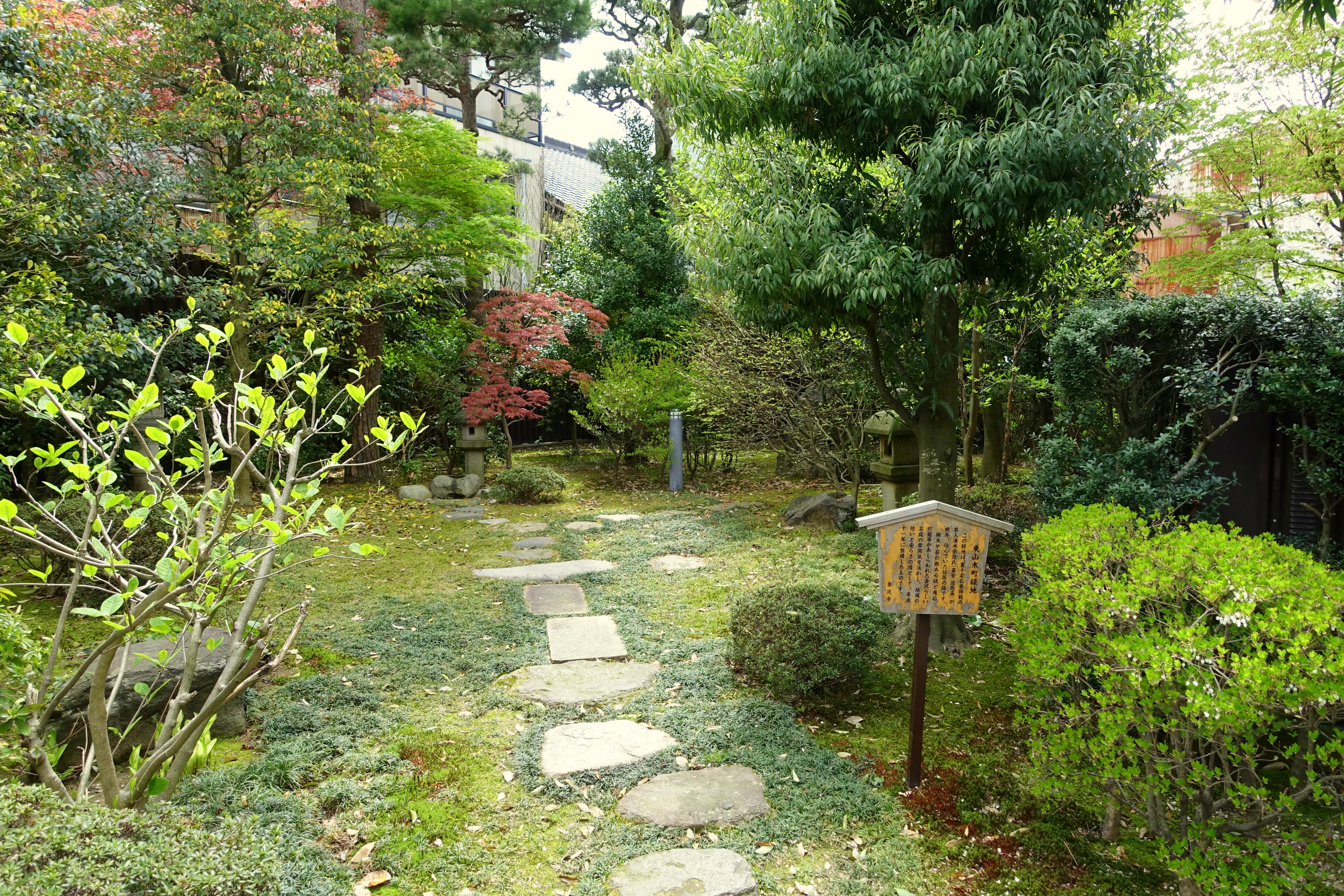
A beautifully preserved neighborhood of earthen walls (dobei), narrow water channels, and samurai residences. The Nomura-ke Samurai Residence is a must — its tiny garden was rated one of Japan’s top three by the Journal of Japanese Gardening. The garden is small but exquisite, viewed from tatami rooms that feel unchanged in centuries.
Admission: ¥550
Local tip: Visit on a rainy day. The wet earthen walls deepen to rich amber and ochre tones, the water channels run high, and the atmosphere becomes almost cinematic. Kanazawa locals believe their city is most beautiful in rain.
Omicho Market Area
7. Omicho Market (近江町市場)
Kanazawa’s “Kitchen” since 1721. Over 170 stalls sell the freshest seafood from the Sea of Japan, local vegetables, pickles, and ready-to-eat street food. Come hungry. This is not a tourist market pretending to be local — it’s where Kanazawa restaurants source their fish and where grandmothers buy their vegetables.
Best time to visit: Arrive between 7:30–9:00 AM on a weekday. By 11:00 AM on weekends, the narrow alleys become shoulder-to-shoulder. Many shops close by 5:00 PM, and some close Wednesdays.
Southern Kanazawa
8. D.T. Suzuki Museum
A meditative space dedicated to the Zen Buddhist philosopher who introduced Zen to the West. Designed by architect Yoshio Taniguchi (who also designed MoMA’s expansion), the museum is an architectural poem of water, stone, and silence. The “Water Mirror Garden” — a reflective pool surrounded by clean white walls — is one of the most photographed spaces in Kanazawa.
Admission: ¥310. Allow 45–60 minutes, including sitting time.
9. Nishi Chaya District
The smallest and least visited of Kanazawa’s three geisha districts. Just a single short street, but it feels genuinely untouched. The Nishi Chaya Shiryokan (free) offers an intimate look at geisha culture. Visit in late afternoon when the light slants through the lattice windows.
10. Myoryuji (Ninja Temple)
Despite the nickname, this isn’t actually connected to ninjas — it’s a Nichiren Buddhist temple built with ingenious defensive features: hidden rooms, trap doors, escape routes, and trick staircases. Visits are by guided tour only (in Japanese, with English pamphlet) and reservations are required by phone. Call the day before or morning of your visit. Tours run roughly every 30 minutes.
Admission: ¥1,000
Kanazawa Food Guide: What to Eat and Where to Find It
Food is the primary reason I keep returning to Kanazawa. The combination of Sea of Japan seafood, mountain vegetables from the Kaga region, and a deeply rooted food culture makes this one of Japan’s top culinary destinations.
Must-Try Dishes
Kaisen-don (Seafood Rice Bowl): The signature Kanazawa meal. A bowl of vinegared rice buried under layers of the day’s freshest sashimi. At Omicho Market, Omicho Ichibazushi and Morimori Zushi are popular (expect 30–60 minute waits at lunch). For a less crowded, higher-quality experience, try Yamasan Sushi on the market’s upper floor.
Nodoguro (Blackthroat Seaperch): Called “the king of the Sea of Japan," this white fish has rich, buttery fat that melts on your tongue. It’s typically served grilled with salt (shioyaki), as sashimi, or as nigiri sushi. Not cheap — a grilled nodoguro at a good restaurant runs ¥2,500–5,000 — but it’s the single fish I’d tell every visitor to try. Itaru Honten (near Korinbo) is a beloved local izakaya that serves excellent nodoguro at reasonable prices. Reservations essential.
Jibuni: Kanazawa’s most famous local dish — duck (or chicken) and vegetables simmered in a rich dashi-based broth thickened with wheat flour. It’s comfort food with centuries of history, originally served at samurai tables. Try it at Tamazushi or at Miyoshian inside Kenrokuen (the garden’s traditional restaurant, open for lunch).
Kano Gani (Snow Crab, November–March): A full crab course typically includes sashimi, boiled legs, grilled sections, crab tempura, crab miso (the green innards, which are umami-rich and delicious), and a final course of kani zosui (crab rice porridge). Budget ¥8,000–25,000 per person depending on the restaurant and crab grade. Female crabs (kobako gani), smaller but packed with eggs and roe, are available only November through December and are a fraction of the price.
Hanton Rice: Kanazawa’s quirky yoshoku (Western-style Japanese) creation — omurice (omelette rice) topped with fried shrimp or white fish and drizzled with ketchup and tartar sauce. It sounds absurd and tastes wonderful. Grill Otsuka in Katamachi is the definitive spot.
Kaga Yasai (Kaga Vegetables): Kanazawa cultivates 15 officially designated heritage vegetables. Particularly worth trying: kaga renkon (lotus root), kinjiso (a leafy green with purple undersides), and gensuke daikon (a short, stout radish used in winter hot pots). You’ll encounter these on kaiseki menus and at farm-to-table restaurants.
Where to Eat by Neighborhood
| Neighborhood | Best For | Recommended Spots |
|---|---|---|
| Omicho Market | Seafood bowls, sushi, street food | Yamasan Sushi, Omicho Ichibazushi, Daiwa (croquettes) |
| Katamachi/Korinbo | Izakayas, high-end dining | Itaru Honten, Grill Otsuka, Tamazushi |
| Higashi Chaya | Sweets, matcha, atmosphere | Hakuza Café (gold-leaf ice cream), Kazu Nakashima |
| Kanazawa Station area | Conveyor-belt sushi, ramen | Morimori Zushi (Forus building), Menya Taiga |
| Tatemachi | Modern cafés, craft cocktails | HUM&Go, Curio Espresso |
Budget tip: Conveyor-belt sushi (kaiten zushi) in Kanazawa is shockingly good because the base seafood quality is so high. Even a ¥1,500 lunch at a chain like Morimori Zushi rivals mid-range sushi in Tokyo.
Day Trips from Kanazawa
Shirakawa-go (白川郷) — 1.5 hours by bus
The UNESCO-listed village of steep-roofed gassho-zukuri farmhouses. Stunning year-round, but winter illumination events (late January–February, advance lottery required) are legendary. Direct Nohi Bus from Kanazawa Station; book round-trip tickets in advance, especially on weekends.
Noto Peninsula — 2–3 hours by car or train
Rugged coastal scenery, terraced rice paddies (Shiroyone Senmaida), traditional salt-making, and remote fishing villages. Best explored by rental car. The morning market in Wajima (daily except the 10th and 25th of each month) is one of Japan’s oldest and most atmospheric.
Takayama — 2 hours by bus (via Shirakawa-go)
Combine Shirakawa-go and Takayama in an overnight trip. Takayama’s old town, morning markets, and Hida beef are all excellent. The Nohi Bus route from Kanazawa to Takayama stops at Shirakawa-go.
Fukui/Eiheiji Temple — 1 hour by train
One of Japan’s two head Soto Zen temples, set deep in a cedar forest. A powerful, moving place regardless of your spiritual inclinations. Accessible via JR to Fukui, then Keifuku Bus.
Kaga Onsen — 30 minutes by train
A cluster of four hot-spring towns (Yamashiro, Yamanaka, Katayamazu, Awazu), each with distinct character. Yamashiro has the beautifully restored Ko Soyu bathhouse; Yamanaka is set in a forested gorge. Perfect for a half-day or overnight soak.
Getting There & Around Kanazawa
Getting to Kanazawa
From Tokyo: The Hokuriku Shinkansen runs directly from Tokyo Station to Kanazawa Station in approximately 2 hours 30 minutes. It’s one of Japan’s most scenic shinkansen routes, crossing through the Japanese Alps. A one-way reserved seat costs approximately ¥14,380, or is fully covered by the Japan Rail Pass (7-day, 14-day, or 21-day).
From Kyoto/Osaka: Limited Express Thunderbird from Kyoto (2 hours 10 minutes, ¥6,810) or Osaka (2 hours 40 minutes, ¥7,790). Important note as of March 2024: The Hokuriku Shinkansen was extended to Tsuruga, which changes some routing. The Thunderbird now terminates at Tsuruga, requiring a transfer to the shinkansen for the final leg to Kanazawa. Total travel time from Kyoto/Osaka remains roughly similar, but the transfer adds a minor hassle. The JR Pass covers this entire route.
From Takayama/Shirakawa-go: Nohi Highway Bus (approximately 2 hours, ¥3,600). Not covered by JR Pass.
Getting Around Kanazawa
Kanazawa is remarkably walkable. Most major attractions are within a 2 km radius of Kanazawa Castle. However, the city’s flat terrain and excellent bus system make getting around effortless.
Kanazawa Loop Bus: A dedicated tourist loop bus (right-loop and left-loop) connects all major sights. One-day pass: ¥800 (covers both loop routes and city flat-rate buses). Buy it at the bus ticket office immediately outside Kanazawa Station’s East Gate (Motenashi Dome side).
Walking: I genuinely recommend walking as your primary mode. Kenrokuen → Higashi Chaya → Omicho Market → Nagamachi can be done on foot in a comfortable half-day loop.
Cycling: Several rental cycle shops operate near the station. Kanazawa is flat and cycle-friendly, though winter and rainy days limit this option.
Rental car: Only recommended for day trips to the Noto Peninsula. Downtown parking is expensive and unnecessary.
Where to Stay in Kanazawa
By Area
Kanazawa Station Area Most convenient for arrivals and departures. Plenty of mid-range hotels, good restaurants in the station building (Forus and Rinto shopping areas), and the Loop Bus starts here.
- Budget: Kaname Hostel (¥3,500–5,000/night, beautifully designed)
- Mid-range: Hotel Mystays Kanazawa (¥8,000–14,000), Dormy Inn Kanazawa (¥10,000–16,000, excellent rooftop onsen)
- Upscale: Hotel Nikko Kanazawa (¥18,000–30,000)
Katamachi/Korinbo (City Center) Best for nightlife, dining, and central access. Walking distance to Nagamachi, Kenrokuen, and 21st Century Museum.
- Mid-range: Kanazawa Tokyu Hotel (¥12,000–20,000)
- Upscale: Hyatt Centric Kanazawa (¥25,000–45,000, one of my favorite hotels in Japan for the price)
Higashi Chaya Area Stay in the geisha district itself for maximum atmosphere. Several machiya (traditional townhouse) guesthouses operate here.
- Ryokan/Machiya: Sumiyoshiya (¥15,000–30,000, a historic ryokan), various Airbnb machiya rentals (¥10,000–20,000)
Traditional Ryokan Experience For a special-occasion stay, consider spending one night at a ryokan in the nearby Kaga Onsen area (30 minutes by train). Multi-course kaiseki dinner, private onsen baths, and tatami rooms. Expect ¥25,000–60,000+ per person including dinner and breakfast.
Booking tip: Kanazawa hotels fill up fast during Golden Week (late April–early May), Obon (mid-August), autumn foliage season, and New Year. Book at least 2–3 months in advance for these periods. For the best rates and flexibility, I recommend checking both Booking.com and Rakuten Travel (Japan’s domestic booking platform, which sometimes has exclusive local hotel deals).
Practical Tips for Visiting Kanazawa
Budget
Kanazawa is moderately priced by Japanese standards — cheaper than Tokyo or Kyoto for accommodation, but food can be pricey if you’re eating high-end seafood.
- Budget traveler: ¥8,000–12,000/day (hostel, market meals, walking)
- Mid-range: ¥18,000–30,000/day (business hotel, good restaurants, attractions)
- Comfort/Luxury: ¥40,000+/day (upscale hotel, kaiseki or crab course, taxis)
Cash: Many small restaurants, market stalls, and traditional shops in Kanazawa still prefer cash. Don’t rely solely on credit cards. 7-Eleven ATMs accept international cards.
Etiquette & Local Customs
- Omicho Market: Don’t touch the fish. Don’t block narrow aisles for photos. If a vendor offers a sample, accept graciously (and consider buying something).
- Geisha districts: Real geisha (geiko in local dialect) still work in these neighborhoods. If you spot one, a respectful nod is fine. Do not chase, block, or photograph them up close.
- Temples and gardens: Remove shoes where indicated. Speak softly. Stay on marked paths in Kenrokuen.
- Rain etiquette: Kanazawa provides umbrella stands at shop entrances. Use them. Wet umbrellas are never brought inside shops or restaurants — fold and place in the stand or plastic sleeve provided.
Local Customs Unique to Kanazawa
- Kaga hospitality (Kaga hyakumangoku no omotenashi): Kanazawa was the seat of the fabulously wealthy Maeda clan, and local hospitality reflects that heritage. Shopkeepers and restaurant staff tend to be exceptionally gracious. Reciprocate with politeness.
- Arts culture: Kanazawa has a living tradition of tea ceremony, Noh theater, Kutani ceramics, Kaga yuzen silk dyeing, and lacquerware. Attending a workshop or demonstration is one of the best things you can do here. The Kanazawa Yasue Gold Leaf Museum and Kaga Yuzen Kimono Center both offer hands-on experiences.
- The umbrella thing: Kanazawa ranks among Japan’s rainiest cities. Locals genuinely don’t mind rain and consider it part of the city’s identity. You’ll see beni-gasa (traditional red umbrellas) displayed at many ryokan and tea houses — they’re not just decorative; they’re functional.
Frequently Asked Questions About Visiting Kanazawa
How many days do I need in Kanazawa?
I recommend two full days as a minimum: one for the cultural district loop (Kenrokuen, Kanazawa Castle, Nagamachi, 21st Century Museum) and one for Higashi Chaya, Omicho Market, and the D.T. Suzuki Museum. A third day allows for a day trip to Shirakawa-go or the Noto Peninsula, or simply more time to explore at a relaxed pace and eat well.
Is Kanazawa covered by the Japan Rail Pass?
Yes. The Hokuriku Shinkansen from Tokyo to Kanazawa is fully covered by the JR Pass. The Limited Express route from Kyoto/Osaka via Tsuruga is also covered. This makes Kanazawa an excellent addition to a Tokyo–Kyoto itinerary — it sits roughly between the two and is easily incorporated as a 2–3 night stopover.
Is Kanazawa worth visiting compared to Kyoto?
Absolutely, and for different reasons. Kyoto has the sheer volume of temples and shrines, but Kanazawa offers a more intimate, less crowded experience with arguably superior food (especially seafood). Many repeat visitors to Japan tell me they prefer Kanazawa’s atmosphere. The two cities complement each other perfectly — I’d never say “skip Kyoto for Kanazawa,” but I would say “don’t skip Kanazawa for Kyoto.”
Can I do Kanazawa as a day trip from Tokyo?
Technically yes (2.5 hours each way by shinkansen), but I strongly advise against it. You’d spend 5 hours on trains and have only 5–6 hours in the city, which doesn’t do it justice. An overnight stay — even just one night — transforms the experience, especially if you can catch Kenrokuen at sunrise or enjoy an evening stroll through the illuminated Gyokusen-inmaru Garden.
What’s the best way to combine Kanazawa with other destinations?
The classic route: Tokyo → Kanazawa (2–3 nights) → Shirakawa-go (day trip or overnight) → Takayama (1–2 nights) → Kyoto/Osaka. This covers Japan’s cultural heartland in a logical geographic arc. The Kanazawa-to-Takayama bus via Shirakawa-go is one of Japan’s best overland journeys.
Do I need to speak Japanese in Kanazawa?
Kanazawa has significantly improved its English signage and tourist infrastructure in recent years. Kenrokuen, the museums, and most hotels have English support. However, many smaller restaurants (especially the best izakayas) have Japanese-only menus. Download Google Translate’s offline Japanese pack before you arrive, and don’t be afraid to point at what others are eating. Kanazawa locals are notably patient and kind with foreign visitors.
Is Kanazawa safe?
Extremely. Like virtually all of Japan, Kanazawa has negligible violent crime. The only “danger” is spending more than you planned at Omicho Market because everything looks too good to resist. I speak from deep personal experience.
Kanazawa isn’t the city that shouts for your attention. It’s the one that quietly rewards you for showing up, staying a little longer, and eating one more plate of sushi than you planned. It’s been fifteen years, and it still surprises me every visit. I think it will surprise you too.