Naoshima Art Island Japan Complete Guide: The Ultimate Insider’s Guide to Japan’s Living Art Museum
If someone told you that a sleepy fishing island in the Seto Inland Sea would become one of the most important contemporary art destinations on the planet, you’d probably raise an eyebrow. But that’s exactly what happened to Naoshima — a tiny island of roughly 3,000 residents in Kagawa Prefecture, Shikoku — where world-class architecture by Tadao Ando, installations by Yayoi Kusama and James Turrell, and an entire village transformed into living art galleries have created something utterly unlike anything else in Japan, or the world.
This Naoshima art island Japan complete guide is the result of my visiting this island in every season over the past fifteen years, watching it evolve from a quiet insider secret to a global art pilgrimage site. I’ll cover everything you need: the best times to visit, how to navigate the island, what to eat, where to sleep, and — crucially — the practical tips and local knowledge that will transform your visit from “a nice day trip” into something genuinely unforgettable.
Naoshima is technically part of Kagawa Prefecture on the Shikoku side, though geographically it sits in the Seto Inland Sea between Shikoku and Honshu. It’s the crown jewel of the Benesse Art Site Naoshima project, which also encompasses nearby islands Teshima and Inujima. Together, they form one of the most remarkable art ecosystems anywhere.
Best Time to Visit Naoshima: A Season-by-Season Breakdown
Naoshima is a year-round destination, but each season delivers a dramatically different experience. Here’s what to expect and what to eat in every month.
Spring (March–May) ★ Best Overall Season
Weather: Mild temperatures, 12–22°C. Cherry blossoms typically peak on Naoshima around April 1–8, slightly earlier than Kyoto due to the mild maritime climate.
Spring is arguably the best time for a first visit. The light over the Inland Sea is luminous, crowds are manageable outside Golden Week (April 29–May 5), and you can comfortably cycle the island without overheating.
Seasonal food highlights: Tai (sea bream) is at peak season — Kagawa’s spring tai-meshi (sea bream rice) is extraordinary. Bamboo shoots (takenoko) appear on menus everywhere. And of course, this is prime season for sanuki udon on the Shikoku mainland, best enjoyed after your island trip.
Insider tip: Visit in the first week of April and you’ll catch cherry blossoms framing the outdoor sculptures — the yellow Kusama pumpkin against pink sakura is a once-a-year shot.
Summer (June–August)
Weather: Hot and humid, 25–33°C. The rainy season (tsuyu) typically runs from early June to mid-July.
Summer brings the longest daylight hours, meaning you can visit more sites. The Seto Inland Sea turns a deep, shimmering blue, and sunset views from the southern coast are at their most spectacular. However, the heat and humidity can be punishing, especially if you’re cycling.
If you visit in a Setouchi Triennale year (held every three years — the next is 2025), summer is one of the three festival seasons and brings additional installations and events across the islands.
Seasonal food highlights: Sōmen (chilled thin noodles) served cold with dipping sauce. Octopus (tako) from the Seto Inland Sea is at its best. Shaved ice (kakigōri) from the island cafés hits differently after cycling uphill in 32°C heat. Local peaches from Okayama (just across the water) are sublime.
Autumn (September–November) ★ Best for Photography
Weather: Comfortable and clear, 12–25°C. Autumn foliage peaks around mid-to-late November.
Autumn is my personal favorite. The air is crisp, the crowds thin after October’s Triennale season, and the quality of light is extraordinary — the golden hour lasts longer, and Tadao Ando’s concrete structures seem to glow. November brings subtle autumn colors that beautifully contrast with the art installations.
Seasonal food highlights: Sanma (Pacific saury) grilled whole. Persimmons (kaki) appear everywhere. Olive products from nearby Shodoshima island — olive oil, olive soda, olive soft-serve — are harvested in autumn. Sweet potatoes are roasted and sold at small stands.
Winter (December–February)
Weather: Cool but mild for Japan, 3–10°C. Snow is extremely rare. The Inland Sea moderates temperatures.
Winter is the quiet season. Some guesthouses close, ferry schedules are reduced, and the island feels truly local. But this is when you’ll have the museums almost to yourself — I once spent 45 minutes alone in the Chichu Art Museum’s Monet room in January, which was a near-spiritual experience.
Seasonal food highlights: This is peak fugu (puffer fish) season — available on the mainland in Takamatsu. Citrus fruits, especially mikan and the Kagawa-specific sanuki sanbon varieties, are abundant. Hot sanuki udon is at its most comforting. Winter yellowtail (buri) is rich and fatty.
Important note on closings: Most museums are closed on Mondays (or Tuesday if Monday is a national holiday). The Chichu Art Museum and Lee Ufan Museum require advance reservations year-round. Always book online before your trip — especially March through November, when popular time slots sell out days in advance.
Top Attractions on Naoshima: Organized by Area
Naoshima is small — roughly 8 km² — but it’s dense with art. The island divides naturally into three main areas.
Miyanoura Port Area (North)
This is where most ferries arrive, and where your Naoshima experience begins.
1. Naoshima Pavilion (Fujimoto Sou)
Right at the port, this floating lattice structure of stainless steel triangles is free to visit and makes an immediate statement: you’ve arrived somewhere different. Beautiful at night when illuminated.
2. Red Pumpkin (Yayoi Kusama)
The iconic red polka-dotted pumpkin sits on the pier at Miyanoura Port. You can walk inside it. Yes, there will be a queue for photos. Local tip: Come back at night when it’s lit from within and virtually nobody is around.
3. Naoshima Bath “I♥湯” (Shinro Ohtake)
A functioning public bathhouse that is also an art installation — from the neon exterior to the collage-covered interior, every surface is a work of art. Open afternoons and evenings. Bring your own towel or buy one at the entrance (¥260). Admission is ¥660. This is where locals actually bathe, so observe bath etiquette carefully.
Art House Project Area — Honmura Village (East)
The Art House Project transforms abandoned houses, a temple, and a shrine in the old village of Honmura into permanent art installations. You’ll need a shared ticket (¥1,050 for all sites except Kinza, which requires a separate ¥520 reservation).
4. Minamidera (James Turrell + Tadao Ando)
Enter a pitch-black building and sit in total darkness for 10–15 minutes as your eyes adjust and a barely perceptible light installation slowly reveals itself. This is one of the most powerful art experiences I’ve had anywhere. Arrive early — admission is by timed entry with limited capacity, and it fills fast by midmorning.
5. Go’o Shrine (Hiroshi Sugimoto)
A functioning Shinto shrine redesigned with an underground stone chamber and glass staircase leading to a subterranean space. The juxtaposition of ancient spirituality and contemporary design is breathtaking. You can still pray at the shrine above — locals do.
6. Kadoya, Ishibashi, Gokaisho, Haisha
The remaining Art House Project sites, each unique. Kadoya features a digital water installation by Tatsuo Miyajima. Haisha (“The Dentist”) is a former dental clinic transformed by Shinro Ohtake into an explosion of found objects. Budget 2–3 hours to walk through all of Honmura slowly and absorb the atmosphere of the village itself, which is as much a part of the experience as the art.
Benesse Art Site Area (South)
The southern coast is where the major museums are concentrated, connected by a free shuttle bus and coastal walking paths.
7. Chichu Art Museum (Tadao Ando)
Built entirely underground so as not to disrupt the island’s landscape, this is Naoshima’s masterpiece. Three artists — Claude Monet (five late Water Lilies paintings displayed in a naturally lit white marble room), Walter De Maria (a massive sculptural sphere in a concrete stairwell), and James Turrell (an Open Sky installation where the ceiling literally opens to the sky) — each have dedicated spaces designed around their work. The architecture IS the art.
Advance reservation required. Book at ticket.chichu.jp as early as possible. Admission: ¥2,100. No photography inside. Plan 60–90 minutes.
8. Lee Ufan Museum (Tadao Ando + Lee Ufan)
A half-buried concrete museum dedicated to the Korean-born minimalist artist. The relationship between stone, steel, empty space, and the surrounding landscape creates a meditative calm that’s hard to describe. Also requires advance reservation. Admission: ¥1,050.
9. Benesse House Museum
The original museum that started Naoshima’s transformation, where hotel rooms and gallery spaces intermingle. Works by Bruce Nauman, Richard Long, Jasper Johns, and many others. The museum section is open to all visitors (¥1,050), while the hotel areas are guest-only after 11 PM. The outdoor sculptures along the coastal path here — including the famous Yellow Pumpkin by Yayoi Kusama on the pier — are free and accessible.
Note: The original yellow pumpkin was swept into the sea by Typhoon Lupit in August 2021 and was restored and reinstalled in 2022. It remains one of the most photographed objects in Japan.
10. Vallée de Lalanne (Outdoor Gallery)
A newer addition to the Benesse Art Site — whimsical animal sculptures by Les Lalanne set in a hillside garden overlooking the sea. Open seasonally; check schedules. Admission: ¥1,300.
Food Guide: What to Eat on Naoshima and Where
Let me be honest: Naoshima is not a food destination. It’s a tiny island, and dining options are limited. But there are genuine gems if you know where to look.
Miyanoura Port Area
Café Marugame — Near the port, serving a decent sanuki udon set. Not transcendent, but solid and quick for your arrival meal.
Café Salon Naka-Oku — A hidden gem on a residential lane. The daily lunch set features local fish, rice, pickles, and miso for around ¥1,200. The grandmother who runs it speaks no English but radiates warmth.
Honmura Village
Café & Meal MUGI — My top recommendation for lunch. Set meals featuring local fish, seasonal vegetables, and Kagawa rice. The grilled sea bream set (when available) is excellent. Budget ¥1,300–1,800. Expect a wait on weekends.
Aisunao — Handmade gelato using local fruits. The lemon and olive flavors are distinctly Seto Inland Sea.
Honmura Lounge & Archive — Coffee and light meals in a beautifully converted old house. Good for a rest between Art House Project sites.
Benesse Area
Benesse House Restaurant (Issen) — The upscale option. Multi-course French-Japanese fusion using Seto Inland Sea ingredients. Dinner sets start around ¥8,000. The sea bream carpaccio and olive-fed pork are standouts. Reservations essential.
Museum Café (Chichu) — Light meals and the best coffee on the island, with a terrace overlooking Monet’s garden (yes, they planted a garden inspired by Giverny). The curry rice is simple but good.
Essential Food Tips
- Bring snacks. Seriously. If you arrive mid-afternoon, many restaurants will be closed (lunch service typically ends at 2 PM), and there’s only one convenience store (a small 7-Eleven near Miyanoura Port).
- Eat your big meal on the mainland. Before or after Naoshima, hit Takamatsu for sanuki udon (try Udon Baka Ichidai for their butter udon or Nagata in Kanoka for the classic) or Okayama for demi-katsu-don (pork cutlet with demi-glace sauce).
- Don’t skip olive products. Nearby Shodoshima is Japan’s olive capital, and olive oil, olive rice crackers, and olive soda appear throughout the islands.
Day Trips from Naoshima and the Wider Shikoku Region
Teshima (30 min by high-speed ferry)
Home to the Teshima Art Museum by Ryue Nishizawa — a single, open concrete shell where water droplets emerge from the floor and travel across the surface in mesmerizing patterns. This might be the single most beautiful art experience in the entire Seto Inland Sea. Advance reservation required. Combine with the Les Archives du Cœur (Christian Boltanski) where you can listen to recorded heartbeats from around the world.
Inujima (accessible via Teshima)
The smallest of the art islands, with a former copper refinery turned art museum and a village art project. Half a day is sufficient. The ruined industrial architecture combined with Yukinori Yanagi’s installations creates an eerie, powerful atmosphere.
Shodoshima (1 hour by ferry from Takamatsu)
Famous for olive groves, soy sauce breweries, and sōmen noodle production. Visit Marukin Soy Sauce Historical Museum and drive the stunning Kankakei Gorge in autumn for some of the best foliage in western Japan (peak around November 15–25).
Takamatsu (mainland Kagawa)
The gateway city to Naoshima and a destination in its own right. Ritsurin Garden is one of Japan’s finest landscape gardens — better than many in Kyoto, with a fraction of the crowds. The Takamatsu fish market area is excellent for a morning seafood bowl.
Iya Valley (2.5 hours from Takamatsu by car)
Deep in Shikoku’s mountainous interior, the Iya Valley features vine bridges, thatched-roof farmhouses, and an atmosphere that feels centuries removed from modern Japan. A perfect contrast to Naoshima’s contemporary art.
Kotohira/Konpira-san (1 hour from Takamatsu)
Climb the 1,368 stone steps to Kotohira-gū shrine, dedicated to the god of seafaring. The approach is lined with udon shops and souvenir stalls. Combine with Naoshima for the ultimate Kagawa day.
Getting There and Around Naoshima
Getting to Naoshima
From Takamatsu (Shikoku side) — Most Common Route:
- Ferry: Naoshima-bound ferries depart from Takamatsu Port (10-minute walk from JR Takamatsu Station). The standard ferry takes 50 minutes (¥520, carries cars and bikes). The high-speed ferry takes 30 minutes (¥1,220, passengers only). Roughly 5–7 departures per day depending on season.
From Uno Port (Okayama side — Honshu):
- Ferry: 20 minutes from Uno Port (¥300). This is the fastest sea crossing and ideal if you’re coming from Okayama, Hiroshima, or Osaka. Uno Port is reached via JR Uno Line from Okayama Station (50 minutes, covered by JR Pass).
JR Pass Tips:
- The JR Pass covers the train to Uno Station (Okayama side) and the train to Takamatsu Station. Ferries are NOT covered by the JR Pass.
- If you have a JR Pass and are coming from Kyoto/Osaka/Hiroshima, the route via Okayama → Uno → ferry to Naoshima is often most efficient.
- The JR Shikoku Pass or All Shikoku Rail Pass covers trains within Shikoku, including the Takamatsu area, and can be useful if you’re exploring the wider region.
Getting Around Naoshima
The island is small but hilly. Here are your options, ranked:
1. Bicycle (Best Option for Most Visitors) Rental shops are at Miyanoura Port. Regular bikes: ¥300–500/day. E-bikes: ¥1,000–1,500/day. Get the e-bike. The hills between Honmura and the Benesse area are deceptively steep, and you’ll thank yourself at 2 PM when the sun is blazing.
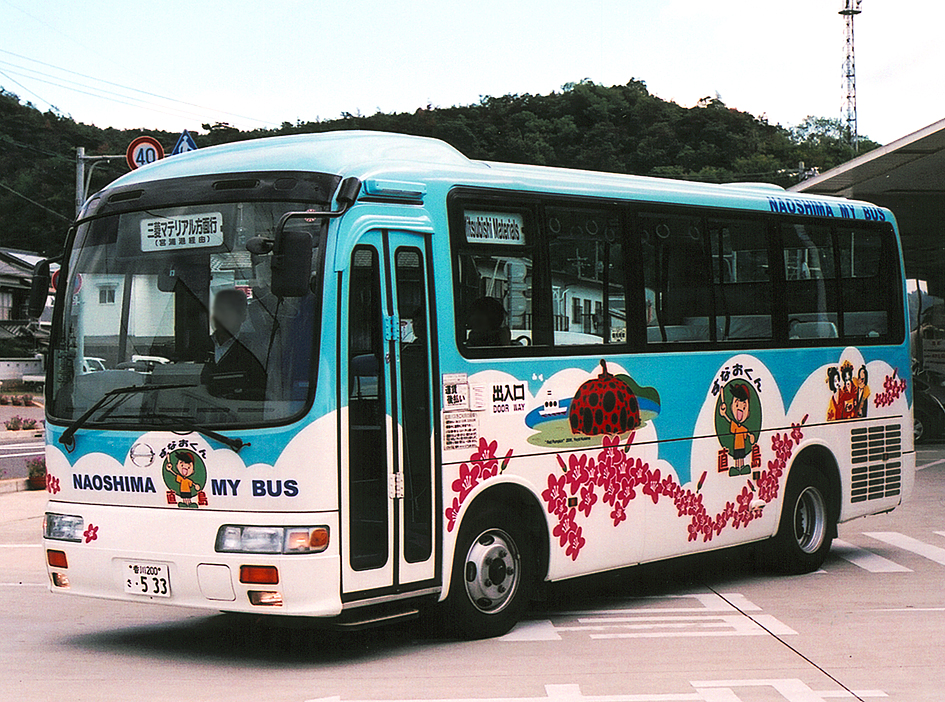
2. Town Bus (Naoshima Chōei Bus) A local bus runs between Miyanoura Port, Honmura, and Tsutsuji-so (near Benesse area). ¥100 per ride. Runs roughly hourly. Convenient but limits your flexibility.
3. Free Benesse Shuttle A shuttle runs between Tsutsuji-so and the Benesse House area museums. Essential for reaching the Lee Ufan Museum and Chichu Art Museum, which are uphill from the coast.
4. Walking Totally feasible for the Honmura area. Walking from Miyanoura to Honmura takes about 25 minutes. Walking from Honmura to the Benesse area takes 30–40 minutes along coastal roads. Walking up to Chichu Art Museum from the coast is a steep 15-minute climb.
5. Car Not recommended. Parking is extremely limited and the island’s narrow roads aren’t designed for tourist traffic.
Where to Stay on Naoshima
Staying overnight transforms your Naoshima experience. Day-trippers rush between sites; overnight guests get the evening light, the empty morning streets, and the sense of actually living on the island.
Luxury
Benesse House (¥35,000–80,000/night) Sleep literally inside the museum. Four buildings — Museum, Oval, Park, and Beach — offer different experiences. The Oval building, accessible only by monorail, has just six rooms with Seto Inland Sea views. Guests get exclusive after-hours museum access. This is a once-in-a-lifetime stay.
👉 Book Benesse House well in advance, especially for spring and autumn weekends.
Mid-Range
Naoshima Ryokan Rō (¥15,000–25,000/night) A beautifully renovated traditional inn in Honmura village. Excellent kaiseki-style dinner featuring local seafood. The Japanese-style rooms overlook a small garden. My top recommendation for the balance of comfort, location, and experience.
Shimacoya (¥8,000–15,000/night) Part guesthouse, part bookshop, part café, located in Honmura. Stylish, modern, and perfectly positioned for the Art House Project. Book early — only a few rooms.
Budget
Dormitory-style guesthouses (¥3,500–6,000/night) Several options near Miyanoura Port, including Backpacker Naoshima and various Airbnb-listed houses. Basic but clean, and you’ll meet fellow art travelers.
Camping (¥500–1,500/night) Tsutsuji-so campground near the Benesse area offers tent sites with sea views. Bring your own gear or rent on-site (limited availability). The cheapest way to stay overnight and absurdly beautiful at sunrise.
Staying on the Mainland Instead
Takamatsu is the practical alternative if Naoshima accommodation is full. Business hotels near JR Takamatsu Station start at ¥5,000–8,000/night, and you can catch the first morning ferry. Uno (Okayama side) has a few small hotels if you’re approaching from Honshu.
👉 [Search accommodation in Naoshima and Takamatsu →] Book at least 2–3 months ahead for peak seasons and Triennale years.
Practical Tips: Budget, Etiquette, and Local Customs
Budget Planning
Here’s a realistic daily budget for Naoshima:
| Category | Budget | Mid-Range | Comfort |
|---|---|---|---|
| Accommodation | ¥3,500 | ¥12,000 | ¥40,000+ |
| Meals | ¥2,000 | ¥4,000 | ¥10,000 |
| Museums | ¥3,000 | ¥5,000 | ¥5,000 |
| Transport (ferry + bike) | ¥1,500 | ¥2,500 | ¥2,500 |
| Daily Total | ¥10,000 | ¥23,500 | ¥57,500+ |
Etiquette and Local Customs
Remember: people live here. This is the single most important thing to understand about Naoshima. It’s not a theme park. Three thousand residents go about their daily lives among the art installations. Please:
- Keep your voice down in residential areas, especially Honmura village.
- Don’t photograph private homes or peer into people’s gardens, even if the boundary between “art” and “house” sometimes feels blurry.
- Remove your shoes when entering any Art House Project site (and anywhere else where shoe racks or shelves are visible at the entrance).
- Don’t touch the art unless explicitly invited to.
- Take your trash with you. There are almost no public trash cans on the island. Carry a small bag.
Money
Bring cash. Many restaurants, smaller accommodations, and the ferry accept cash only. The 7-Eleven near Miyanoura Port has an ATM that accepts international cards, but don’t rely on it as your only option. Museum ticket offices generally accept credit cards.
Connectivity
Wi-Fi is available at museums, some cafés, and most accommodation. Mobile data works fine (all major carriers). Download offline maps before arriving — Google Maps works well for Naoshima’s roads and paths.
Photography Rules
- No photography inside Chichu Art Museum, Lee Ufan Museum, or Art House Project sites. This is strictly enforced.
- Outdoor sculptures are free to photograph.
- Benesse House Museum allows photography in some areas — check at reception.
- The best photography locations: Yellow Pumpkin at golden hour, Red Pumpkin at night, the approach path to Chichu Art Museum, and the coastal walk between Benesse House and the Yellow Pumpkin.
Suggested Itineraries
One Day (Minimum): Morning ferry from Takamatsu/Uno → Miyanoura (Red Pumpkin, rent bike) → Honmura Art House Project → Lunch at MUGI → Benesse area (Chichu Art Museum, Lee Ufan Museum, Yellow Pumpkin) → Evening ferry back.
Two Days (Recommended): Day 1: Arrive midday, explore Honmura village, Art House Project, evening at I♥湯 bathhouse. Day 2: Morning at Chichu Art Museum (first entry slot), Lee Ufan Museum, Benesse coastal walk, afternoon ferry + Teshima Art Museum.
Three Days (Ideal): Add Teshima and Inujima for the complete art island experience, with a relaxed pace on Naoshima itself.
Frequently Asked Questions
Is one day enough for Naoshima?
One full day is the minimum to see the highlights (Chichu Art Museum, Art House Project, Yellow Pumpkin, and one or two other sites). But it will feel rushed. Two days allows a much more relaxed pace and the chance to absorb the atmosphere. If you’re including Teshima, plan three days total.
Do I need to book museum tickets in advance?
Yes, for Chichu Art Museum and Lee Ufan Museum — advance online reservations are required and popular time slots sell out days ahead in peak season. Art House Project tickets can be purchased on-site, but arriving early at Honmura (before 10 AM) is wise as Minamidera entries fill up quickly. Teshima Art Museum also requires advance booking.
Can I visit Naoshima with children?
Absolutely. Children often respond to the art in surprising ways, and the island’s outdoor sculptures and cycling-friendly roads make it family-friendly. However, very young children may struggle with the “no touching” rules in museums and the extended periods of silence required at places like Minamidera. Benesse House Beach is a lovely spot for kids to play between museum visits.
What happens on Mondays?
Most museums and Art House Project sites are closed on Mondays (or Tuesday if Monday is a national holiday). If Monday is your only option, you can still enjoy the outdoor sculptures, the I♥湯 bathhouse, the village atmosphere, and the cycling routes. But it would be a significantly diminished visit — avoid Mondays if possible.
Is Naoshima wheelchair accessible?
Partially. The Chichu Art Museum and Lee Ufan Museum have wheelchair access (inform staff when booking). Benesse House Museum is largely accessible. However, many Art House Project sites in Honmura involve steps, narrow doorways, and uneven floors in old houses. The island’s hilly terrain also makes wheelchair travel challenging without assistance. Contact each venue in advance for specific accessibility information.
How does the Setouchi Triennale affect my visit?
The Setouchi Triennale (held every three years — next in 2025) brings additional temporary artworks, performances, and events across Naoshima and neighboring islands during three festival seasons (spring, summer, autumn). It also brings significantly larger crowds and higher accommodation prices. If you want the fullest art experience, visit during the Triennale. If you want a calmer, more contemplative visit, come in a non-Triennale year or during the Triennale’s winter off-season.
What should I do if it rains?
Rain on Naoshima has its own beauty — the concrete architecture of Tadao Ando looks stunning when wet, and the museums are all indoors. Bring a compact umbrella or rain jacket. Cycling in heavy rain isn’t pleasant, so pivot to the bus on wet days. The Chichu Art Museum’s Turrell Open Sky installation changes dramatically under overcast skies. Some visitors (myself included) actually prefer Naoshima in soft rain.
Final Thoughts
After fifteen years and more visits than I can count, Naoshima still surprises me. It’s a place where art doesn’t hang on walls waiting to be observed — it lives in the landscape, breathes with the seasons, and exists in dialogue with a community that was here long before the first museum was built. The fishing boats still go out at dawn. Grandmothers still tend their gardens beside million-dollar installations. The yellow pumpkin sits on its pier as the tide rises and falls.
Come with enough time, come with an open schedule, and come ready to be changed. That’s what Naoshima does.