Osaka Street Food Guide: Dotonbori, Shinsekai & Beyond — The Ultimate Eating Adventure
Introduction: Why Osaka Is Japan’s Undisputed Street Food Capital
There’s a reason the people of Osaka invented the word kuidaore — “to eat until you drop.” This is not Tokyo, where elegance and restraint define the dining culture. This is not Kyoto, where centuries of refinement have turned every meal into an art installation. Osaka is the city where a grandmother will stand over a flat-top griddle for forty years perfecting a single dish, where the neon lights reflect off rivers of sauce and batter, and where the greatest compliment you can give is “that was cheap and ridiculously delicious.”
If you’re searching for a comprehensive Osaka street food guide covering Dotonbori, Shinsekai, and the city’s other legendary eating districts, you’ve come to the right place. I’ve lived in Japan for fifteen years, and I still make the trip to Osaka specifically to eat. Not at Michelin-starred restaurants (though those are excellent too), but at the tiny stalls, the standing counters, the hole-in-the-wall shops where the line stretches around the corner and nobody cares because they know what’s waiting at the end of it.
Osaka’s street food isn’t just snacking — it’s a philosophy. It’s konamon culture (flour-based foods), it’s the unapologetic pursuit of flavor over formality, and it’s the beating heart of a city that has defined itself through its stomach for over four hundred years. Whether you’re biting into a crispy-shelled takoyaki ball at a nameless stall in Shinsekai, watching okonomiyaki sizzle on the griddle in Dotonbori, or discovering a skewer of kushikatsu you didn’t know you needed in your life, Osaka delivers food experiences you simply cannot replicate anywhere else in Japan — or the world.
This guide will walk you through everything: the history, the districts, the dishes, the timing, the etiquette, and the practical tips that transform a good food trip into an unforgettable one.
The Food Explained: Osaka’s Street Food Heritage and What Makes It Authentic
The Roots of Kuidaore Culture
Osaka’s identity as Japan’s kitchen (tenka no daidokoro) goes back to the Edo period (1603–1868), when the city served as the nation’s commercial hub. Rice, soy sauce, kelp, dried bonito — the building blocks of Japanese cuisine — all flowed through Osaka’s ports and warehouses. Merchants grew wealthy, and unlike the samurai class in Edo (Tokyo), they had no shame about spending that wealth on food. Eating well wasn’t just acceptable in Osaka — it was a civic virtue.
This merchant culture gave birth to a food philosophy that persists today: ingredients should be high quality, prices should be reasonable, and portions should be generous. You’ll notice this immediately. Osaka street food is almost absurdly affordable for how good it is.
Konamon: The Flour-Based Soul of Osaka
The backbone of Osaka street food is konamon — literally “flour things.” This category includes the city’s three most iconic dishes:
Takoyaki (たこ焼き) — Spherical balls of wheat batter filled with diced octopus (tako), pickled ginger, green onion, and tenkasu (tempura scraps), cooked in specially molded cast-iron pans. The perfect takoyaki has a crispy exterior shell and a creamy, almost molten interior. It’s topped with takoyaki sauce (similar to Worcestershire), Japanese mayonnaise, bonito flakes, and aonori (green seaweed powder). The dish originated in Osaka in 1935, credited to a street vendor named Tomekichi Endo.
Okonomiyaki (お好み焼き) — A savory pancake made from batter, shredded cabbage, and your choice of fillings (pork belly, seafood, cheese, mochi, etc.), cooked on a flat griddle. The name literally means “grill what you like.” Osaka-style okonomiyaki mixes all ingredients into the batter before cooking, distinguishing it from the Hiroshima style, which layers ingredients. Finished with a sweet-savory brown sauce, mayo, bonito flakes, and aonori.
Kushikatsu (串カツ) — Deep-fried skewers of meat, seafood, and vegetables, coated in a light panko breadcrumb batter. Kushikatsu originated in Shinsekai in 1929 and remains the signature dish of that neighborhood. The cardinal rule: never double-dip in the communal sauce. This is not a suggestion. Signs are posted everywhere in multiple languages. You dip once. If you need more sauce, use the provided cabbage leaves to scoop sauce onto your skewer.
Beyond the Big Three
Osaka’s street food repertoire extends far beyond these icons:
- Ikayaki (イカ焼き) — Not grilled squid (that’s a different thing), but a pressed crepe of egg batter and whole squid, cooked between two iron plates. Uniquely Osaka.
- Negiyaki (ねぎ焼き) — A green onion-heavy variation of okonomiyaki, thinner and lighter, with a soy-based sauce instead of the brown stuff. A true local’s choice.
- Butaman (豚まん) — Osaka’s version of Chinese steamed pork buns, typically larger and more savory than what you’ll find elsewhere in Japan.
- Gyoza (餃子) — While not unique to Osaka, the city has its own distinctive crispy-bottomed style, often served with a vinegar-heavy dipping sauce.
- 551 Horai specialties — The famous chain’s butaman and shumai are Osaka institutions. You’ll know you’re near one by the line out the door.
What Makes It “Authentic”
Authenticity in Osaka street food comes down to a few things: the quality of the dashi (stock) used in batters, the freshness of the octopus in takoyaki, the specific sauce blends (many shops guard their recipes fiercely), and the cooking technique. A real takoyaki master rotates each ball dozens of times with metal picks, achieving even browning and that signature crispy-outside-creamy-inside texture. The process looks effortless. It isn’t. Many cooks train for years before they’re allowed to man the griddle alone.
Best Places to Eat: Osaka’s Top Street Food Districts
This Osaka street food guide wouldn’t be complete without a district-by-district breakdown. Rather than naming specific restaurants (which open, close, and change quality over the years), I’ll point you to the areas where the density of excellent food is so high that you almost can’t go wrong.
1. Dotonbori (道頓堀)
The iconic heart of Osaka street food tourism.
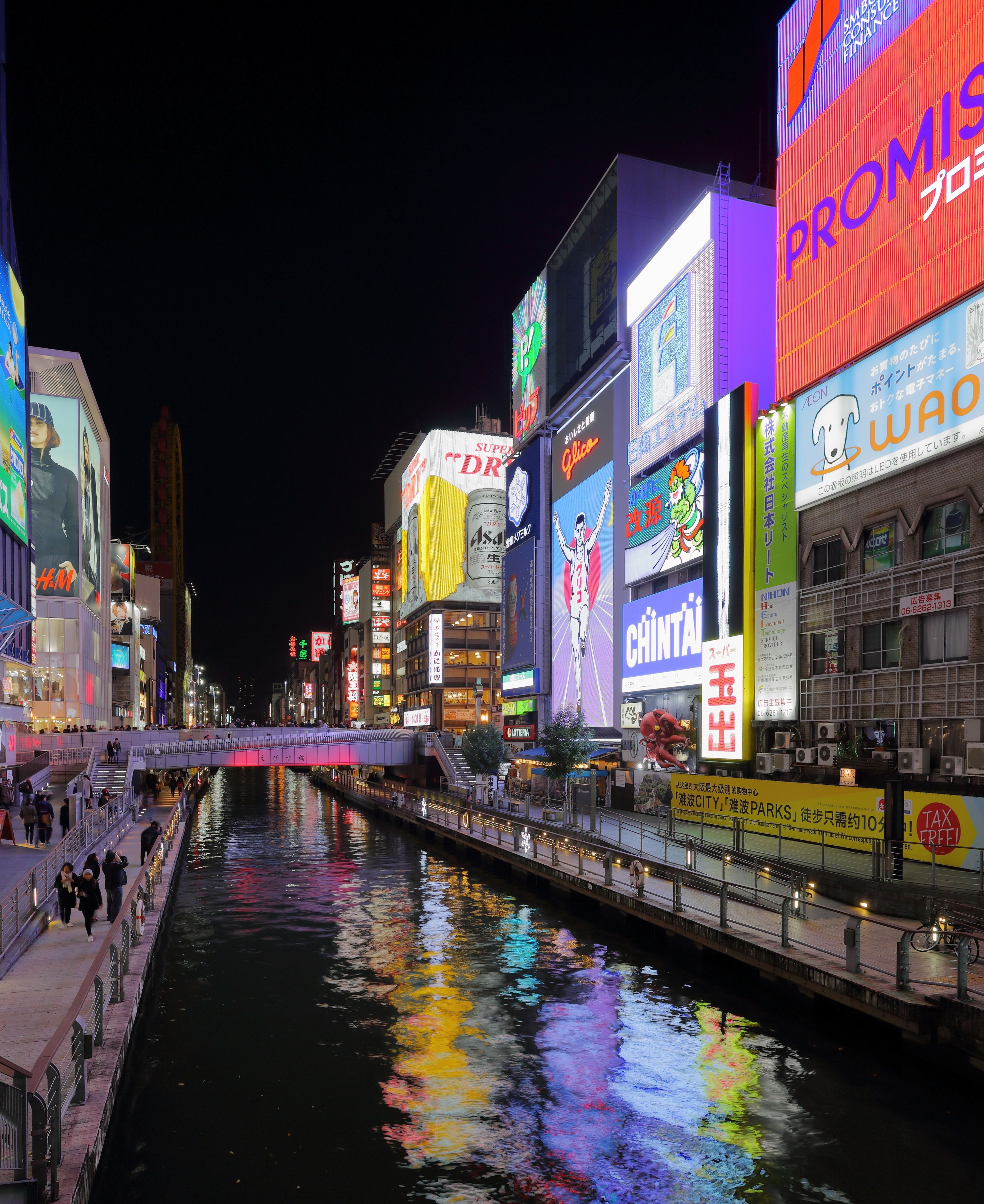
Dotonbori is the neon-drenched canal-side strip that appears on every Osaka postcard. The famous Glico Running Man sign, the giant mechanical crab, the enormous gyoza and takoyaki sculptures mounted on building facades — it’s sensory overload in the best possible way. Both sides of the canal, plus the connecting side streets, are packed with street food stalls and restaurants.
What to prioritize here: Takoyaki, okonomiyaki, gyoza, grilled seafood skewers, and cheesecake.
Insider tip: The main Dotonbori-suji strip is extremely tourist-heavy, and some stalls charge a premium for mediocre food. Duck into the narrow side streets (especially the alleys running south toward Namba) for better quality and lower prices. The parallel street one block south, Hozenji Yokocho, offers a completely different atmosphere — stone-paved, lantern-lit, and intimate.
Best time to walk through: After 5:00 PM when the neon lights are blazing and the energy peaks. Late night (after 10:00 PM) thins the crowds considerably.
2. Shinsekai (新世界)
The gritty, retro, deeply local neighborhood.
If Dotonbori is the tourist stage, Shinsekai is the authentic backstage. Built in 1912 as a “new world” entertainment district inspired by New York and Paris (hence the Tsutenkaku Tower, a nod to the Eiffel Tower), Shinsekai fell into rough decline for decades before being rediscovered. Today it retains a gloriously retro, slightly rough-around-the-edges charm that makes it feel like stepping into 1960s Osaka.
What to prioritize here: Kushikatsu (this is its birthplace — you must eat it here), doteyaki (beef tendon simmered in miso), and cheap beer. Kushikatsu shops line both sides of the main strip, with their signature angry-faced mascots warning you not to double-dip.
Insider tip: Visit Shinsekai for a late lunch (2:00–3:00 PM) to avoid the worst crowds. The area is compact — you can walk the entire district in 20 minutes. Combine with a trip up Tsutenkaku Tower for views and a visit to Spa World nearby.
3. Kuromon Market (黒門市場)
Osaka’s kitchen — the traditional covered market.
Known as “Osaka’s Kitchen,” Kuromon Ichiba is a 600-meter covered market that has served the city’s chefs and home cooks for nearly 200 years. While it has become increasingly tourist-oriented in recent years (with prices to match), it remains the best place to eat incredibly fresh seafood street-food-style.
What to prioritize here: Sashimi on a stick, grilled king crab legs, sea urchin (uni), fried fish cakes, fresh fruit, and tamagoyaki (Japanese rolled omelet).
Insider tip: Go early. I mean it — arrive by 9:00 AM. By 11:00 AM, the narrow aisles become uncomfortably packed with tour groups. Early morning also gets you the freshest seafood. Note that some stalls close by mid-afternoon, and most are closed on Sundays and holidays.
4. Ura-Namba (裏なんば)
The foodie’s secret south of Namba.
“Ura” means “behind” or “back,” and Ura-Namba refers to the tangle of narrow streets south and east of the main Namba entertainment district. This area has exploded over the past decade as young chefs and food entrepreneurs set up affordable, inventive shops. It’s still largely off the international tourist radar.
What to prioritize here: Modern takoyaki variations, craft beer with street food pairings, gyoza specialists, yakitori (grilled chicken skewers), and Korean-influenced street food.
Insider tip: Ura-Namba is best experienced on foot with no particular plan. Wander, follow the smoke and the lines, and eat what looks good. Friday and Saturday evenings are electric.
5. Tenjinbashisuji Shopping Street (天神橋筋商店街)
Japan’s longest shopping street — and a local street food treasure.
At 2.6 kilometers, Tenjinbashisuji is the longest shopping arcade in Japan. Unlike Dotonbori, this is where regular Osaka residents actually shop and eat. The food stalls and small restaurants here cater to locals, which means higher quality and lower prices.
What to prioritize here: Korokke (Japanese croquettes), takoyaki, taiyaki (fish-shaped pastries filled with sweet red bean or custard), cheap okonomiyaki, and kitsune udon (Osaka’s signature udon with sweet fried tofu).
Insider tip: Start at the southern end (near Minami-Morimachi Station) and walk north. The best food tends to cluster in the Tenma (天満) section, roughly in the middle. Visit Osaka Tenmangu Shrine while you’re in the area.
6. Amerikamura (アメリカ村) & Shinsaibashi-suji
Youth culture meets creative street food.
Amerikamura (America Village) is Osaka’s youth fashion and culture hub, a few blocks west of Shinsaibashi-suji shopping arcade. The street food here tends toward creative, Instagram-friendly fusion — but don’t dismiss it. Some of the city’s most inventive takoyaki variations and sweets are found here.
What to prioritize here: Creative takoyaki, crêpes, bubble tea, soft-serve ice cream in seasonal flavors, and fusion snacks.
Insider tip: The small triangular park in the center of Amerikamura is the cultural heart of the neighborhood. Grab street food and people-watch. Shinsaibashi-suji, the long covered shopping arcade running north-south, has plenty of food options at its southern end near Dotonbori.
7. Tsuruhashi (鶴橋)
Osaka’s Korea Town — a different kind of street food.
Just east of central Osaka, Tsuruhashi is home to one of Japan’s largest Korean communities. Exit the JR or Kintetsu station and you’ll immediately be engulfed by the smell of grilling meat. The covered market here is a labyrinth of yakiniku (Korean BBQ) shops, kimchi vendors, and stalls selling hotteok (sweet Korean pancakes), tteokbokki (spicy rice cakes), and Korean fried chicken.
What to prioritize here: Yakiniku (you can get exceptional quality for ¥1,000–2,000), fresh kimchi to take home, Korean street food snacks, and horumon (grilled organ meats — an Osaka specialty).
Insider tip: The market area closest to the station is the most atmospheric. Some shops are cash-only. Lunchtime on weekdays is the best time for a relaxed visit.
Best Time to Visit for the Best Street Food Experience
Month-by-Month Breakdown
Osaka street food is available year-round, but seasonal ingredients and weather significantly affect the experience.
January–February: Cold weather makes hot street food taste incredible. This is peak oden season (a hot pot of fishcakes, daikon, and boiled eggs sold at convenience stores and street stalls). Hot takoyaki, steaming butaman, and warm amazake (sweet rice drink) at shrines. New Year period (Jan 1–3) means many shops close, so plan accordingly. By mid-January, most are back to normal.
March–April: Cherry blossom season (typically late March to early April in Osaka, peaking around April 1–7). Street food vendors set up temporary stalls in parks like Osaka Castle Park, Kema Sakuranomiya Park, and along the Okawa River. Seasonal specialties include sakura mochi (cherry blossom rice cakes) and strawberry-flavored everything.
May–June: Pleasant temperatures before the humid rainy season (tsuyu, typically mid-June to mid-July). Late May is excellent — comfortable weather, manageable crowds, and fresh spring ingredients. Green tea (matcha) seasonal items peak in May.
July–August: Hot, humid, and crowded — but also festival season. The Tenjin Matsuri (July 24–25) is one of Japan’s top three festivals, and the surrounding streets fill with food stalls (yatai). Summer specialties include kakigori (shaved ice), cold kitsune udon, and beer. Lots of beer. Street food hours extend late into the evening.
September–October: September is still warm and typhoon-prone, but October is arguably the single best month to visit. The heat breaks, autumn ingredients arrive (sweet potato, chestnut, mushroom, Pacific saury), and crowds are moderate. Halloween festivities in Dotonbori in late October bring wild energy and themed food.
November–December: Autumn leaves peak around late November. Winter illuminations light up Midosuji Boulevard and Nakanoshima. Year-end food markets (toshikoshi) at Kuromon Market are spectacular but absurdly crowded on December 30–31. December street food highlights include atsukan (hot sake) and seasonal oden.
My recommendation: Late October to mid-November offers the best combination of weather, seasonal ingredients, and manageable crowds. For pure atmosphere, Golden Week (late April to early May) and festival season (July) are unbeatable, but expect significant crowds.
How to Order and Eat: A Practical Guide for First-Timers
Basic Ordering
Most Osaka street food stalls are remarkably easy to navigate, even with zero Japanese.
- Look at the display or photos. Almost every stall has pictures or plastic food models showing what’s available with prices clearly marked.
- Point and say the number. Hold up fingers or say “hitotsu” (one), “futatsu” (two), “mittsu” (three). Or simply point and say “kore kudasai” (“this one, please”).
- Pay. Most stalls are cash-only. Have coins and ¥1,000 bills ready. Some newer stalls accept IC cards (Suica/ICOCA) or QR payments, but don’t count on it. Carry at least ¥5,000–10,000 in cash for a street food day.
- Wait. Many items are made to order. Takoyaki takes 8–12 minutes. Be patient — it’s worth it.
Eating Etiquette
- Walking and eating (arukitabere) is technically frowned upon in Japanese culture, though it’s increasingly common in tourist areas like Dotonbori. The polite approach: buy your food, step to the side or find a bench, eat, dispose of your trash properly, and move on.
- There are almost no public trash cans in Japan. Carry a small plastic bag for your garbage, or return wrappers and containers to the stall where you bought them.
- The kushikatsu double-dip rule is real. Dip your skewer in the communal sauce once. Use the provided cabbage to scoop additional sauce if needed.
- Takoyaki is served nuclear-hot. The inside of a freshly cooked takoyaki ball can exceed 100°C. Do not pop a whole one in your mouth. Bite carefully, blow on it, and expect to wait a minute or two before eating.
- Saying “oishii!" (delicious!) or “gochisousama deshita” (thank you for the meal, said when finished) will earn you genuine smiles.
Dietary Restrictions
Street food in Osaka is challenging for vegetarians and vegans. Dashi (fish stock) is in almost everything, including okonomiyaki batter. Kushikatsu is inherently meat/seafood-based. Your best options:
- Vegetarian: Seek out vegetable kushikatsu (available at some stalls), taiyaki, and fruit stalls at Kuromon Market. Some newer shops in Ura-Namba cater to vegetarians.
- Halal: A small but growing number of halal-certified street food vendors exist in Dotonbori and Namba. Search “halal food Osaka” in Google Maps for current options.
- Allergies: Wheat (flour) and shellfish are in nearly everything. Egg allergies also make most konamon off-limits. If you have serious allergies, carry an allergy card in Japanese (free printable versions are available online) and show it to vendors.
Price Guide: What to Expect
Osaka street food is famously affordable. Here’s what a typical day of eating looks like:
Budget (¥2,000–3,500 / ~$14–25 for a full day)
- Takoyaki: 8 pieces for ¥500–700
- Kushikatsu: 5 skewers for ¥500–800
- Okonomiyaki: ¥600–900 for a basic pork version
- Butaman: ¥200–400 per bun
- Drinks: Canned beer from a konbini (convenience store) ¥200–250
This is entirely realistic. You can eat extremely well in Osaka for under ¥3,000 a day if you stick to stalls and standing counters.
Mid-Range (¥4,000–7,000 / ~$28–50)
- Higher-end takoyaki with premium octopus: ¥800–1,000
- Full okonomiyaki meal at a sit-down griddle restaurant: ¥1,200–1,800
- Kushikatsu course with beer: ¥2,000–3,000
- Sashimi and grilled seafood at Kuromon Market: ¥1,500–3,000
- Seasonal specialties and desserts: ¥500–1,000
Splurge (¥8,000–15,000+ / ~$55–105)
- High-end teppanyaki okonomiyaki with wagyu beef: ¥3,000–5,000
- Premium sushi counter near Kuromon: ¥5,000–10,000
- Full yakiniku dinner in Tsuruhashi with premium cuts: ¥4,000–8,000
- Sake pairing with street food: ¥3,000–5,000
Tipping is not practiced in Japan. Don’t do it — it can cause confusion or embarrassment.
Nearby Sights to Combine with Your Food Trip
A major advantage of Osaka’s street food districts is that they’re woven into the city’s best sightseeing areas.
Dotonbori + Hozenji Temple
After eating in Dotonbori, walk one block south to Hozenji Temple, a tiny moss-covered temple tucked in an atmospheric alleyway. Splash water on the moss-draped Fudo Myo-o statue and make a wish. The contrast between the neon chaos of Dotonbori and this tranquil pocket is quintessentially Osaka.
Shinsekai + Tsutenkaku Tower + Tennoji Park
Eat kushikatsu in Shinsekai, then walk to Tsutenkaku Tower (¥900 for the observation deck). Afterward, stroll through Tennoji Park and visit the excellent Osaka City Museum of Fine Arts or Tennoji Zoo. The Abeno Harukas building (Japan’s tallest skyscraper at 300 meters) is a 10-minute walk south — the observation deck offers panoramic views.
Kuromon Market + Nipponbashi (Den Den Town)
After breakfast at Kuromon, walk east to Nipponbashi, Osaka’s answer to Tokyo’s Akihabara. Electronics, anime, manga, retro games, and maid cafes line the street. A great pairing of food culture and pop culture.
Tenjinbashisuji + Osaka Castle
From the northern end of the shopping street, Osaka Castle is a 20-minute walk east. The castle grounds are especially beautiful during cherry blossom season and autumn foliage. The castle interior houses a museum of Osaka’s history, with excellent English explanations.
Tsuruhashi + Ikuno Korea Town
Beyond the market area at Tsuruhashi Station, the broader Ikuno Korea Town extends along Miyuki-dori street. This is one of Japan’s most vibrant multicultural neighborhoods, with murals, bilingual signage, and an energy unlike anywhere else in Osaka.
Getting There & Around
Getting to Osaka
From Tokyo: The Shinkansen (bullet train) from Tokyo Station to Shin-Osaka Station takes approximately 2 hours 30 minutes on the Nozomi (¥13,870 one-way, not covered by Japan Rail Pass) or 2 hours 50 minutes on the Hikari (covered by JR Pass). Budget airlines (Peach, Jetstar) fly from Narita/Haneda to Kansai International Airport (KIX) for as low as ¥4,000–8,000 if booked early.
From Kyoto: JR Special Rapid train from Kyoto Station to Osaka Station takes 29 minutes (¥580). The Hankyu Railway from Kawaramachi to Umeda takes about 45 minutes (¥410). Osaka is an easy day trip from Kyoto, or vice versa.
From Kansai International Airport: The Nankai Rapi:t express reaches Namba in 38 minutes (¥1,450). The JR Haruka express reaches Tennoji in 30 minutes or Shin-Osaka in 50 minutes (¥1,210–2,380 depending on seat class).
Getting Around Osaka
Osaka’s Metro system is efficient, clean, and covers all the major food districts:
- Dotonbori: Namba Station (Midosuji, Sennichimae, Yotsubashi lines) or Nipponbashi Station (Sakaisuji, Sennichimae lines)
- Shinsekai: Dobutsuen-mae Station (Midosuji, Sakaisuji lines)
- Kuromon Market: Nipponbashi Station (Sakaisuji line)
- Tenjinbashisuji: Tenjinbashisuji-Rokuchome Station (Tanimachi, Sakaisuji lines)
- Tsuruhashi: Tsuruhashi Station (JR, Kintetsu, Sennichimae line)
- Amerikamura: Shinsaibashi Station (Midosuji line)
The Osaka Amazing Pass (1-day: ¥2,800 / 2-day: ¥3,600) includes unlimited subway and bus rides plus free admission to 40+ attractions including Tsutenkaku Tower. Excellent value if you’re combining food with sightseeing.
Walking is the best way to food-hop. Dotonbori, Amerikamura, Shinsaibashi, Ura-Namba, and Hozenji are all within a 15-minute walk of each other. Wear comfortable shoes.
Where to Stay
For maximum street food access, stay in the Namba/Shinsaibashi area. You’ll be walking distance to Dotonbori, Ura-Namba, Amerikamura, Kuromon Market, and Shinsekai. This is the beating heart of Osaka’s food culture.
Budget: Capsule hotels and hostels in Namba start around ¥3,000–5,000/night. Many hostels have kitchens if you want to bring back market finds.
Mid-Range: Business hotels in the Namba/Shinsaibashi corridor typically run ¥8,000–15,000/night. Look for properties along Midosuji Boulevard for easy metro access.
Upscale: The Shinsaibashi and Kitahama areas have premium hotels starting around ¥25,000/night, often with views over the city.
👉 Book your Osaka accommodation early if visiting during cherry blossom season (late March–early April), Golden Week (April 29–May 5), or autumn leaves (mid-November). These periods sell out weeks in advance.
Local Tips: Things Only Residents Know
1. The best takoyaki is not on Dotonbori’s main strip. The stalls with the biggest signs and the most aggressive hawkers are often the most average. Look for stalls with long lines of Japanese customers, especially in residential neighborhoods. The back streets near Tamade or along Tenjinbashisuji consistently deliver superior takoyaki at lower prices.
2. Eat okonomiyaki on weekday lunchtimes. Popular griddle restaurants have 30–60 minute waits on weekends. Visit the same places Tuesday through Thursday for lunch and you’ll often walk right in.
3. Convenience store food is legitimately excellent. I know this sounds blasphemous in a street food guide, but Osaka’s konbini (7-Eleven, Lawson, FamilyMart) stock regional items you won’t find in Tokyo locations. Look for Osaka-exclusive onigiri flavors, local brand snacks, and surprisingly good oden in winter.
4. The Nankai Namba Station basement food hall (Namba City and Namba Parks) is where office workers eat lunch. High quality, reasonable prices, zero tourists. Explore the B1 and B2 floors.
5. Follow the smoke. In Osaka, if you see a column of charcoal smoke rising from a narrow alley, follow it. It’s almost always someone grilling something wonderful.
6. Lunchtime teishoku (set meals) at street food shops are incredible deals. Many kushikatsu and okonomiyaki shops offer lunch sets for ¥700–1,000 that would cost ¥1,500+ at dinner.
7. ICOCA is the local IC card (equivalent to Tokyo’s Suica). Load one up at any station and use it for trains, convenience stores, vending machines, and many food stalls. It saves the fumbling-for-coins routine that slows down ordering.
8. Check closing days. Many small stalls and shops close on Wednesdays or Thursdays (it varies). Kuromon Market is significantly reduced on Sundays. A quick Google Maps search showing “open now” saves you from disappointment.
Frequently Asked Questions
Is Osaka street food safe to eat?
Yes, extremely safe. Japan has some of the strictest food hygiene standards in the world, and this extends to street stalls. Food poisoning from street food in Osaka is exceptionally rare. Standard precautions apply: eat items that are freshly prepared in front of you, and consume them promptly.
How much money should I budget for a day of street food in Osaka?
Bring ¥5,000–7,000 in cash for a full day of comfortable eating across multiple districts. This allows for 5–8 different items plus drinks. You can do it for less (¥2,000–3,000) if you’re selective, or spend more if you add seafood at Kuromon Market or yakiniku in Tsuruhashi.
Can I do Dotonbori and Shinsekai in one day?
Absolutely. They’re connected by the Sakaisuji subway line (Nipponbashi to Dobutsuen-mae, one stop) or about a 25-minute walk. A good strategy: Shinsekai for a late lunch of kushikatsu, then walk or ride to Dotonbori for an evening of takoyaki, okonomiyaki, and neon-lit wandering.
Is Osaka street food suitable for vegetarians?
It’s challenging but improving. Most traditional items contain dashi (fish stock), meat, or seafood. Your best bets are vegetable kushikatsu (ask for yasai dake, vegetables only), taiyaki, sweet potato snacks, and fruit. Some newer establishments in Ura-Namba and Amerikamura offer explicitly vegetarian options. Veganism is harder — egg and dairy appear frequently.
What’s the difference between Osaka-style and Hiroshima-style okonomiyaki?
Osaka-style mixes all ingredients (batter, cabbage, meat, egg) together before cooking on the griddle. Hiroshima-style layers ingredients sequentially, with yakisoba noodles added in the middle, creating a taller, more structured pancake. Both are delicious. In Osaka, obviously, eat Osaka-style — you’ll find it everywhere.
Do I need to speak Japanese to order street food?
No. Pointing, holding up fingers for quantities, and basic English will get you through 95% of transactions. Useful phrases that help: “Kore kudasai” (this please), “Ikura desu ka?" (how much?), “Oishii!" (delicious!), and “Arigatou gozaimasu” (thank you very much). Most vendors in tourist areas understand basic English numbers and food names.
When are the street food stalls open?
Hours vary by district. Dotonbori stalls typically open by 11:00 AM and many stay open until 10:00 PM–midnight. Kuromon Market opens around 8:00–9:00 AM and winds down by 4:00–5:00 PM. Shinsekai is mainly a lunch-through-dinner area (11:00 AM–9:00 PM). Ura-Namba and Tsuruhashi are busiest from late afternoon through evening. Holiday periods and festival days extend hours significantly.
*Osaka doesn’t just feed you — it feeds your soul. Take your time, eat slowly (except when it’s kushikatsu, then eat at whatever speed brings you joy), talk to the vendors, and embrace the beautiful, greasy, sauce-covered chaos of