Osaka Street Food Guide: Dotonbori, Shinsekai & the Best Eats in Japan’s Kitchen
There is a word in Osaka that tells you everything you need to know about this city’s relationship with food: kuidaore (食い倒れ), which translates roughly to “eat until you drop.” No other city in Japan wears its appetite so proudly. If you’re searching for a comprehensive Osaka street food guide covering Dotonbori, Shinsekai, and the best eats across the city, you’ve come to the right place — because after fifteen years of living in Japan and making countless trips to Osaka with an empty stomach and a full sense of adventure, I can tell you with absolute certainty: this is the greatest street food city in Asia.
Osaka isn’t subtle about its food obsession. The neon glow of Dotonbori’s giant mechanical crab, the smell of sizzling batter drifting through Shinsekai’s retro alleyways, the sound of vendors shouting “irasshaimase!” at Kuromon Market at seven in the morning — eating here isn’t just a meal, it’s a full sensory immersion. Tokyo may have the most Michelin stars, Kyoto may have the most refined kaiseki, but Osaka owns the street. This is where Japanese comfort food was born, perfected, and served to you on a paper tray with a toothpick.
This guide will walk you through every district, every dish, every season, and every practical detail you need to eat your way through Osaka like someone who actually lives here.
The Food Explained: Why Osaka Became Japan’s Street Food Capital
A City Built on Commerce and Appetite
Osaka’s food identity goes back centuries. During the Edo period (1603–1868), Osaka served as Japan’s primary commercial hub — the “Kitchen of the Nation” (tenka no daidokoro). Rice, soy sauce, kelp, dried bonito, and seafood from across Japan flowed into Osaka’s merchant warehouses. With access to the finest raw ingredients in the country, the city’s food culture exploded. But unlike the aristocratic cuisine of Kyoto or the samurai-influenced food of Tokyo, Osaka’s food was made by merchants and working people, for merchants and working people. It was affordable, fast, hearty, and absolutely delicious.
This is the origin of Osaka street food. The city never developed the pretension that food needed to be expensive to be excellent. To this day, Osakans judge a restaurant not by its décor or its reputation, but by one merciless question: Is it oishii? Is it delicious?
The Holy Trinity: Takoyaki, Okonomiyaki, and Kushikatsu
Three dishes form the backbone of the Osaka street food experience:
Takoyaki (たこ焼き) — Spherical balls of wheat batter filled with diced octopus (tako), pickled ginger, green onion, and tenkasu (tempura scraps), cooked in specially molded cast-iron pans. The outside should be lightly crisp, the inside almost liquid and creamy. Topped with takoyaki sauce, Japanese mayonnaise, bonito flakes, and aonori (green seaweed powder). Every Osaka family owns a takoyaki pan. This is not a metaphor. They literally do.
Okonomiyaki (お好み焼き) — A savory pancake whose name means “grilled however you like it.” The Osaka style (as opposed to the Hiroshima style) mixes shredded cabbage, batter, egg, and your choice of toppings (pork belly, shrimp, squid, cheese, mochi) together before cooking on a flat griddle. It’s slathered with okonomiyaki sauce, mayo, bonito flakes, and aonori. In Osaka, many places let you cook it yourself on a teppan (hot plate) built into your table.
Kushikatsu (串カツ) — Deep-fried skewered meat, seafood, and vegetables dipped in a light panko-style breadcrumb coating. Originated in Shinsekai in the 1920s and remains one of the neighborhood’s defining dishes. The cardinal rule of kushikatsu, posted in every shop and enforced with genuine seriousness: No double-dipping. The communal sauce trough is shared, so you dip once and only once. If you need more sauce, use the provided cabbage leaf to scoop sauce onto your skewer.
Beyond the Big Three
Osaka’s street food goes far deeper:
- Negiyaki — A thinner, green onion-heavy cousin of okonomiyaki, often made with soy sauce instead of the sweeter brown sauce
- Ikayaki (イカ焼き) — Not grilled squid (as in other parts of Japan), but a pressed squid pancake unique to Osaka, famously sold in the basement of Hanshin Department Store
- Butaman (豚まん) — Osaka’s version of Chinese steamed pork buns, larger and juicier than what you’ll find elsewhere
- Kitsune udon — Osaka-style udon in a delicate, kelp-heavy dashi broth topped with sweet fried tofu; Osaka’s broth is lighter in color and more umami-forward than Tokyo’s soy-heavy version
- Tamagoyaki (on a stick) — Japanese rolled omelet served as a street snack, especially common at markets
- Gyoza — Pan-fried dumplings with thin, crispy wings, sold from tiny storefronts
- Yaki-imo — Roasted sweet potatoes sold from trucks in autumn and winter, one of Japan’s most underrated seasonal street foods
Best Places to Eat: Osaka’s Street Food Districts
1. Dotonbori — The Iconic Neon Food Carnival
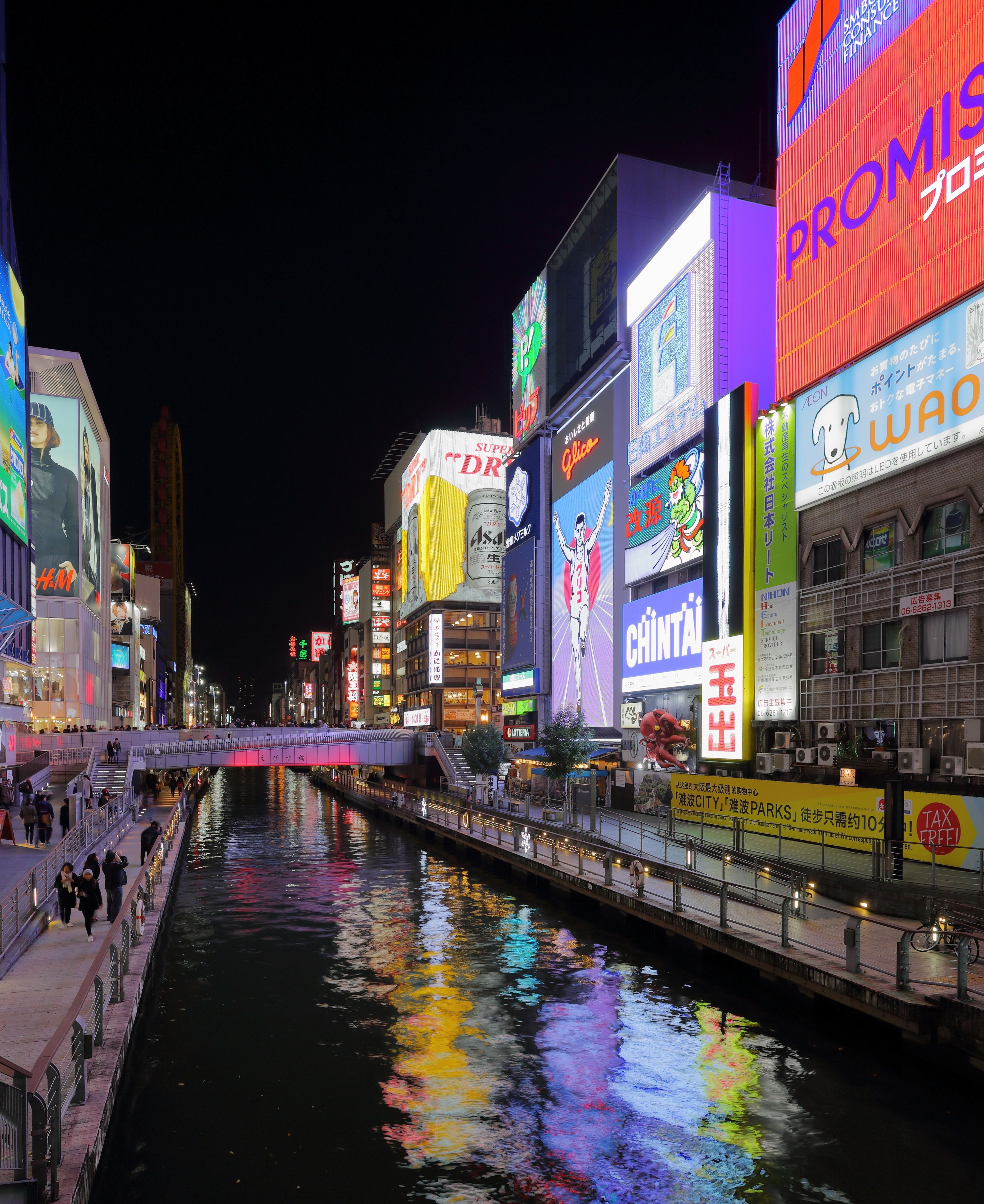
Dotonbori is the beating heart of Osaka street food culture and the image that appears on every travel poster. The canal-side boulevard stretches roughly 600 meters along the Dotonbori River, lined with towering neon signs, mechanical billboards (look for the famous Glico Running Man), and an overwhelming concentration of food stalls and restaurants.
What to eat here: Takoyaki, okonomiyaki, gyoza, ramen, kushikatsu, crab, and grilled seafood on sticks.
The experience: Walk the main strip slowly, especially after dark when the neon reflects off the canal. The side streets (especially Hozenji Yokocho, a tiny atmospheric lantern-lit alley with a moss-covered Buddhist statue) offer more intimate dining. Dotonbori is touristy, yes — but it’s also genuinely where Osakans go to eat. The key is to wander off the main drag into the perpendicular alleys where the quality jumps and the prices drop.
Local tip: The takoyaki stands along the canal are convenient, but locals often prefer the vendors one block north or south of the main strip. Follow the lines — in Osaka, a queue almost always means quality.
2. Shinsekai — Retro Osaka and the Birthplace of Kushikatsu
Shinsekai (“New World”) is Osaka’s most character-rich neighborhood. Built in 1912 as a futuristic entertainment district modeled on Paris and New York (the Tsutenkaku Tower was inspired by the Eiffel Tower), Shinsekai declined through the mid-20th century and became rough around the edges. Today it’s been revitalized while retaining a gloriously retro atmosphere — think vintage signage, billiards halls, shogi parlors, and the densest concentration of kushikatsu restaurants in existence.
What to eat here: Kushikatsu is the undisputed star. Also look for doteyaki (beef tendon stewed in miso), cheap beer sets with snacks, and horn-shaped cream-filled pastries.
The experience: The streets around Tsutenkaku Tower are packed with kushikatsu joints, many open from late morning. The area has a working-class warmth that feels completely different from polished Dotonbori. Visit during late afternoon when the neighborhood transitions from daytime sightseeing to evening drinking — the golden hour light hitting the Tsutenkaku Tower while you eat kushikatsu with a cold beer is peak Osaka.
Local tip: Don’t overlook the adjacent Jan Jan Yokocho (ジャンジャン横丁), a narrow covered arcade south of the main Shinsekai area. It’s grittier, less tourist-oriented, and has some of the cheapest, most authentic kushikatsu in the city.
3. Kuromon Market — “Osaka’s Kitchen”
Kuromon Ichiba Market has served Osaka’s restaurant industry for nearly 200 years. The 600-meter covered arcade houses roughly 150 shops selling the freshest seafood, meat, produce, tofu, pickles, and prepared street food in the city.
What to eat here: Fresh sashimi (tuna, sea urchin, scallops), grilled seafood on sticks, tamagoyaki, fresh fruit on sticks (especially strawberries and melon), mochi, and seasonal specialties.
The experience: Arrive early (before 9:00 AM) to see the market functioning as an actual market for chefs and locals, not just tourists. Many vendors offer eat-while-you-stand seafood — a skewer of giant grilled scallops or a small cup of fresh uni (sea urchin) eaten right at the counter.
Local tip: Kuromon’s prices have risen significantly in recent years due to tourism. For better value, skip the premium seafood counters right at the main entrance and walk deeper into the market where prices are more reasonable and portions are more generous. Also, the market’s tofu and pickle shops are often overlooked by visitors but offer incredible products.
4. Tenma / Tenjinbashisuji — The Local’s Choice
Tenjinbashisuji Shopping Street is the longest covered shopping arcade in Japan at 2.6 kilometers, and the surrounding Tenma area (especially around Tenma Station and Ogimachi) is one of Osaka’s most vibrant local food neighborhoods. This is where Osakans eat when they’re not performing for tourists.
What to eat here: Takoyaki (some locals argue the best in the city is here, not Dotonbori), okonomiyaki, udon, yakitori, and an enormous variety of izakaya food.
The experience: Less crowded, more local, more varied. The area around JR Tenma Station transforms into a massive open-air drinking and eating scene in the evenings, with tiny bars and food stalls spilling onto the streets. Tenjinbashisuji itself is lined with affordable food shops perfect for grazing.
Local tip: The area called “Ura-Tenma” (裏天満, “behind Tenma”) refers to the dense network of tiny bars and restaurants east of the shopping arcade. It’s become one of Osaka’s hottest food scenes among locals, particularly for natural wine, craft beer, and creative small-plate dining.
5. Amerikamura & Namba Area — Youth Culture Meets Street Food
Amerikamura (“American Village”) is Osaka’s answer to Harajuku — a youthful fashion district just west of Shinsaibashi. The surrounding Namba area, including Namba Parks and the streets around Namba Station, offers a huge variety of street food with a younger, trendier energy.
What to eat here: Creative takoyaki variations, crêpes, Korean street food, bubble tea, and Instagram-worthy sweets. This is where you’ll find fusion experiments and seasonal limited-edition offerings.
Local tip: The triangle park (Sankaku Koen) in Amerikamura is a good people-watching spot, and several beloved takoyaki stands are within a two-minute walk.
6. Tsuruhashi — Korea Town and Yakiniku Heaven
Tsuruhashi, directly southeast of central Osaka, is home to Japan’s largest Koreatown. The Tsuruhashi Market and surrounding streets form a labyrinthine network of yakiniku (grilled meat) restaurants, kimchi shops, Korean street food stalls, and spice vendors.
What to eat here: Yakiniku (especially horumon — offal cuts), kimchi, Korean fried chicken, tteokbokki, and pajeon (Korean savory pancakes). The quality of meat here is extraordinary, and prices are significantly lower than in more central areas.
Local tip: The covered market area can be disorienting — embrace it. Some of the best yakiniku joints are the smallest, most hidden ones. If smoke is billowing from the doorway and you can hear sizzling from the street, go in.
7. Nakazakicho — The Hipster Food Village
A ten-minute walk from Umeda Station, Nakazakicho is a quiet residential neighborhood where old wooden machiya townhouses have been converted into cafés, bakeries, and tiny restaurants. It’s the opposite of Dotonbori’s chaos.
What to eat here: Artisan coffee, handmade sweets, organic bento, craft beer, and creative seasonal small plates.
Local tip: This neighborhood is perfect for a morning or early afternoon food crawl before heading to the more intense street food districts in the evening. Combine it with a visit to nearby Tenjinbashisuji.
Best Time to Visit for the Best Street Food Quality
Osaka is a year-round street food destination, but seasons dramatically affect what’s available and how enjoyable the eating experience is.
Month-by-Month Breakdown
January–February: Cold weather is peak kushikatsu season — the hot, crispy skewers are perfect when the temperature drops to 2–7°C. This is also prime oden season (fishcakes and vegetables simmered in dashi broth, sold from convenience stores and street stalls). Look for seasonal fugu (blowfish) in Shinsekai. Winter strawberries (ichigo) appear at Kuromon Market and are outrageously good.
March–April: Cherry blossom season (typically peaking in Osaka around March 28–April 5) transforms street food culture. Vendors set up around parks like Osaka Castle and Kema Sakuranomiya, selling hanami (flower-viewing) snacks: yakitori, yakisoba, dango, and beer. Spring seasonal ingredients like bamboo shoots (takenoko) and spring cabbage make okonomiyaki particularly good.
May–June: Pleasant weather before the rainy season (tsuyu, usually mid-June to mid-July). Octopus quality is excellent in spring, making this prime takoyaki season. Fresh green tea from the spring harvest appears in desserts across the city.
July–August: Hot, humid summers (35°C+) shift street food toward cold dishes: kakigori (shaved ice), cold udon, and refreshing fruit. The Tenjin Matsuri festival (July 24–25) is one of Japan’s biggest, with massive food stall setups along the river. Be prepared to sweat but also to encounter an extraordinary festival food atmosphere.
September–October: Autumn brings comfortable temperatures and arguably the best food season. Sanma (Pacific saury), matsutake mushrooms, sweet potatoes (yaki-imo), and new-crop rice elevate everything. The autumn appetite (shokuyoku no aki — “autumn of appetite”) is real in Osaka.
November–December: Crab season begins (November), and Dotonbori’s famous mechanical crab sign takes on special meaning. Kushikatsu and oden hit their stride. December brings year-end food markets and holiday street food scenes. Kuromon Market is spectacularly busy in the last week of December as families shop for New Year’s (osechi) ingredients.
How to Order and Eat Osaka Street Food: A Practical Guide
The Basics
Ordering at stalls: Most street food stalls have picture menus or plastic food displays (sampuru). Point and hold up fingers to indicate quantity. Many stalls in Dotonbori and Shinsekai now have English menus or at least English labels.
Payment: Cash is still king at many stalls and small restaurants, though IC cards (Suica, ICOCA, Pasmo) and increasingly PayPay (a QR payment app) are accepted at larger establishments. Carry at least ¥5,000 in small bills and coins.
Eating etiquette:
- Eat at the stall or in designated areas. Walking and eating (aruki-gui) is increasingly common in tourist areas but is technically considered poor manners in Japan. When possible, stand near the stall to eat and dispose of your trash there.
- Use the provided toothpicks for takoyaki. Do not bite directly into a fresh takoyaki — the inside is molten hot and will burn your mouth. Experienced eaters break them open slightly with the toothpick to let steam escape.
- Remember the kushikatsu rule: No double-dipping in the communal sauce. Dip once, or use the cabbage leaf to add more sauce.
- Slurping noodles is fine and expected. It’s not rude — it actually cools the noodles and is considered a sign of enjoyment.
Useful Japanese Phrases
| English | Japanese | Pronunciation |
|---|---|---|
| One (order), please | ひとつください | Hitotsu kudasai |
| Two, please | ふたつください | Futatsu kudasai |
| This one, please | これください | Kore kudasai |
| Delicious! | おいしい! | Oishii! |
| No [ingredient], please | [ingredient] 抜きで | [ingredient] nuki de |
| How much? | いくらですか? | Ikura desu ka? |
| Thank you for the meal | ごちそうさまでした | Gochisousama deshita |
Saying “oishii!” to a street food vendor in Osaka will genuinely make their day. Osakans take enormous pride in their food.
Dietary Restrictions
Osaka street food is challenging for vegetarians and vegans. Takoyaki contains octopus, okonomiyaki almost always contains pork or seafood, kushikatsu is by definition meat/seafood, and most dashi broths use bonito (fish). However, options are slowly increasing:
- Some okonomiyaki shops offer vegetable-only versions (yasai okonomiyaki)
- Kuromon Market has fruit and tofu options
- Nakazakicho has several vegetarian-friendly cafés
- Halal and vegetarian-certified restaurants are growing, especially around Namba
For allergies, the phrase “[allergen] arerugii ga arimasu” (I have a [allergen] allergy) is useful, though carrying a printed allergy card in Japanese is more reliable.
Osaka Street Food Price Guide
One of Osaka’s greatest qualities is that extraordinary food is genuinely affordable. Here’s what to expect:
Budget (Under ¥1,000 per item)
- Takoyaki: ¥500–800 for 6-8 pieces
- Kushikatsu: ¥100–200 per skewer (a satisfying meal of 8-10 skewers runs ¥1,000–2,000)
- Ikayaki: ¥200–400
- Butaman (pork bun): ¥200–400
- Grilled skewers (Kuromon Market): ¥300–600
- Yaki-imo (roasted sweet potato): ¥200–500
Mid-Range (¥1,000–3,000)
- Okonomiyaki (full meal): ¥800–1,500 per pancake
- Ramen: ¥800–1,200
- Kitsune udon: ¥600–900
- Yakiniku set meal (Tsuruhashi): ¥1,500–3,000
- Sashimi plate (Kuromon Market): ¥1,000–3,000
Splurge (¥3,000+)
- Premium sashimi and uni at Kuromon Market: ¥3,000–6,000
- Fugu course (Shinsekai): ¥4,000–8,000
- Wagyu beef kushikatsu or yakiniku: ¥3,000–6,000+
- Full crab course (Dotonbori area): ¥5,000–15,000
A realistic daily food budget: You can eat spectacularly well in Osaka on ¥3,000–5,000 per day if you’re sticking to street food and casual restaurants. A splurge day with market seafood and yakiniku might run ¥8,000–12,000. Even then, it’s dramatically cheaper than equivalent quality food in most Western cities.
Nearby Sights to Combine with Your Osaka Street Food Trip
Osaka Castle (大阪城)
A 15-minute walk from Tenjinbashisuji or a short subway ride from Namba. The castle grounds are magnificent during cherry blossom season (late March–early April) and autumn foliage (mid-November to early December). Combine a morning castle visit with an afternoon of eating in Tenma or Dotonbori.
Sumiyoshi Taisha Shrine
One of Japan’s oldest and most important Shinto shrines, south of Shinsekai. The iconic arched bridge (taiko bashi) is stunning. Visit the shrine, then head north to Shinsekai for kushikatsu — a perfect half-day itinerary.
Tsutenkaku Tower
Right in the heart of Shinsekai, this retro observation tower (103 meters) gives you a panoramic view of the neighborhood where you’re about to eat. Go up for the view, come down for the kushikatsu.
Namba Yasaka Shrine
A striking shrine famous for its giant lion-head stage (ema-den), only a 10-minute walk from Dotonbori. It’s a great detour between eating stops.
Shitennoji Temple
Japan’s oldest officially commissioned Buddhist temple, founded in 593 AD. Located between Shinsekai and Tsuruhashi, it makes a natural stopping point on a south-Osaka food crawl. On the 21st of each month, a large flea market sets up in the temple grounds.
Day Trip: Nara (45 minutes by train)
Nara’s friendly bowing deer and magnificent Todaiji Temple are an easy day trip. Eat a massive Osaka breakfast, take the Kintetsu line to Nara, explore for a few hours, then return to Osaka for dinner in Dotonbori or Shinsekai.
Getting There and Around Osaka
Getting to Osaka
From Kansai International Airport (KIX):
- Nankai Rapi:t Express to Namba Station: 38 minutes, ¥1,450 — deposits you directly in the Dotonbori/Shinsekai action zone
- JR Haruka Express to Tennoji or Shin-Osaka: 35–50 minutes, covered by JR Pass
- Airport Limousine Bus to various hotels/stations: 50–70 minutes, ¥1,600
From Tokyo:
- Shinkansen (Tokaido line) to Shin-Osaka: 2 hours 22 minutes on Nozomi (¥13,870), 2 hours 37 minutes on Hikari (covered by JR Pass)
- Budget flights (Peach, Jetstar) to KIX: 1 hour 20 minutes, often ¥4,000–8,000 booked early
From Kyoto:
- JR Special Rapid to Osaka Station: 29 minutes, ¥580
- Hankyu Railway to Umeda: 43 minutes, ¥410
- Keihan Railway to Yodoyabashi/Kitahama: 50 minutes, ¥420
Getting Around Osaka
The Osaka Metro is clean, efficient, and connects all major food districts:
- Midosuji Line (red): The main artery — Shin-Osaka → Umeda → Shinsaibashi → Namba → Tennoji
- Sakaisuji Line (brown): Tenjinbashisuji-Rokuchome → Nipponbashi (for Kuromon Market) → Ebisucho (for Shinsekai)
Practical tips:
- Get an ICOCA card (Osaka’s IC transit card, works on all trains and many shops/vending machines) or use a Suica/Pasmo from Tokyo — they’re interchangeable
- The Osaka Amazing Pass (¥2,800 for 1 day) gives unlimited subway/bus rides plus free entry to 50+ attractions including Osaka Castle and Tsutenkaku Tower. Excellent value if you’re combining sightseeing with your food crawl.
- Most food districts are walkable from each other: Dotonbori to Shinsekai is about 25 minutes on foot through interesting neighborhoods, or one subway stop.
- Taxis are metered and honest but rarely necessary for the central food districts.
Where to Stay
For street food convenience, stay in the Namba/Shinsaibashi area. This puts you within walking distance of Dotonbori, Shinsekai, Amerikamura, and Kuromon Market. The Namba area has the highest concentration of accommodation options from hostels to luxury hotels.
Other great base options:
- Tennoji/Shinsekai area: Budget-friendlier, direct access to kushikatsu heaven, easy connections to the airport
- Tenma/Umeda area: Better for those wanting a local atmosphere, great food scene, major transport hub
- Shin-Osaka area: Ideal if arriving by shinkansen and prioritizing transport convenience
Booking tip: Reserve early if visiting during cherry blossom season (late March–early April), Golden Week (April 29–May 5), or autumn foliage season (November). Osaka hotel prices spike dramatically during these periods. Mid-week stays are typically 20-30% cheaper than weekends year-round.
👉 [Search Osaka hotels near Dotonbori and Namba for the best street food access]
Local Tips: Things Only Residents Know
-
The best takoyaki is not at the most famous shop. The longest line doesn’t always mean the best food — sometimes it just means the best marketing. Explore side streets and look for the stalls where older Osakans are lining up, not just tourists.
-
Lunch sets (ranchi setto) are insane value. Many okonomiyaki and kushikatsu restaurants offer lunch specials that are 30–50% cheaper than dinner prices for essentially the same food. Eat your biggest meal at lunch.
-
Convenience store food in Osaka is shockingly good. Lawson, FamilyMart, and 7-Eleven offer onigiri, fried chicken (karaage), oden, and seasonal sweets that rival some restaurants. A midnight convenience store run after a big evening in Dotonbori is an Osaka tradition nobody talks about.
-
Shinsekai is best on weekday afternoons. Weekend evenings are packed. Visit on a Tuesday or Wednesday afternoon for shorter lines and more elbow room at the kushikatsu counters.
-
Kuromon Market closes early. Most stalls start packing up by 4:00–5:00 PM, and some close even earlier. Go in the morning for the best selection and freshest product.
-
Don’t skip the department store basement (depachika). The food halls beneath Takashimaya (Namba), Daimaru (Shinsaibashi), and Hankyu (Umeda) are extraordinary. Free samples are generously offered, and the bento boxes, wagashi (Japanese sweets), and seasonal specialties are world-class. Discounts of 20-50% appear on prepared foods in the last hour before closing (typically 7:30–8:00 PM).
-
Osakans love to talk about food. If you express genuine enthusiasm about what you’re eating, vendors and fellow customers will often recommend their own favorites, sometimes drawing you maps on napkins. The warmth and humor of Osaka people is real and extends generously to visitors.
-
Tap water is safe and excellent. Save money by carrying a refillable bottle. Free water is provided at virtually every restaurant.
Frequently Asked Questions
Is Osaka street food safe for tourists?
Absolutely. Japan has some of the strictest food safety standards in the world, and Osaka is no exception. Street food stalls maintain high hygiene standards. Tap water is safe to drink. Food poisoning from street food in Osaka is extremely rare.
How many days do I need for an Osaka street food trip?
A minimum of two full days allows you to cover the major districts (Dotonbori, Shinsekai, Kuromon Market) without rushing. Three to four days lets you explore Tsuruhashi, Tenma, Nakazakicho, and take a day trip. Honestly, I’ve been visiting Osaka for fifteen years and I still discover new food neighborhoods.
Can I enjoy Osaka street food with dietary restrictions?
It’s challenging but improving. Vegetarians will struggle with the Big Three (takoyaki, okonomiyaki, kushikatsu all typically contain animal products), but markets offer fruit and tofu, and vegetarian-friendly restaurants are growing. Halal options are expanding, especially around Namba. For serious allergies or strict dietary requirements, carrying a translated allergy card in Japanese is strongly recommended.
What’s the single best food district for a first-time visitor?
Start with Dotonbori for the full sensory experience — it’s iconic for a reason. Then walk south to Shinsekai for kushikatsu and a completely different atmosphere. This Dotonbori-to-Shinsekai walk is the essential Osaka food pilgrimage.
Is it rude to eat while walking in Osaka?
Technically, yes — eating while walking (aruki-gui) is considered inconsiderate in Japanese culture because of the risk of spilling food on others and generating litter. In practice, tourist areas like Dotonbori are more relaxed about this. The polite approach is to eat standing near the stall where you purchased your food, dispose of your trash properly, and then move on.
When is the least crowded time to visit Dotonbori?
Weekday mornings and early afternoons (before 2:00 PM) are the quietest. Dotonbori peaks between 6:00 PM and 10:00 PM on weekends and holidays. For photos of the neon without enormous crowds, try a weeknight around 10:30–11:00 PM when many tourists have headed back to their hotels but the signs are still blazing.
Should I make reservations for street food in Osaka?
No — that’s the beauty of it. Street food is walk-up by nature. For sit-down okonomiyaki restaurants or popular yakiniku spots in Tsuruhashi, a reservation can help during peak dinner hours (6:00–8:00 PM on weekends), but the vast majority of eating in Osaka is wonderfully spontaneous. Show up hungry, follow your nose, and trust the city to feed you well. It always does.
Osaka doesn’t just feed you — it embraces you, laughs with you, and sends you home heavier and happier than when you arrived. There is no city in the world where eating is more joyful. Go hungry. Stay curious. Eat everything.