Shikoku · Guide de la Préfecture

Guide de voyage à Ehime

Le plus ancien établissement de bains thermaux du Japon, un château perché sur une colline avec ses donjons d'origine, la plus belle route cyclable au monde et des vergers d'agrumes qui dévalent jusqu'à une mer turquoise

♨️ Dogo Onsen — Le Plus Ancien Onsen du Japon🏯 Château de Matsuyama (Donjon d'Origine)🚴 Route Cyclable de Shimanami Kaido🍊 Oranges Mikan — Premier Producteur du Japon🏘️ Ozu — Le Petit Kyoto de Shikoku

🗾 À propos de Ehime

Ehime est l'endroit où le plus ancien établissement de bains thermaux du Japon s'imprègne de 3 000 ans d'histoire, où un véritable château à donjon d'origine couronne une colline au cœur d'une ville, et où une chaîne d'îles reliées par d'élégants ponts suspendus est devenue la route cyclable la plus célèbre au monde. Dogo Onsen Honkan — le grinçant établissement de bains de l'ère Meiji largement considéré comme l'inspiration du film d'animation Le Voyage de Chihiro du Studio Ghibli — se trouve au cœur de la ville de Matsuyama, entouré d'auberges traditionnelles et de bars à saké. À soixante kilomètres à l'ouest, le Shimanami Kaido s'étend sur six îles et cinq ponts maritimes entre Imabari et Onomichi, offrant aux cyclistes et motocyclistes une route d'une beauté extraordinaire. Au sud, le château d'Ozu avec son pont de vigne et sa tradition de pêche au cormoran semblent totalement coupés du Japon moderne.

🌏
Localisation
Nord-ouest de Shikoku, face à la mer intérieure de Seto et à la mer d'Uwa
🗣️
Langue
Japonais (anglais dans les sites touristiques de Matsuyama ; Dogo Onsen dispose d'un personnel multilingue)
💴
Monnaie
Yen japonais (JPY) — cartes IC dans les villes ; espèces pour les ryokan ruraux et les petits commerces
🕐
Fuseau horaire
JST (UTC+9) — pas d'heure d'été
🌡️
Meilleure saison
Printemps (mars–mai) et automne (oct.–nov.) pour le vélo ; hivers doux pour les onsen
✈️
Aéroports les plus proches
Aéroport de Matsuyama (MYJ) · Takamatsu (TAK) 1h30 · Hiroshima (HIJ) via ferry/pont
🚌
Déplacements
Ligne JR Yosan · Tramway Iyotetsu à Matsuyama · vélo/voiture de location pour le Shimanami Kaido
Prise électrique
Type A, 100V / 50Hz

✈️ Comment s'y rendre

Matsuyama est la principale porte d'entrée, desservie par l'aéroport de Matsuyama avec des vols directs depuis Tokyo Haneda, Osaka et Nagoya. Le Shimanami Kaido part d'Imabari (40 min depuis Matsuyama en JR) ou du côté d'Onomichi dans la préfecture d'Hiroshima. Des liaisons en ferry relient Matsuyama à Hiroshima et Oita (Kyushu).

✈️ Depuis Tokyo (Haneda)
  • Vol vers l'aéroport de Matsuyama (MYJ) — ANA/JAL direct : 1h20. À partir de ¥12,000 (tarif promotionnel). Bus de l'aéroport vers le centre-ville de Matsuyama : 15 min, ¥480.
  • Shinkansen + train — Tokyo à Okayama (3h15), express limité jusqu'à Matsuyama (~2h30). Total ~6h. Couvert par le JR Pass.
🚄 Depuis Osaka / Hiroshima
  • JR depuis Okayama via la ligne Yosan — Shin-Osaka à Okayama (30 min), express limité Shiokaze jusqu'à Matsuyama (2h30). Total ~3h. ¥8,500.
  • Ferry depuis le port d'Hiroshima Ujina — Ferry rapide jusqu'au port de Matsuyama Kanko : 1h10. ¥7,100 aller-retour. Pittoresque et pratique.
🚴 Accès au Shimanami Kaido
  • Depuis Imabari (côté Ehime) — JR de Matsuyama à Imabari : 40 min, ¥840. Vélos de location disponibles à la gare d'Imabari ou au terminal cycliste Sunrise Itoyama.
  • Depuis Onomichi (côté Hiroshima) — Ferry d'Onomichi à Mukaishima, puis cyclisme vers le sud jusqu'à Imabari (~70 km). Le magasin de vélos Giant à Onomichi loue des vélos de route de qualité.
  • Options de location de vélos — Magasin GIANT à Onomichi (¥3,000/jour pour un vélo de route), terminaux cyclistes à chaque pont insulaire. Les vélos peuvent être rendus à l'autre extrémité (supplément de ¥1,100).
🚌 Se déplacer dans Ehime
  • Tramway Iyotetsu (Matsuyama) — Le plus ancien chemin de fer privé encore en activité au Japon, les tramways circulent dans le centre de Matsuyama jusqu'à Dogo Onsen. Tarif unique ¥180.
  • Dogo Onsen depuis la gare de Matsuyama — Tramway : 20 min. Ou bus Iyotetsu : 15 min. Matsuyama est compacte et très agréable à parcourir à pied.
  • Ligne JR Yosan — Relie Matsuyama à Imabari (nord) et Uwajima/Ozu (sud). Les express limités Shiokaze et Uzu sont confortables.
💡 Conseil voyageLe <strong>pass vélo Shimanami Kaido Giant Loop</strong> (¥3,000 pour 3 jours) est d'un excellent rapport qualité-prix pour parcourir l'intégralité de la route. Réservez les vélos de location à l'avance pendant la Golden Week (fin avril–début mai) et l'automne (octobre–novembre) car ils partent rapidement.

📖 Guides de Voyage Recommandés

Des guides complets pour planifier chaque aspect de votre séjour — des incontournables aux meilleurs restaurants et événements saisonniers.

⛩️

Sites touristiques

6 lieux
Oyamazumi Jinja (Omishima Island)
📍 Omishima Island, Imabari, Ehime

Oyamazumi Jinja (Omishima Island)

Japan's most important shrine for the gods of war, sea, and mountains, located on Omishima island along the Shimanami Kaido. The shrine treasury holds over 80% of Japan's designated national treasure armour and swords.

Sacred Shrine
Dogo Onsen Honkan
📍 Dogo, Matsuyama, Ehime

Dogo Onsen Honkan

Japan's oldest hot spring bathhouse, dating to 1894, widely believed to have inspired Studio Ghibli's Spirited Away. The iconic three-storey Meiji wooden structure is a National Important Cultural Property. Multiple bath tiers available.

Oldest Hot Spring
Matsuyama Castle
📍 Matsuyama, Ehime

Matsuyama Castle

One of Japan's 12 original castles with an unrestored wooden keep, perched on a hill above Matsuyama city. The ropeway or gondola lift provides access. In spring, cherry blossoms surround the keep in a spectacular display.

Historic Castle
Ozu Castle & Cormorant Fishing
📍 Ozu, Ehime

Ozu Castle & Cormorant Fishing

A beautifully restored hilltop castle in Ozu, called the 'Little Kyoto of Shikoku'. From May to September, traditional ukai (cormorant fishing) takes place on the Hijikawa River below, with viewing boats available.

Historic Town
Kosan-ji Temple (Ikuchijima)
📍 Ikuchijima Island, Onomichi, Ehime

Kosan-ji Temple (Ikuchijima)

A flamboyant temple on Ikuchijima island along the Shimanami Kaido, built by a businessman in the 1950s as a tribute to his late mother. The temple complex is covered in gold leaf and extravagant reproductions of famous Japanese architectural works.

Golden Temple
Uwajima Castle
📍 Uwajima, Ehime

Uwajima Castle

One of Japan's 12 surviving original-keep castles, Uwajima Castle sits on a low hill overlooking the Uwa Sea. It is notable for its compact, elegant three-storey tower and peaceful grounds. The city is also known for bullfighting (togyu).

Original Keep Castle
🍜

Gastronomie

7 lieux
Taimeshi (Sea Bream Rice)
📍 Matsuyama, Ehime

Taimeshi (Sea Bream Rice)

Ehime's most celebrated local dish, served in two regional styles: Matsuyama-style (raw sea bream on hot rice with egg and dashi broth) and Uwa-style (whole grilled sea bream cooked directly over rice). Both versions showcase the exceptional quality of Ehime's Seto Inland Sea snapper.

Signature Dish
Saijo Sake Breweries
📍 Saijo, Ehime

Saijo Sake Breweries

Saijo City is one of Japan's most celebrated sake-brewing towns, famous for its exceptionally soft water drawn from the Nishiyama groundwater system. The city has 8 active breweries in a small area, many offering tastings. Labels including Chitosetsuru and Sachi no Tsuru are sought after.

Soft-Water Sake
Mikan & Citrus Products
📍 Throughout Ehime Prefecture

Mikan & Citrus Products

Ehime produces around 20% of Japan's mikan (mandarin oranges) and is also famous for iyokan, dekopon, and beni madonna — some of Japan's finest citrus varieties. The terraced orange groves spilling down hillsides to the Uwa Sea are iconic Ehime scenery.

Japan's Top Citrus
Matsuyama Ramen & Imabari Yakibuta
📍 Matsuyama & Imabari, Ehime

Matsuyama Ramen & Imabari Yakibuta

Ehime has two distinct local ramen styles: Matsuyama-style, featuring a soy-based broth with a delicate balance of sweetness, and Imabari-style featuring thick noodles with a strong pork-bone broth and distinctive 'yakibuta' (grilled pork slices). Both reflect the prefecture's confident food culture.

Local Noodles
Jakoten Fish Cake
📍 Yawatahama, Ehime

Jakoten Fish Cake

A beloved Ehime snack made from small ground fish (primarily small sharks and other bycatch), mixed and deep-fried into a flat cake. The texture is dense and chewy with a pleasantly savoury, slightly salty fish flavour. Sold hot from the fryer at market stalls.

Local Snack
Kamaboko & Seafood Products
📍 Yawatahama, Ehime

Kamaboko & Seafood Products

Ehime's Seto Inland Sea location makes it exceptional for seafood-based preserved foods. Kamaboko (steamed fish paste), chikuwa (grilled fish tube), and satsuma-age (fried fish cake) are produced locally in many regional styles. Yawatahama's morning market is the best place to sample and buy.

Seto Sea Cuisine
🏔️

Nature

4 lieux
Shimanami Kaido Sea Views
📍 Shimanami Kaido, Imabari, Ehime

Shimanami Kaido Sea Views

The Shimanami Kaido connects six islands between Imabari (Ehime) and Onomichi (Hiroshima) with five spectacular suspension bridges over the Seto Inland Sea. The views of island-dotted emerald waters from bridge walkways are considered among the most beautiful in Japan.

Island Sea Bridge Route
Mt. Ishizuchi
📍 Ishizuchi, Ehime

Mt. Ishizuchi

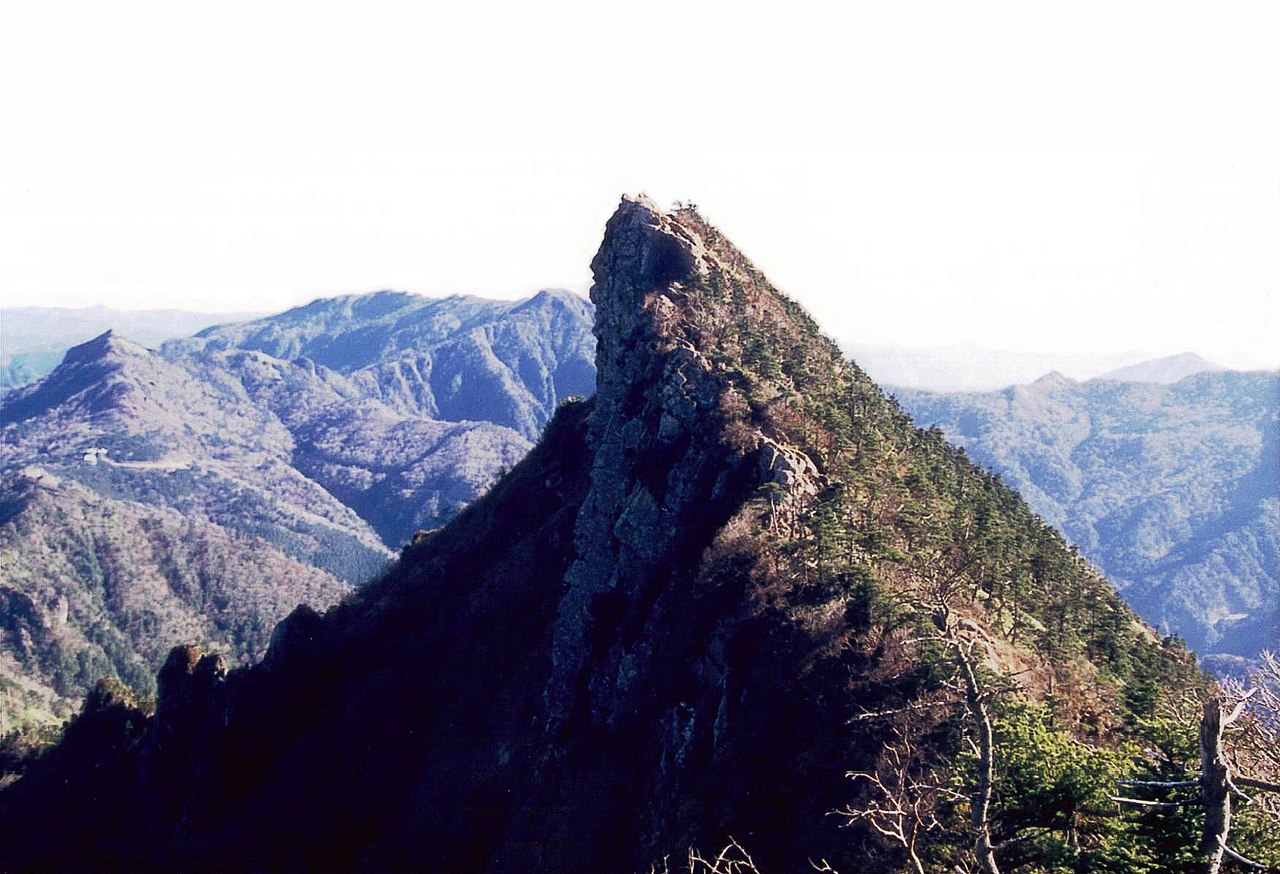
At 1,982 metres, Mt. Ishizuchi is the highest mountain in western Japan and a sacred peak of the Shugendo mountain ascetic tradition. The dramatic ridge walk features vertical chain-assisted climbs on the traditional pilgrimage route. Panoramic views from the summit extend to the Seto Inland Sea.

Highest Peak in W. Japan
Shikoku Karst Plateau
📍 Shikoku Karst, Ehime-Kochi Border

Shikoku Karst Plateau

A dramatic limestone karst plateau straddling the Ehime-Kochi border at 1,400 metres elevation, with white limestone rocks jutting from green alpine pastures grazed by dairy cattle. The panoramic views of both the Pacific side and Seto Inland Sea side of Shikoku are extraordinary.

Karst Highlands
Uwa Sea & Sightseeing Boat
📍 Uwajima, Ehime

Uwa Sea & Sightseeing Boat

The Uwa Sea on Ehime's western coast is a drowned ria coastline of extraordinary beauty — dozens of small islands, pearl oyster farms, and fishing villages accessible by local ferry. The Uwa-jima area offers glass-bottom boat tours to see pearl cultivation and coral.

Ria Coastline
🎿

Loisirs

5 lieux
Shimanami Kaido Cycling
📍 Shimanami Kaido, Imabari, Ehime

Shimanami Kaido Cycling

The 70-kilometre cycling route across six islands between Imabari and Onomichi is widely considered the world's most scenic cycling route. Dedicated cycle lanes, well-marked blue line routes, and rental terminals on each island make it accessible to all fitness levels.

World-Class Cycling
Shimanami Kaido Cycling (Ehime Side)
📍 Imabari, Ehime

Shimanami Kaido Cycling (Ehime Side)

Starting from Imabari on the Ehime side, the 70-km Shimanami Kaido cycling route crosses six Seto Inland Sea islands via spectacular suspension bridges — including the world's longest bicycle-exclusive suspension bridge. Citrus groves, fish drying racks, and traditional fishing villages line the route, with salt-wind cycling and epic sea views all the way to Onomichi.

Cycling Bridge Seto Inland Sea Imabari
Dogo Onsen Bathing Experience
📍 Dogo, Matsuyama, Ehime

Dogo Onsen Bathing Experience

Bathing at Dogo Onsen is one of Japan's most memorable hot spring experiences — the sodium bicarbonate waters are gentle on the skin and the atmospheric Meiji wooden buildings add historical depth. Multiple facilities (Honkan, Asuka-no-Yu, Tsubaki-no-Yu) cater to different preferences.

Historic Bathing
Sea Kayaking in the Seto Inland Sea
📍 Imabari & Seto Inland Sea, Ehime

Sea Kayaking in the Seto Inland Sea

The calm, island-sheltered waters of the Seto Inland Sea offer ideal conditions for sea kayaking. Multi-day guided paddling tours connect small islands with overnight stays at fishing village guesthouses. Day tours from Imabari explore the Kurushima island chain.

Island Paddling
Mt. Ishizuchi Hiking & Chain Climbing
📍 Ishizuchi, Ehime

Mt. Ishizuchi Hiking & Chain Climbing

Three traditional iron chain routes ascend the sacred peak of Mt. Ishizuchi — the steepest chain section rises nearly vertically up a bare granite face. The pilgrimage route has been walked by Shugendo practitioners for over 1,000 years. Summit views on clear days reach both coasts of Shikoku.

Sacred Mountain Trek
🎆

Événements

5 lieux
Niihama Taiko Drum Festival (October)
📍 Niihama, Ehime

Niihama Taiko Drum Festival (October)

One of Japan's greatest festival spectacles — 54 massive festival floats (taiko-dai), each weighing 2.5 tonnes and decorated with elaborate golden ornaments, are carried through the streets by teams of young men. The floats are then used in dramatic float-carrying contests (kakikurabe).

Taiko Festival
Dogo Onsen Spring Festival
📍 Matsuyama, Ehime

Dogo Onsen Spring Festival

Dogo Onsen's spring festival (April) celebrates Japan's oldest hot spring with a mikoshi procession carrying a portable shrine through the bathhouse district, traditional dance performances, and special public bath events. The festival's highlight is the night procession when lantern-lit mikoshi pass the illuminated Meiji-era bathhouse facade — one of Japan's most photogenic festival settings.

Onsen Spring Festival Traditional Mikoshi
Uwajima Toro Nagashi Lantern Float
📍 Uwajima, Ehime

Uwajima Toro Nagashi Lantern Float

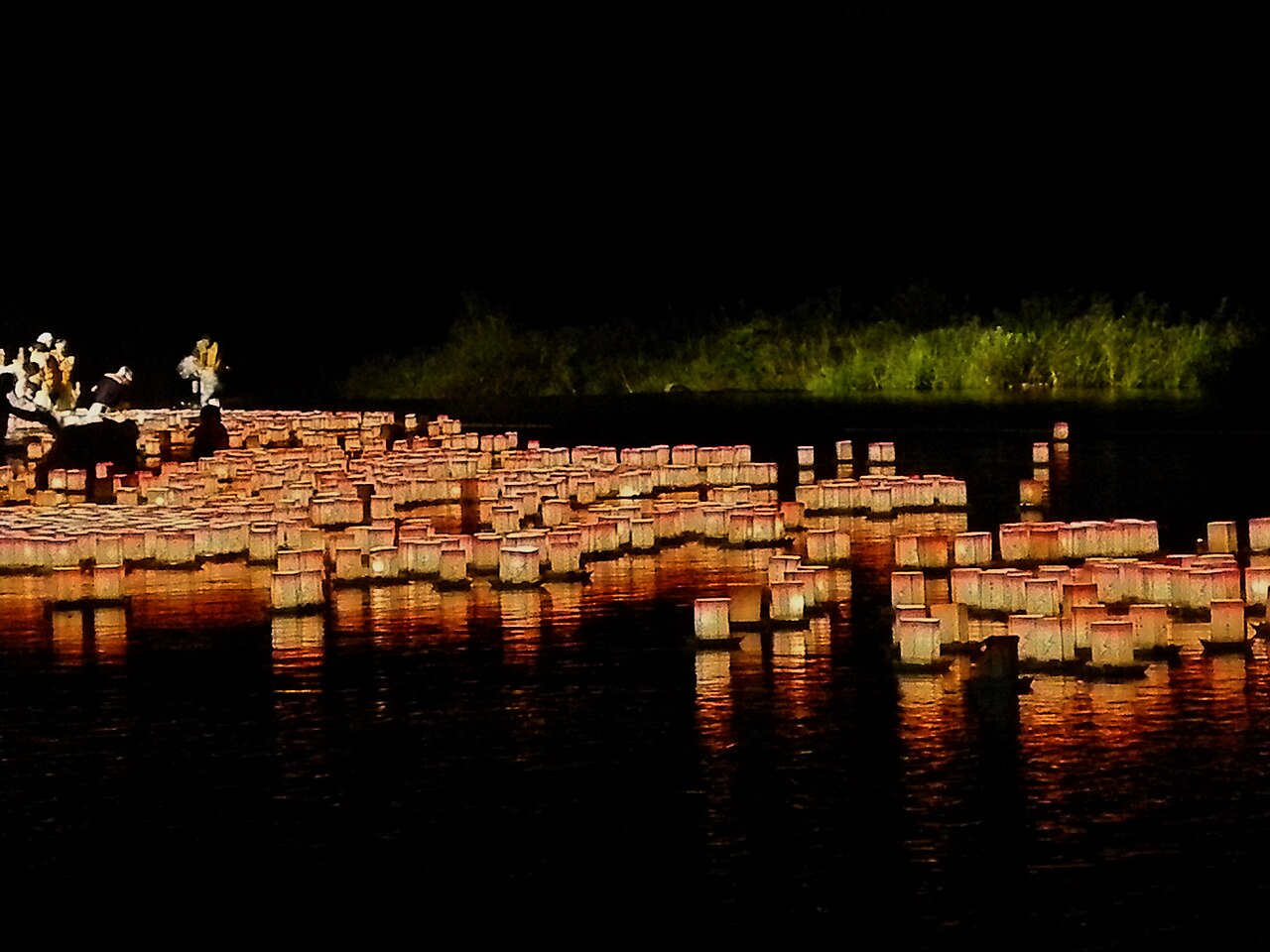
On August 14 during Obon, Uwajima city releases hundreds of illuminated paper lanterns on the Suka River to guide ancestral spirits back to the afterlife. The slow-moving stream of glowing lanterns drifting seaward in the summer dusk, accompanied by traditional music from the riverside, creates a meditative and deeply moving spectacle unique to this castle town.

Lantern Float Obon River Summer
Uwajima Ushioni Festival (July)
📍 Uwajima, Ehime

Uwajima Ushioni Festival (July)

One of Shikoku's oldest and most distinctive festivals, held every July 22–24 in Uwajima. The centrepiece is the ushioni — a fierce bull-demon float with a long serpentine body carried through the streets. Accompanied by traditional music, fireworks over Uwajima Bay, and yakyu (bullfighting) events.

Ancient Festival
Matsuyama Festival (August)
📍 Matsuyama, Ehime

Matsuyama Festival (August)

Held over three days in mid-August, the Matsuyama Festival features the spectacular Dogo Onsen Matsuri parade and the lively bon-odori (folk dancing) processions through the city centre. The festival celebrates the end of summer with traditional costumes, taiko drums, and street food stalls.

Summer Festival
🎌

Expériences

1 lieux
Dogo Onsen Historic Bathhouse Experience
📍 Matsuyama, Ehime

Dogo Onsen Historic Bathhouse Experience

Dogo Onsen Honkan — Japan's oldest continuously operating hot spring bathhouse (opened in its current form in 1894) — is a three-storey wooden building that inspired the spirit bathhouse in Spirited Away. The signature Tama no Yu (Spirit Bath) requires a reservation and includes bathing in a private stone tub, wearing a yukata, and being served hot tea and monaka wafer sweets in an upstairs tatami room.

Onsen Historic Dogo Natsume Soseki

💡 Conseils pratiques de voyage

Tout ce que vous devez savoir avant et pendant votre visite.

♨️
L'Essentiel de Dogo Onsen
  • Le Honkan (bâtiment principal) est le bâtiment historique de 1894. Il a fait l'objet d'une importante rénovation en 2019 et a rouvert progressivement — vérifiez quelles ailes sont actuellement ouvertes avant votre visite (certains bains peuvent encore être en phase de réouverture échelonnée).
  • Niveaux d'entrée : Kami-no-Yu (bain public du 1er étage, ¥460), Tama-no-Yu (salons privés du 2e étage + thé, ¥1,560), Yushinden (visite de la suite impériale, ¥1,610). Réservez le Yushinden via le site web.
  • L'Annexe de Dogo Onsen (Asuka-no-Yu) est le nouvel établissement complémentaire — moins fréquenté, d'excellente qualité, et propose des œuvres d'art d'Otomo Katsuhiro (Akira). Ouvert jusqu'à 23h00.
  • La charmante galerie marchande de Dogo (Honmachi Shotengai) menant aux bains est bordée de confiseries, de brasseries de saké et de souvenirs artisanaux — prévoyez du temps pour flâner.
🏯
Château de Matsuyama
  • Le château de Matsuyama est l'un des 12 châteaux d'origine du Japon avec un donjon en bois non restauré — une rare survivance authentique de l'ère féodale. Entrée ¥520 (+ ¥270 téléphérique ou gondole).
  • Le téléphérique met 3 minutes ; la gondole (chaise téléportée) met 6 minutes et offre une vue à ciel ouvert sur la ville et la mer intérieure de Seto — l'option la plus panoramique par temps clair.
  • Au printemps (fin mars) : l'un des plus beaux décors de château fleuri de cerisiers du Japon occidental — le donjon entouré de sakura roses. Arrivez tôt ; les jardins sont très fréquentés.
  • À combiner avec le Ninomaru Shiseki Teien — un beau jardin reconstruit sur la deuxième enceinte du château. Entrée gratuite.
🚴
Cyclisme sur le Shimanami Kaido
  • Le trajet complet d'Imabari (Ehime) à Onomichi (Hiroshima) est de 70 km et prend généralement une journée entière de cyclisme tranquille. La plupart des cyclistes comptent 6 à 8 heures pauses comprises.
  • Chacune des 6 îles (Oshima, Hakatajima, Omishima, Ikuchijima, Mukaishima) a son propre caractère — Omishima abrite le plus ancien sanctuaire du Japon (Oyamazumi Jinja), Ikuchijima possède un temple recouvert d'un milliard de yens de feuilles d'or (Kosan-ji).
  • La piste cyclable est bien balisée par des lignes bleues peintes sur la route. Les terminaux de location de vélos à chaque pont permettent de rendre les vélos en un point différent.
  • Les vélos électriques (denki assist) sont disponibles aux principaux points de location pour ¥1,500/jour supplémentaire — vivement recommandés pour les montées des ponts.
🍊
Mikan et Gastronomie Locale
  • Ehime produit environ 20 % des mandarines mikan du Japon. La saison s'étend d'octobre à février ; les étals en bord de route et les boutiques de ferme offrent un excellent rapport qualité-prix.
  • Le Taimeshi (riz aux daurades) est le plat emblématique d'Ehime — servi de deux façons : style Matsuyama (daurade crue sur riz avec œuf et dashi) et style Uwa (daurade grillée sur riz). Les deux sont excellents.
  • Le Jakoten (galette de petit poisson) est un en-cas local dégusté chaud à la sortie de la friteuse — ¥100 à ¥200 la pièce dans les poissonneries près de la rue commerçante Okaido à Matsuyama.
  • Les brasseries de saké d'Ehime se concentrent autour de Saijo — connue pour son saké à l'eau douce d'une douceur exceptionnelle. Cherchez les étiquettes Chitosetsuru et Sachi no Tsuru.
💴
Guide du Budget
  • Petit budget (¥5,000–¥9,000/jour) — Auberge de jeunesse à Matsuyama, Dogo Onsen Kami-no-Yu, déjeuner taimeshi, transport en tramway.
  • Budget moyen (¥15,000–¥28,000/jour) — Ryokan à Dogo Onsen avec dîner, château de Matsuyama, journée de cyclisme sur le Shimanami.
  • Luxe (¥40,000+/jour) — Ryokan de luxe à Dogo, guide privé à vélo sur le Shimanami, kaiseki avec fruits de mer de Seto.
  • Le Matsuyama Sightseeing Pass (¥1,700/jour) couvre les tramways illimités, certaines lignes de bus et des réductions au château et à Dogo Onsen — rentable pour une journée d'exploration de la ville.

🏨 Trouver des hôtels à Ehime

Comparez les prix de centaines d'hôtels — des capsules économiques aux ryokan de luxe.

Chercher sur Booking.com →

🎌 Circuits &amp; Expériences

Réservez des visites guidées, excursions, cours de cuisine et expériences culturelles.

Voir les circuits sur Viator →

🗺️ Activités &amp; Attractions

Évitez les files d'attente — réservez à l'avance entrées, excursions et expériences locales.

Découvrir sur GetYourGuide →

🎟️ À faire à Ehime

Découvrez billets, pass transport et expériences locales à Ehime avec Klook.

Réserver sur Klook →

🚄 JR Pass &amp; Billets de Train

Achetez votre Japan Rail Pass en ligne avant d'arriver — le moyen le plus simple de voyager en Shinkansen à travers le Japon.

Acheter le JR Pass →
🗺️ Plan