Fukushima Prefecture Nature & Outdoor Guide
Fukushima Prefecture, stretching from the Pacific coast to the central mountains of Honshu, offers some of Japan’s most dramatic volcanic landscapes, pristine forests, and accessible highland trails. Despite lingering misconceptions, the prefecture’s natural areas are safe, spectacular, and surprisingly uncrowded—making them ideal for international visitors seeking authentic Japanese nature experiences away from the tourist crowds.
1. Bandai-Asahi National Park & Mount Bandai (磐梯朝日国立公園・磐梯山)
The catastrophic eruption of Mount Bandai in 1888 transformed the landscape forever, creating over 300 lakes and ponds across what is now known as the Urabandai (Back-Bandai) highland. This volcanic event, while devastating to nearby villages, left behind one of Tohoku’s most enchanting natural environments.
Mount Bandai Summit Hike
Mount Bandai (1,816m) offers a manageable day hike with spectacular rewards. The most popular route begins at the Chusha-mae trailhead on the mountain’s south side, accessible by bus from Inawashiro Station. The round-trip takes 3–4 hours, ascending through beech forests before emerging onto volcanic scree slopes. The summit provides panoramic views across the Aizu basin to the south and the lake-studded Urabandai highland to the north. The trail is well-marked and suitable for reasonably fit hikers from late May through October. Arrive early in peak autumn season (mid-October) as parking fills quickly.
Goshiki-numa Trail (Five-Coloured Lakes)
The Goshiki-numa trail showcases the eruption’s most photogenic legacy: a chain of volcanic lakes that shimmer in different colours depending on mineral content, depth, and light conditions. The 4km trail takes approximately 1.5 hours, following a gentle forest path connecting Bishamon-numa, Aka-numa, Midoro-numa, Benten-numa, and Ruri-numa. Each pond displays unique hues—emerald green, cobalt blue, rusty red—creating an almost surreal landscape. The trail begins at the Goshiki-numa entrance (accessible by bus from Inawashiro or Kitakata stations) and ends at the Urabandai Visitor Center.
Urabandai Highland & Lake Hibara
The Urabandai highland sits at approximately 800m elevation, offering cooler summer temperatures and stunning autumn colours. Lake Hibara, the largest lake created by the eruption, provides canoeing, camping, and fishing opportunities. The area around Bandaiko Lake features numerous hiking trails, cycling paths, and observation points. The highland transforms into one of Tohoku’s premier autumn destinations in mid-October, when maple, beech, and birch create a tapestry of red and gold reflected in mirror-still volcanic lakes. This brief two-week window (typically October 10–25) draws photographers from across Japan.
Access: From Tokyo, take the Tohoku Shinkansen to Koriyama (80 minutes), then the Ban’etsu-West Line to Inawashiro Station (40 minutes). Local buses serve the Goshiki-numa area and mountain trailheads (April–November).
2. Azuma Mountains & Jododaira (吾妻山・浄土平)
Rising directly behind Fukushima City, the Azuma volcanic range offers high-altitude experiences accessible by Japan’s most scenic mountain road.
Bandai-Azuma Skyline & Jododaira
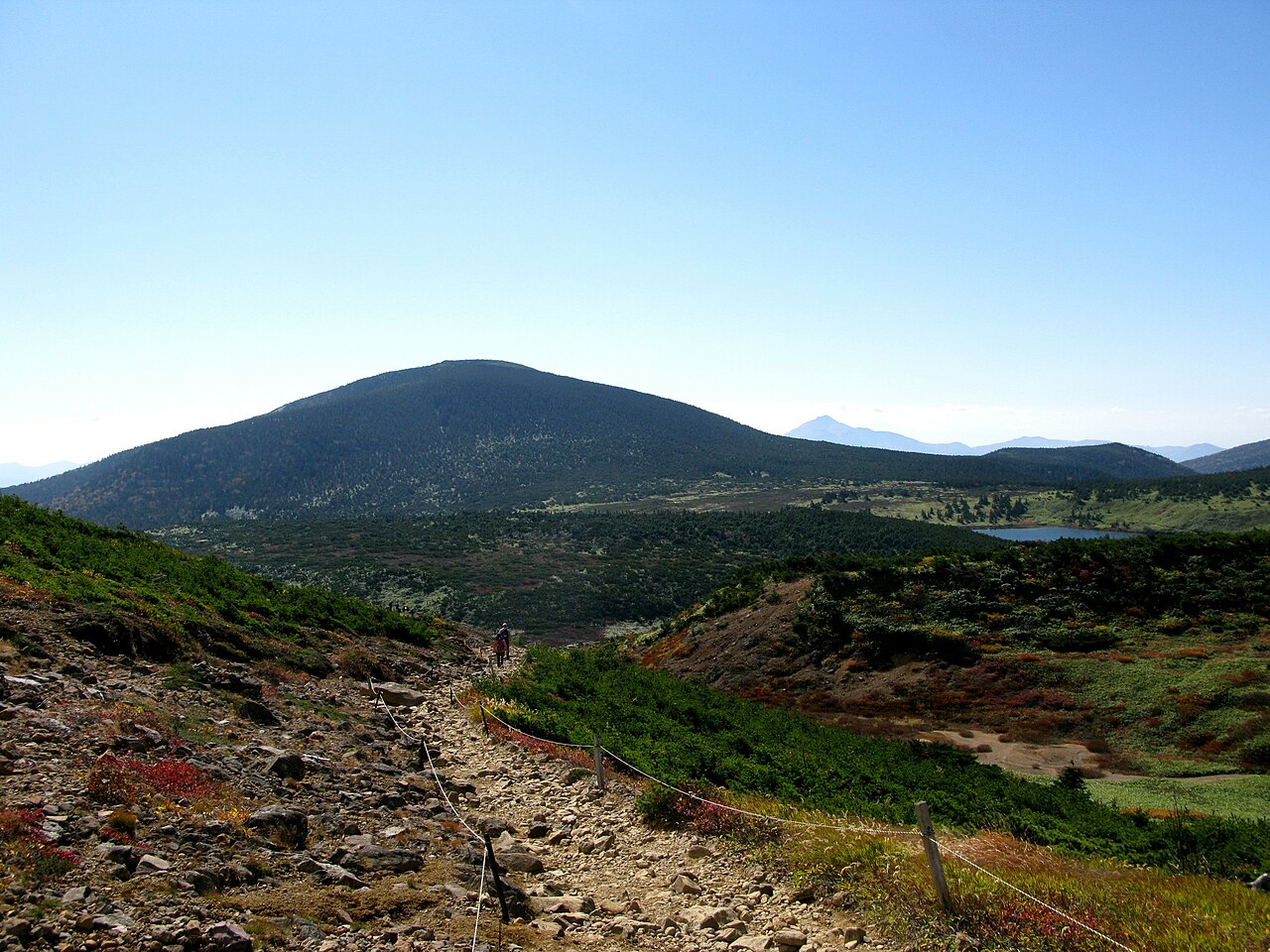
The Bandai-Azuma Skyline, a 29km toll-free mountain road, climbs to 1,600m through forests and volcanic moonscapes. (Note: The road typically closes from late November to late April due to snow.) Jododaira, the road’s highest point, features a visitor center, restaurants, and trailheads surrounded by active volcanic vents releasing sulfurous steam.
The 45-minute loop around Ittosawaike crater lake provides close-up views of volcanic activity amid a landscape of coloured rocks and sparse vegetation. The trail, mostly boardwalk, is accessible for all fitness levels.
Issaikyo-zan Summit
For a more challenging hike, the trail to Issaikyo-zan summit (1,949m) begins at Jododaira and takes approximately 90 minutes one-way. The reward is breathtaking: Mao-no-hitomi (Devil’s Eye), an emerald-coloured volcanic crater lake, lies hundreds of meters below, its colour shifting from green to turquoise depending on weather and sunlight. The trail crosses volcanic scree—wear sturdy boots and check weather conditions before departing.
Access: From Fukushima Station, rent a car or join a tour bus (seasonal). Public buses run along the Skyline route during peak seasons (late April–early November).
3. Hinoemata Primeval Beech Forest & Oze National Park (檜枝岐村・尾瀬国立公園)
Deep in the Aizu mountains near the Niigata border, Hinoemata village serves as the southern gateway to Oze National Park and some of Japan’s last remaining primeval beech forests.
Ozegahara Marsh
Ozegahara, a vast alpine wetland at 1,400m, represents one of Japan’s most important highland ecosystems. A 5km boardwalk network traverses the marsh, allowing visitors to explore without damaging fragile vegetation. In late June, the marsh explodes with white water-lilies (mizubasho), while September brings golden autumn grasses swaying against mountain backdrops. The trail from Yamanohana trailhead (the Hinoemata access point) to the main boardwalk area takes about one hour.
Beech Forest Trails
The trails around Hinoemata pass through cathedral-like beech forests, with massive trees reaching heights of 30 meters. These old-growth forests, protected from logging due to their remoteness, provide glimpses of Japan’s original forest cover. Several trails of varying difficulty radiate from Hinoemata village.
Access: From Aizuwakamatsu, buses run to Hinoemata (2 hours, limited service). Car rental provides more flexibility. The Oze area is accessible from late May (after snowmelt) through October.
4. Fukushima Fruit Country (果物街道)
The volcanic soil and mountain climate of central Fukushima create ideal conditions for stone-fruit cultivation. The region produces some of Japan’s most prized cherries, peaches, pears, and apples.
Fruit Line Route
Route 72, known as the Fruit Line, runs 40km through the foothills between Fukushima City and Date City, passing hundreds of family-run orchards. Many offer mogi-tori (pick-your-own) experiences where visitors pay a flat fee for unlimited sampling and picking.
Seasonal Picking:
- June: Cherries (sakuranbo)—visit in mid-June for peak sweetness
- August: Peaches (momo)—Fukushima peaches rival those of Yamanashi
- September: Pears (nashi)—crisp, juicy Asian pears
- October–November: Apples (ringo)—multiple varieties through autumn
Spring (early April) transforms the Fruit Line into a spectacular corridor of white and pink orchard blossoms.
Access: Rent a car in Fukushima City or take local trains along the Tohoku Main Line, getting off at small stations and walking to nearby orchards.
5. Seasonal Planning Guide
Spring (April–May): Cherry blossoms at Tsurugajo Castle in Aizuwakamatsu (early-mid April); orchard blossoms along Fruit Line (early April); mountain trails open late May; Oze opens late May after snowmelt.
Summer (June–August): Oze water-lilies peak in late June; Bandai highland offers cool relief from lowland heat; cherry and peach picking; high-altitude wildflowers.
Autumn (September–October): Peak colours at Goshiki-numa and Urabandai (mid-October); apple and pear picking; comfortable hiking temperatures; Bandai-Azuma Skyline at its finest before winter closure.
Winter (December–March): Most mountain areas closed; historic Ouchi-juku village beautiful under snow (January–February); winter sports at several ski resorts.
Practical Information
Getting Around: Car rental provides maximum flexibility, especially for Fruit Line and remote trails. Major rental companies operate at Fukushima, Koriyama, and Aizuwakamatsu stations.
Accommodation: Urabandai offers pensions, hotels, and campgrounds; Hinoemata has mountain lodges; Fukushima City provides urban convenience.
Safety: Check volcanic activity alerts at visitor centers; carry layers for mountain weather changes; inform someone of hiking plans; trails can be slippery after rain.
Fukushima’s natural treasures remain among Tohoku’s best-kept secrets, offering authentic encounters with Japan’s volcanic landscapes, ancient forests, and agricultural traditions.