Hokkaido’s goshuin culture reflects the island’s young history — the shrines here were established in the Meiji era (post-1869), not centuries earlier, which means their architectural style is cleaner, their administrative records are complete, and their goshuin designs reflect a conscious aesthetics decision rather than an accumulated tradition. The stamp designs at Hokkaido’s major shrines often reference the specific natural feature of their location (crane imagery at Kushiro, the volcanic context at Noboribetsu) and the kaitaku (development) history that brought these institutions into existence. This is a different kind of goshuin from Kyoto’s layered Buddhist aesthetics — more direct, more geographically specific.
📖 Hokkaido Goshuin Basics
Goshuincho (stamp book): The standard goshuincho is required at most Hokkaido shrines and temples. Hokkaido Jingu sells a high-quality book (¥1,200) with a design referencing Hokkaido’s mountain and sky motif. Buy your book at the first stamp destination.
Opening hours: Stamp offices (juinjo) at Hokkaido shrines typically operate 9:00–16:30. Some smaller shrines only issue stamps on specific days (check individual shrine websites).
Distance consideration: Unlike Kyoto where multiple shrines are within walking distance, Hokkaido goshuin collection requires multi-day planning — Sapporo’s shrines and Hakodate’s shrines are 3+ hours apart. Plan your goshuin route alongside your overall Hokkaido itinerary rather than as a separate circuit.
Cost: ¥300–¥500 standard; ¥700–¥1,000 for seasonal special designs.
🏯 Hokkaido Jingu (北海道神宮) — Head Shrine of Hokkaido
Access: Maruyama-koen Station (Tozai Line) — 15 min walk through Maruyama Park; or bus Hours: 7:00–17:00 (winter), 7:00–18:00 (summer) Stamp office: 9:00–17:00
Hokkaido Jingu (also called Hokkaido Shrine) is the highest-ranking Shinto shrine in Hokkaido — an Ikkaku-sha (first-class shrine) established by imperial decree in 1869 at the founding of the Hokkaido colonial administration. The shrine enshrines four deities: the three traditional kaitaku development deities (Okunitama no Kami, Onamuchi no Kami, Sukunahikona no Kami) and the Emperor Meiji, who authorised and drove the Hokkaido colonisation project.
The Setting
The shrine stands within Maruyama Park — a 600,000-square-metre forested park on Sapporo’s western edge that preserves old-growth forest (gensei-rin) that pre-dates the city’s establishment. The approach through the park’s towering harunire (Japanese elm) trees gives the shrine a sense of established depth unusual for a 19th-century institution.
Cherry blossom season (late April–early May): The combination of Maruyama Park’s cherry trees and the shrine approach creates one of Sapporo’s most-visited spring destinations. The shrine’s inner precincts have several hundred cherry trees that bloom simultaneously — the approach under cherry blossom with the torii gate visible ahead is the most distinctive image of Hokkaido Shrine.
Goshuin at Hokkaido Jingu
Main goshuin: The primary stamp features the shrine’s circular chrysanthemum (kiku) crest combined with the shrine name in formal brushwork and the date. The design is restrained and classical — appropriate for the head shrine of an entire island.
Seasonal sakura stamp: During the cherry blossom season (late April–early May), a special stamp with cherry blossom petal elements is added to the standard design. Available only during the bloom period; the exact dates vary by year.
Sapporo Matsuri festival stamp: During the Hokkaido Shrine Spring Festival (June 14–16), a special festival-day goshuin is issued — the only time the festival-specific design is available. The queue for this stamp during the festival can be long (30–60 min) on the main procession day.
The Hokkaido Jingu Precinct (Maruyama)
Adjacent to the main shrine within Maruyama Park:
- Kaitaku Jinja (開拓神社): A subsidiary shrine within the Hokkaido Jingu precinct dedicated to 37 individuals who contributed to Hokkaido’s development (kaitaku). Their names are enshrined alongside the figures from the broader Hokkaido colonisation history — an unusual combination of historical record and religious commemoration. Separate goshuin available (¥300).
⚓ Hakodate’s Shrine Circuit
Hakodate Hachiman-gu (函館八幡宮)
Access: Tram to Hachiman-gu-mae stop (Hakodate City Tram) Hours: Dawn to dusk | Stamp office: 9:00–16:30
Hakodate Hachiman-gu is Hakodate’s most historically significant shrine — established in 1445 before Hokkaido’s formal integration into the Japanese state, making it among the oldest religious institutions on the island. The shrine stands on a hillside above the city with a view toward Hakodate Bay.
The goshuin: Hakodate Hachiman-gu’s stamp features an anchor motif (ikari) — appropriate for a maritime city shrine. The anchor symbol references Hakodate’s history as a trading and naval harbour. The calligraphy style is notably vigorous; the brushwork is done with a wider brush than most shrine stamps.
The Goryokaku connection: Hakodate Hachiman-gu is historically connected to the Battle of Hakodate (1869) — the shrine area was used as a camp and position by the Meiji government forces during the final battle of the Boshin War. A memorial stone in the shrine grounds marks this association.
Motomachi Park Shrines
The Motomachi hillside district of Hakodate has three religious buildings within a 200m radius:
- Higashi Honganji Hakodate Betsuin (東本願寺函館別院, Buddhist): A concrete-construction temple built after fires destroyed the wooden original; the goshuin uses the Higashi Honganji lotus seal (¥300)
- Hakodate Orthodox Church (函館ハリストス正教会): Russian Orthodox — no goshuin (not in the Shinto/Buddhist stamp tradition), but the church is open for viewing and has postcards of its interior
Goryokaku Tenmang-u (五稜郭天満宮): A small Tenjin shrine within 5 minutes of Goryokaku Tower — the combination of scholar deity stamp collection with the Goryokaku fort visit is a practical pairing. Simple stamp (¥300), no queue.
🌋 Noboribetsu and Sulphur Shrines
Noboribetsu Jinja (登別神社)
Access: 15 min walk from Noboribetsu Onsen main street Stamp office: 9:00–16:00
Noboribetsu Jinja occupies a forested hill above the main resort, overlooking the Jigokudani volcanic area. The shrine’s setting — sulphur-scented air, steam visible through the tree cover, and the geological drama of the active volcanic area immediately below — creates an atmospheric context that few Japanese shrines share.
The goshuin: The stamp design incorporates a demon (oni) motif — the Noboribetsu area’s mascot is the red-and-blue Yakuma oni figure that appears throughout the resort. The combination of Shinto religious stamp with a demon character is unusual and reflects Noboribetsu’s specific identity.
Seasonal stamp: A winter version of the oni stamp (blue ice background) and a summer version (red flame background) are issued alternately — the seasonal variation makes the Noboribetsu stamp worth returning for if you visit in both seasons.
🦢 Kushiro Shrine (釧路神社) — Crane Motif
Access: Car from Kushiro Station (10 min) or bus Stamp office: 9:00–16:30
Kushiro Shrine is the head shrine of the Kushiro/eastern Hokkaido region — established 1870 as part of the Meiji kaitaku settlement infrastructure, like most Hokkaido shrines. Its geographical proximity to the Kushiro Wetlands and the Tsurui tancho crane sanctuary (40 min away) has influenced the shrine’s current identity.
The goshuin: Kushiro Shrine’s primary stamp features a tancho crane (red-crowned crane) in flight — a design created specifically to reference the shrine’s regional ecology rather than a generic shrine crest. The crane is rendered in a simplified calligraphic stroke style: one or two bold brushstrokes suggesting the bird’s shape against the seal’s red circular ground.
The seasonal crane stamp: During the tancho crane winter gathering season (November–March), when the cranes are most visible at nearby Tsurui, a special crane-specific goshuin is issued at Kushiro Shrine. The design includes a pair of cranes (the tancho’s monogamous pairing is the source of the crane’s significance in Japanese culture) and the date.
Combined itinerary: Kushiro Shrine goshuin + Tsurui-Ito Tancho Sanctuary crane watching + Kushiro Wetlands observation deck = a full Kushiro day with a specific regional identity.
🌸 Sapporo Fushimi Inari (伏見稲荷神社)
Access: Sapporo Subway Namboku Line to Makomanai Station (10 min walk); or bus from Sapporo Station Hours: Dawn to dusk | Stamp office: 9:00–16:30
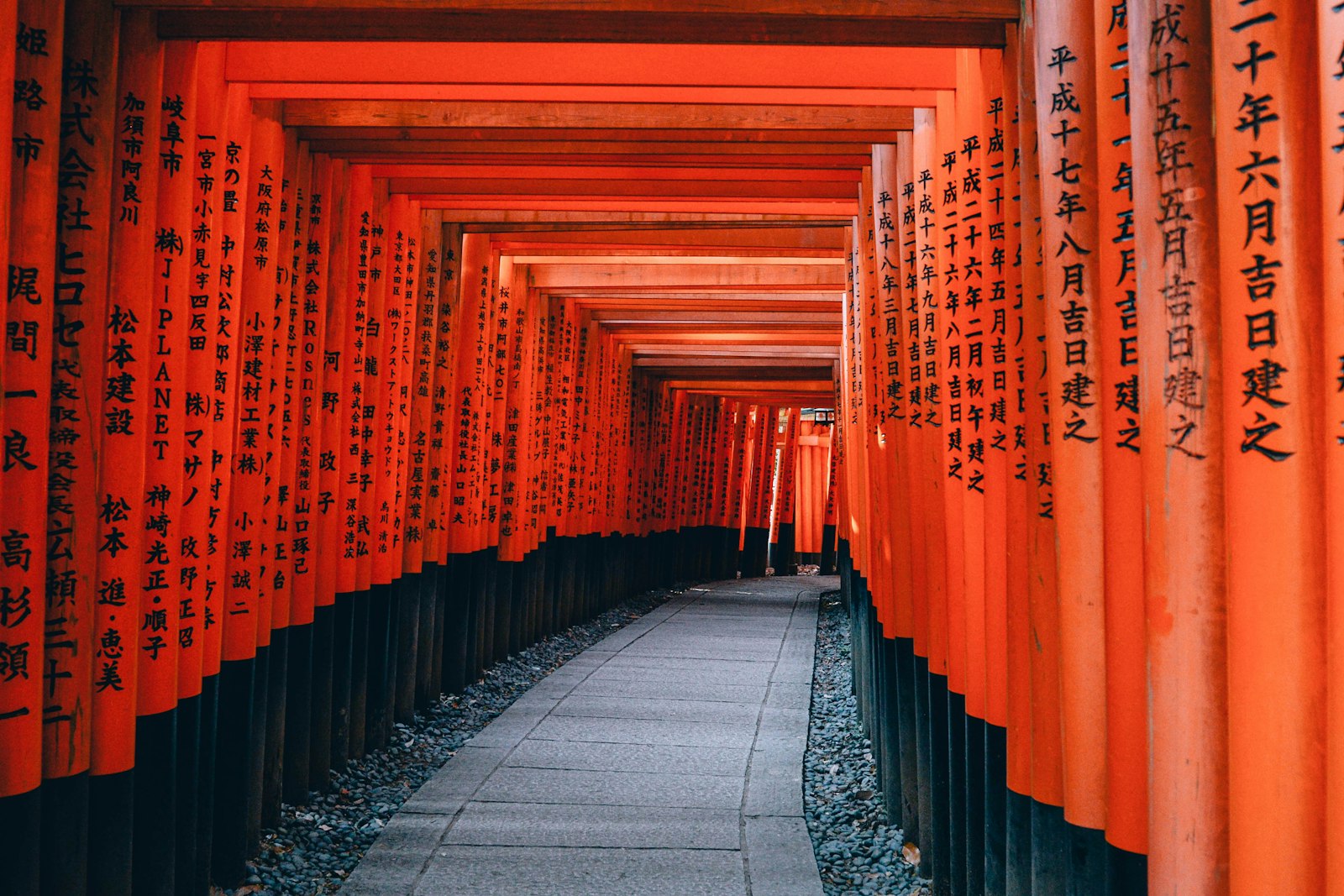
Sapporo Fushimi Inari is a subsidiary shrine of the main Fushimi Inari in Kyoto — established in Sapporo in 1884 by Kyoto priests to provide the rice deity (Inari) for Hokkaido’s agricultural development. The shrine has a torii gate tunnel (sennbon torii) modelled on the Kyoto original, with approximately 200 red torii gates climbing the forested hillside behind the main shrine.
The goshuin: The stamp features the standard Inari fox (kitsune) motif combined with the kinko (fox with a jewel in its mouth) variant specific to this branch shrine. The design is distinctive from the main Kyoto Fushimi Inari stamp.
The practical advantage: The Sapporo Fushimi Inari is almost entirely unvisited by international tourists — the combination of a torii tunnel (the aesthetic usually associated with Kyoto crowds) with complete solitude makes it Sapporo’s most rewarding unexplored attraction for goshuin collectors.
Hokkaido Goshuin Routes
Route A: Sapporo (Half-Day, 3 Stamps)
- Hokkaido Jingu — Main stamp + Kaitaku Jinja = 2 stamps (9:00, 45 min)
- Walk through Maruyama Park to bus/subway
- Sapporo Fushimi Inari — Fox stamp (11:30, 30 min) Total: 3 stamps, ¥900–¥1,200, 3 hours
Route B: Hakodate (Half-Day, 2–3 Stamps)
- Hakodate Hachiman-gu — Anchor stamp (9:00, 15 min)
- Tram to Motomachi district
- Goryokaku Tenmangu — Scholar deity stamp (11:00, 10 min) Total: 2 stamps, ¥600, 2 hours
Route C: Eastern Hokkaido (Full Day, 2 Stamps)
- Morning: Tsurui crane watching
- Kushiro Shrine — Crane stamp (11:00)
- Afternoon: Kushiro Wetlands walk Total: 1–2 stamps; pairs with wildlife experience rather than shrine-hopping
Full Hokkaido Circuit (Multi-Day)
Hokkaido Jingu (Sapporo) → Noboribetsu Jinja (sulphur/demon) → Hakodate Hachiman-gu → Kushiro Shrine (crane) — covers the island’s regional shrine identity over a full Hokkaido road trip itinerary.