Ibaraki does not market itself as a romantic destination. It has no famous ryokan district, no landmark hot spring, no scenic train line with a dedicated lovers' platform. What it has instead are moments — the kind that arrive quietly and stay with you. A hill turning blue as far as you can see. Cedar trees so old they absorb sound. A lake surface catching the last horizontal light of a November afternoon. A bowl of monkfish stew on a cold coastal evening when the wind is audible outside.
For couples who want something beyond the standard honeymoon checklist, Ibaraki offers a Japan that most international visitors have never encountered. The distances from Tokyo are short enough to take the pressure off logistics, while the absence of international tourist infrastructure means you encounter Japanese places as they actually are — used by Japanese people, priced for Japanese people, and shaped by centuries of local life rather than decades of inbound tourism.
Hitachi Seaside Park — The Blue Horizon
Hitachi Seaside Park’s Miharashi Hill during nemophila season is one of the most visually extraordinary places in Japan. In late April and early May, approximately 4.5 million nemophila flowers — each individually small and cornflower-blue — cover a broad hillside so densely that the ground itself disappears. From the summit of Miharashi Hill, the blue extends to the horizon in every direction, meeting a sky that is usually the same colour during the clear spring days of this season.
For couples, the timing of your visit matters more than anything else. Arrive when the park opens (9:30 AM) and you will have the hill largely to yourselves for the first hour before tour buses begin arriving from around 10:30. The light at this time is soft and diffuse — good for photography without the harsh mid-morning shadows. Alternatively, return in the late afternoon after 3:30 PM, when the visitor numbers thin and the low western sun turns the blue flowers golden at the edges.
Walking the hill together rather than following the main path up and down rewards you with quieter angles. The path that circles the hill’s perimeter at mid-height is less used and offers unobstructed views with fewer other visitors in frame.
What to bring: a wide-angle lens or a phone with a panoramic mode, a blanket if you plan to sit on the hill, and layers — the coastal wind here is persistent even on warm days.
In mid-October, the same hill becomes a deep crimson as kochia bushes colour for autumn. The scale is smaller but the effect is equally striking, and the October park is considerably less crowded than the spring season.
Entry: ¥450 per adult; children under 15 free. Shuttle bus from Katsuta Station during peak nemophila season only.
Lake Kasumigaura — Sunset Cycling and Boat Cruise
Lake Kasumigaura is Japan’s second-largest lake, a wide inland body of water covering 168 square kilometres on the southern Ibaraki plain. It lacks the alpine drama of Kawaguchiko or the volcanic setting of Towada, but it offers something those lakes do not: space, wind, and a particular quality of light in the late afternoon that makes the flat water look like hammered silver.
The 180-kilometre circuit path around the lake is popular with road cyclists, but for couples without serious cycling experience, the shorter sections along the northern shore near Tsuchiura are ideal. Bicycles rent from Tsuchiura Station area for around ¥500 per day. A two-hour ride along the lakeside path, stopping at waterfront viewpoints, is enough to reach the quieter sections where the lake opens out to its full width.
Tour boats operate on the lake from Tsuchiura and offer afternoon and sunset cruise departures. The sunset cruise, running from late autumn through winter when the skies are clearest, is the most atmospheric option — Lake Kasumigaura’s flat surface reflects colour without obstruction, and the combination of reed beds, distant mountains, and low cloud on a clear November evening is genuinely beautiful. Check current schedules and pricing through the Kasumigaura Authority website; cruises typically cost ¥1,500–¥2,500 per person.
Autumn is the most scenic season for the lake — the surrounding farmland and reed beds shift through amber and gold, and the weather is stable enough for long outdoor afternoons.
Kashima Jingu at Dawn
Kashima Jingu is one of Japan’s most ancient Shinto shrines, dedicated to Takemikazuchi-no-Mikoto, and it sits within a forest of old-growth cedar that is extraordinary by any standard. The main approach — the Omotesando — runs under a canopy of cedars whose trunks are two and three metres in diameter, blocking daylight even at midday and creating an atmosphere of compression and quiet that intensifies as you walk deeper into the grove.
Arriving at dawn, before the first tour groups of the day, gives you this approach in a way that afternoon visitors never experience it. Morning mist frequently lingers in the lower sections of the approach. Deer — wild sika deer associated with the shrine — are visible in the cedar forest and along the pathways in the early morning hours, largely indifferent to visitors who move quietly.
The shrine complex itself holds national treasure swords in its treasury (open from 8:30 AM) and a large garden-like precinct with stone lanterns and subsidiary shrines. After the treasury, the path continues to the Okumiya inner shrine, a 15-minute walk deeper into the forest along a track that is barely wider than two people. This walk, in particular, is worth taking slowly.
Access: Kashima Jingu is approximately two hours from Tokyo by limited express train via the Kashima Rinkai Line from Chiba, or directly accessible by highway bus from Tokyo Station (approximately 80 minutes). There is no efficient train connection from Mito, making a rental car the practical choice if combining Kashima with northern Ibaraki.
Oarai Coastal Dinner — Anko and Pacific Seafood
Oarai is a working fishing port, and its restaurant strip along the coast north of the aquarium serves some of the most honest seafood dining in the Kanto region. The town’s signature dish is anko nabe — monkfish hot pot — served from November through March when the fish are at their fattest and the coastal wind makes a pot of broth the most reasonable object in the world.
Monkfish (anko) is a bottom-dwelling Pacific species with a rich, firm flesh and an intensely flavoured liver. The nabe typically includes large pieces of fish, tofu, vegetables, and daikon in a miso or soy broth, with the liver added either separately as a premium supplement or dissolved into the broth to add depth. The liver version — kimo nabe — is the more prized preparation. A full monkfish nabe for two runs ¥3,000–¥6,000 per person depending on the grade of fish and the inclusion of liver.
The restaurants around Oarai are largely Japanese-only in terms of menus, but pointing and ordering by sight works well here — the tanks and display cases outside most restaurants show the current day’s catch. Outside monkfish season, fresh crab, clams, and Pacific fish are reliably available year-round.
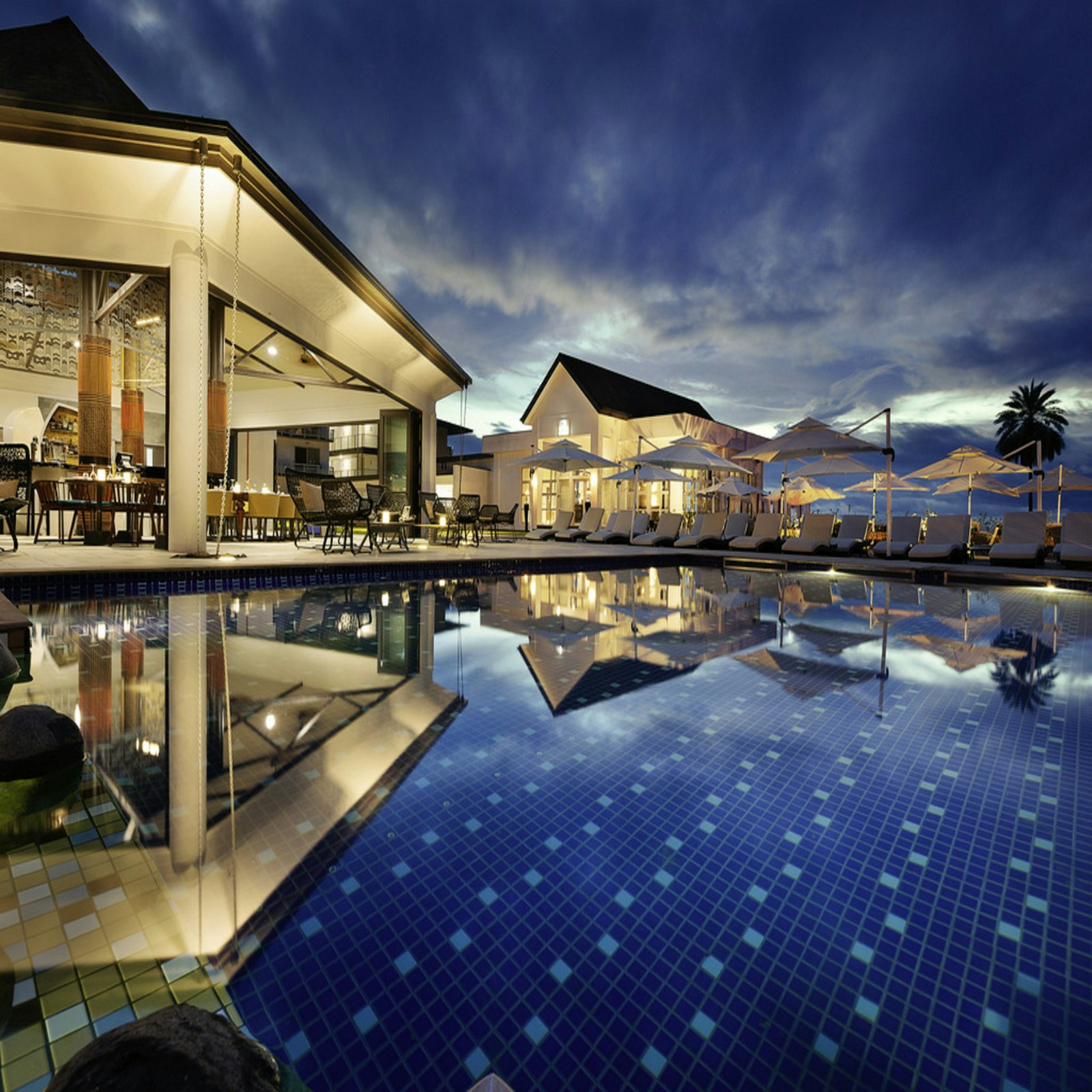
For couples staying overnight, the Oarai Hotel is the most romantic option — the Pacific-facing rooms look directly onto the ocean, and the indoor baths allow you to end a long day watching waves. Room rates with dinner packages run ¥15,000–¥25,000 per person.
Kairakuen in Plum Blossom Season
Kairakuen — ranked alongside Kenrokuen in Kanazawa and Korakuen in Okayama as one of Japan’s three great landscape gardens — is most visited in February and March when its 3,000 plum trees are in bloom. The garden was designed in 1842 by Lord Nariaki Tokugawa not as a private retreat but as a place for all people of Mito to enjoy, and this intention is still felt in its generous, open design.
Walking through Kairakuen during plum blossom season is a sensory experience that photographs cannot fully capture: the scent of plum blossom is strong and pervasive in a way that cherry blossom is not, and the variety of tree cultivars means that reds, whites, and pinks bloom at different times across the season, so the garden shifts its palette week by week.
Entry is free outside the festival period (typically late February to late March); during the festival, admission is ¥300. On weekend evenings during the festival, the park stages night illumination events casting the blossom trees in warm light — this is the single most romantic experience the garden offers. The adjacent Mito Kodokan — a historic Confucian academy associated with the Mito Tokugawa domain — is worth visiting alongside the garden, free of charge.
Accommodation for Couples
Oarai seafront: The Oarai Hotel is the strongest choice for a romantic stay — Pacific ocean views, an indoor bath, and access to the freshest seafood in the prefecture. Book a Japanese-style room with futon for the full coastal experience. The Nakaminato Kaihin Hotel is a smaller, quieter alternative slightly north of the main Oarai tourist area. Rates: ¥10,000–¥25,000 per person with dinner.
Mito for garden access: During Kairakuen plum blossom season, staying in Mito puts you within walking distance of the park and allows early-morning visits before tour groups arrive. The Richmond Hotel Mito and Dormy Inn Mito are comfortable options at ¥7,000–¥12,000 per night per room. Neither is a ryokan, but the convenience is genuine.
Ryokan options: Ibaraki has fewer traditional ryokan than Tochigi or Gunma. The most practical option for couples wanting a ryokan-style experience is to choose one of the Oarai seafront hotels that offer Japanese-style rooms with dinner service, which delivers most of the ryokan elements — tatami, yukata, multi-course meal — within a hotel framework.
Suggested 3-Night Honeymoon Itinerary
Day 1 — Mito and Kairakuen: Arrive Mito via JR Joban Line from Ueno (approximately 75 minutes). Afternoon in Kairakuen; evening stroll in the Sannomaru samurai district. Overnight in Mito.
Day 2 — Kashima and the coast: Morning drive south to Kashima Jingu (aim for 7:30 AM arrival). Two hours exploring the cedar approach and shrine. Afternoon drive up the coast to Oarai. Sunset walk to Oarai Isosaki Shrine. Seafood dinner in Oarai. Overnight at Oarai Hotel.
Day 3 — Hitachi Seaside Park: Drive north to Hitachi Seaside Park (30 minutes from Oarai). Full morning cycling and walking the park. Return to Oarai for lunch. Afternoon at leisure on the beach or at the aquarium. Overnight Oarai.
Day 4 — Lake Kasumigaura and return: Drive south to Tsuchiura on Lake Kasumigaura. Morning cycle along the lake shore; afternoon boat cruise if schedules permit. Return to Tokyo from Tsuchiura Station (approximately 60 minutes to Ueno).
Practical Tips
Best seasons: Spring (late April to early May) for nemophila at Hitachi Seaside Park; mid-October for kochia; February to March for Kairakuen plum blossom; November to February for monkfish hot pot and lake cruises. Autumn combines cycling, kochia, and seafood in a single trip.
Car rental: A rental car is essential for the most romantic routing through Ibaraki. The coastal road between Oarai and Hitachi Seaside Park is pleasant to drive, and Kashima is not easily reached without a car from northern Ibaraki. Mito Station has multiple rental agencies; booking in advance during peak season is necessary.
Pace: Ibaraki rewards a slower approach. Two nights is the minimum for a meaningful visit; three or four nights allows the pace to drop to something that actually feels like a honeymoon. Resist the urge to add Tokyo day-trips — the prefecture is worth the full attention.