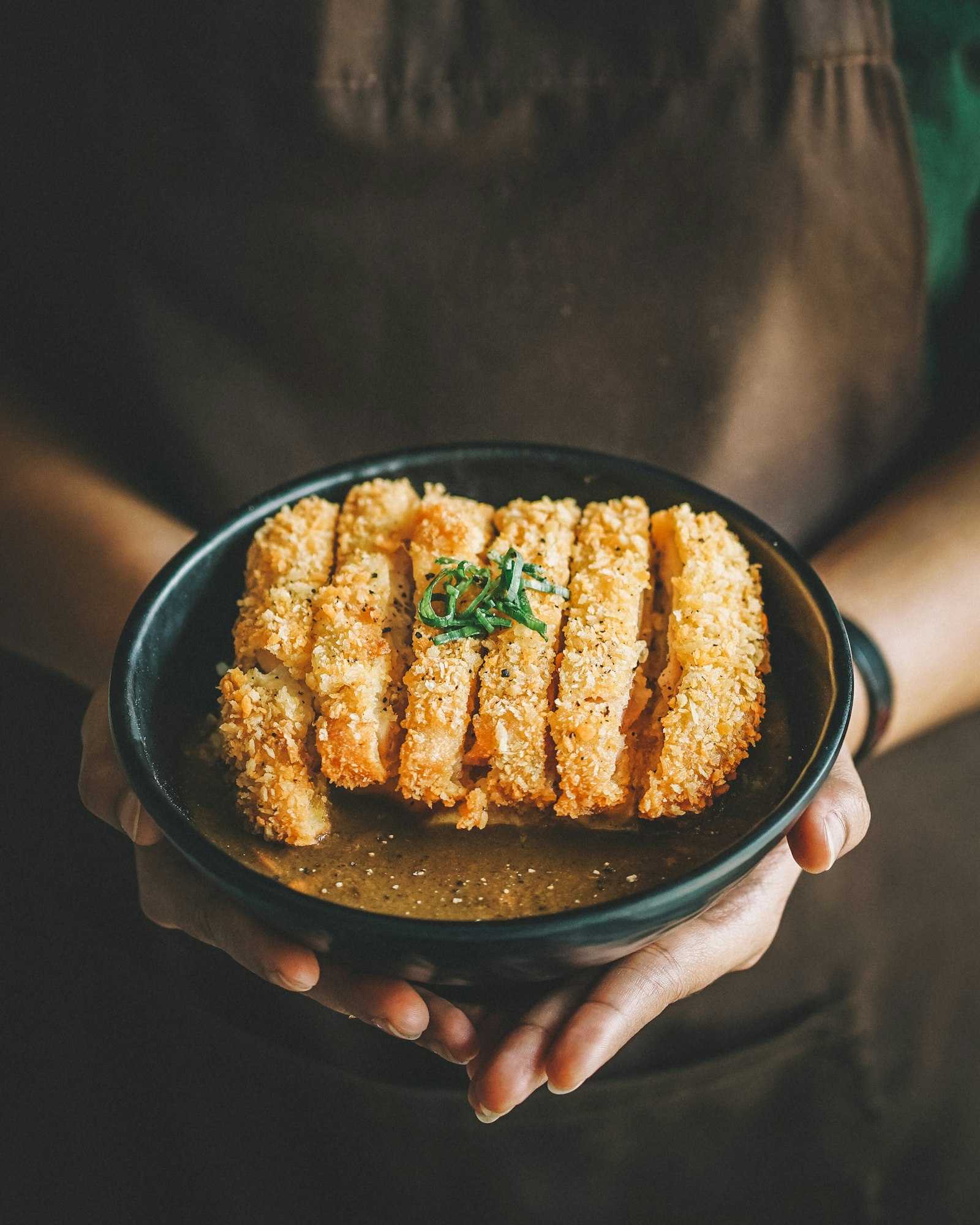
Kanagawa’s food scene is one of the most distinctive in Japan, shaped by the prefecture’s dual identity as an ancient capital and a 19th-century international port. This is the birthplace of Japan’s most copied ramen style, the home of the country’s largest Chinatown, and the region where the Japanese Navy invented curry as we know it. Eating your way through Kanagawa is a journey through modern Japanese food history.
Ie-kei Ramen (家系ラーメン) — Yokohama’s Gift to Japan
No single city has had more influence on Japanese ramen culture than Yokohama. Ie-kei ramen (literally “house-style ramen”) was invented here in 1974 at a shop called Yoshimuraya (吉村家) in Nishi-Ku, and the style has since spawned hundreds of imitators across Japan.
The bowl is distinctive: thick, flat noodles (not the thin wavy kind used in most tonkotsu ramen) swim in a rich broth that blends pork bone (tonkotsu) with soy sauce, topped with three sheets of seaweed, spinach, chashu pork, and a firm-yolked seasoned egg. The broth is deliberately thick — it coats the spoon.
At every ie-kei shop, you customize three variables:
- Broth strength (aji no kosa): light (ussuri), regular (futsuu), or strong (koku)
- Fat level (abura): light, regular, or extra (oomori)
- Noodle firmness (katasa): soft (yawamen), regular, or firm (katamen)
Where to eat ie-kei:
- Yoshimuraya (吉村家), Yokohama Station west exit: the original, a pilgrimage site. Expect a 30-minute queue on weekends. A regular bowl runs ¥950. Worth it once for the history.
- Sugitaya (杉田家), Isogo-ku: Many locals consider this the best bowl in Yokohama — richer, more balanced, and far shorter queues than Yoshimuraya. ¥950.
- Rokurinsya (六厘舍), Yokohama Station: Technically a tsukemen (dipping noodle) specialist rather than pure ie-kei, but beloved in Yokohama. The thick dipping broth with cold firm noodles is a different but equally satisfying experience. ¥1,100.
- Honmoku Tei (本牧亭): A local neighbourhood shop in Naka-ku with a more restrained broth — recommended if you find the classic ie-kei style overpoweringly rich.
Yokohama Chinatown — Japan’s Largest
More than 500 restaurants occupy the 0.2 square kilometres of Yokohama Chukagai (中華街), making this the most concentrated dining district in Japan. The neighbourhood has operated continuously since 1859, when Chinese merchants came to trade with the newly opened port. The food is authentically Chinese-Japanese — meaning it’s genuinely good Chinese cooking adapted over generations rather than the generic “chuka ryori” found elsewhere.
What to eat:
- Dim sum (飲茶, yum cha): The two best sit-down dim sum restaurants are Yokohama Daihanteien (横浜大飯店) and Heichinrou (聘珍樓), both on the main Chukagai Odori. Expect to pay ¥2,500–4,000 per person for a full dim sum lunch. Reservations are essential on weekends.
- Nikuman (肉まん): The giant steamed pork buns sold from street windows are the district’s defining street food. Jukouken (重光飯店) and Egawa (江川) are the most celebrated sellers. Buns range from ¥200 (basic) to ¥380 (premium pork with ginger).
- Street food vs sit-down: The main boulevard (Chukagai Odori) is overwhelmingly tourist-facing with aggressive touts outside. Walk one or two blocks north or south to find the narrower lanes where actual Yokohama Chinese residents eat. The food improves and the prices drop considerably.
Avoid: The elaborate all-you-can-eat buffets visible from the main street represent the worst value and lowest quality in the district. Locals never eat there.
Shirasu (白子) — Enoshima’s Whitebait Culture
Shirasu (young whitebait, specifically juvenile Japanese anchovy and sardines) has been the culinary identity of the Shonan coast for centuries. The tiny silver fish are netted in Sagami Bay from spring through autumn, and the restaurants of Enoshima island and the Katase-Enoshima beachfront have made them into a defining regional cuisine.
Season: Shirasu fishing is banned January through late April to protect breeding stocks. Fresh shirasu (nama-shirasu) is available late April through December only. Outside the season, you’ll be served kamaage-shirasu (boiled and dried) — still delicious, but missing the translucent freshness of the raw version.
The two styles:
- Nama-shirasu-don (生しらす丼): Raw whitebait over rice, served cold with ginger, spring onion, and soy sauce. The texture is slightly gelatinous, the flavour briny and fresh. Around ¥1,200–1,600 at most Enoshima restaurants.
- Kamaage-shirasu-don (釜揚げしらす丼): Boiled whitebait over warm rice, more approachable for first-timers. ¥1,000–1,400.
- Shirasu pizza: A uniquely local innovation that sounds alarming and tastes excellent — thin-crust pizza topped with shirasu, garlic, olive oil, and often cherry tomatoes. Popularized by Enoshima restaurants in the 2000s and now widely available along the Shonan coast. ¥1,200–1,600.
Where to eat shirasu: The restaurants along the main street climbing Enoshima island all serve it (look for the blue shirasu-don flags). Shirasuya and Otoyan are the most consistently recommended. For ocean views while eating, try the restaurants on the island’s west cliff, reached via the Enoshima Samuel Cocking Garden path.
Misaki Tuna (三崎まぐろ) — Bluefin at the Source
Misaki Port on the southern tip of the Miura Peninsula has been one of Japan’s leading bluefin tuna landing ports since the 1950s. The tuna caught here — often honmaguro (Pacific bluefin, the most prized variety) — arrives fresh from the Pacific and is served within hours at the port’s restaurants.
The cuts to order:
- Otoro (大トロ): The fattiest belly meat, deeply marbled, melts at body temperature. The most expensive cut (¥800–1,500 per piece at sushi counters).
- Chutoro (中トロ): Medium-fatty belly — most experienced tuna eaters consider this the perfect balance. ¥500–900.
- Akami (赤身): The lean red back meat, clean and intensely flavoured. Often overlooked, but at Misaki the quality is exceptional. ¥300–500.
Recommended restaurants:
- Misaki Maguro Station (三崎まぐろ駅): A dedicated tuna specialist with teishoku (set meals) for ¥2,000–3,500 that include multiple cuts, rice, miso, and pickles. A good entry point for first-time Misaki visitors.
- Kakuichi Suisan (角一水産): A more local choice with a sashimi counter where the tuna comes from the boats unloading metres away.
- Maguro Curry: An unusual Misaki specialty — tuna braised in curry sauce — available at several port-side restaurants. It sounds wrong. It’s genuinely good.
Access to Misaki: Keikyu Kurihama line to Misakiguchi Station, then the Keikyu bus to Misaki port (20 minutes, ¥280). Total from Yokohama: about 75 minutes.
Hakone Kaiseki — Mountain Luxury
Hakone’s ryokan culture has produced some of Japan’s finest kaiseki cuisine, drawing on local mountain vegetables (mountain wasabi, wild mushrooms, bamboo shoots), freshwater fish from the Hayakawa river, and Sagami Bay seafood.
For day visitors, the most accessible kaiseki experience is the lunch service at the Fujiya Hotel in Miyanoshita — Japan’s first Western-style hotel (1878) still operates, and its restaurant offers a hybrid kaiseki-Western lunch using the hotel’s historic kitchen traditions. Set lunches from ¥3,500. Booking recommended: 0460-82-2211.
For overnight kaiseki, ryokan in Gora and Miyagino area include elaborate multi-course dinners in the room rate. Expect 10–14 courses using seasonal ingredients over 90 minutes. Most mid-range ryokan charge ¥25,000–45,000 per person per night including two meals (breakfast and dinner kaiseki).
Odawara Kamaboko (小田原かまぼこ) — Artisan Fish Cake Street
Odawara has produced Japan’s finest kamaboko (processed fish cake) for 500 years, capitalizing on the abundant white-fleshed fish caught in Sagami Bay. The town’s kamaboko-ya (fish cake workshops) line the old Tokaido road west of Odawara Station.
The most famous producer is Suzuhiro (鈴廣), whose main complex outside Kazamatsuri Station includes a kamaboko museum (free entry), a workshop where you can make your own (¥800–1,200 for 30 minutes, reservation required), and a shop selling the full range of products. The classic red and white kamaboko (紅白かまぼこ, used at New Year celebrations) originates in Odawara; the chikuwa (grilled tube-shaped fish cake) sold hot from the workshop costs ¥300–500 and is the best version you’ll find anywhere.
Yokosuka Navy Curry (横須賀海軍カレー)
This is where Japanese curry was born. When the Imperial Japanese Navy adopted British sailors' rations in the Meiji era (1868–1912), their cooks adapted the curry powder recipe used by the Royal Navy — creating a stew-like curry served over rice that became a weekly tradition aboard Japanese naval vessels. Yokosuka, as the Navy’s main Pacific base, claims the dish as its own.
Dobuita Street (どぶ板通り), the entertainment strip directly outside the US Naval Base gate, has developed a self-styled “Navy curry” restaurant trail with participating establishments displaying blue naval flags. The curry served here is historically inspired — milder and thicker than modern Japanese curry, served with a side salad and a glass of milk (the original naval serving tradition). Most bowls run ¥900–1,400. Kaigun Curry Honpo and Mikasa are the most consistently recommended stops on the trail.
Shonan Craft Beer
The Shonan coast — Chigasaki, Hiratsuka, and the beach towns — has developed an unexpectedly strong microbrewery scene over the past decade, fuelled by the area’s surf and outdoor culture. Shonan Beer (Kumazawa Brewery), based in Chigasaki, produces the region’s best-known craft beers including a distinctive yuzu wheat ale. The taproom is open weekends. In Kamakura, the Craft Beer Kobo Kamakura bar on Komachi-dori offers rotating taps from small Shonan and Kanagawa producers.
Hayama’s Seafood — Hidden Gem
The fishing village of Hayama, directly south of Zushi on Sagami Bay, benefits from proximity to the Imperial Summer Villa — which means the local fish market and restaurants have historically supplied fish to the Imperial Household. The quality is exceptional and the prices are half what you’d pay in Yokohama for equivalent freshness. Izakaya Misaki near Hayama harbour serves seasonal sashimi, grilled whole fish, and the local specialty Hayama nori (dried seaweed harvested in Sagami Bay) as a side dish. Lunch sets ¥1,500–2,200. Access: Bus from Zushi Station (15 min).
Kamakura Café Culture — Komachi-dori and Beyond
Komachi-dori, the shopping street running from Kamakura Station to Tsurugaoka Hachimangu, has evolved from a souvenir strip into one of the most interesting street food lanes in the Kanto region.
Street food worth stopping for:
- Shirasu sandwich: A unique Kamakura creation — whitebait on focaccia with cream cheese, available at several bakeries on the side streets. ¥400–600.
- Purple sweet potato soft cream (murasaki imo soft cream): Brilliant violet ice cream made from local Murasaki imo sweet potatoes, served in a cone. ¥350. Not subtle but delicious.
- Matcha everything: Kamakura’s tea ceremony heritage means matcha lattes, matcha roll cake, matcha mochi, and matcha soft cream appear on roughly one in three stalls.
For a sit-down experience, the back streets of the Hase and Zaimokuza neighbourhoods contain old machiya townhouse cafes where the food (sandwiches, curry, hand-drip coffee) takes a back seat to the architecture — dark wooden beams, garden views, complete quiet. Café Terrace Hase-dera in the Hase temple garden and Cafe Cocoon in a converted fisherman’s house near Yuigahama beach are the most atmospheric options.
Food Planning Tips
Best food day trip from Tokyo: Take the train to Misaki-guchi for tuna lunch, then return via Enoshima for shirasu-don and shirasu pizza at sunset. Allow a full day (8 hours).
Kamakura food: Book Komachi-dori street food for lunch; the restaurants near the beach at Yuigahama and Zaimokuza are less crowded and often better quality than the temple-adjacent options.
Budget guide: Ramen ¥900–1,100 / Shirasu-don ¥1,200–1,600 / Misaki tuna teishoku ¥2,000–3,500 / Chinatown dim sum lunch ¥2,500–4,000 / Hakone kaiseki ryokan dinner included in room rate (¥25,000–45,000/person/night 2 meals).