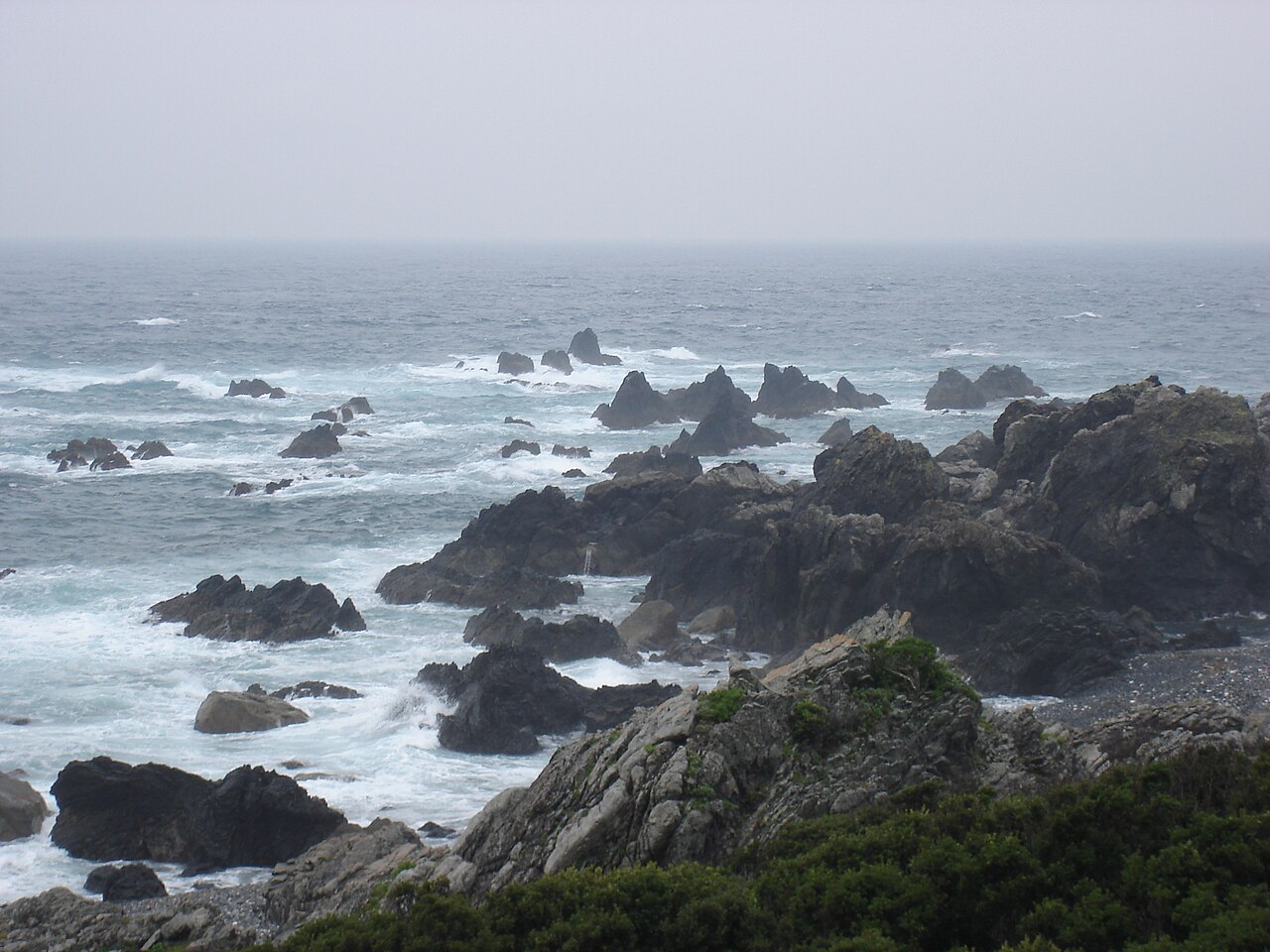
Kochi has an unusual advantage as a family destination: its main attractions are the kind that hold the attention of children without requiring the sort of patient appreciation that makes some cultural sightseeing difficult with young travellers. A castle that you actually climb, with steep wooden staircases and a top floor where the lord once slept. Boats that go out in search of enormous whales in open Pacific water. A flat-bottomed houseboat that drifts along a river so clear you can watch the fish below your feet. And a city market where the smoke from straw-fired bonito curls into the air and the sound of the kitchen is entirely part of the experience. Kochi is a prefecture where children and adults encounter the same things, and both come away with something worth talking about.
Kochi Castle
Kochi Castle stands on Kochi City’s central hill, Otakasa-yama, and is one of the most important surviving castle complexes in Japan. Among the twelve original donjon castles that survived the war and modernisation intact, Kochi is unique: it is the only one that retains its original lord’s residence (goten) within the same enclosure as the main tower. Most surviving castles have lost one or the other, but at Kochi both structures stand as they were built in the early eighteenth century following a fire that destroyed the original 1601 construction.
Climbing the Donjon
For children, the castle’s interior is its primary appeal, and it delivers. The staircases inside the donjon are steep — genuinely steep, built for defence rather than comfort, with some flights at near-ladder angles and handrails added only as a modern concession to safety. Climbing from the ground floor to the sixth floor requires active effort and some use of hands. Children who are old enough to manage the stairs unassisted (generally from around age 6 or 7) typically find the experience exciting rather than difficult.
The top floor offers a 360-degree view across Kochi City, the Pacific coastline to the south, and the mountains of the Shikoku interior to the north and west. On clear days the ocean is visible as a blue line along the horizon. The interior displays include armor, weapons, and historical documents; the pace can be adjusted based on how much time children want to spend at each floor before continuing upward.
Admission to the donjon is ¥420 for adults; children under 18 enter free. The castle grounds (ninomaru and sannomaru) are free to enter and well maintained, with shade trees and enough open space to walk without crowding. Allow approximately 90 minutes for a comfortable visit including the donjon interior.
Kochi Castle Grounds and Access
The castle is a 10-minute tram ride from Kochi Station on the Tosa Denki Tetsudo tram (¥200 per adult, children under 6 free, primary school children ¥100). Trams run every 10 to 15 minutes and are themselves an attraction for younger children who may not have ridden a street tram before. The approach from the tram stop to the castle gate involves a moderate hill, entirely manageable for families with children old enough to walk independently. Strollers become impractical inside the castle grounds; carriers are a better option for very young children.
Whale Watching from Ogata Port
From Ogata on the southern Kochi coast, whale watching boats depart between April and October in search of the sperm whales and Bryde’s whales that feed in the deep water where the Kuroshio Current passes offshore. For children between roughly 6 and 14, this is the kind of experience that gets talked about for years — standing on the observation deck of a boat, watching a sperm whale the length of a bus rise and fall at the surface before lifting its enormous tail clear of the water and disappearing into the Pacific.
Practical Details
Tour prices are approximately ¥8,500 per adult and ¥4,500 per child. Tours run for two to three hours on the water. The boat journey to and from the whale ground can itself be rough if the Pacific swell is running, and younger children prone to motion sickness should be given appropriate medication at least an hour before departure. The observation deck is open and windswept; warm layers and sunscreen are both necessary even in summer, when the temperature on deck can be significantly cooler than on shore.
Sighting rates from Ogata are quoted above 90 percent during the main season, which makes this one of the most reliable whale watching operations in Japan. The boats return to Ogata port by early afternoon on most departures, leaving time for a seafood lunch in one of the nearby coastal restaurants before heading inland.
Shimanto River Houseboat Sightseeing
The traditional flat-bottomed houseboats (yanebune) that have operated on the Shimanto River for generations offer one of the most relaxed family activities in all of Shikoku. Boarding at a landing near Shimanto City, visitors settle onto low cushioned seating under a covered roof while the boat drifts slowly downstream, propelled by a small motor that makes almost no sound. The river is exceptionally clear. Looking over the side, the gravel bottom is visible in the shallower sections, and schools of sweetfish (ayu) are visible threading through the current below.
The standard sightseeing course costs approximately ¥1,500 per person and covers a section of the lower river over about 60 minutes. The traditional sinking bridges — chinkabashi — are passed at close range from the water, which reveals their construction in a way that walking across them does not. Several operators also offer longer private hire options for families who want a quieter, more leisurely experience; prices for private hire range from ¥8,000 to ¥15,000 depending on duration and the number of passengers.
Young children are entirely comfortable on these boats. The motion is minimal, the seating is secure, and the slow pace means there is time to point out herons, cormorants, and river life as they appear on the banks. Rain does not prevent the experience — the covered roof is adequate shelter — though lightning and very high water during typhoon season will cause departures to be suspended.
Tosa Marine Biology Museum (Katsurahama Aquarium)
Near Katsurahama beach on the southeastern outskirts of Kochi City, the Katsurahama Aquarium houses a well-regarded collection of Pacific marine life including sea turtles, reef fish, and the occasional large pelagic species that reflects the Kuroshio Current waters just offshore. The aquarium is modest in scale compared to large urban facilities but is friendly and well-maintained. Admission is ¥600 for adults and ¥300 for children. The beach adjacent to the aquarium is famous in Kochi for its view and its association with the 19th-century explorer Nakahama Manjiro, whose statue stands on the cliff above.
From the aquarium, the clifftop walk toward the Katsurahama shrine offers views south across the Pacific that are excellent for explaining to children just how remote and ocean-facing Kochi actually is. The beach itself is not suitable for swimming — currents make it dangerous — but the shoreline walk is pleasant and the rock formations at the headland are interesting.
Eating Katsuo Tataki as a Family
Kochi’s signature dish — katsuo tataki, bonito seared directly over burning rice straw and served with garlic, ginger, and ponzu — is one of the more dramatic food preparations in Japan. Watching the preparation at Hirome Market in Kochi City, where the flames from the burning straw rise well above waist height and the smell of seared fish fills the covered hall, is itself an experience. Most children find the fire preparation immediately engaging.
The flavour of katsuo tataki is assertive — the garlic and ginger are not subtle — and some younger children find it too strong. The milder preparations at sit-down restaurants (served with citrus ponzu rather than the full garlic-heavy condiment spread) are more accessible for cautious eaters. A full family meal at a Kochi katsuo restaurant typically costs ¥2,000 to ¥4,000 per adult, with children’s portions often available for ¥800 to ¥1,200.
Yosakoi Festival with Children
Held annually from August 9 to 12 in Kochi City, the Yosakoi Festival is one of Japan’s most energetic summer festivals. Some 20,000 dancers perform across dozens of city venues, coordinated in teams that design their own costumes and choreography around a single compulsory rhythm. The performances take place outdoors, are free to watch from the street, and are loud, colourful, and kinetic enough to hold the attention of children of almost any age. Unlike some traditional festivals where participation is restricted, Yosakoi actively welcomes visiting children who want to join informal practice sessions at certain venues. Accommodation in Kochi fills rapidly during Yosakoi; book at least two months in advance.