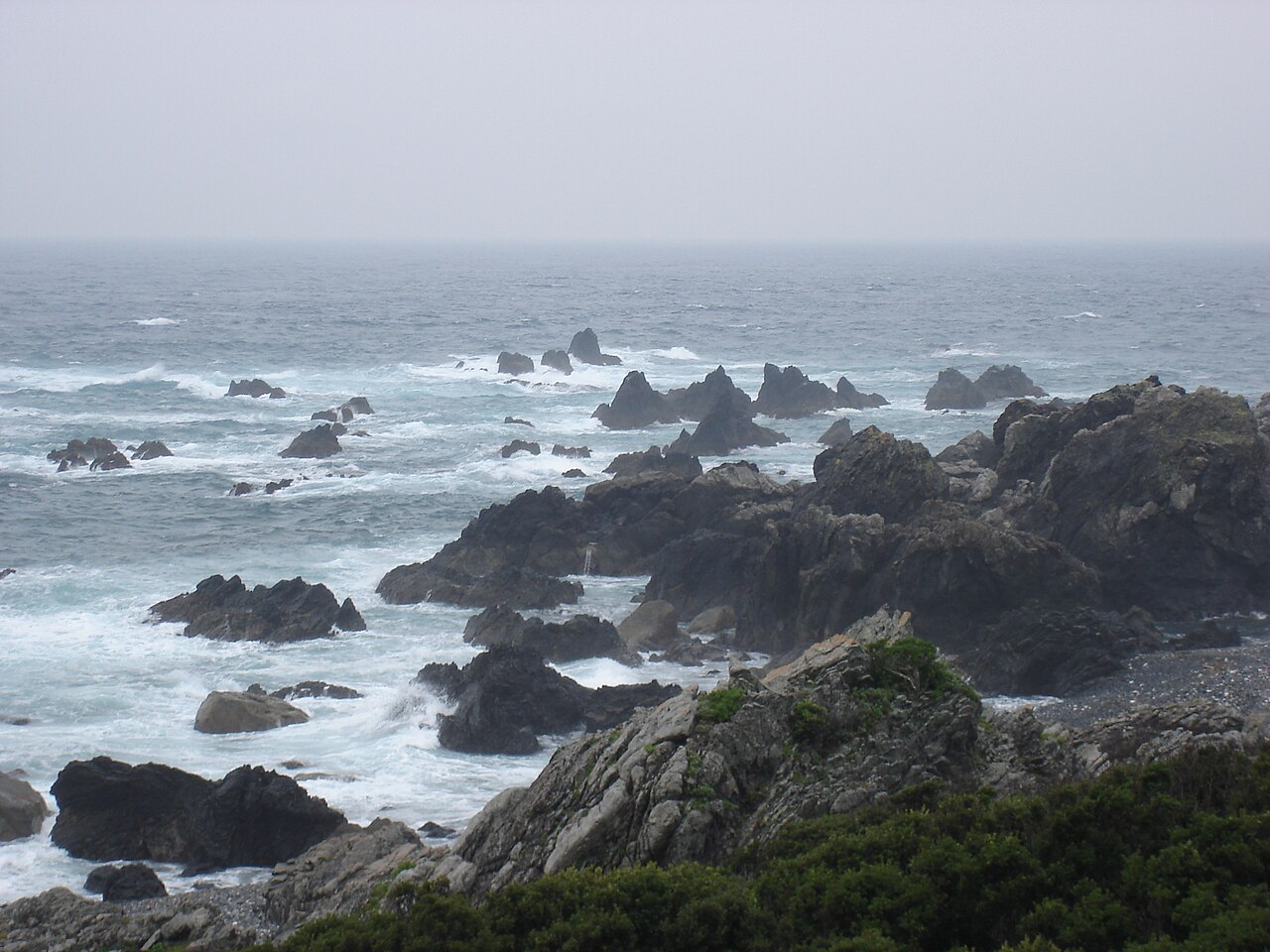
There is a particular quality to places that face the open ocean without apology. Cape Ashizuri, the southernmost point of Shikoku, is one of those places. The cliffs drop eighty metres to the Pacific below and nothing interrupts the view south until the Antarctic. The lighthouse has stood here since 1872. The camellia trees — Ashizuri is covered in wild tsubaki in late winter and early spring — grow sideways from the wind. Inland from the cape, the Shimanto River moves through a valley that seems entirely disconnected from the rest of Japan, its water so clear that it turns a visible shade of turquoise in the deeper sections. Kochi is not a prefecture that markets itself to honeymoon travellers, which is precisely what makes it right for couples who have no interest in places that do.
Cape Ashizuri
A honeymoon itinerary in Kochi should allocate at least two nights at the cape. The area rewards slow exploration on foot — the Ashizuri Skywalk trail follows the clifftop south from the ryokan village toward the lighthouse, a walk of about 45 minutes in each direction that passes through camellia groves and opens periodically onto views of the full arc of the southern coast. The trail is well-maintained and not technically demanding, but the exposure of the cliff edge and the power of the Pacific below it give the walk a gravity that more manicured nature walks do not possess.
Sunset at the Lighthouse
The lighthouse at Cape Ashizuri is accessible year-round, and the cliff platform below it is one of the finest sunset viewpoints in all of Japan. The sun drops directly into the Pacific from this latitude during the warmer months, and the Kuroshio Current keeps the atmosphere unusually clear. Arriving in the late afternoon and staying until after dark — when the lighthouse beam begins to rotate across the darkened ocean — is an experience that does not require company to be moving, but is considerably more so with a person you love.
Kongofukuji Temple, the 38th temple of the Shikoku 88, sits among old-growth trees close to the cape’s tip. Even for visitors with no particular connection to the pilgrimage, the ancient camphor trees around the temple and the sound of the incense-heavy air inside the main hall create an atmosphere that makes the cape feel genuinely sacred rather than merely scenic.
Ryokan at the Cape
Accommodation at Cape Ashizuri runs from ¥20,000 to ¥35,000 per person per night including two meals. The meals are where the Kuroshio Current makes its presence felt most directly: spiny lobster from the waters just below the cliffs, Pacific bluefin sashimi, seasonal fish grilled over charcoal, sea urchin from the rocky coves, and freshwater ingredients from the rivers of the interior. Some ryokan offer private open-air baths looking south over the ocean. Reserving a room with a sea view and requesting the private bath option when booking is strongly recommended for a honeymoon stay.
Shimanto River
From Cape Ashizuri, a drive of approximately 90 minutes north through the mountains brings you to the Shimanto River valley. The transition is complete: from the drama of ocean cliffs to the deep quiet of an undammed river valley where the pace of life follows the current rather than any clock. The lower Shimanto is wide and unhurried, reflecting the sky and the surrounding forest. The sinking bridges — fourteen of them on the main river alone, built low enough to be submerged by floods rather than destroyed by them — cross the water at intervals and are among the most quietly beautiful pieces of functional architecture in Shikoku.
Private Houseboat on the Shimanto
Hiring a private yanebune houseboat for a morning on the river is a genuinely romantic activity in the most practical sense. Seated under the covered roof, the boat drifts downstream while the riverbanks slide past at walking pace. The water is clear enough to see the bottom for most of the journey. Herons stand in the shallows. The mountains close in behind you. No other transport in Japan provides quite this quality of slow witnessing. Private hire for two people typically costs ¥8,000 to ¥12,000 depending on the operator and duration, and can be arranged through the Shimanto tourist association or directly through riverside operators in Shimanto City.
Eco-Lodges and Riverside Accommodation
The Shimanto valley offers accommodation at a different emotional register from the cape ryokan. Small riverside eco-lodges and converted farmhouses provide tatami rooms with shoji screens that open onto garden views of the water. Prices are more modest — ¥6,000 to ¥12,000 per person — and meals focus on river ingredients: sweetfish, freshwater shrimp, and river eel alongside mountain vegetables. The atmosphere is unhurried and entirely private.
Niyodo River
The Niyodo River, accessible by rental car from Kochi City along Route 33 into the mountains north of Ino Town, carries what may be the most beautiful colour of any river in Japan. The turquoise is produced by the optical properties of fine mineral particles in suspension against a pale limestone riverbed — understanding the mechanism does not diminish the experience of standing beside it. The colour changes with the time of day and the angle of light. In the early morning, the river is a deep blue-green. By midday, it shifts toward a brilliant aquamarine. The surrounding forest and the pale karst rock face above create a setting that is quiet and dramatically beautiful.
A kayaking session on the Niyodo — guided, two hours, approximately ¥4,500 to ¥6,000 per person — is a natural activity here. The lower river is calm and entirely manageable without prior experience. The combination of the colour below the hull, the overhanging trees, and the silence of the gorge makes it one of the most memorable outdoor activities available in Shikoku.
Katsurahama Beach at Evening
On the southeastern outskirts of Kochi City, Katsurahama is a small, dramatically placed beach below dark pine trees and a clifftop shrine. The sea is not safe for swimming here — the undertow is strong — but the beach is beautiful to walk as the light goes down, particularly in the late afternoon when the pine shadows lengthen across the sand and the offshore Pacific glows. The beach and its approach are entirely free to visit and are rarely busy outside of weekends in July and August.
Food and Drink in Kochi for Couples
Kochi has a reputation as one of Japan’s great eating and drinking prefectures. The local drinking culture — facilitated partly by the custom of sharing food at communal tables in places like Hirome Market — is warm and inclusive rather than reserved. A private dinner at a katsuo tataki restaurant in Kochi City, ordering the full course from raw bonito sashimi through the straw-seared tataki and on to the broth and salted entrails (shaburi), costs ¥4,000 to ¥7,000 per person depending on the restaurant’s level and the accompanying sake selection.
Tosa sake is made from the same high-quality soft mountain water that fills the prefecture’s rivers. The local style tends toward dry and clean, a perfect match for the assertive flavours of the seafood. Several breweries in Kochi city offer tastings by appointment or through their attached shops, and taking home a bottle of the best local Junmai Daiginjo is one of the most practical souvenirs available.
Getting Around Kochi for a Honeymoon
A rental car is the correct choice for a Kochi honeymoon itinerary. It allows movement between the cape, the Shimanto valley, and the Niyodo at your own pace, with stops at fishing ports and viewpoints that public transport does not serve. Kochi Ryoma Airport receives direct flights from Tokyo Haneda in approximately 85 minutes. Pick up the rental car at the airport and the cape is under two hours away. The roads between Kochi’s main attractions are not heavily trafficked, and the Sunlit Road along the southern coast — National Route 321 — is one of the most scenic drives in Shikoku.