Kyoto’s most-visited sites — Fushimi Inari’s lower gates, Kinkakuji’s golden pavilion, the Arashiyama bamboo grove path — are genuinely beautiful. They are also, between 9:00am and 5:00pm on any day between March and November, overwhelmed with visitors. This guide is for the next layer down: the sub-temples that most guidebooks mention in passing, the neighbourhoods where Kyoto’s actual culture persists, and the experiences that require more effort but far fewer fellow visitors.
⛩️ Fushimi Inari — Go to the Summit
The single most common mistake in Kyoto travel: Visiting Fushimi Inari, photographing the lower Senbon Torii tunnel, and leaving after 20 minutes. The entire site is a 5km mountain circuit with 7,000 gates extending to the summit (233m). Above the Yotsutsuji junction (40 minutes from the base), the gates become mossy and worn, the subsidiary shrines become more remote and atmospheric, and the crowds thin to almost nothing. The summit clearing — a small rock altar where the oldest deity of the mountain is enshrined — receives perhaps 5% of the total visitors.
Summit hike: 2–3 hours return; open 24 hours; free. The trail above Yotsutsuji is best early morning or evening.
🍡 Ichiwa — The World’s Oldest Sweet Shop
Location: Opposite Imamiya Shrine, north Kyoto | Hours: 10:00–17:00 (closed Wednesdays and irregular days) | Access: Bus 46 to Imamiya-jinja-mae stop
Ichiwa (一和) has been selling aburi mochi (small rice-flour cakes on skewers, charcoal-grilled and dipped in white miso sauce) from the same spot since 1,000 CE — making it possibly the oldest continuously operating food establishment in the world. The recipes, the charcoal method, and the seating arrangement in the garden around the well have not materially changed in ten centuries.
The aburi mochi (¥600 for about 13 skewers) is eaten seated in a small enclosed garden; the smoke from the charcoal grill and the sweet-savory miso flavor are humble but deeply satisfying. The experience of eating food made by the same family from the same recipe in the same place for a thousand years is something no other restaurant in Japan can offer.
Across the lane: The rival shop Kazariya (also 400 years old, merely) offers the same dish. Both claim priority.
🌿 Imamiya Shrine — The Garden of Spring Ritual
Access: Bus 46 to Imamiya-jinja-mae stop; 2 min walk | Hours: 9:00–17:00 | Admission: Free
Imamiya Shrine (今宮神社) is the most undervisited major shrine in Kyoto — a broad, tree-filled compound with gravel forecourts, ancient wisteria, and a remarkable ritual object: the Yasurai Matsuri held here in April is one of Kyoto’s three great shrine festivals, dating to the 10th century, and performed specifically to appease the plague deity. The shrine itself was built following a catastrophic plague in 994.
The shrine complex also contains a remarkable stone — the Kagami-ishi (mirror stone) — which visitors pick up and rub: if it feels light, a wish is granted; if heavy, denied. The stone has been polished smooth by a thousand years of hands.
🌸 Jonangu Shrine — The Garden Nobody Visits
Access: Subway Kintetsu-Kyoto Line to Takeda Station + 10 min walk; or bus to Jonangu-michi | Hours: 9:00–16:30 | Admission: ¥700
Jonangu (城南宮) is in southern Kyoto, 20 minutes from the city centre — far enough that almost no casual visitors find it. The shrine’s five gardens are styled to represent different historical periods of Japanese garden design, from Heian through modern, and the shidarezakura (weeping cherry) section in March–April rivals anything in Kyoto for spring beauty.
The most extraordinary section is the Heian-period garden with its meandering stream (yarimizu) beneath weeping cherry branches — the design recreates the garden setting used for the aristocratic nagashi hina doll-floating ceremony. In late February through March, a carpet of kogane (golden yellow) plum blossoms covers the stream bank while the weeping cherries overhead begin to open — a combination of colour that the Kyoto tourist routes entirely miss.
🔑 Daitokuji Sub-Temples — Hidden Christian Cross Garden
Access: Bus 12 or 206 to Daitokuji-mae stop | Admission varies: ¥400–¥600 per sub-temple
Daitokuji is covered in the main sightseeing guide, but its most remarkable hidden feature deserves specific mention: Zuiho-in (瑞峯院) contains a karesansui garden designed by 20th-century garden master Shigemori Mirei in 1961. Mirei embedded a hidden Christian cross in the stone arrangement — a reference to the temple’s founder, the Christian daimyo Otomo Sorin, who was baptised in 1578. The cross appears when you view the garden from a specific angle, formed by the gap pattern between the stones.
This garden is openly discussed by garden scholars but almost never mentioned in mainstream Kyoto guides — ask the attendant at Zuiho-in and they will confirm it.
Also at Daitokuji: The Koto-in (高桐院) sub-temple has the finest autumn maple path in Kyoto — a 70m approach lane covered so completely with fallen maple leaves in November that the stone pavers disappear under a solid red layer. Open year-round; ¥600 in autumn.
🎋 Honen-in — The Most Peaceful Temple Gate
Access: 5 min walk off the Philosopher’s Path, north of Ginkakuji | Hours: 6:00–16:00 (inner garden closed Mon/Tue) | Admission: Free (inner garden ¥500 when open)
Honen-in (法然院) has the most photogenic gate in Kyoto — a steep thatched sanmon gate opening suddenly off a bamboo-lined lane, with stone stairs rising to a garden of immaculate moss and two parallel shirazu (white sand platform) mounds. The mounds are raked in seasonal patterns; fallen cherry petals cover them in spring.
The temple is 10 minutes from Ginkakuji on the Philosopher’s Path but receives perhaps 2% of Ginkakuji’s visitors. Because entry is free, there is no commercial pressure or souvenir apparatus — it is simply a gate, a path, and a garden.
🏛️ Zuishin-in — Lady Ono no Komachi’s Temple
Access: Ono Station (Kintetsu Kyoto Line) from Kyoto Station + 5 min walk | Hours: 9:00–16:30 | Admission: ¥500
Zuishin-in (随心院) in Yamashina — 20 minutes from central Kyoto — is dedicated to Ono no Komachi, the 9th-century court poetess considered the most beautiful woman in Japanese history. Her poems are among the Hyakunin Isshu anthology’s most famous; she is said to have died alone and impoverished despite (or because of) her legendary beauty.
The temple’s garden contains a representation of a willow tree (Komachi’s emblem) and a well said to be hers; the main hall displays portraits and literary exhibits. In March, the temple holds a hina matsuri doll display combining Heian court aesthetics with the local history.
What makes Zuishin-in worth the detour is its near-total lack of tourists — a significant cultural site, easily accessible, that almost no foreign visitor finds.
🍶 Fushimi Sake Canal
Access: Kintetsu or Keihan from Kyoto to Fushimi-Momoyama or Chushojima stations | Free
The Horikawa canal in Fushimi — a narrow waterway lined with sake warehouses (sakagura) and weeping willows — is one of Kyoto’s most cinematic streetscapes and almost completely unknown to visitors who don’t actively seek it out. The canal is navigable in 1-hour tourist punts (yuka-bune, ¥1,500) March–November, floating between willow branches and warehouse walls with sake tasting on board.
The district also contains:
- Terada-ya Inn (寺田屋): The 1866 inn where Sakamoto Ryoma (the most romanticised figure of the Meiji Restoration) survived an assassination attempt; the original building is preserved as a museum with the sword marks still visible in the woodwork (¥400)
- Gekkeikan Okura Museum: 400 years of sake history, sample included in ¥600 entry
🏮 Nishijin Back Streets
Access: Bus 9 or 12 to Nishijin area | Free
Nishijin (西陣) is central Kyoto’s most intact pre-war residential neighbourhood — a dense grid of narrow tori-iva lanes (back alleys where traditional townhouses face inward) with almost no tourist infrastructure. The area is known for its weavers and its coffee culture.
What to find:
- Morning loom sounds from active workshops behind wooden shutters (most active 7:00–12:00)
- Ima Cafe and similar kissaten (retro coffee shops) that have been serving the same menu since the 1960s
- Myoshinji temple complex (妙心寺) — Kyoto’s largest Zen compound (47 sub-temples, most closed) — which borders Nishijin and can be walked through freely; the scale of its precincts and its near-total lack of visitors are remarkable given its size
🌙 Night Kyoto — The City After 8pm
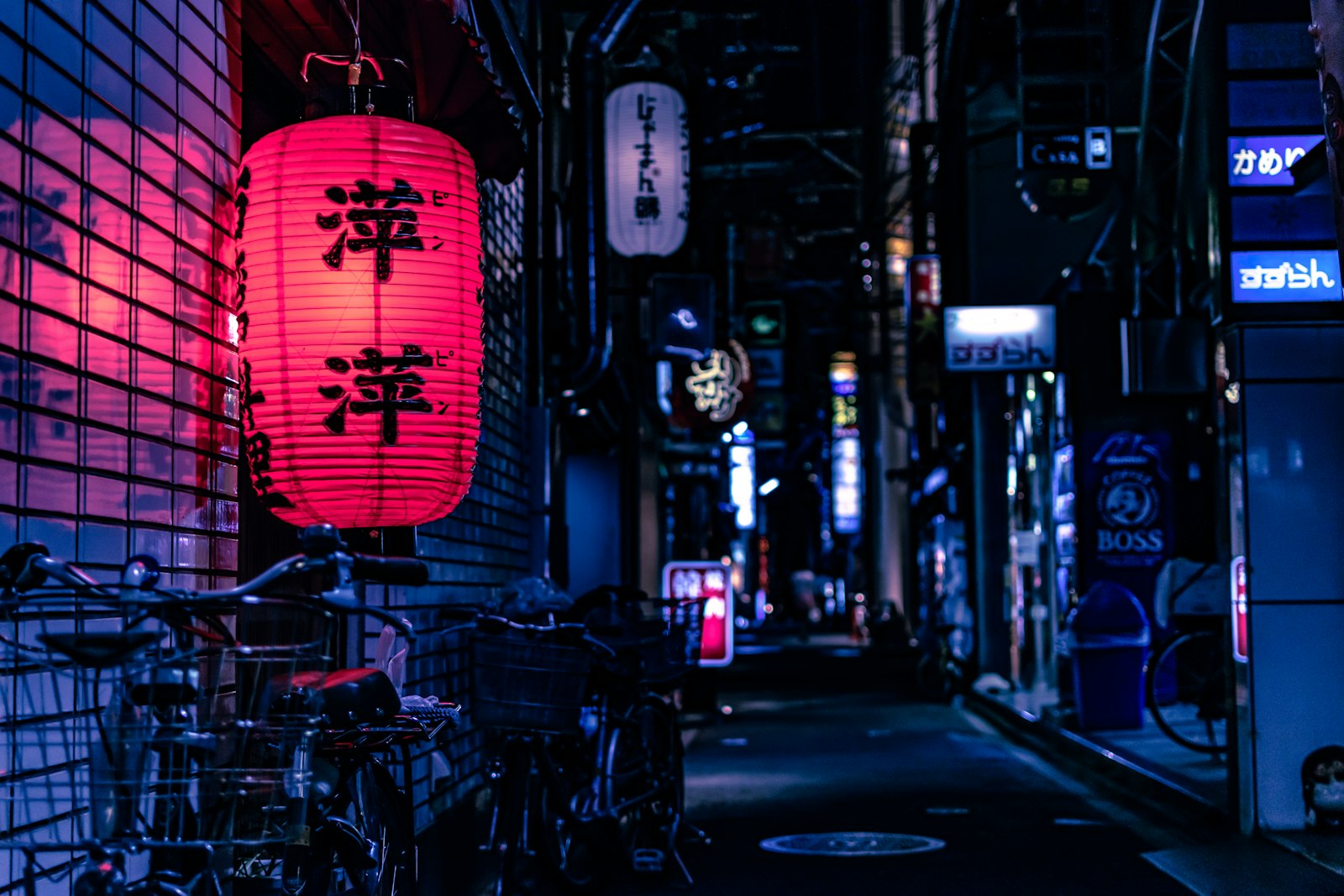
Most visitors experience Kyoto between 9:00am and 5:00pm. The evening city is different: the day-trip tourists have departed (Kyoto has very limited hotel capacity relative to visitor numbers; most visitors are day-trippers from Osaka), the light changes to lantern-lit, and the streets become those of an inhabited city rather than a tourist venue.
Evening recommendations:
- Gion Shirakawa canal (17:30–20:00) — the small canal behind Hanamikoji with willow trees and stone bridges is at its best as the lanterns light and the city empties
- Pontocho alley (17:00–21:00) — the narrow lane running parallel to the Kamogawa between Shijo and Sanjo is too narrow for tour groups; the lanterns and the sense of being inside a living geisha district are most palpable at dusk
- Fushimi Inari gates (after 20:00) — lantern-lit, empty, and completely transformed from the daytime experience
Recommended “Beyond The Guidebook” Itinerary
Half day in north Kyoto: Bus to Imamiya-jinja → Aburi mochi at Ichiwa → Imamiya Shrine → Bus to Daitokuji → Zuiho-in Christian cross garden → Koto-in (autumn) or Daisen-in → Walk south through Nishijin back streets → Coffee at old kissaten → Bus back to Shijo
Half day south: Kintetsu to Fushimi → Terada-ya inn → Canal walk + sake tasting → Gekkeikan Museum → Fushimi Inari (arrive by 4:00pm for gate shadows + summit attempt) → evening gates lit at dusk