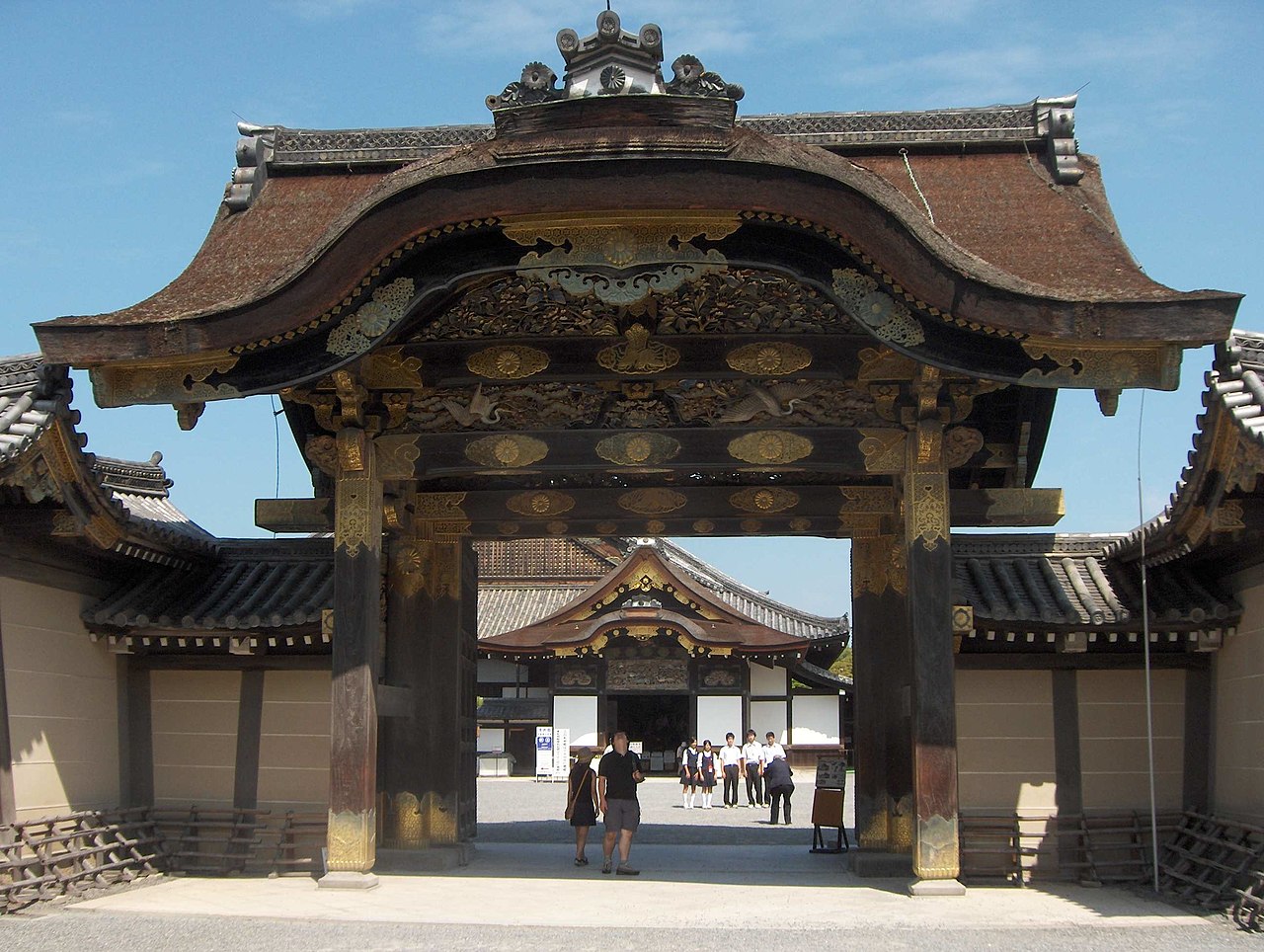
Nijo Castle is where the power of the shogun was put on display — and, three centuries later, where it was formally surrendered. Built by the Tokugawa shoguns as their Kyoto residence, it is not a fortress of soaring keeps but a sprawling palace of tatami halls, gold-leaf screens, ornate carved transoms, and gardens, surrounded by moats and stone walls. Walking its Ninomaru Palace — across floors deliberately engineered to “sing” like nightingales to warn of intruders — is one of the most evocative historical experiences in Kyoto, and a UNESCO World Heritage Site.
This guide covers the palace, the famous squeaking floors, the painted rooms, the gardens, and the pivotal moment of Japanese history that played out within these walls.
🗓️ Quick Reference
| Address | 541 Nijojocho, Nakagyo-ku, Kyoto |
| Hours | 8:45–16:00 (entry); grounds to 17:00 |
| Entry | ~¥800 grounds + ~¥500 Ninomaru Palace (combined ticket) |
| Closed | Some Tuesdays & New Year period — check ahead |
| Time needed | 1.5–2 hours |
| Nearest station | Nijojo-mae (Tozai subway line), directly outside |
A Brief History
Nijo Castle was completed in 1626 by Tokugawa Ieyasu, founder of the shogunate that would rule Japan for over 250 years, as the Kyoto seat of the shogun’s power. Its scale and lavish decoration were a deliberate statement of Tokugawa supremacy over the imperial court, whose palace lay nearby.
In a profound twist of history, it was here in 1867 that the last shogun, Tokugawa Yoshinobu, summoned the feudal lords and announced the return of power to the Emperor — ending 700 years of military rule and beginning the Meiji Restoration that propelled Japan into the modern era. You can stand in the very room where it happened.
The Ninomaru Palace
The Ninomaru Palace is the heart of the visit — a connected series of five buildings with 33 rooms and over 800 tatami mats, arranged so that visitors of different rank were received in different chambers, never seeing deeper into the shogun’s private world than their status allowed.
- Painted screens (fusuma): The rooms are decorated with magnificent gold-leaf paintings by the Kano school — tigers, leopards, pine trees, and hawks, designed to intimidate and impress visiting lords.
- Carved transoms (ramma): Intricate openwork wood carvings above the sliding doors.
- The Great Hall (Ohiroma): The grandest chamber, where the shogun received the most important guests — and where the surrender of power was announced. Mannequins now depict the historic scene.
- Photography is not permitted inside the palace to protect the screens.
The Nightingale Floors
The palace’s most famous feature is invisible: the “nightingale floors” (uguisubari). As you walk, the floorboards emit a high-pitched chirping squeak, like birdsong. This was a deliberate security device — the floors were engineered with clamps and nails that rub and squeak under any footstep, making it impossible for an assassin or spy to move through the palace silently. Try as you might to tread softly, the floors will sing. It is a genuinely delightful, slightly eerie experience to walk them knowing why they were built.
The Gardens & Grounds
- Ninomaru Garden: A classic Momoyama-period garden beside the palace, with a large pond, islands representing crane and tortoise (symbols of longevity), and carefully arranged stones — designed by the famous landscape master Kobori Enshu.
- Honmaru: The inner citadel, with its own palace (interior access varies) and the foundation of a former five-storey keep that burned in the 1700s — you can climb the base for a view.
- Seiryu-en: A more modern garden area used for tea ceremonies and events.
- Cherry blossoms: Nijo Castle is one of Kyoto’s great cherry-blossom spots, with hundreds of trees of many varieties extending the season, and special evening illuminations in spring.
Best Time to Visit
- Opening (8:45): Quietest, before tour groups arrive.
- Spring: Cherry-blossom season and the evening light-up are spectacular.
- Autumn: Maples in the gardens.
- Check closures: Nijo Castle closes on certain Tuesdays and over New Year — verify before you go.
Combining Your Visit
Nijo Castle is in central Kyoto, easy to combine with:
- Kyoto Imperial Palace (Gosho): The former imperial residence and its vast park, a short ride north.
- Nishiki Market and downtown dining are nearby — see our Nishiki Market guide .
- Nijo-jinya (nearby): A fascinating “ninja house” merchant residence full of hidden defences (reservation/Japanese-guided).
- See our top sightseeing guide for the full plan.
Getting There
- Tozai subway line → Nijojo-mae Station, directly across from the entrance — the easiest access of any major Kyoto sight.
- Bus from Kyoto Station (City Bus 9, 50, 101) to the Nijojo-mae stop.


