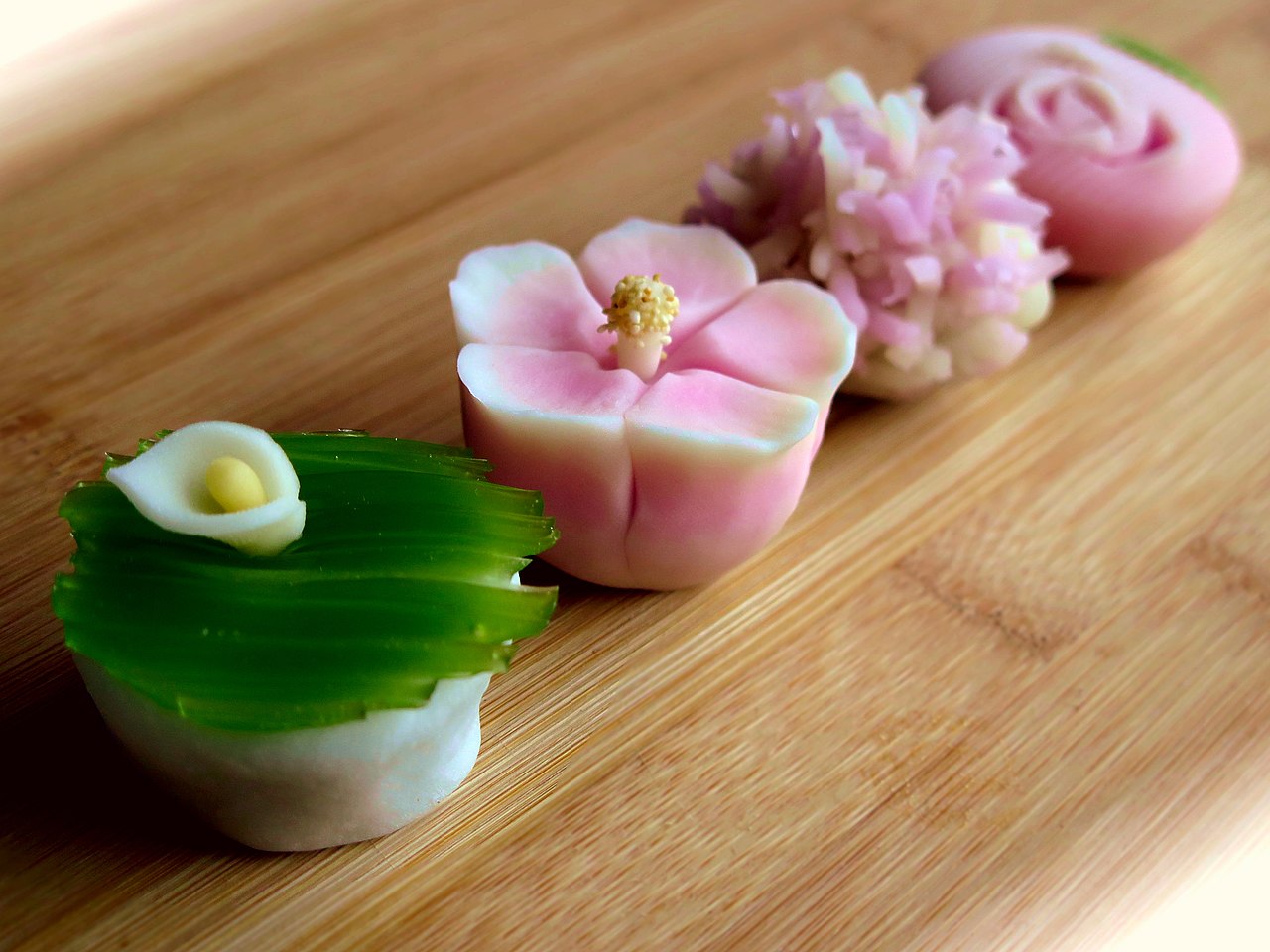
Kyo-wagashi are the refined traditional sweets of Kyoto, developed alongside the tea ceremony and elevated here into an edible art form. Made largely from sweet bean paste, glutinous rice, agar and sugar, they are prized less for sweetness than for beauty: each is shaped and coloured to evoke a season — a pink petal in spring, a cool cube of kingyoku in summer, a russet maple leaf in autumn. Served with a bowl of bitter matcha, a single wagashi is a small ceremony in itself. Kyoto’s centuries-old confectioners, some serving the imperial court for generations, make them fresh each day.
🗓️ At a Glance
| Location | Central Kyoto |
| Hours | Shop and tearoom hours |
| Admission | From a few hundred yen per sweet |
| Time needed | 30–60 minutes for tea and a sweet |
| Best time | Year-round; the sweets change with the season |
What to Try
- Seasonal nerikiri sweets shaped by hand into flowers and leaves.
- A fresh wagashi served with a bowl of bitter matcha.
- Summer kingyoku and higashi dry sweets.
- Historic confectioners near the temples and palace.
Combine Your Visit
- Combine with a wagashi-making class .
- Pair with a temple or garden visit and a tea break.
- Read our Kyoto overview .
Getting There
- Anywhere central: old confectioners cluster around Nishiki, Gion and the palace.
- In tearooms: many temples and gardens serve matcha with a seasonal sweet.
Tips
Buy fresh nerikiri sweets to eat the same day rather than as souvenirs, as they don’t keep, and pick up the longer-lasting higashi dry sweets to take home instead. The best experience is a bowl of matcha with a single seasonal sweet in a temple tearoom or an old confectioner’s salon; look for whatever shape reflects the current season, which is the whole point of the art.


