Mie has the most serious New Year in Japan. Ise Jingu is not simply a popular shrine — it is the shrine, the home of Amaterasu, the sun goddess from whom the imperial line claims descent, and the spiritual centre of Shinto. In the first days of January it receives worshippers in the millions, with something like half a million crossing the Uji Bridge on January 1 alone. For centuries, before trains existed, ordinary people saved for years to walk here; that sense of a once-in-a-lifetime pilgrimage has never entirely gone.
What makes Mie work as a New Year trip is that the pilgrimage comes with everything around it: a 300-metre Edo-period food street at the shrine gates that opens before dawn, the wedded rocks at Futami where people gather for the first sunrise, lobster and oysters at their winter peak along the Shima coast, and one of Japan’s largest winter illuminations an hour north at Nabana no Sato.
Dates in this guide: The next New Year falls on Friday, January 1, 2027; the holiday runs through Sunday, January 3, with most businesses reopening Monday, January 4. Shrine and shop hours change each year — confirm officially before planning around them.
🗓️ The New Year Calendar, Day by Day
| Date | What happens |
|---|---|
| Dec 26–28 | The last normal days. Museums, pearl workshops and the Shima coast restaurants all open. |
| Dec 29–31 | Ise’s Oharai-machi and Okage Yokocho at their busiest pre-holiday peak; the Toba and Matoya oyster huts in full swing. |
| Dec 31 (Omisoka) | Toshikoshi soba — in Ise, often Ise udon instead. Ise Jingu’s inner shrine opens continuously from the early hours of January 1; Kintetsu and JR run all-night services to Ise and Toba. |
| Jan 1 (Ganjitsu) | Sunrise at Futami’s Meoto Iwa, then hatsumode at Geku and Naiku. Roughly half a million people visit Ise Jingu on this day; park-and-ride systems and road closures are in force. |
| Jan 2–3 | Still extremely busy at Ise but more manageable from mid-afternoon. Okage Yokocho’s shops and stalls are fully open. |
| Jan 4 | Business resumes; company delegations arrive at Ise Jingu in formation. Museums reopen. |
| Jan 5–15 | The quiet window: a nearly empty Naiku in cold morning light, cheap accommodation, lobster still in season. |
| Through mid-March | Nabana no Sato’s winter illumination continues — one of the largest in Japan. |
⛩️ Hatsumode at Ise Jingu — How It Actually Works

Ise Jingu is not one shrine but 125, centred on two complexes about 6 km apart:
- Geku (the Outer Shrine), dedicated to Toyouke, the deity of food, clothing and shelter — closer to Ise-shi station
- Naiku (the Inner Shrine), dedicated to Amaterasu, reached across the arched wooden Uji Bridge, which is rebuilt every twenty years along with the shrine buildings themselves
The traditional order is Geku first, then Naiku. Most pilgrims do both; allow at least three hours for the pair, plus travel.
What to expect, and how to time it:
- The shrine opens continuously from the small hours of January 1 — the gates do not close on New Year’s Eve. The 00:00–03:00 window is intense and atmospheric; 05:00–07:00 on January 1 is the best balance of crowd and light.
- January 1 daytime, 09:00–16:00 is the peak: queues of an hour or more to approach the main sanctuary, with crowd control on the approach paths.
- January 4–10 is the local secret: company groups in the morning, almost nobody in the afternoon, all the New Year decorations still up.
- Photography is restricted at the innermost areas of both complexes — look for the signs at the final steps and put the camera away.
- No coin-tossing at the main sanctuary. Unlike most Japanese shrines, there is no offering box at Naiku’s innermost hall; worship here is quieter and more formal. Bow twice, clap twice, bow once, and keep to the side paths — the centre of the approach is reserved for the deity.
Other shrines in Mie worth the trip:
| Shrine | Why |
|---|---|
| Futami Okitama Shrine (Ise) | Guardian shrine of the Meoto Iwa rocks; where people purify before Ise Jingu |
| Tsubaki Grand Shrine (Suzuka) | A major, ancient shrine with a fraction of Ise’s crowds |
| Ise Jingu’s lesser shrines (betsugu) | Takihara-no-miya and Izawa-no-miya are forested, silent, and almost unvisited |
🌅 First Sunrise at Meoto Iwa
Futami, a few minutes by train from Ise, is where the pilgrimage traditionally began: worshippers purified themselves in the sea before approaching the shrine. The Meoto Iwa — the “wedded rocks”, two rocks joined by a heavy sacred rope, male and female — stand just offshore, and the sunrise over them on January 1 is one of the classic Japanese New Year images.
- Sunrise is around 7:00 am on January 1. Arrive by 06:15 for a position on the sea wall; the area fills and the shrine runs food and amazake stalls before dawn.
- A note on the famous shot: the photographs showing the sun rising exactly between the rocks, with Mt. Fuji on the horizon, are taken around the summer solstice, not at New Year. On January 1 the sun comes up further south — still beautiful over the sea, but not framed between the rocks.
- Alternative sunrise spots: the Ise-Shima Skyline at Asama-yama (summit views over the bay, if the road is open), the Toba waterfront, and the beaches of the Shima peninsula.
🍤 Eating in Mie at New Year
Okage Yokocho and Oharai-machi. The approach to Naiku is lined for about 800 metres with Edo- and Meiji-style wooden shopfronts, and the reconstructed Okage Yokocho district at its centre. This is the practical answer to New Year closures: the stalls and restaurants here open early and stay open through January 1–3, when the rest of Japan shuts.
What to eat along it:
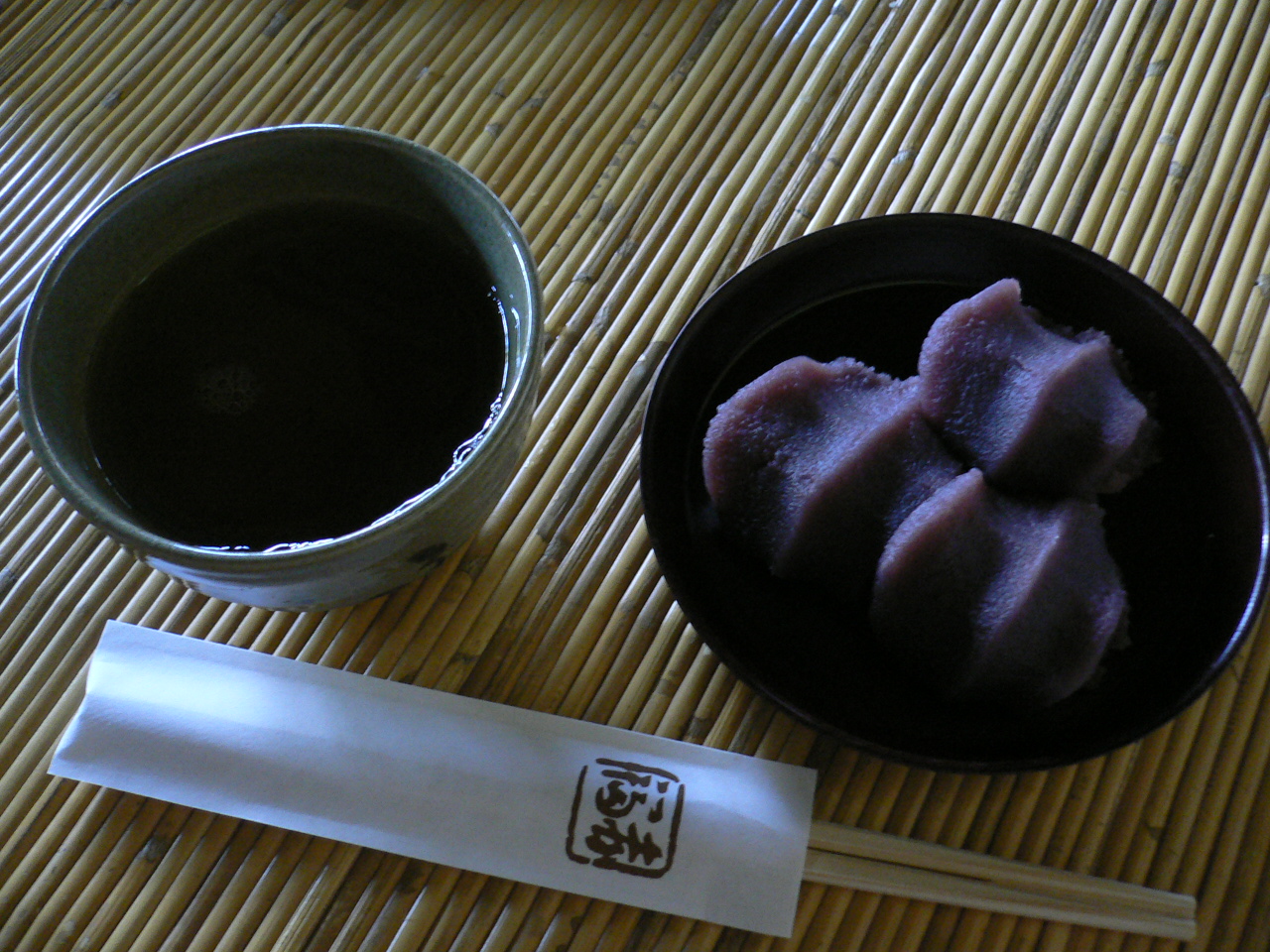
- Akafuku mochi — soft mochi under sweet red bean paste, made here since 1707; eat it hot with tea at the main shop
- Ise udon — thick, soft noodles in a small amount of very dark, sweet tare rather than a soup; the local year-end noodle
- Tekone-zushi — marinated bonito over sushi rice, a fisherman’s dish from the Shima coast
- Grilled oysters and scallops — sold by the piece at the stalls, straight off the charcoal
- Ise-ebi (Japanese spiny lobster) — in season through winter; grilled whole at the stalls or served as sashimi in Toba and Shima restaurants
Oyster huts (kaki-goya). From December to March the oyster huts at Matoya Bay and around Toba serve all-you-can-eat charcoal-grilled oysters for about ¥3,000–¥4,500 for 60–90 minutes. Most close for a few days at New Year and reopen around January 4–5; reservations are essential in January.
A caution about mochi: grilled rice cakes are a genuine choking hazard and send people to hospital in Japan every New Year. Cut them small and chew thoroughly.
✨ Nabana no Sato — Japan’s Great Winter Illumination
An hour north of Ise, at Kuwana, the flower park Nabana no Sato runs one of the largest illuminations in Japan from late October to mid-March: tunnels of light hundreds of metres long, a main display across an entire field, and a scent of hot amazake over everything. It is open through the New Year holiday, and the entry ticket normally includes a voucher usable in the park’s shops and restaurants.
Practical: it is busiest between 18:00 and 20:00 and over the New Year weekend; arrive before dark to walk the park first, and allow for heavy traffic on the access road. Combine it with Nagashima Resort next door, or treat it as a stop between Nagoya and Ise.
🏨 Transport, Hotels and Money
Getting there: Kintetsu limited express trains run to Ise-shi and Toba from Nagoya (about 1h20), Osaka Namba (about 1h45) and Kyoto (about 2h). JR runs the Mie rapid service from Nagoya. Over New Year, Kintetsu adds all-night and extra services to Ise and Toba on December 31 — and the reserved seats for December 31 to January 3 sell out well in advance.
Driving: if you drive on January 1–3, expect traffic control around Ise Jingu, with park-and-ride lots outside the centre and shuttle buses in. Many visitors park at Ise-shi station and take the bus, or stay within walking distance of Geku.
Hotels: the Ise–Toba–Shima corridor books out for New Year months ahead, and rates peak. Toba’s seafood ryokan and the Shima resorts sell two-night New Year packages with osechi and lobster. If Ise is full, Tsu, Matsusaka and Kuwana are all within reach by train, and Matsusaka has the compensation of being the home of Matsusaka beef.
Money: bank counters close December 31 to January 3; convenience store ATMs take foreign cards throughout. Note that some of the older shops in Oharai-machi are cash-only.
🗺️ A Day-by-Day Plan: December 30 to January 4
Dec 30 — Arrive and warm up. Train to Ise, Geku in the quiet afternoon, then walk Oharai-machi before the crowds. Evening: Matsusaka beef at a Matsusaka or Tsu restaurant, booked ahead, or oysters at a Matoya hut.
Dec 31 — Omisoka in Ise. Morning in Toba: the aquarium, Mikimoto Pearl Island and the ama diver demonstrations. Ise udon for lunch. Afternoon rest, because you are getting up before dawn — or, if you prefer the night version, go to Naiku between 00:00 and 03:00 for hatsumode in near-silence under floodlights.
Jan 1 — Sunrise and the pilgrimage. Be at Meoto Iwa in Futami by 06:15 for the sunrise, then train to Ise. Geku first, then the bus or a walk to Naiku for the main hatsumode. Breakfast and lunch along Okage Yokocho — akafuku mochi, grilled oysters, amazake. Afternoon: rest. Evening: a quiet dinner at the hotel.
Jan 2 — Illumination day. Train north to Kuwana for Nabana no Sato, arriving mid-afternoon for the flower park in daylight and staying for the illumination. Alternatively, a Shima coast day: Kashikojima, the bay, and lobster for dinner.
Jan 3 — The other Ise. The betsugu lesser shrines — Takihara-no-miya in its cedar forest is the most beautiful place in the prefecture and almost nobody goes. Or Tsubaki Grand Shrine in Suzuka. Afternoon: Ise Jingu again, now thinner, in the late light.
Jan 4 — Business day. Company delegations at Ise Jingu in the morning — formal, suited, in rows, and a remarkable thing to witness. Then Matsusaka’s samurai district or the Kuwana coast as the museums reopen, and a proper dinner now that restaurants are back.
Should You Come to Mie at New Year?
Yes, if you want the single most significant hatsumode in Japan, a sunrise over the wedded rocks, a food street that stays open when the country closes, lobster and oysters at their peak, and a major illumination within an hour.
No, if crowds on January 1 would spoil it for you. Mie’s secret is that January 5–15 gives you the same shrine in the cold morning silence, the same oysters, the same illumination, at the lowest prices of the year — and the tradition allows hatsumode any time in January.