Mie is one of Japan’s most rewarding food destinations. It lies at the intersection of two food cultures that rarely overlap: a premium beef tradition of the highest calibre, centred on the inland city of Matsusaka, and a Pacific coastal seafood tradition that draws on the exceptionally clean waters of Ago Bay and the Kumano Coast. The two rarely appear on the same table, and that is part of the pleasure of visiting — each meal in Mie feels like an argument for an entirely different region of Japan.
Matsusaka Beef
Among Japan’s three great wagyu beef brands — Kobe, Omi, and Matsusaka — it is Matsusaka that frequently receives the highest rankings in domestic Japanese food criticism. The cattle are raised on a specific protocol: only female Japanese Black cattle, fed on beer grain and sake lees, raised in Matsusaka City and the surrounding designated area of Mie Prefecture, and slaughtered within the region. The resulting beef is distinguished by its fine, evenly distributed marbling, its low melting point, and a flavour that is genuinely unlike any other wagyu produced in Japan.
Where to Eat Matsusaka Beef
The city of Matsusaka, accessible from Nagoya by the Kintetsu Nagoya Line in approximately 75 minutes (limited express ¥2,410) or from Osaka in around 100 minutes by Kintetsu, has several generations-old yakiniku restaurants specialising exclusively in Matsusaka beef. Wadakin, the most celebrated establishment, has operated since 1898 and serves sukiyaki and shabu-shabu sets in a traditional merchant house. A sukiyaki dinner at Wadakin runs from around ¥15,000 to ¥30,000 per person depending on the cut. Reservations are essential and should be made several weeks in advance for weekend visits.
For visitors who want to experience the beef without the full formal setting, several butcher shops on Matsusaka’s main shopping street sell prepared cuts for immediate consumption or as gifts. Grilled over a small table burner at a butcher’s eat-in counter, a portion of premium Matsusaka sirloin costs roughly ¥4,000–¥8,000.
Matsusaka Beef in Ise
Because Ise is the main gateway for most visitors to Mie, a number of restaurants on Okage Yokocho and in the streets around Ise-shi Station also serve Matsusaka beef in accessible formats — beef skewers for around ¥800, burger patties, and teppanyaki sets. The quality is generally good, though for the definitive experience the city of Matsusaka itself is worth the additional hour.
Ise Lobster — Ise Ebi
Ise Ebi (Japanese spiny lobster) takes its name directly from this prefecture and has been a sacred offering at Ise Jingu for centuries. The lobster is larger than European varieties, without claws, with firm white flesh and a distinctively sweet flavour. Mie produces roughly 30 percent of Japan’s total Ise Ebi catch, and the freshest specimens are found along the Shima Peninsula coastline.
The most straightforward way to eat Ise Ebi in Mie is at a seafood restaurant in Toba, on the Shima Peninsula, or at one of the grilling counters inside Okage Yokocho near the Ise Naiku. A half-lobster grilled over charcoal and served with salt and a wedge of sudachi citrus costs around ¥3,000–¥4,500 depending on the season and size. In season (October through April), lobster appears in miso soup sets (¥2,500–¥3,500) at most restaurants in the region, and the combination of the rich broth with the tender tail meat is one of the best single-dish experiences in Mie.
Higher-end ryokan on the Ago Bay coast typically include whole Ise Ebi in their kaiseki dinner courses, often prepared as sashimi alongside the grilled version — the contrast in texture between raw and charcoal-cooked from the same animal is worth seeking out.
Ago Bay Seafood — Oysters, Abalone and Pearl Bay Cuisine
Ago Bay, the deeply indented coastal inlet that houses Japan’s pearl cultivation industry, also produces exceptional oysters and abalone. The same clean, nutrient-rich current that produces gem-quality pearls creates ideal conditions for shellfish cultivation.
Oysters from Toba
The oysters cultivated in the cold coastal waters around Toba are served raw, grilled on the half-shell, and fried in breadcrumbs (kaki furai) at seafood restaurants throughout the Ise-Shima coastline. Raw oysters in Mie are noticeably clean-tasting with a mild brine — less metallic than Hiroshima oysters, closer to the oysters of northern Hokkaido. A plate of six raw oysters at a coastal seafood restaurant costs around ¥1,500–¥2,000.
The most atmospheric way to eat Toba oysters is at the seafood shack restaurants near Toba’s fishing port, where the oysters are shucked to order at outdoor grilling stations and eaten with a small bottle of local sake. These informal restaurants open during the peak oyster season from November through March, and they represent one of Mie’s genuinely memorable food experiences.
Abalone — Awabi
Abalone (awabi) has been harvested by ama divers along the Mie coastline for over 2,000 years and remains one of the prefecture’s most prized ingredients. It appears on kaiseki menus at Ago Bay resort hotels as a steamed preparation or thinly sliced sashimi with ponzu, and at simpler seafood restaurants as a grilled half-shell with butter and soy. Prices range from ¥3,500 for a single grilled abalone at a casual seafood restaurant to significantly more as part of a formal hotel dinner course.
Okage Yokocho — The Ise Food Street
The pedestrian food street immediately outside the Ise Naiku approach functions as Mie’s most concentrated introduction to the prefecture’s food culture in a single stretch of perhaps 200 metres. The buildings are reconstructed Edo-period merchant architecture, and the atmosphere is lively without being overwhelming.
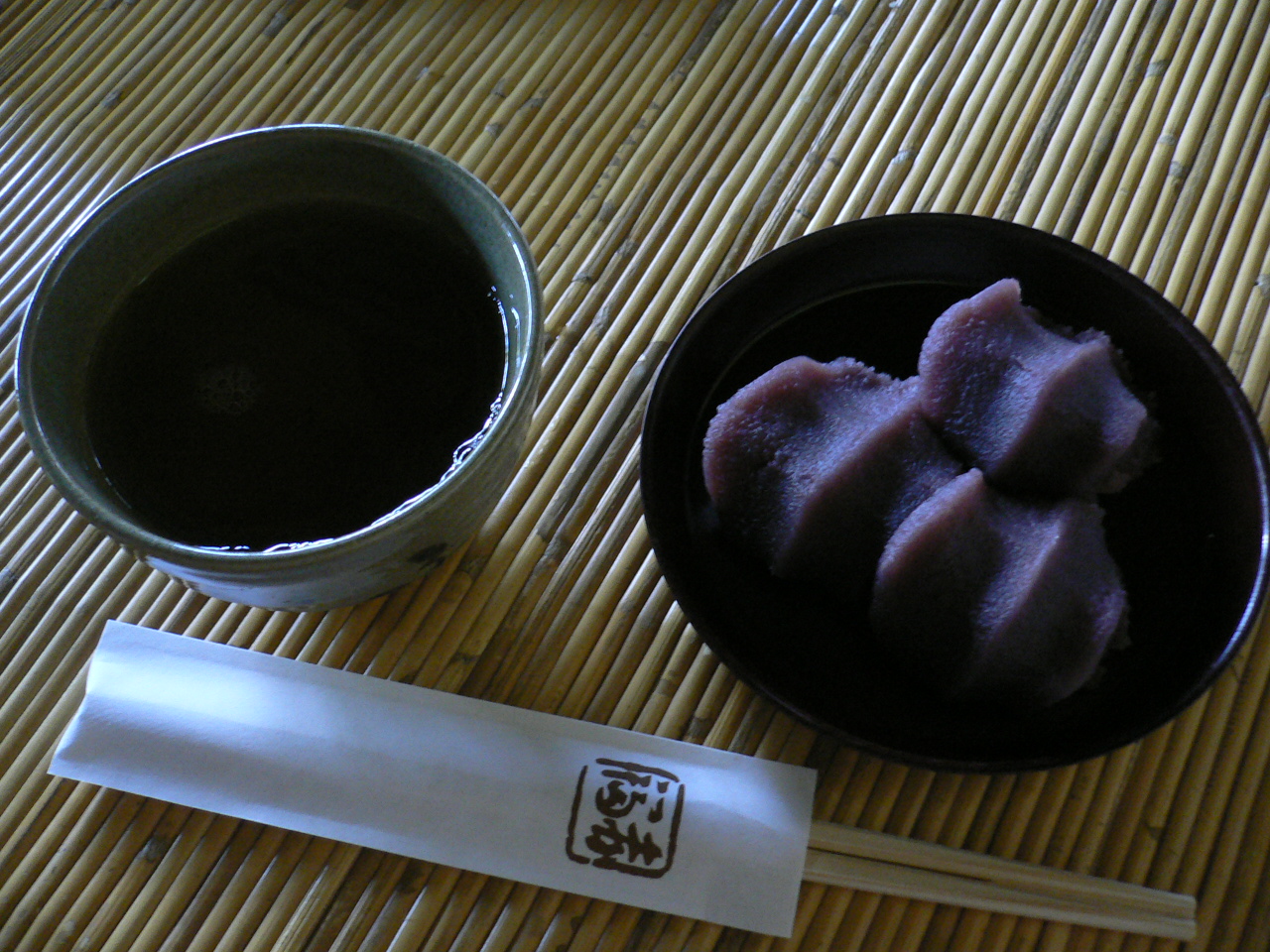
Akafuku mochi — soft white rice cakes topped with a thin layer of sweet red bean paste — have been produced in Ise for over 300 years and are the food most closely associated with the Ise pilgrimage. The flagship Akafuku shop on Okage Yokocho serves them fresh and warm, three pieces for around ¥360. They are meant to be eaten on the day they are made and do not travel well, which gives them a pleasing particularity to the place.
Ise udon deserves special attention. Unlike the firm, bouncy udon of Kagawa or the mountain udon of Gunma, Ise udon is exceptionally soft and thick — the noodles are cooked for an unusually long time until they become genuinely yielding — then dressed in a dark, rich sauce of tamari soy and dashi. It is a polarising texture, beloved by those who grew up eating it and surprising to those encountering it for the first time, but it is a regional speciality that is difficult to find outside Mie and worth trying once. Bowls cost around ¥600–¥800 at the Okage Yokocho noodle shops.
Dining in Toba and the Pearl Coast
Toba’s dining scene runs heavily to seafood, with the highest concentration of quality restaurants along the waterfront road between Toba Station and the ferry terminal. The Toba Sakanaza (¥1,500–¥2,500 for set lunches) offers a rotating selection of the day’s catch in teishoku format — grilled fish, raw sashimi, miso soup, pickles, and rice — and represents excellent value for the quality.
Several of the larger hotels along the Ago Bay coast — particularly in the Kashikojima and Hamajima areas — offer kaiseki dinner courses that trace the full range of Mie’s food culture in a single meal: Ise Ebi sashimi, abalone grilled in its shell, small pieces of Matsusaka beef, pearl oysters in miso soup, and seasonal vegetables from the Kii Mountains. These dinners typically cost ¥12,000–¥25,000 per person and are included in ryokan room rates at higher-end properties.
Sake and Local Drinks
Mie produces a number of sake breweries, concentrated particularly around the Matsusaka and Toba areas. The cold, clean water from the Kii Mountains creates conditions well-suited to clean, dry sake production. Hakuro Suishu from Matsusaka and Takami Musubi from Ise are two breweries worth seeking out. Bottles are available at food shops throughout the Ise pilgrimage area and at department stores in Tsu.
Sudachi — the small, intensely fragrant green citrus fruit associated with the Pacific coastline of Shikoku and Mie — appears as a table condiment at most seafood restaurants in the prefecture. A squeeze of sudachi over grilled fish, lobster, or abalone is one of those flavour pairings that feel both entirely obvious and somehow surprising each time.
Practical Notes
Lunch service at most Mie seafood restaurants runs from 11:00 to 14:00. Dinner service typically begins at 17:30. During the peak autumn season (October through November) and Golden Week (late April through early May), reservation waits of 30 to 60 minutes are common at popular restaurants near the Naiku without advance bookings. For Wadakin in Matsusaka, reservations several weeks ahead are strongly recommended regardless of season.
The Kintetsu Iseshima Free Kippu, available from Nagoya and Osaka, covers the full Ise-Shima area at a flat return fare and simplifies the logistics of eating across multiple towns.