Mie Prefecture curves around the eastern shore of the Kii Peninsula, facing the Pacific Ocean on one side and the forested spine of the Kii Mountains on the other. It is a prefecture of remarkable contrasts: the quietest and most sacred atmosphere in all of Japan exists here, within an hour’s walk of a buzzing food street, pearl jewellery boutiques, and a museum where children can throw shuriken at wooden targets. For overseas visitors who make the journey — most arriving from Nagoya in under an hour, or from Osaka in roughly 90 minutes by Kintetsu Shimakaze limited express — Mie offers one of the most layered and rewarding travel experiences in the country.
Ise Jingu — Japan’s Most Sacred Shrine
No site in Mie carries more weight than Ise Jingu. Not merely a shrine, Ise Jingu is a complex of 125 shrines spread across a wide area of forested hills and river valleys, with two principal sites — the Geku (Outer Shrine) and Naiku (Inner Shrine) — forming the heart of the visit.
The Geku, dedicated to Toyouke no Omikami, the goddess of food, clothing, and shelter, stands close to Ise-shi Station and serves as the prescribed starting point. The approach through tall cypress trees, the gravel paths, and the strict wood-and-thatch architecture of the shrine buildings create an atmosphere of compressed stillness that feels unlike anything else in Japan. No photography is permitted inside the inner precincts.
The Naiku, a 30-minute bus ride from the Geku, enshrines Amaterasu Omikami, the sun goddess and supreme deity of the Shinto pantheon. The approach crosses the Uji Bridge over the Isuzu River — a moment that is commonly described as one of the most beautiful transitions in Japanese sacred architecture. Beyond the bridge, a forest path of ancient Japanese cypress leads toward the inner shrine. The main hall itself is deliberately hidden from public view by a series of wooden fences, which concentrates the sense of sacred presence rather than diluting it. The entire complex is ritually rebuilt every 20 years; the most recent reconstruction was completed in 2013.
Okage Yokocho
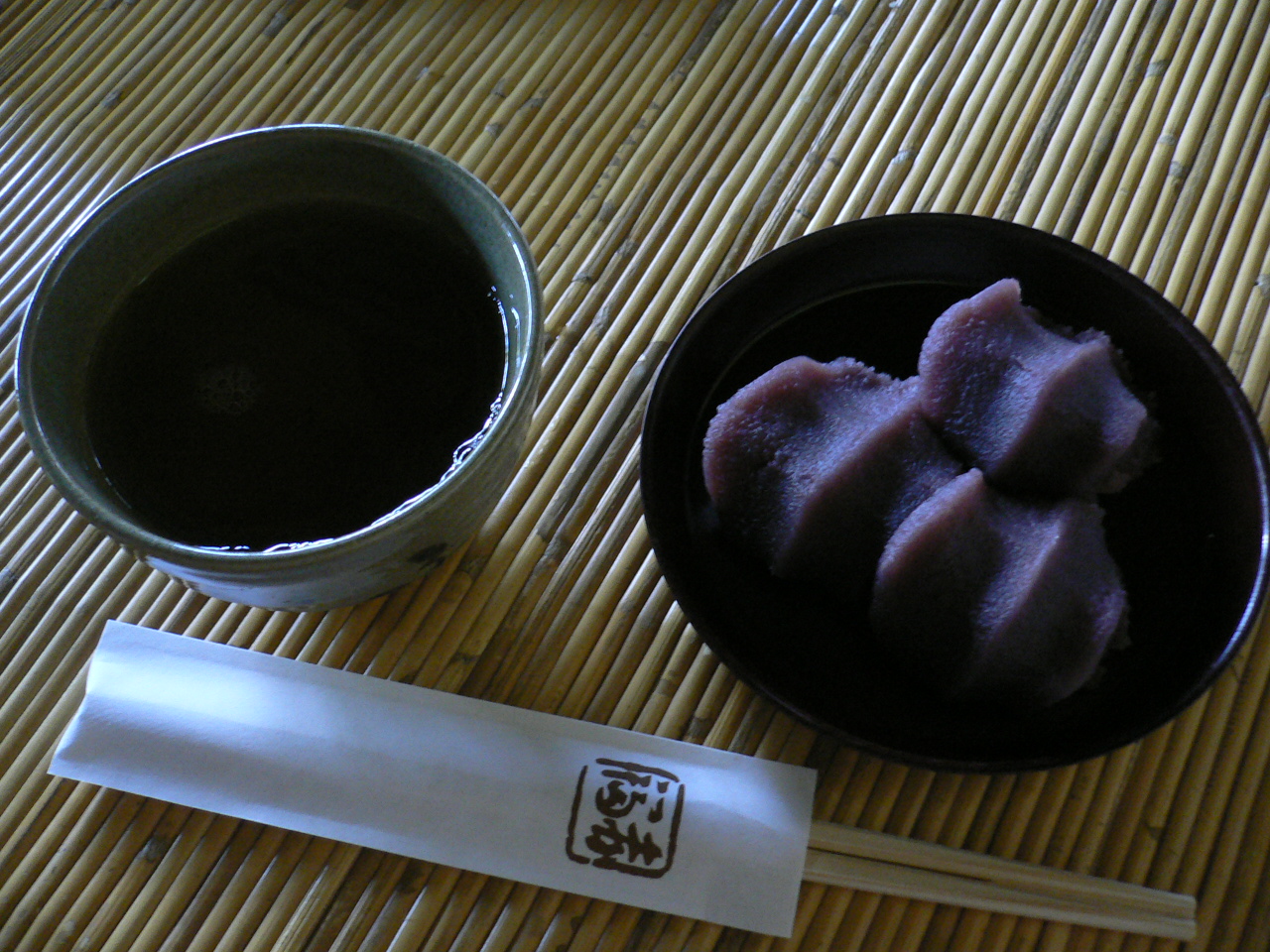
Immediately outside the Naiku approach, the Okage Yokocho traditional food street recreates the merchant lanes that once served pilgrims travelling the Ise Road. Today it is a lively but well-curated stretch of wooden buildings selling Ise udon (thick, soft noodles in a dark soy broth), akafuku mochi (soft rice cakes topped with sweet red bean paste), grilled lobster tails, and fresh oysters from Ago Bay. The food street works equally well as a pre-shrine fuel stop or a post-shrine reward, and prices are generally reasonable — a bowl of Ise udon costs around ¥650.
Meoto Iwa — The Wedded Rocks at Futami
On the coast at Futami, roughly 10 minutes by train from Ise-shi Station on the Sangu Line, two rocks rise from the sea just offshore from Futamigaura Beach. The larger rock stands about 9 metres high; the smaller stands beside it. A thick shimenawa rope — a sacred rope of twisted rice straw — is stretched between the two rocks at the waterline, connecting them as husband and wife. Meoto Iwa, literally “Husband and Wife Rocks,” is one of the most photographed images in all of Japanese travel photography, and in person the rocks carry an emotional weight that the photographs do not quite capture.
Sunrise and the Ritual Calendar
The rocks are oriented toward the sea in the direction of the rising sun, and on clear days the summit of Mount Fuji is visible in the far distance between the rocks during the winter months. Sunrise visits are the most atmospheric by a significant margin. A small shrine, Futami Okitama Shrine, sits on the beach beside the rocks. Its torii gate stands in the shallows, and dozens of stone frog sculptures — kaeru, considered messengers of the gods here — are placed among the rocks and on the shrine buildings.
The shimenawa rope is replaced three times a year, most notably during the Shimenawa Harikae ceremony, which draws crowds from across the region. Visiting before 7:00 in the morning on an ordinary weekday means having the site almost entirely to yourself.
Mikimoto Pearl Island, Toba
The story of Kokichi Mikimoto, who developed the process for cultivating spherical pearls in the 1890s and built a worldwide jewellery empire from his home in Toba, is one of the great stories of Meiji-era entrepreneurial determination. Mikimoto Pearl Island, accessible from Toba Station by a five-minute walk, preserves that story and provides access to pearl-related experiences that visitors cannot find anywhere else.
Admission costs ¥1,650 and includes entry to the Pearl Museum, where the history of pearl cultivation is presented in exhaustive and fascinating detail, alongside the island’s main attraction: the ama diver demonstrations. Ama — women divers who have worked the coastal waters of the Ise-Shima coast for over 2,000 years — perform diving demonstrations from a wooden platform into a pool of seawater around the island’s perimeter, collecting oysters by hand without the use of breathing equipment. The demonstrations run approximately every hour and last around 20 minutes. The combination of physical skill and historical context makes this one of the most memorable experiences in Mie.
The island’s boutiques sell cultured pearl jewellery at a wide range of price points, from modestly priced stud earrings to important necklaces costing several hundred thousand yen.
Iga Ninja Museum
The town of Iga, roughly 70 minutes from Ise-shi by road and accessible by the Kintetsu Osaka Line from Nagoya via Tsuruhashi, was the historical heartland of the Iga ninja tradition — one of the two main schools of ninjutsu in medieval Japan. The Iga Ninja Museum (entry ¥756) is housed in a reconstructed ninja residence and covers the history, tools, and techniques of the Iga ninja with a thoroughness that goes well beyond the tourist-oriented treatment the subject often receives.
The Residence and the Demonstrations
The thatched residence itself is engineered with trap doors, hidden chambers, reversible walls, and concealed weapons caches — devices that protected ninja operatives during the constant warfare of the Sengoku period. Guides in period costume demonstrate the mechanisms and explain their historical context. The explanations are available in English through an audio guide.
Outside the main museum building, a separate demonstration area hosts ninja performance shows several times daily, where costumed performers demonstrate throwing stars, rope techniques, and climbing equipment. Shuriken throwing practice costs an additional ¥200 and proves extremely popular with visitors of all ages. Iga Ueno Castle, a short walk from the museum, is one of Japan’s finest surviving small castles and can be combined with the museum in a half-day visit.
Akame 48 Waterfalls
In Nabari, on the Kintetsu Osaka Line about 90 minutes from Osaka Uehonmachi, the Akame Gorge hides one of the Kansai region’s most impressive and most undervisited waterfall hiking trails. The trail follows the Akame River for approximately 4 kilometres through heavily forested gorge, passing a succession of waterfalls — 48 is the traditional count, though the actual number varies with conditions — of which several are genuinely dramatic cascades dropping into deep green pools.
Entry costs around ¥500. The trail takes two to three hours for the full out-and-back journey. Japanese giant salamanders — up to 1.5 metres in length, listed as a national natural monument — inhabit the river, and though rarely seen in daylight, information boards at the entrance explain their presence. The gorge is most spectacular in late April when new growth covers the canyon walls, and again in November during autumn foliage.
Getting Around Mie
The Kintetsu network is the practical backbone of Mie travel. The Kintetsu Nagoya Line connects Nagoya to Matsusaka, Tsu, and ultimately Iseshi (for Ise Jingu) in around 90 minutes. The Shimakaze limited express, one of Japan’s most comfortable trains, connects Osaka Namba with Kashikojima in the south of Mie via Iseshi in approximately 120 minutes. JR Rapid trains also run from Nagoya to Toba via Matsusaka.
The Kintetsu Iseshima Free Kippu (¥4,870 from Nagoya, ¥5,750 from Osaka) covers unlimited Kintetsu travel throughout the Ise-Shima area for two days and is excellent value for visitors covering multiple sites. Buses connect Ise-shi Station to the Naiku and Geku, and a tourist loop bus links all the major Ise sights.
Accommodation ranges from business hotels in Tsu (from ¥7,000 per night) to traditional ryokan near Okage Yokocho in Ise (¥20,000–¥45,000 per night including dinner and breakfast) to large resort hotels in Ago Bay and Kashikojima (¥30,000–¥80,000). The most immersive experience is a ryokan stay in Ise itself, arriving the evening before an early-morning Naiku visit.