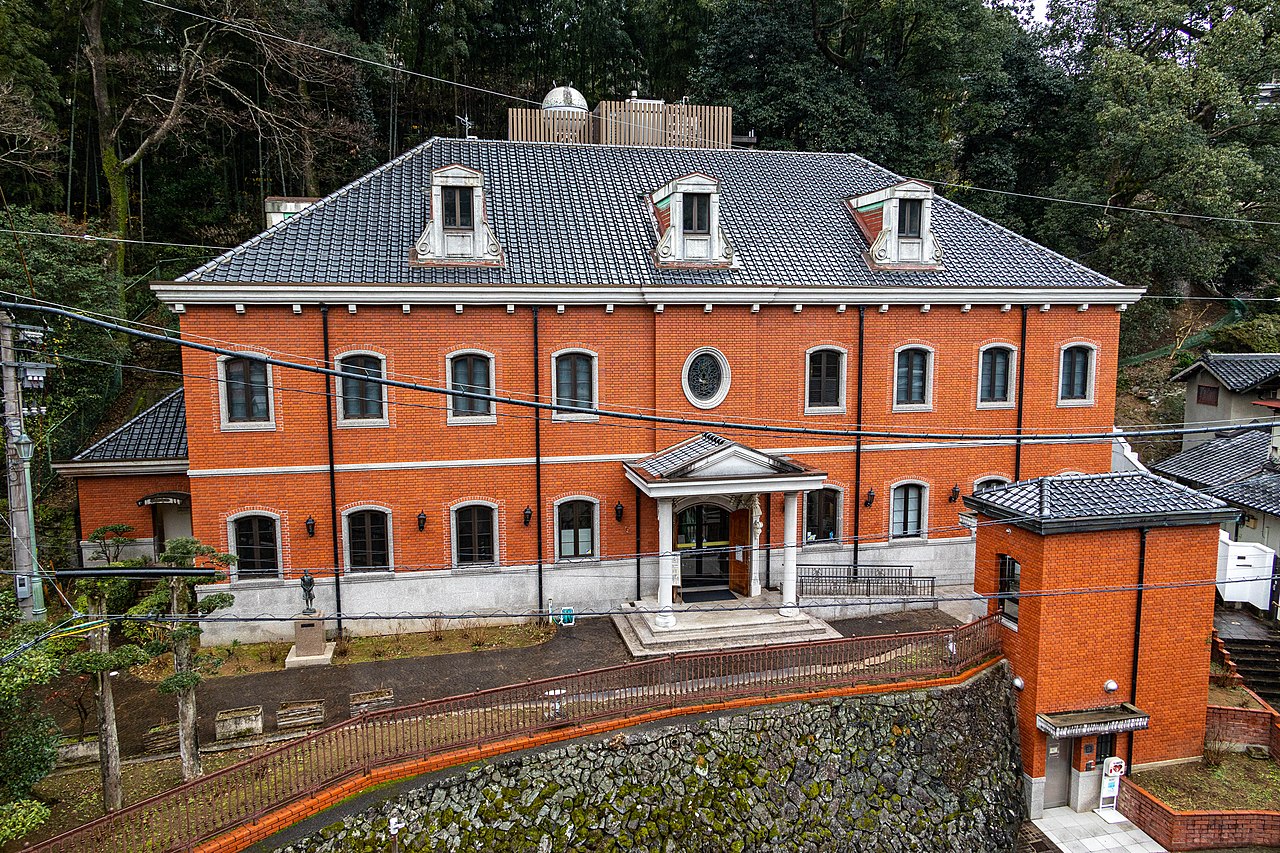
The Siebold Memorial Museum, in the Narutaki district where the physician once lived, honours Philipp Franz von Siebold, the German doctor who arrived at the Dutch trading post of Dejima in 1823 and became one of the most important figures in the exchange of knowledge between Japan and the West. At his private school Narutaki-juku he taught Western medicine and science to Japanese students, while himself studying and cataloguing Japanese plants, animals and culture, sending vast collections back to Europe that shaped Western understanding of Japan. Built in a style echoing his birthplace in Würzburg, Germany, the museum displays documents, instruments, specimens and artefacts telling the story of Siebold, his students and the flowering of ‘Dutch learning’ (rangaku) in Nagasaki. A rewarding stop for those interested in the city’s role as Japan’s bridge to Western science.
🗓️ At a Glance
| Location | Narutaki / Minami Yamate area |
| Hours | ~9:00–17:00 (closed Mon) |
| Admission | Paid (low) |
| Time needed | 30–45 minutes |
| Best time | Year-round |
What to See
- The story of Siebold, physician of Dejima.
- Documents, instruments, specimens and artefacts.
- The legacy of his Narutaki-juku medical school.
- A building echoing his German birthplace.
Combine Your Visit
- Combine with Dejima , where Siebold worked.
- Pair with Glover Garden nearby.
- Read our Nagasaki overview .
Getting There
- By tram/bus: to the Narutaki / Shindaiku-machi area.
- On foot: a short walk from central stops.
Tips
Visit the museum together with Dejima, where Siebold was based, to connect his story to the trading post that made his work possible. It’s a smaller, specialist museum best for history enthusiasts, so use the exhibits to understand how ‘Dutch learning’ modernised Japanese medicine and science through Nagasaki.