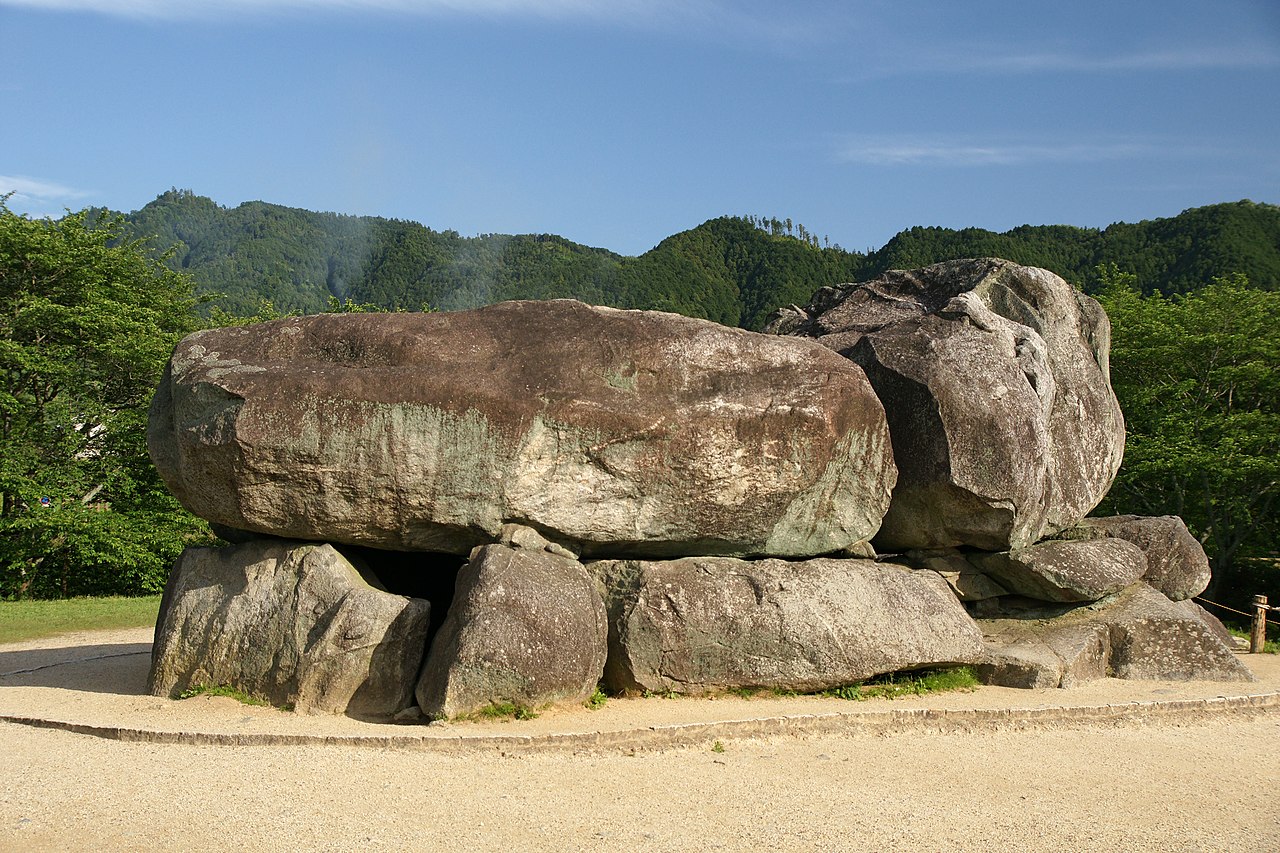
Asuka, a quiet farming village south of Kashihara, was the political heart of Japan in the 6th and 7th centuries, before the capital moved to Nara — the era when Buddhism and continental culture first took root and the imperial state was forged. Its gentle countryside is scattered with the enigmatic remains of that dawn age: ancient temple sites, mysterious carved granite stones whose purpose is still debated, decorated tomb mounds, and above all the Ishibutai Kofun, a monumental 7th-century burial chamber whose earth mound has eroded away to reveal enormous megaliths, the largest weighing some 77 tons. Exploring it all by rental bicycle is one of Japan’s most rewarding historical days.
🗓️ At a Glance
| Location | Asuka Village, Nara |
| Hours | Ishibutai ~8:30–17:00; sites vary |
| Admission | Ishibutai ~¥300; many sites free |
| Time needed | Half day to full day |
| Best time | Spring and autumn for cycling |
What to Do
- The colossal megalithic Ishibutai Kofun burial chamber.
- Mysterious ancient carved stones scattered in the fields.
- Ancient temple sites from the dawn of Japanese Buddhism.
- Exploring the historic countryside by rental bicycle.
Combine Your Visit
- Combine with Kashihara Jingu just north.
- Pair with Tanzan Shrine in the same region.
- Read our Nara overview .
Getting There
- By train: Kintetsu to Asuka Station, where rental bicycles are available.
- By bike: the sites are spread across farmland — cycling is the ideal way around.
Tips
Rent a bicycle at Asuka Station — the ancient sites are scattered across a wide area of farmland and cycling between them, past rice paddies and the mysterious carved stones, is the whole pleasure of an Asuka day. Ishibutai is the essential stop, best entered to stand inside the vast stone chamber; allow a full day in spring or autumn to take in the tombs, temple ruins and gentle scenery at leisure.


