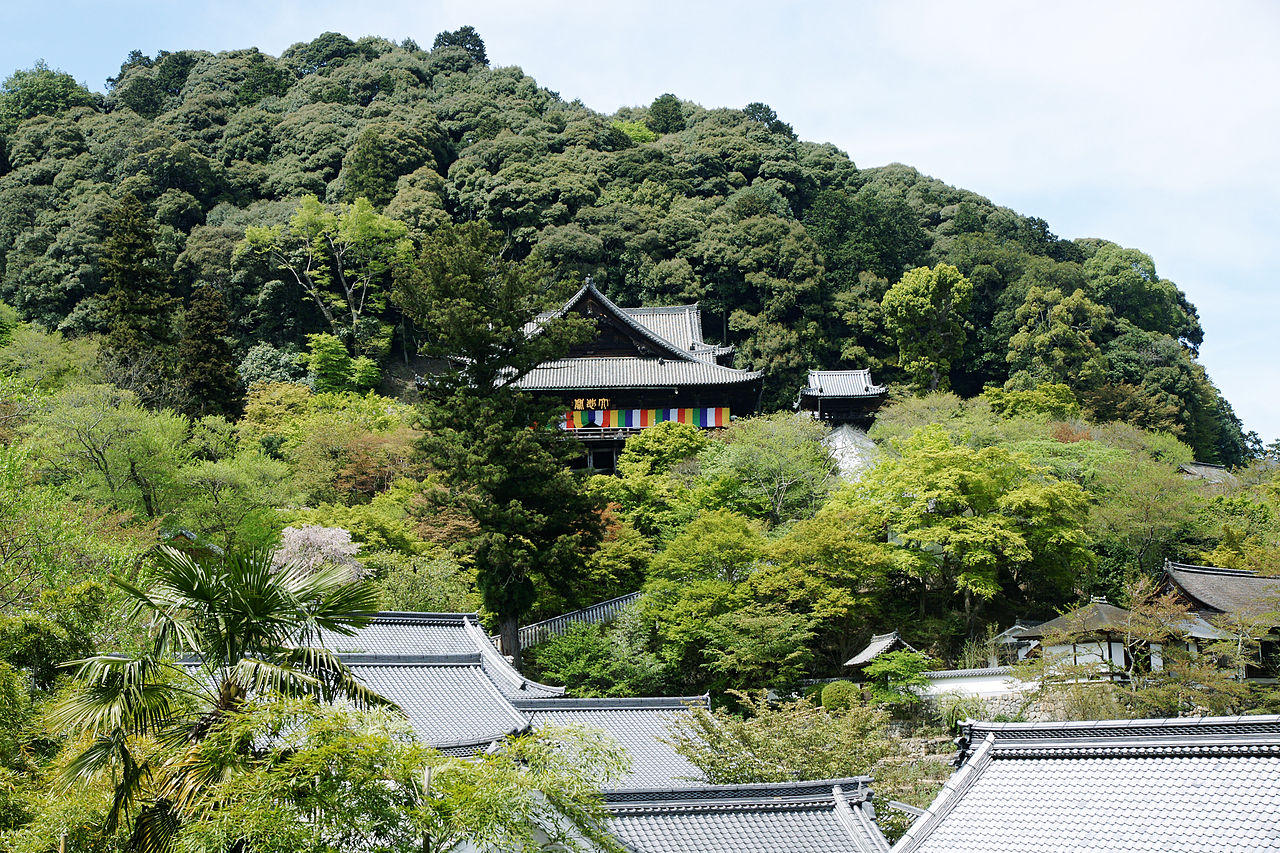
Hasedera, in the mountains of eastern Nara near Sakurai, is one of Japan’s great flower temples and the head of the Buzan Shingon school. Its signature is the Noboriro, a magnificent roofed corridor of 399 stone steps that climbs the hillside beneath hanging lanterns to the main hall, which stands on a stilted veranda overlooking the valley in the manner of Kiyomizu-dera. Inside towers a magnificent 10-metre-plus gilded statue of Kannon, the goddess of mercy — one of the largest wooden statues in Japan. The temple is famed above all for flowers: some 150 varieties of peony bloom along the stairway in late April and May.
🗓️ At a Glance
| Location | Sakurai, eastern Nara |
| Hours | ~8:30–17:00 (seasonal) |
| Admission | ~¥500 |
| Time needed | 1.5–2 hours |
| Best time | Peonies late April–May; autumn foliage |
What to See
- The magnificent 399-step covered stairway (Noboriro).
- The towering 10-metre gilded Kannon in the main hall.
- The stilted main-hall veranda over the valley.
- Some 150 varieties of peonies blooming in spring.
Combine Your Visit
- Combine with Muroji on the eastern-Nara route.
- Pair with Omiwa Shrine near Sakurai.
- Read our Nara overview .
Getting There
- By train: Kintetsu to Hasedera Station, then a 15–20 minute walk to the temple.
- From Nara: about 40 minutes plus the walk.
Tips
Climb the covered stairway slowly — its 399 steps beneath hanging lanterns, lined with peonies in season, are as memorable as the temple at the top. Time your visit for the late-April to May peony bloom for the full spectacle, and pair it with mountain temple Muroji or nearby Omiwa Shrine to justify the trip into eastern Nara; the main hall veranda gives a fine valley view year-round.