The Nara that most visitors see — the deer, Todai-ji, Kasuga Taisha — represents perhaps 10% of the prefecture’s heritage. Spread across the Yamato Plain and into the surrounding mountains is a landscape of extraordinary archaeological and cultural density: Japan’s first capitals, the oldest Buddhist temples, burial mounds that predate written Japanese history, mountain shrines of mythological antiquity, and a merchant town so intact it makes Kyoto’s Gion feel modern. These are the sites that reward the traveller willing to go one train stop further.
🏺 Asuka — Japan’s First Capitals & Oldest Buddhist Temple
Access: Kintetsu Yoshino Line or JR Sakurai Line to Kashihara-Jingumae, then Kintetsu Yoshino Line 2 stops to Asuka Station; or JR Takatori Station + bus. Total: approx. 45 min from Kintetsu Nara Station (transfer at Yamato-Yagi). Best explored by: Bicycle (rental from Asuka Station, ¥1,000–1,500/day) — the flat rice-field roads between sites are ideal for cycling
Asuka was Japan’s political capital repeatedly between the late 6th and early 8th centuries, before the capital moved to Nara in 710 AD. The Yamato Plain here is one of the richest archaeological landscapes in East Asia: hundreds of burial mounds (kofun) of varying sizes, the remains of the earliest Japanese imperial palaces, and the ruins of temples that mark the introduction of Buddhism to Japan.
Asuka-dera (飛鳥寺): Founded in 596 AD, this is Japan’s first Buddhist temple — predating Horyuji, predating the Nara temples by over a century. The current building is a reconstruction, but the seated copper Asuka Daibutsu inside is the oldest surviving large Buddhist statue in Japan (606 AD), created by the sculptor Kuratsukuri no Tori. The face has a distinctly Korean Baekje influence — historical evidence of the continental connections that founded Japanese Buddhism. The surrounding compound is small, quiet, and has almost no overseas visitors.
Takamatsuzuka Kofun: A 7th-century burial mound whose interior contains extraordinary wall frescoes of star maps and Chinese-style court ladies — paintings of comparable quality to Tang Dynasty Chinese art. The mound itself cannot be entered (the murals have been removed for conservation), but the Takamatsuzuka Fresco Museum adjacent to the site shows full-scale replicas and explains the mystery of the tomb’s unknown occupant.
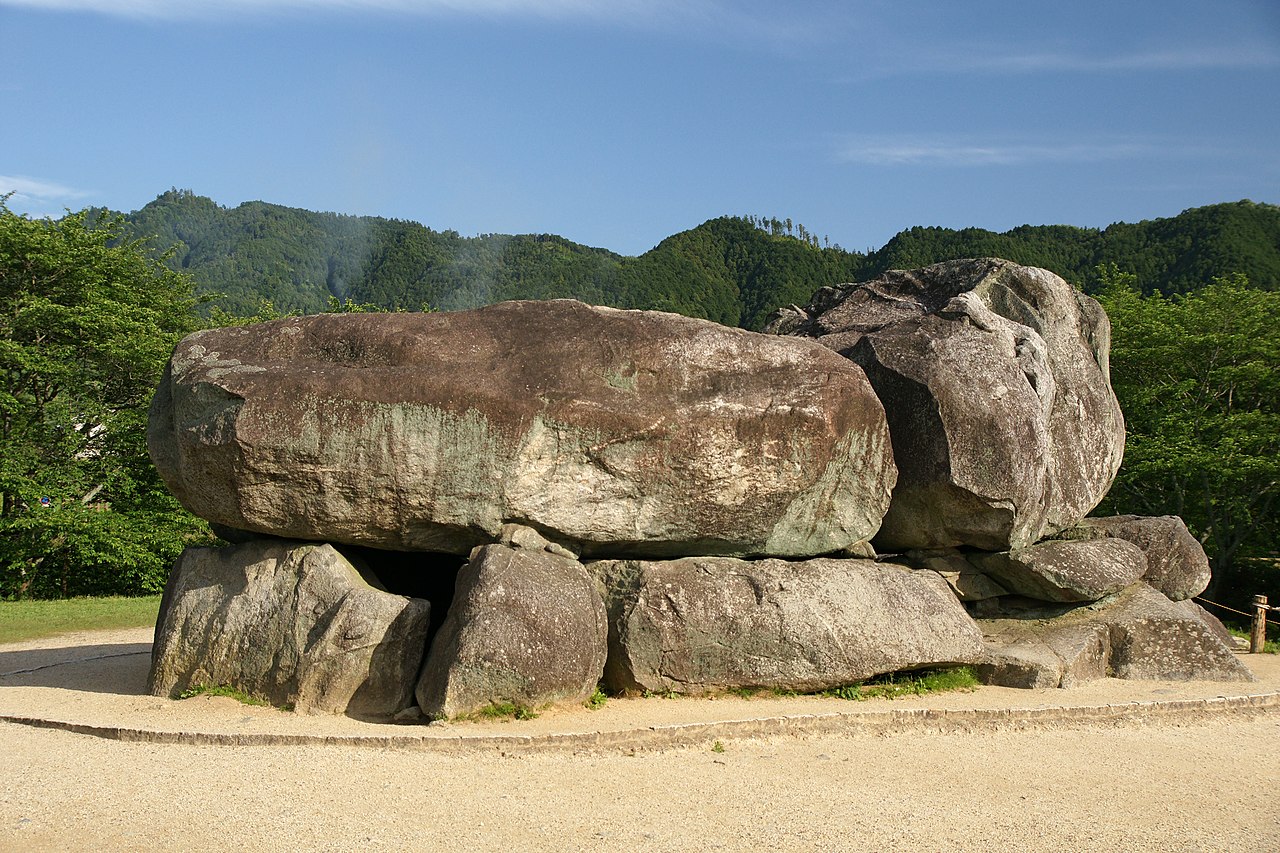
Ishibutai Dolmen (石舞台古墳): The largest megalithic burial chamber in Japan — 30-tonne granite slabs assembled without mortar, believed to be the tomb of the powerful minister Soga no Umako (died 626 AD). The earthen mound covering the stones was removed in antiquity; today the exposed granite structure sits in an open field, accessible for close examination. Admission ¥300. Standing inside the burial chamber — the stones overhead, the original entrance visible — is a genuinely uncanny experience.
Cycling route: A bicycle circuit from Asuka Station through rice fields, burial mounds, Asuka-dera, Ishibutai, and the Asukadera road stone markers takes approximately 2–3 hours at leisurely pace. The countryside is working agricultural land — rice paddies, persimmon orchards, farmhouses — with burial mounds rising naturally from the fields without barriers or visitor infrastructure. This is the most authentic archaeological landscape in Japan that’s accessible without a guide.
🌲 Muro-ji Temple — Five-Story Pagoda in Cedar Forest
Access: Kintetsu Osaka Line to Muroguchi-Ono Station, then bus approx. 15 min to Muroji stop. Total: approx. 70 min from Kintetsu Nara Station (transfer at Yamato-Yagi) or 60 min from Osaka Uehonmachi. Admission: ¥600 | Hours: 8:30–17:00 (April–November), 9:00–16:00 (December–March) Best seasons: Spring (April–May, shakkuyaku peonies), late October–November (autumn foliage)
Muro-ji sits on a cedar-forested mountainside at the end of a valley in southeastern Nara, accessible only by one road. Founded in the late 8th century and historically significant as a temple that — unlike the nearby Koyasan — admitted women when Koyasan remained exclusively male until 1872. Muro-ji was known as the Women’s Koyasan (Nyonin Koya) and remains a place of particular importance for female pilgrims.
The approach to the temple — up a steep stone staircase through ancient cryptomeria cedars — creates an atmosphere of genuine seclusion. The main hall and five-story pagoda, Japan’s smallest five-story pagoda at 16 metres, stand in the forest on different levels. The pagoda’s setting against ancient cedar trunks and mossy rock, particularly in early morning mist, produces one of the most-photographed images in Japanese architecture — and yet the site receives a tiny fraction of Yoshino’s visitors.
The path continues beyond the pagoda to the Oku-no-in inner sanctuary — a 400-step staircase through old-growth forest to a cliff-edge shrine. This 30-minute climb accesses the mountain’s original sacred space, where few tourists venture.
Muroji Gorge: The road from the bus stop to the temple follows the Muroji Gorge, a clear mountain river with emerald pools and small waterfalls. A river walk (30–40 min) runs along the gorge from the bus stop to the temple entrance — an excellent warm-up before the temple climb.
🍂 Tanzan Shrine — Japan’s Only 13-Story Pagoda in Autumn Maples
Access: Kintetsu Osaka Line to Sakurai Station, then bus to Tanzan Shrine (approx. 25 min); or bus from near Asuka Station. Total approx. 45 min from Kintetsu Nara Station. Admission: Free | Hours: 8:30–16:30 Best season: Late October–mid-November (autumn foliage — exceptional)
Tanzan Shrine (談山神社) occupies a wooded mountain site above the Makimuku Plain and is visited almost exclusively by Japanese visitors — overseas tourists rarely make the detour despite the quality of the experience. The shrine is dedicated to Fujiwara no Kamatari, founder of the Fujiwara clan who dominated Japanese politics for 500 years.
The centrepiece is the 13-story wooden pagoda — the only 13-story wooden pagoda in existence. Built in 678 AD (current structure reconstructed 1532), it rises through the maple canopy on the hillside above the main shrine. In mid-November, the surrounding maples turn a violent red and orange, and the 13-story pagoda visible through coloured leaves against a grey autumn sky is one of the most striking architectural-landscape combinations in Japan.
The overall shrine complex — multiple linked vermillion halls along a forested ridge, connected by staircases and small bridges — is architecturally rich and atmospheric at any season. Almost always quiet even on autumn weekends when Japanese domestic visitors are at their peak.
🌸 Hasedera — Peony Garden & Pilgrimage Approach
Access: Kintetsu Osaka Line to Hase Station (near Sakurai), then 15 min walk. Approximately 50 min from Kintetsu Nara Station. Admission: ¥500 | Hours: 8:30–17:00 (summer 8:00–17:00) Best seasons: April–May (7,000 peony flowers); autumn foliage (November)
Hasedera is one of the most important pilgrimage temples in western Japan — the western anchor of the Saigoku Kannon Pilgrimage (33-temple circuit) and the temple where the Heian literary heroine of the Tale of Genji came to pray. The temple’s long, roofed approach staircase of 399 stone lanterns climbing the hillside is one of the most dramatic temple approaches in Japan outside Kyoto.
The main hall’s outdoor corridor projects from the cliff face in the Kiyomizudera style, with views over the Hase River valley. In late April and May, approximately 7,000 peony plants flower simultaneously in the temple garden — the peonies (botan) are a Hasedera signature and the source of pilgrims' prayers for good health. The combination of ancient architecture, steep mountain setting, and a flower display of this scale is extraordinary.
⛩️ Omiwa Shrine & Mt. Miwa — The Mountain IS the God
Access: JR Miwa Station (JR Sakurai Line, 25 min from JR Nara Station) — 10 min walk to shrine entrance Admission: Shrine approach free; mountain trail ¥300 | Hours: Shrine always accessible; mountain trail 9:00–14:00 (allow 2 hours for summit and return)
Omiwa Shrine is Japan’s oldest shrine and one of its most theologically distinctive: there is no main hall (honden), because the deity — Omononushi-no-kami — does not reside in a building. Mt. Miwa itself is the deity. The conical mountain behind the shrine is considered a living divine presence, enclosed by the sacred forest, and the shrine exists as a gate to approach it rather than as a container for it.
This makes Omiwa Shrine one of the few places in Japan where you can walk through a living deity — the mountain trail to the summit passes through the sacred cedar forest, through torii gates at different elevations, and emerges at the summit shrine where the deity is most directly present. The hike takes approximately 90 minutes return and requires registration at the trail entry point (¥300). No photography on the upper mountain trail.
The lower approach — through cedar torii of the secondary shrines, past stone basins and ancient offerings — has an atmosphere unlike anything in Nara city. Add the somen noodle lunch at a nearby restaurant and sake tasting at Imanishi brewery, and Miwa warrants a full half-day.
🏘️ Imai-cho — Japan’s Most Intact Merchant Town
Access: Yamato-Yagi Station (Kintetsu Osaka Line), then 15 min walk south. Total: approx. 40 min from Kintetsu Nara Station. Admission: Free | Open: Always (exterior); some machiya museums open 9:00–17:00
Imai-cho is possibly the best-kept secret in Nara Prefecture. This merchant town, developed in the late 16th century around a Jodo Shinshu Buddhist temple, retains approximately 500 Edo-period buildings in an intact urban grid — the highest density of traditional buildings of any town in Japan, more comprehensive than Kyoto’s Gion or Kanazawa’s Higashi Chaya. The streets have been almost completely preserved because Imai-cho developed as a semi-autonomous merchant community that resisted outside influence and modernisation.
Walking through Imai-cho is disorienting in the best way — narrow streets lined with black-and-white lattice-front townhouses, sake brewery walls, merchant gates, all completely intact. Almost no tour groups come here. You can spend 2 hours walking every street and encounter perhaps a dozen other visitors on a weekday.
What to see: The Imai-cho Preservation District Office (free) provides an English map and brief history. Several merchant houses are open as museums (free admission) including the Imanishi family residence — one of the largest surviving merchant houses in Japan, with extraordinary original interiors. The sake brewery operating within the district produces one of Nara’s more characterful junmai sakes, sold directly.
🚲 Yamato Ancient Highway — Cycling the Oldest Road
Access: Start at Sakurai Station or Asuka Station; route runs northward through the Yamato Plain Distance: Variable; 20–30km for the key section | Best by: Bicycle (rental from Asuka or Kashihara-jingumae stations)
The Yamatoji (Yamato ancient highway) connected Nara’s early capitals and major shrines along the base of the eastern mountain range — one of Japan’s oldest recorded roads. Today, stretches of the original route survive as farm tracks and quiet prefectural roads through rice paddies, connecting Asuka, the Miwa shrine cluster, Sakurai, and the ancient burial grounds of Makimuku. Cycling this route — through working agricultural landscape unchanged in its basic character for centuries — connects the dots between Asuka, Omiwa Shrine, Hasedera, and Tanzan Shrine into a coherent itinerary.