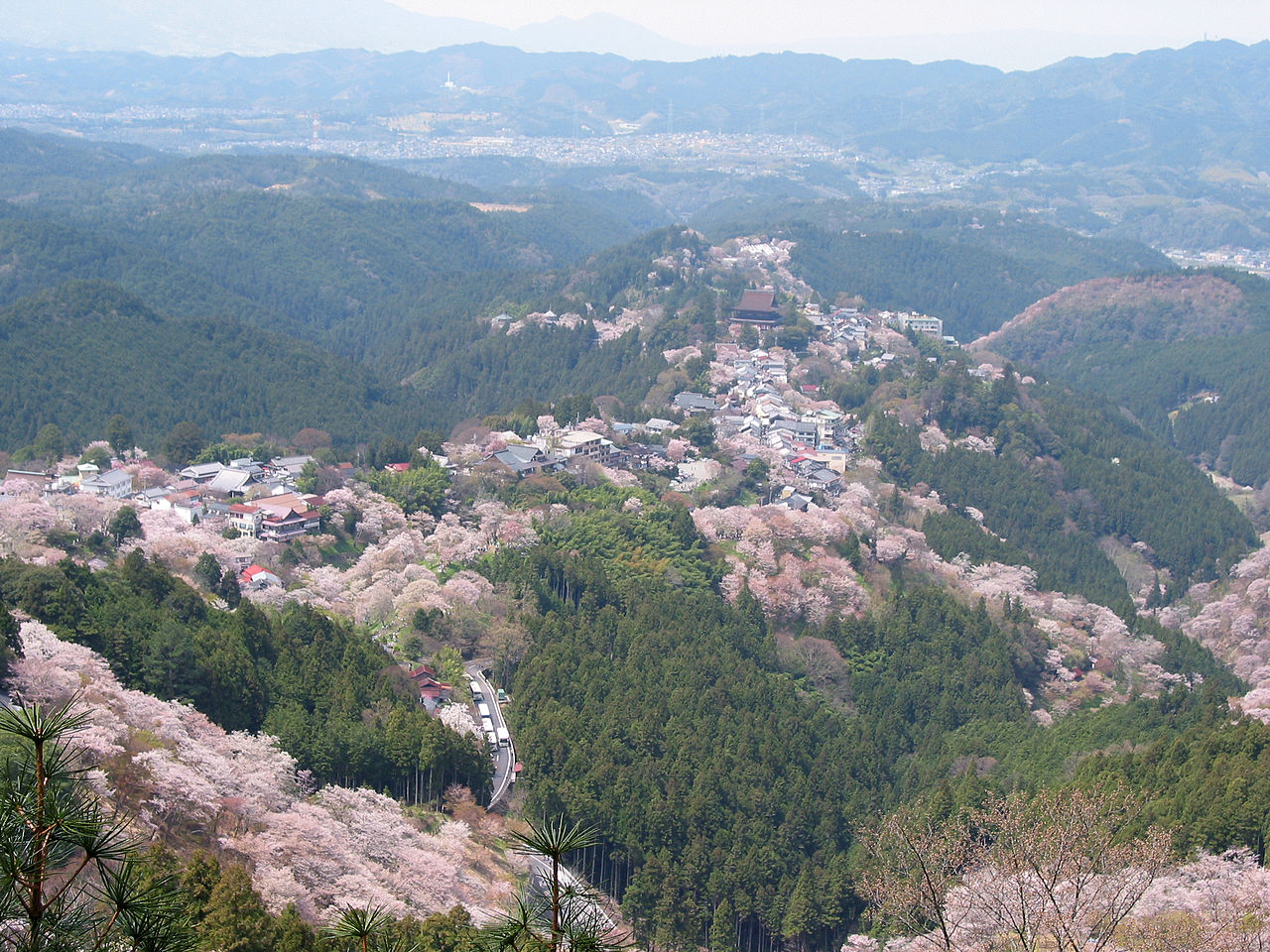
Mount Yoshino (Yoshinoyama), in southern Nara, is celebrated as the greatest cherry-blossom destination in all of Japan: some 30,000 cherry trees, planted over more than a thousand years as sacred offerings, cover its slopes and bloom each spring in staggered waves that climb the mountain from the Shimo (lower) grove to the Oku (upper) grove over about two weeks. The effect — whole ridgelines washed in shifting pink, dotted with temples and shrines — is breathtaking, and the mountain is also a sacred centre of Shugendo mountain asceticism and part of a UNESCO World Heritage listing. Beyond the blossoms it rewards year-round with autumn colour and ancient temples.
🗓️ At a Glance
| Location | Yoshino, southern Nara |
| Hours | Mountain always open; temples daytime |
| Admission | Free (some temples/ropeway charge) |
| Time needed | Half day to full day |
| Best time | Early–mid April for cherry blossoms |
What to See
- Some 30,000 cherry trees blooming in waves up the mountain.
- The Shimo, Naka, Kami and Oku groves flowering in sequence.
- Kinpusen-ji temple, a centre of Shugendo mountain asceticism.
- A UNESCO World Heritage landscape; autumn colour too.
Combine Your Visit
- Combine with the Shugendo temples and shrines along the ridge.
- Pair with Yoshino kuzu sweets and local crafts.
- Read our Nara overview .
Getting There
- By train: Kintetsu to Yoshino Station, then a ropeway or walk up to the groves.
- Timing: blossoms climb the mountain over ~2 weeks; check the bloom report.
Tips
During peak bloom Yoshino is extremely popular, so arrive early and expect crowds and packed trains — but the payoff is Japan’s most famous mountain of cherry blossoms. Because the trees bloom in sequence from lower to upper groves over about two weeks, you can often still catch flowers in the Oku grove after the lower groves have faded, extending the window; staying overnight lets you enjoy the mountain after the day trippers leave.