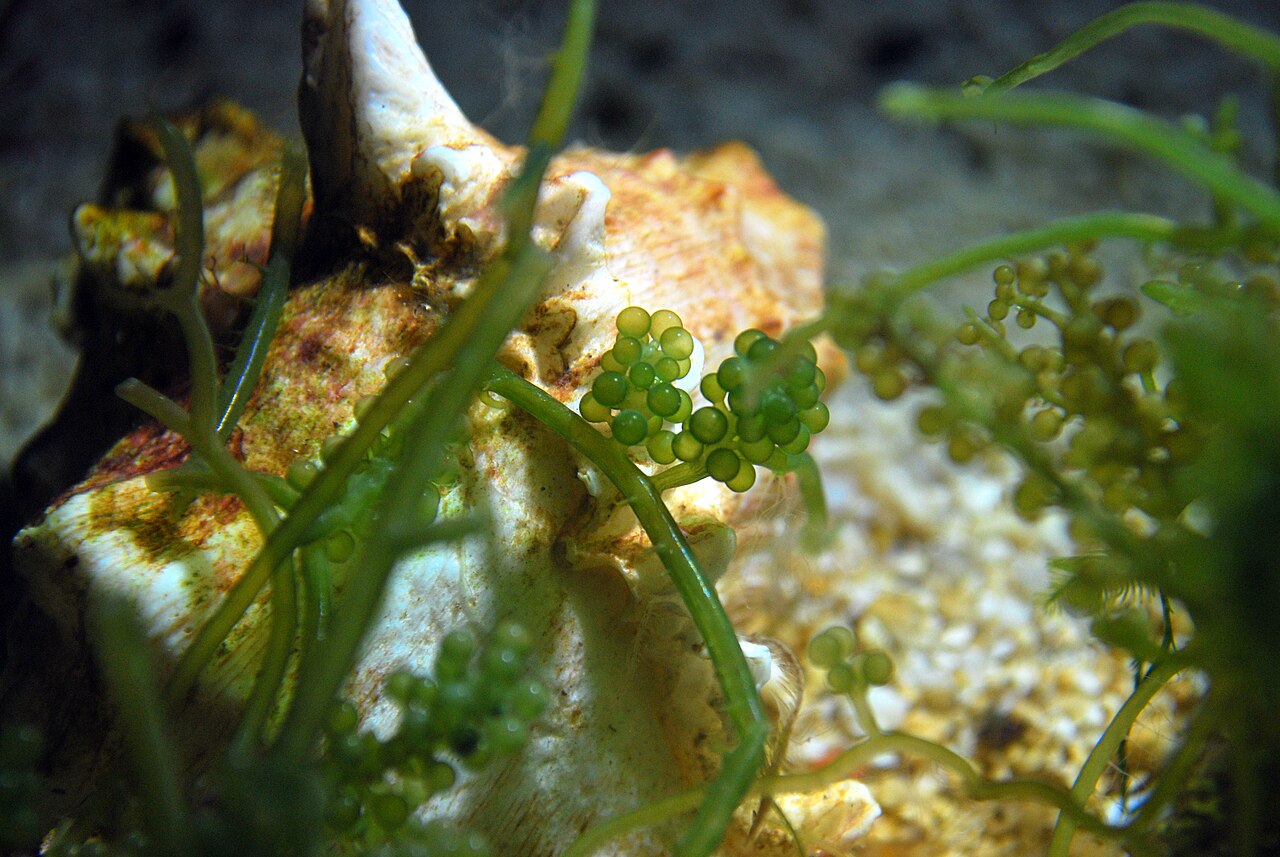
Umibudo (“sea grapes”) are one of Okinawa’s most distinctive delicacies — a bright-green sea vegetable of tiny, caviar-like beads that pop with a fresh, briny crunch in the mouth. Rich in minerals and part of the island’s celebrated longevity diet, they’re served cool with a dipping sauce as a refreshing starter. Alongside other sea vegetables like mozuku and a bounty of tropical fish, sea grapes showcase the clean, ocean-forward side of Okinawan cuisine.
This guide covers what sea grapes are, how to eat them, Okinawa’s seafood, where to try them and tips.
🗓️ Quick Reference
| What | Umibudo — “sea grape” seaweed |
| Taste | Briny, popping, refreshing |
| Serve | Chilled, with ponzu/vinegar dip |
| Also try | Mozuku, sea snail, tropical fish |
| Good for | Healthy eating, izakaya, longevity diet |
What are sea grapes?
- A type of green algae (Caulerpa lentillifera) farmed in Okinawa’s warm seas.
- Clusters of small spheres that burst with a juicy, salty pop — the texture is the whole appeal.
- Best eaten fresh and at room-to-cool temperature; they shrink if refrigerated too cold.
How to eat them & other seafood
- Dip lightly in ponzu or vinegar (don’t drown them) and eat as a starter or over rice (“umibudo don”).
- Mozuku: a slippery seaweed served in vinegar — another local staple.
- Tropical reef fish, sea snail (chinbora), squid-ink dishes and agu pork round out izakaya menus.
- Part of the longevity diet — see our Okinawan cuisine guide .
Where to try them & tips
- Izakaya and seafood diners across Naha; the Makishi market has fresh stalls.
- Buy packaged sea grapes as an edible souvenir (eat soon, keep cool not cold).
- Pair with awamori or Orion beer — see our awamori guide .
Combine your visit
Sea grapes fit naturally into an Okinawan food crawl:
- Match with goya champuru, rafute and Okinawa soba — see our champuru guide and soba guide .
- Easy to find along Kokusai-dori and the Makishi market — see our Kokusai-dori guide .
How to get there
- Best sampled at izakaya and seafood eateries in central Naha.
- Available island-wide; coastal towns often serve the freshest.