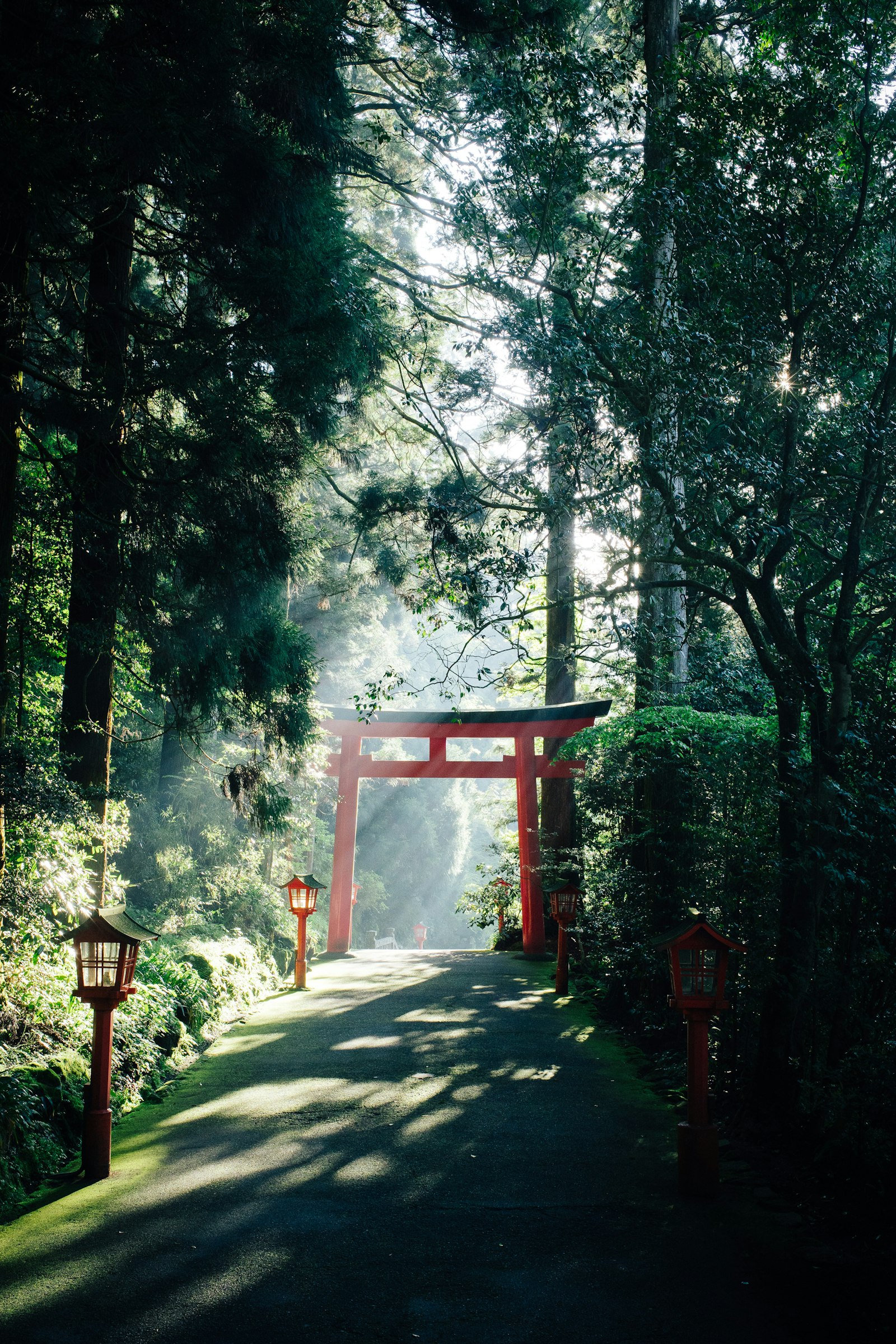
Okinawa’s history is unlike anywhere else in Japan. For 450 years (1429–1879) it was the independent Ryukyu Kingdom — a maritime trading nation with its own language, religion, architecture, and performing arts. The Ryukyuan legacy is everywhere: in the bright red lacquer of its castles (gusuku), the sound of the sanshin (three-stringed lute), and a cuisine built on tropical ingredients rather than the rice and soy of mainland Japan.
1. 首里城 — Shuri Castle
Access: Shuri Station (Okinawa Monorail Yui Rail), 15 min walk
Hours: 8:00–19:30 (Mar–Nov), 8:00–18:00 (Dec–Feb)
Entry: ¥400 adult (outer precinct free)
The royal palace of the Ryukyu Kingdom — a complex of vermilion-lacquered halls on a hilltop above Naha. The castle was burned to the ground in the Battle of Okinawa (1945) and rebuilt in 1992; a 2019 fire destroyed the main hall again, but restoration is ongoing and the outer precincts and satellite halls are fully accessible.
What to know: The Seiden (main hall) is currently under restoration until 2026. The outer castle walls, Shureimon Gate, and several auxiliary halls are open and impressive. Early morning (before 9 a.m.) offers the gate area without tour-bus crowds.
Hidden detail: The castle architecture has no parallel in Japan — the red lacquer, Chinese-influenced rooflines, and coral-stone walls reflect Ryukyu’s position as a tributary state of Ming China while maintaining its own identity.
2. 中城城跡 — Nakagusuku Castle Ruins (UNESCO)
Access: Kitanakagusuku Village, 30 min by car from Naha
Hours: 8:30–17:00 (closes 18:00 May–Sep)
Entry: ¥400
One of five Ryukyuan gusuku inscribed as UNESCO World Heritage Sites in 2000. Unlike Shuri Castle, Nakagusuku was never restored — its remarkable coral-limestone walls (some 8 m high) have stood in their original form for 600 years. From the clifftop, the entire East China Sea is visible.
Why it’s better than Shuri for history: The absence of reconstruction gives Nakagusuku a raw, ancient atmosphere that Shuri’s visitors often miss. You can walk the original perimeter walls and stand in the same spaces as Ryukyuan lords.
3. 今帰仁城跡 — Nakijin Castle Ruins (UNESCO)
Access: Nakijin Village, northern main island, 90 min from Naha
Hours: 8:00–18:00 (8:00–19:00 May–Sep)
Entry: ¥600
The most dramatically located of Okinawa’s UNESCO gusuku — a sprawling hilltop ruin with 1.5 km of original walls on the Motobu Peninsula. Nakijin was the stronghold of a rival northern lord before the Ryukyu Kingdom unified the island.
Special feature: Japan’s earliest cherry blossoms open here in late January — the hot-pink kanhizakura against the grey ancient walls is one of Okinawa’s most distinctive images. Arrive early January to late February for peak bloom.
4. 美ら海水族館 — Okinawa Churaumi Aquarium
Access: Motobu Town (Ocean Expo Park), 2 hours by bus from Naha
Hours: 8:30–18:30 (closes 20:00 Jul–Sep; closed Dec–Jan Wednesdays)
Entry: ¥2,180 adult
One of the world’s largest aquariums — the Kuroshio Sea tank (7,500 m³) holds the world’s largest acrylic panel viewing window and is home to three whale sharks and multiple manta rays swimming alongside schools of tuna. The feeding show (whale sharks eating krill suspended on poles) runs twice daily.
Practical tip: The aquarium is 2 hours from Naha — combine it with Nakijin Castle (30 min away) and the nearby Emerald Beach for a full northern day trip. A Naha departure by 8 a.m. is necessary.
5. 斎場御嶽 — Seifa Utaki (UNESCO)
Access: Nanjo City, 50 min from Naha by car
Hours: 9:00–18:00 (closes 17:00 Oct–Mar; closed Wednesdays Nov–Mar)
Entry: ¥300
The holiest site in Ryukyuan religion — a forest of massive limestone boulders forming natural ritual spaces. Seifa Utaki was the spiritual centre of the kingdom; high priestesses (kikoe-ogimi) performed ceremonies here for the royal family. The atmosphere is one of genuine spiritual gravity.
Important: This is an active sacred site, not a historical ruin. Dress modestly (no beachwear), speak quietly, and respect the ceremonial areas marked with rope.
6. 琉球村 — Ryukyu Mura Village
Access: Onna Village, 60 min from Naha
Hours: 9:00–17:30
Entry: ¥1,500 adult
Six original Ryukyuan farmhouses relocated from across the island to a single site — the most accessible introduction to traditional Ryukyuan architecture and daily life. Eisa drum performances, traditional craft workshops (pottery, dyeing, sugar cane pressing), and sanshin music demonstrations run throughout the day.
Best for: Families, those with limited time who want a broad introduction to Ryukyuan culture.
7. 国際通り — Kokusai Street & Makishi Public Market
Access: 10 min walk from Naha Airport (monorail to Makishi Station)
Hours: Shops 10:00–22:00; Market 2F restaurants 8:00–21:00
Naha’s main tourist boulevard — 1.6 km of souvenir shops, restaurants, and bars. The attached Makishi Kousetsu Ichiba (public market) is the real interest: a labyrinthine covered market where vendors sell Okinawan sea produce (mozuku seaweed, sea grapes, tiger prawns, blue-spotted trevally) and you can take your raw purchase upstairs to be cooked by market restaurants for ¥500–¥1,000.
8. 備瀬のフクギ並木 — Bise Fukugi Tree Tunnel
Access: Bise, Motobu Town — 10 min from Churaumi Aquarium
Hours: Always open
Entry: Free
A 300-year-old tunnel of fukugi trees (Garcinia subelliptica) lining narrow village lanes — planted by the original settlers to protect houses from typhoon winds. One of Okinawa’s most distinctive natural walking experiences, entirely unknown to most visitors. Rental bicycles available at the village entrance.
Practical Tips
- Driving is essential for northern Okinawa (Nakijin, Churaumi, Bise). Rent a car at Naha Airport — it is significantly more practical than the limited bus service.
- Yui Rail (monorail) covers Naha city only — Shuri Castle, Kokusai Street, and Makishi Market are all accessible without a car.
- Ryukyu Kingdom context: Many visitors treat Okinawa as a Japanese beach resort and miss its extraordinary cultural depth. Spending even one day at the UNESCO gusuku ruins changes the entire experience.
- Language note: Okinawan (Uchinaaguchi) is a distinct language from Japanese, though all residents speak Japanese. You may hear older locals using Okinawan phrases — a living trace of the Ryukyu Kingdom.