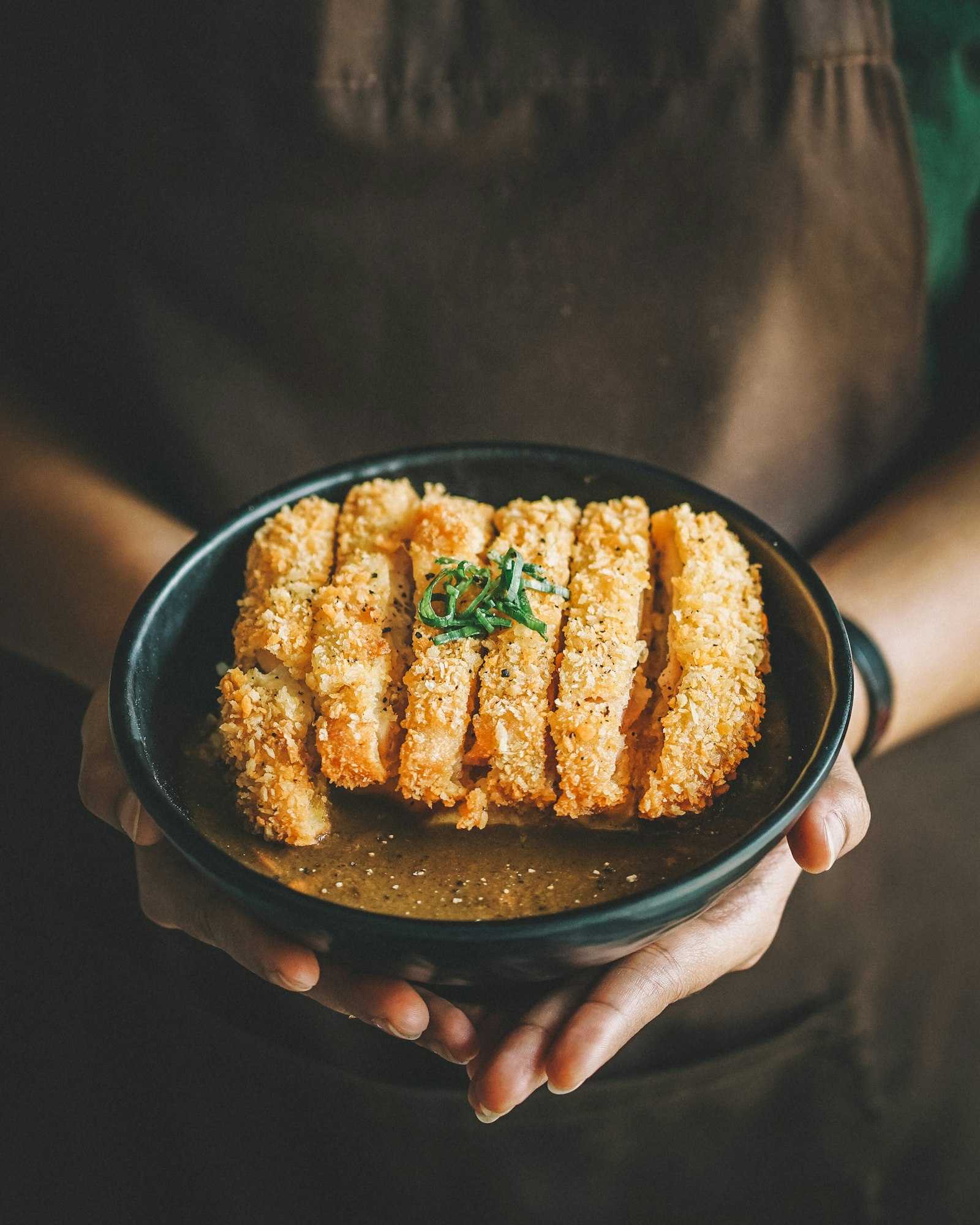
Osaka’s relationship with food is unlike any other Japanese city. The phrase kuidaore (食い倒れ — “eat until you drop”) is both the city’s motto and a description of actual behaviour: Osaka residents spend a higher percentage of household income on food than any other city in Japan, and the city’s food culture is the most democratic in the country — great meals are found in market stalls and basement counters as readily as in restaurant dining rooms. This guide explains the food properly.
🐙 Takoyaki — The Real Story
Takoyaki (たこ焼き) — octopus-filled batter balls cooked in a special dimpled iron griddle, topped with Worcestershire sauce, mayonnaise, and bonito flakes — was invented in Osaka in 1935 by Endo Tomekichi, a street vendor in the Namba district. He adapted a technique from akashiyaki (a local Akashi-style batter ball) and added octopus as the standard filling. The griddle is cast iron, heated to 220°C, and the balls are flipped with thin metal skewers to create a crispy shell around a still-liquid interior.
The quality test: Great takoyaki has a glass-thin, crackling outer shell that collapses slightly when you bite it, releasing a hot liquid interior. Bad takoyaki is solid all the way through (overcooked) or raw inside. The filling should include minced octopus, tenkasu (tempura scraps), spring onion, and pickled ginger. The sauce is applied at the last moment — the Worcester-style glaze burns bitter if applied too early.
Where to Find the Best
Wanaka (わなか) — Multiple Osaka locations; founded 1952 One of Osaka’s longest-running takoyaki chains; the outside of the ball is properly crispy, the interior steaming liquid. The Shinsaibashi and Namba branches typically have lines of locals, not tourists. The yam-sauce version (tororo-soy sauce instead of Worcester) is an underrated variation worth trying.
Doraku (道楽) — Dotonbori area At the original street-side stall on Dotonbori, the balls are made and served within 4 minutes of ordering. The griddle operator’s speed and the consistent quality make this worth the queue.
Aizuya (会津屋) — Namba Namba Considered by many Osaka food writers as the gold-standard of the classic style — minimal toppings, the traditional Worcester + mayo combination, and the original-recipe griddle seasoning. No seating; eat on the street.
🍢 Kushikatsu — The Golden Rule
Kushikatsu (串カツ) — deep-fried skewers of meat, vegetables, and seafood coated in breadcrumbs, served with a shared communal Worcestershire sauce — originated in Shinsekai in the 1920s as cheap protein for factory workers. The variety of ingredients is remarkable: standard pork and beef, but also quail egg, lotus root, cheese, asparagus, prawn, mochi, and in some shops, seasonal wild vegetables.
The rule: Every kushikatsu restaurant in Shinsekai has a sign reading 「二度づけ禁止」 — “No double-dipping.” The communal sauce bowl is used once per skewer; redipping is forbidden because it contaminates the shared sauce. First-timers are given cabbage leaves as sauce spoons — scoop sauce onto the cabbage, eat the skewered piece, or risk social embarrassment.
Kushikatsu Restaurants
Daruma (だるま) — Multiple Shinsekai locations; the most famous name in the district; the original store (1929) has long queues but the standalone counter stalls on the street are faster. The sauce recipe is unchanged from the original.
Yokozuna (横綱) — Shinsekai; larger format with table seating; an excellent choice for groups who want to eat comfortably for 90 minutes. ¥200–¥400 per skewer.
Yaekatsu (八重勝) — Shinsekai; consistently rated the best in the district by food critics; the batter coating here is notably lighter than competitors. Arrive at opening (11:00) or expect a 30-min wait.
🥘 Okonomiyaki — Osaka vs Hiroshima
Osaka-style okonomiyaki (Kansai-yaki) mixes all ingredients — flour batter, egg, shredded cabbage, pork belly, seafood — together before cooking, producing a thick, cohesive pancake. This contrasts with Hiroshima-style, which layers the ingredients separately (batter, then vegetables, then protein, then noodles). The debate about which style is “better” is the deepest culinary argument in Japan.
Mizuno (美津の) — Dotonbori; Osaka’s most famous okonomiyaki restaurant; the Yamato-imo yam added to the batter produces an unusually light and fluffy texture. The queues are long (30–60 min on weekends) but the cooking at the griddle table is part of the experience.
Fukutaro (福太郎) — Namba; the negi-yaki variation (spring onion pancake with pork, no cabbage) is a Kansai specialty unique to Osaka and difficult to find outside the city. ¥1,200.
🏪 Kuromon Ichiba Market — Osaka’s Kitchen
Access: Nippombashi Station (Osaka Metro Sennichimae Line) — 3 min walk; or 10 min walk from Namba Hours: Most stalls 8:00–18:00; some open from 6:00; closed Sundays (some stalls) Length: 580m covered arcade, ~170 vendors
Kuromon Ichiba (黒門市場 — “Black Gate Market”) has supplied Osaka’s professional kitchens and home cooks for 190 years. The market retains its wholesale orientation — vendors supply restaurants as well as selling retail, which keeps the quality extremely high. The specialties:
- Fugu (pufferfish): Several stalls sell fresh fugu for retail and prepared fugu dishes to eat standing up — the ability to legally sell fugu by vendors (not just licensed restaurants) is unique to Osaka. Watch the preparation: the toxic ovaries and liver are visible as the vendor removes and discards them with practised precision.
- Kobe beef: Two or three premium butchers at the market’s centre sell A5 Wagyu sliced for retail or as cooked-to-order beef steak on a gas burner. ¥3,000–¥5,000 for a 100g tasting piece at the counter.
- Seasonal shellfish and fish: The Osaka Bay position means the market receives some of the freshest seafood in Kansai — the ikebana arrangements of live shellfish in the display tanks are visually extraordinary.
- Takoyaki and street food: Standing-eat counters throughout the market serve the full Osaka street food repertoire.
Timing: Weekday mornings (8:00–10:00) before the tourist groups arrive. By 11:00, the market is crowded; the selection is identical but the experience is better early.
🍜 Osaka Ramen: The Underrated Style
Osaka ramen is overshadowed by Kyoto-style chicken ramen and Fukuoka’s tonkotsu in most food writing, but the Osaka shoyu variant — a clear, amber chicken-and-seafood dashi broth with light soy — is one of the most technically sophisticated in Japan.
Kinryu Ramen (金龍ラーメン) — Dotonbori; open 24 hours; a landmark late-night ramen counter that has fed Dotonbori’s nighttime crowd since 1985. The red dragon decoration above the counter is a Dotonbori landmark. ¥750. Counter seating only; expect a queue after midnight.
Inoue (いのうえ) — Namba; the chuka soba (Chinese-style noodle) format — clear dashi broth, straight noodles, chashu pork — represents Osaka’s most distinctive ramen character. ¥700. Opens at 11:30; sells out by 14:30.
🥩 Tsuruhashi Koreatown — Yakiniku at the Source
Access: Tsuruhashi Station (JR Loop Line or Osaka Metro Sennichimae Line) — 5 min walk Character: Osaka’s Korean community market, established 1945
Tsuruhashi (鶴橋) is Japan’s largest Korean community and one of the oldest — Korean residents arrived in Osaka from the 1920s onward as migrant workers. The market surrounding the station is a labyrinth of Korean produce stalls, kimchi makers, and yakiniku restaurants that predates Japan’s mainstream yakiniku boom by decades.
Why this matters for food: The yakiniku here uses parts of the animal that mainstream Japanese restaurants don’t stock — intestine (horumon), heart, liver, and stomach — cooked over charcoal at a fraction of the price of hotel-area yakiniku. The kimchi sold at market stalls is fermented on-site by Korean-Japanese producers whose families have maintained the recipes for three generations.
Approach the market: Walk into the covered market south of the station and follow the charcoal smoke smell. Any of the small restaurants advertising horumon-yaki (内臓焼き) at counters are reliable.
🍱 Osaka’s Best Food Secret: Department Store Basements
The depachika (デパ地下) food basements of Osaka’s major department stores — Takashimaya (Namba), Hankyu (Umeda), Daimaru (Shinsaibashi), and Kintetsu (Tennoji) — contain prepared foods from the city’s finest restaurants sold at retail prices.
The secret lunch: Buy 3–4 prepared dishes from different depachika counters (one kaiseki restaurant’s simmered vegetables, one tonkatsu shop’s cutlets, one wagashi sweet) for ¥1,500–¥2,500 total, then eat in the building’s picnic area or nearby park. The food is indistinguishable from restaurant dining. Osaka food professionals eat this way regularly.
Best depachika in Osaka:
- Hankyu Umeda B2 — The widest selection; separate sections for Kobe beef, seasonal vegetables, wagashi, and Osaka street food brands
- Takashimaya Namba B1–B2 — Most convenient from Namba tourist area; a Hokkaido seafood counter and a tororo yam bar are highlights
🍣 Hozenji Yokocho — The Hidden Restaurant Alley
Access: 3 min walk from Namba Station; the alley entrance is between Dotonbori and Sennichimae-dori, near the Hozenji temple entrance
Hozenji Yokocho (法善寺横丁) is Osaka’s most atmospheric dining alley — a 100m stone-paved lane flanked by restaurants and bars that have operated here since the Meiji period. The lane is named for the small Hozenji temple at its centre, where a Fudo statue covered in green moss stands perpetually wet from the water poured on it by visitors. The moss has grown undisturbed for over 70 years.
The restaurants on Hozenji Yokocho are not cheap — they cater to Osaka’s middle and upper dining market — but they are among the most atmospheric in the city: wood facades, paper lanterns, tiny interiors, and the sound of the adjacent Dotonbori canal audible from the stone steps. Sushi Yoshino (鮨よし野) and several kappo (counter kaiseki) restaurants here represent Osaka’s finest traditional dining at mid-range prices.
🍺 Fukushima — Where Chefs Eat on Days Off
Access: Fukushima Station (JR Loop Line) — 5 min walk Character: Osaka’s restaurant industry neighbourhood
Fukushima (福島) is the one district in Osaka that most Japanese food writers point to as their personal favourite — a restaurant area that has evolved organically rather than touristically, with a concentration of independent bars, natural wine importers, creative Kansai cuisine restaurants, and French bistros that serve chefs, sommeliers, and food journalists on their days off.
The streets immediately south of Fukushima Station (especially the area around Fukushima 7-chome and Umeda 6-chome) are the most concentrated. The best way to discover the district is to walk slowly between 19:00 and 21:00 and read the handwritten menus in windows. Reservation-required restaurants are common; walk-in options (standing bars, counter yakitori) are plentiful.
Osaka Food Calendar
| Season | Specialty | Location |
|---|---|---|
| March–April | Sakura mochi and seasonal wagashi | Nakazakicho cafes; Kuromon |
| May–August | Cold udon and somen noodles; summer kakigori (shaved ice) | Throughout |
| September–November | Matsutake mushroom dishes; seasonal kaiseki | Fukushima restaurants |
| December–February | Fugu season peak (best November–March) | Kuromon Market; Dotonbori |
| Year-round | Takoyaki, kushikatsu, okonomiyaki | Everywhere |