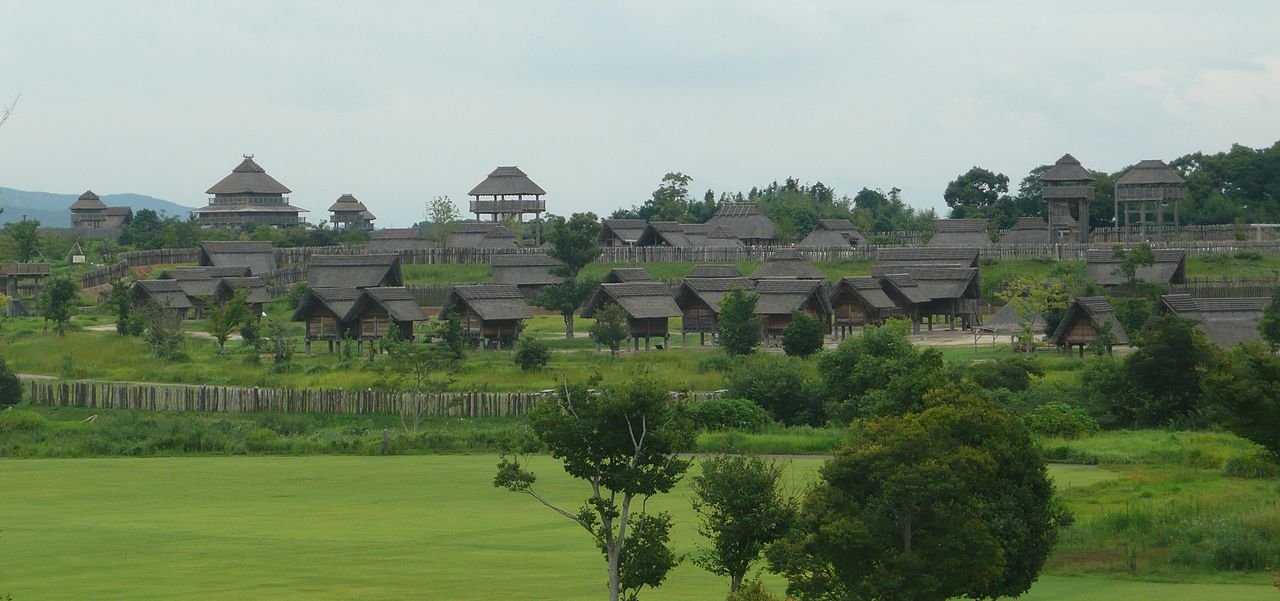
The Yoshinogari Historic Site is one of the most significant archaeological discoveries in Japan, a huge moated settlement from the Yayoi period (roughly 300 BC–300 AD) that flourished here around 2,000 years ago. Excavations revealed the largest such site in the country — a fortified village of encircling moats, wooden watchtowers, storehouses and burial mounds — offering an extraordinary glimpse of Japan’s rice-farming society before recorded history, and possibly linked to the legendary early kingdom described in ancient Chinese chronicles. Now a spacious historical park, it has extensive reconstructions of the raised buildings, palisades and pit dwellings that let you walk through an ancient village, along with a museum of excavated artefacts. Educational, atmospheric and great for families, it brings Japan’s distant past vividly to life.
🗓️ At a Glance
| Location | Yoshinogari, Saga |
| Hours | ~9:00–17:00 (seasonal) |
| Admission | Around ¥460 adults |
| Time needed | 2–3 hours |
| Best time | Year-round; mild seasons |
What to See
- A vast reconstructed Yayoi-period settlement.
- Moats, wooden watchtowers and thatched buildings.
- Burial mounds and a museum of excavated artefacts.
- A vivid glimpse of Japan 2,000 years ago.
Combine Your Visit
- Combine with Saga Castle ruins in the city.
- Pair with the Saga Prefecture Museum for history.
- Read our Saga overview .
Getting There
- By train: JR to Yoshinogari-Koen Station, then a walk.
- By car: parking at the historical park.
Tips
Allow a couple of hours to walk the large park and its reconstructed village, and pick up a map at the entrance to plan a route through the highlights. It’s excellent and educational for families and history lovers, wear comfortable shoes for lots of walking on open ground, and visit the museum to see the excavated artefacts.