Saitama is one of the most underrated prefectures in Japan for families travelling with children. It sits directly adjacent to Tokyo, accessible within 30 to 90 minutes by train, yet it offers outdoor gorge adventures, a world-class railway museum, a lane of old-fashioned sweet shops, a spring flower carpet festival, and ancient cliff tombs that quietly fascinate older children who like a hint of the mysterious. None of it requires a hire car. All of it is manageable on Suica IC cards. This guide covers the best family experiences and a suggested three-day itinerary.
Railway Museum Omiya — Best in Japan for Kids
Japan has many excellent transport museums, but the Railway Museum (Tetsudo Hakubutsukan) in Omiya is the largest and the most comprehensively interactive. For children who love trains — and many children do, deeply — it is one of the best days out in the country.
What Children Love Here
The driving simulators are the first stop. Multiple pods replicate the cab experience of different train types, from a 0-series Shinkansen bullet train to a conventional suburban electric. Children under a certain height must be accompanied by an adult inside the simulator. The queues for the most popular simulators form quickly after the 10:00 opening, so arrive at the museum no later than 09:45 to position yourself near the simulator area before the doors open.
The outdoor section features a steam locomotive that operates short rides around a loop track on weekends and public holidays. Tickets for the steam ride are sold separately at a booth near the outdoor entrance and frequently sell out within the first 30 to 60 minutes of the day. This is the single most important logistical point for family visits: buy steam ride tickets immediately after entering the museum, before exploring anything else.
Younger children are particularly drawn to the scale model diorama room, where a large landscape of miniature stations, tunnels, level crossings, and countryside comes to life during timed shows. The shows are repeated throughout the day on a posted schedule and last around 12 minutes. The close-up detail in the models — tiny passengers, illuminated carriages, signals that actually change — holds attention across a wide age range.
Admission and Access
Admission is ¥1,330 for adults and ¥620 for children aged 3 to 11. Children under 3 enter free. The museum is located a short ride on the New Shuttle automated guideway from Omiya Station, one stop to Tetsudo-Hakubutsukan Station. Allow a full day. The museum is closed on Tuesdays.
Nagatoro Gorge Boat Ride
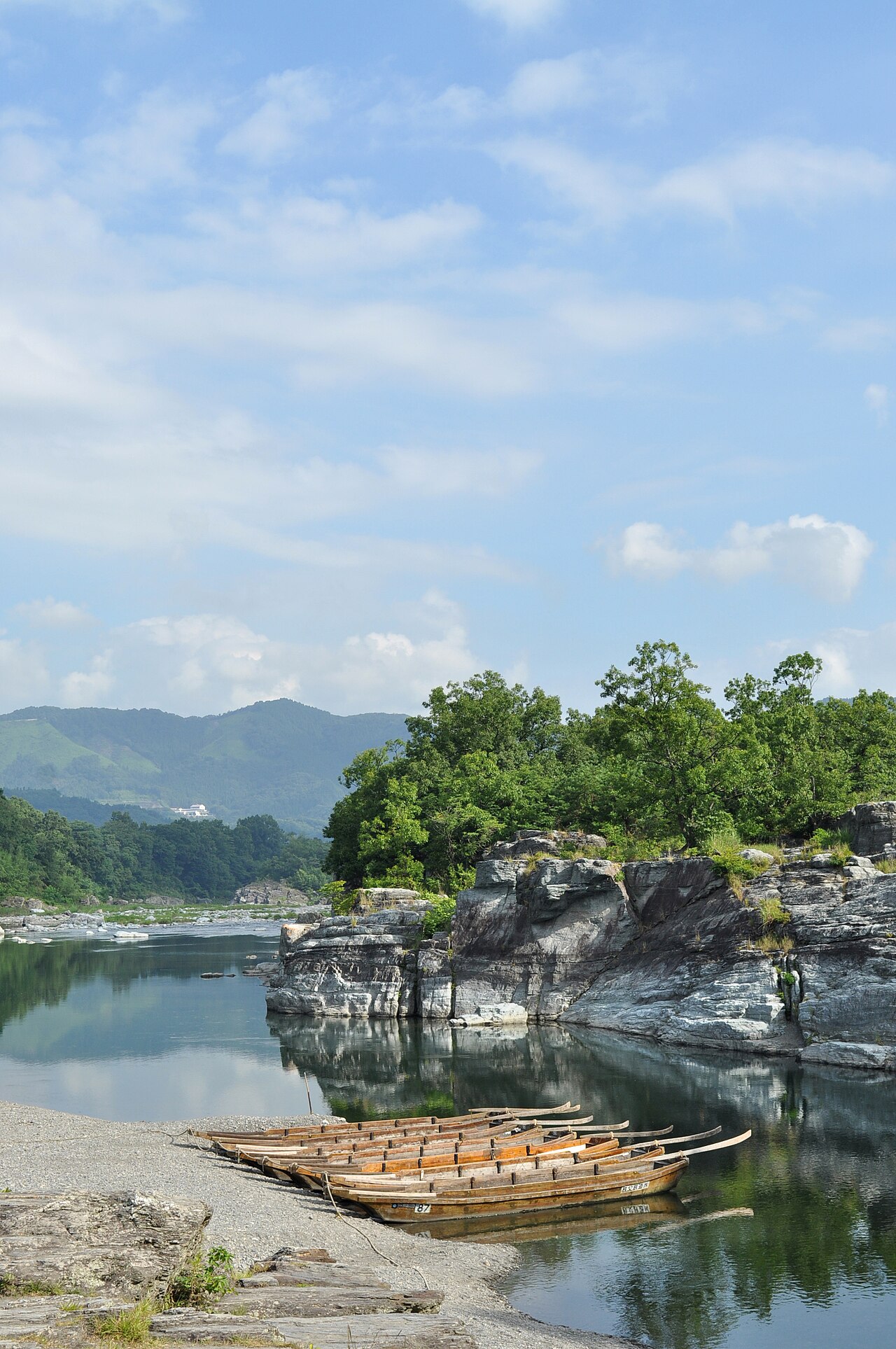
The Arakawa River cuts through ancient rock formations at Nagatoro, creating a dramatic gorge with steep walls and clear water. The traditional flat-bottomed wooden boats, steered by standing watermen using long poles, have been operating along this stretch of river for centuries.
Why Families Enjoy It
The boat ride is genuinely accessible for children. There are no age restrictions, the boats are stable, and the pace is slow enough to watch for birds, examine the rock faces at close range, and listen to the waterman explain what he is doing. The ride covers roughly three kilometres of the gorge, passing through small turbulent sections and calm gliding stretches, and takes approximately 60 minutes. The fare is ¥2,200 per person.
Children who enjoy the natural landscape will notice the layered patterns in the exposed cliff faces — the gneiss and granite here is among the oldest exposed rock in Japan — and the vegetation overhanging the water. In autumn (October to mid-November), the canyon walls turn red and orange in the maple and zelkova foliage, which makes the boat ride especially rewarding.
Getting There
Nagatoro is reached via the Chichibu Railway from Mitsumineguchi or from Kumagaya. From Tokyo, take the Seibu Laview limited express from Ikebukuro to Seibu-Chichibu (approximately 80 minutes, ¥1,500 reserved), then transfer to the Chichibu Railway for one stop to Nagatoro Station. The boat landing is a short walk from the station.
Kawagoe Candy Lane and Sweet Potato
Kawagoe was historically known as “Little Edo” for its preserved clay-walled merchant warehouses, but for younger children the main draw is entirely edible. The town has deep roots in sweet potato cultivation dating to the Edo period, and that heritage now expresses itself in an extraordinary range of sweet potato snacks sold from small shops along Kashiya Yokocho (Candy Lane) and the surrounding streets.
What to Buy and Eat
The soft-serve ice cream made from satsumaimo sweet potato is an obvious starting point — the pale purple colour combined with the mild sweet flavour makes it immediately appealing. Beyond soft-serve, shops sell dried sweet potato chips (hoshiboshi imo), steamed sweet potato buns, caramel and chocolate-covered varieties, and bottles of sweet potato shochu for the accompanying adults. Prices are almost universally reasonable; most snacks cost ¥300 to ¥600.
Candy Lane itself is a narrow alley of small wooden buildings selling old-fashioned sweets — ramune candy, hard fruit drops, rice crackers — that evoke an older Japan without becoming a museum piece. It is still a working shopping street where locals buy. The sensory atmosphere of wooden shopfronts, the smell of roasting sweet potato, and the constant stream of snacking visitors makes it a reliable highlight for children of any age.
Getting to Kawagoe
Kawagoe is 30 minutes from Ikebukuro by Tobu Tojo Line express (¥480). The Kurazukuri district and Kashiya Yokocho are a 15-minute walk from Kawagoe Station.
Hitsujiyama Shibazakura Festival
In late April and early May, Hitsujiyama Park near Chichibu city becomes one of the most visually arresting landscapes in the Kanto region. Roughly 400,000 shibazakura — moss phlox — bloom across a hillside in dense mats of pink, white, and lavender. Seen from above, the effect is of a flowering carpet spread across the ground beneath open sky.
Visiting with Children
The festival runs approximately late April to mid-May, with exact dates varying by year depending on bloom progress. Entry to the festival area costs ¥300 on weekdays and ¥500 on weekends. Children who can ride a bicycle will enjoy the rental bikes available near Seibu-Chichibu Station, which makes the journey to the park an activity in itself. The park is also accessible by shuttle bus from the station, or on foot in about 20 minutes.
Arriving before 09:00 on weekdays gives families the best combination of undisturbed photography and manageable crowd levels. The park is at its most striking in morning light before the haze builds. Afternoons at weekends can be crowded enough to make the narrow paths uncomfortable with strollers.
Yoshimi Hyakuana — Ancient Cave Tombs
Most visitors to Saitama never hear about Yoshimi Hyakuana, which is partly why it is worth including in a family itinerary. Located near Higashimatsuyama, this site consists of more than 1,200 burial chambers carved directly into a cliff face by people of the 6th and 7th centuries. The caves are arranged in horizontal rows across a hillside, each chamber roughly the size of a large wardrobe, excavated by hand into the soft volcanic tuff rock.
Why It Works for Older Children
The site divides into a free outer viewing area and an inner section (¥200 admission) where visitors can walk along the base of the cliff face and look directly into the chambers. Older children who have encountered ancient history in school — Egyptian tombs, Roman burial sites — find the Japanese equivalent quietly compelling. The scale is different from European megalithic monuments but the human impulse is identical.
The outer area is atmospheric at any time of year. The inner area requires a short walk through a wooded section. The site is not heavily commercialised and the visitor infrastructure is minimal, which adds to the sense of discovery.
Access
Yoshimi Hyakuana is reached from Higashimatsuyama Station on the Tobu Tojo Line (approximately 50 minutes from Ikebukuro, ¥660). From the station, the site is accessible by bus or taxi. It can be combined in a half-day with Kawagoe.
Family-Friendly Accommodation
In Omiya, the main business hotel clusters around Omiya Station cover families well. The area is central, well-served by convenience stores, and directly on the Shinkansen and Keihin-Tohoku lines for day trips in multiple directions. Rooms large enough for families are available at most major chains (Dormy Inn, APA, Richmond) with advance booking.
In Chichibu, smaller guesthouses and ryokan with dinner-and-breakfast packages (ippaku nishoku) offer a more immersive experience. Many of these properties are well-suited to families, as the meal service removes the need to find restaurants in the evening in a town where options are limited late at night. Booking 4 to 6 weeks ahead is advisable during shibazakura season and the December Night Festival period.
Suggested 3-Day Family Itinerary
Day 1 — Omiya: Railway Museum (full day); arrive early for simulators and steam ride tickets; dinner near Omiya Station.
Day 2 — Kawagoe and Yoshimi Hyakuana: Morning walk through Kurazukuri and Kashiya Yokocho; sweet potato lunch; afternoon at Yoshimi Hyakuana cave tombs (40 minutes from Kawagoe via Tobu Tojo Line to Higashimatsuyama); return to Omiya or continue to Chichibu for overnight.
Day 3 — Nagatoro and Chichibu: Morning gorge boat ride at Nagatoro; shibazakura at Hitsujiyama Park (seasonal, late April to mid-May); return to Tokyo via Seibu Laview.
Practical Tips
IC cards: Load Suica or Pasmo cards with sufficient credit before leaving Tokyo. Almost all train gates, buses, and convenience stores in Saitama accept IC card payments. Reload machines are available at major stations.
Rainy day options: The Railway Museum is entirely covered and works well on wet days. Chichibu’s indoor options include the Chichibu Nature Science Museum near Seibu-Chichibu Station and the covered shopping arcade in Chichibu city centre.
Strollers: The Kurazukuri district in Kawagoe has some cobbled sections but is broadly accessible. Hitsujiyama Park has paved paths throughout the main festival area. Nagatoro boat boarding requires stepping down to a riverside landing.
Food: Musashino udon — thick, flat wheat noodles served with pork-rich broth — is the regional speciality of inland Saitama and available at farmhouse-style restaurants around the Higashimatsuyama area (¥800–¥1,200 per bowl). Sweet potato products are available throughout Kawagoe.