Saitama’s Little Edo district, mountain valleys, and art spaces make it one of the best-kept secrets for a girls' trip from Tokyo. It is close enough to be accessible in an hour or less, diverse enough to fill two or three relaxed days, and free of the self-conscious trendiness that can make some Tokyo neighbourhoods feel like work. In Kawagoe you browse candy lanes and explore centuries-old storehouses converted into specialty cafes. In Omiya you sit quietly in a bonsai garden. In Nagatoro you drift down a river gorge on a flat wooden boat. And in Chichibu, if your group enjoys a drink, you end the evening with some of Japan’s finest craft whisky. This is a trip built around pleasure, beauty, and very good food.
Kawagoe Hikawa Shrine — Wind Chimes and Wishes
Kawagoe Hikawa Shrine is one of the most romantic shrines in eastern Japan and draws couples and groups of friends year-round. The deity enshrined here is associated with bonds and relationships, which makes it a natural stop for groups wanting to write ema wish plaques or pick up a good-luck charm. But the shrine’s most spectacular moment comes in summer, during the Fuurin Festival held throughout July and August.
For the festival, thousands of wind chimes — fuurin — are hung throughout the shrine grounds in cascades of glass, ceramic, and metal. They come in dozens of colors and patterns, each trailing a small paper strip that catches the breeze. Walking beneath them when the summer air moves is genuinely beautiful: the combined sound of thousands of chimes creates a shimmering, layered music that is unlike anything else.
The shrine also maintains a special display of round glass floats tied with colored paper near the approach, which changes annually with seasonal themes. Early morning is the best time to visit — the light through the trees is softer, and the crowds that arrive by mid-morning have not yet gathered. Arrive before 9 am if you can.
Kashiya Yokocho — Candy Lane Shopping
Kashiya Yokocho, which translates roughly as Candy Shop Alley, is a narrow lane lined with small sweet shops that has been operating since the Meiji era. In those days the alley served children who came to buy penny sweets. Today it serves a slightly older clientele with more refined tastes, but the atmosphere of old Japan has been carefully preserved.
The signature ingredient of Kawagoe is the sweet potato, called satsuma-imo in Japanese, and it appears in virtually every form here. Look for imo-yokan — a dense, slightly sweet block made from sweet potato paste that keeps well and makes an excellent souvenir. Imo-chips come in thin, crispy slices with various seasonings. Karinto (deep-fried dough sticks coated in brown sugar) is another traditional favourite that travels well.
Several shops sell their products beautifully packaged in traditional wrapping paper, which adds to the gift appeal. For eating on the spot, sweet potato soft-serve ice cream is available at a few stalls and is the ideal Kawagoe snack on a warm afternoon. The alley is open from approximately 10 am, and most shops close by 6 pm. Weekends bring more sellers but also more crowds; midweek mornings are calmer.
Kurazukuri Cafe-Hopping
The main kura district of Kawagoe — Ichiban-gai and its surrounding streets — has seen a wave of smart conversions over the past decade. The traditional merchant storehouses, with their thick fire-resistant plaster walls and heavy latticed windows, have become home to specialty cafes, craft boutiques, and sweet shops that blend seamlessly with the historic architecture.
What to Look For
Look for cafes offering matcha in its various forms — matcha latte, matcha soft-serve, matcha parfait — served in a kura setting that puts most Tokyo specialty shops to shame. Sweet potato soft cream (a slightly firmer, richer version of ice cream, in purple or orange) is ubiquitous and worth trying.
The side alleys off the main street contain smaller, quieter shops that tend to be more interesting than the obvious storefronts. Craft boutiques selling ceramics, textiles, and handmade goods are concentrated in these side streets. A few small galleries occupy former storehouses and display the work of local artists.
The district is walkable in an hour or two if you move briskly, but a cafe-hopping approach means you could fill an entire morning without retracing your steps. Many cafes open at 10 am; a few open earlier for breakfast.
Omiya Bonsai Art Museum
Thirty minutes from Kawagoe by the JR Kawagoe Line, Omiya’s Bonsai Art Museum is one of the most unusual and quietly rewarding art spaces in the Kanto region. Bonsai — the art of cultivating miniature trees trained over decades or centuries — is far more compelling in person than in photographs, and the museum’s collection presents the finest examples with exceptional care.
Entry is ¥600 and the museum comprises both an indoor gallery and an outdoor garden. The seasonal rotation means the display changes significantly across the year: spring brings flowering trees, autumn shows brilliant foliage, and winter reduces the collection to bare branches that reveal the architecture of each trunk with unusual clarity.
For groups who enjoy photography, the compositions here are remarkable. The contrast of ancient, gnarled miniature trees against clean white gallery walls, and the outdoor garden’s arrangement of stones and moss, produce images that look carefully staged even when they are simply real.
There is a small cafe in the garden where you can order tea or coffee and sit looking at the trees. Allow 90 minutes to two hours at a relaxed pace. The museum is best reached by taxi from Omiya station (approximately ¥800) or by local bus.
Nagatoro Gorge Boat Ride
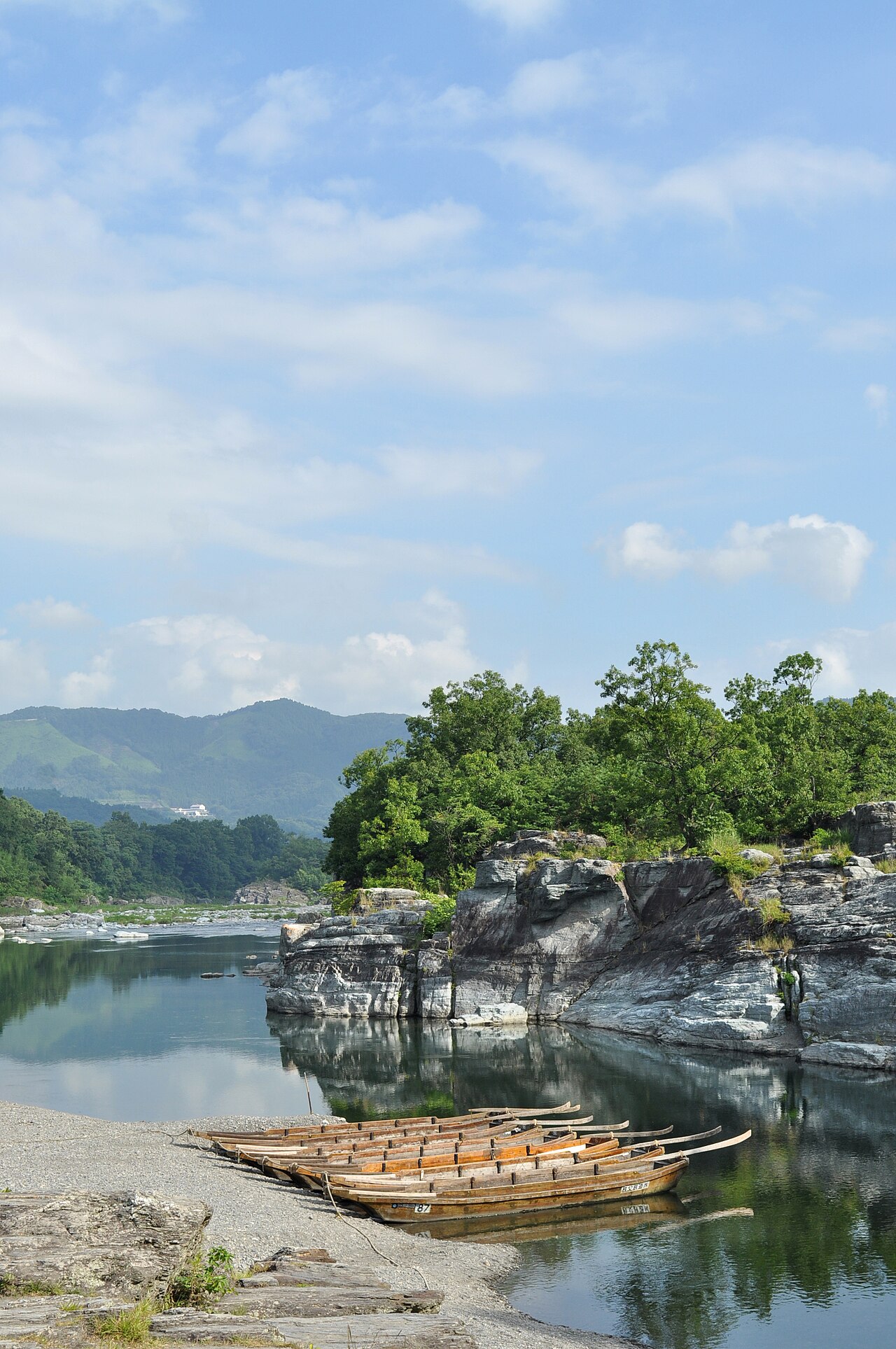
South of Chichibu city, the Nagatoro gorge is where the Arakawa River cuts through a series of dramatic rock formations, creating a landscape quite unlike the flat Kanto plain to the south. The classic way to experience it is on a flat-bottomed wooden boat, poled by boatmen who narrate the journey in Japanese while navigating the mild rapids.
The ride costs ¥2,200 per person and lasts approximately 20 minutes. The boats hold several passengers and run continuously from the dock near Nagatoro station. The experience is relaxed — this is scenic drifting, not whitewater — and the rock formations on either side take on different textures and colors depending on the season. In mid-November, the hillsides above the gorge turn red and gold, making the autumn run particularly photogenic.
After the boat ride, a riverbank path leads past small cafes and snack shops. A riverside cafe with an outdoor terrace is the natural stopping point: coffee and warabi mochi (a soft, dusted sweet) while watching the next group of boats depart is a satisfying end to the morning. Nagatoro is about 80 minutes from Ikebukuro by Seibu Railway and Chichibu Railway.
Chichibu Whisky Evening
Chichibu city is home to a small but internationally celebrated whisky distillery that produces Ichiro’s Malt, a range of Japanese single malts that regularly appear on best-of lists around the world. For a group with an interest in Japanese whisky, spending an evening in Chichibu exploring it is a surprisingly enjoyable experience.
The distillery itself offers guided tours, bookable in advance and available to small groups. The tour covers the full production process and ends with a tasting. Spaces are limited and tend to sell out, so book as early as possible, particularly for weekends.
If the distillery is full or the timing does not work, the bars in Chichibu city stock an excellent selection of local whisky. A few have become destinations in their own right for whisky enthusiasts visiting from Tokyo. The atmosphere in Chichibu after dark is quieter and more personal than anything you would find in the capital — small counter bars, attentive service, and a pace that encourages conversation.
For groups who prefer something other than whisky, local sake breweries in the Chichibu area also welcome visitors, and a few produce craft beer. The area is not a typical evening destination for tourists, which is precisely what makes it interesting.
Suggested 3-Day Itinerary
Day 1 — Kawagoe: Morning at Hikawa Shrine before the crowds, walk Kashiya Yokocho for sweet potato shopping, kura district cafe-hopping for lunch and afternoon, overnight in Kawagoe.
Day 2 — Omiya and Nagatoro: Morning train to Omiya, Bonsai Art Museum and garden cafe, lunch in Omiya, afternoon train to Nagatoro for gorge boat ride, riverside cafe stop, overnight in Chichibu or Nagatoro minshuku.
Day 3 — Chichibu: Morning at Hitsujiyama Shibazakura if in season (late April–mid-May) or Mitsumine Shrine otherwise, afternoon return to Chichibu city, distillery tour or bar crawl in the evening, return to Tokyo.
Practical Tips
- Kawagoe’s Hikawa Shrine is most atmospheric early morning and in summer for the Fuurin Festival (July–August).
- Kashiya Yokocho opens around 10 am; arrival before 11 am on weekdays avoids the main crowds.
- Book the Chichibu Distillery tour well in advance — the official website has English booking available.
- The Nagatoro boat ride runs year-round except during flood conditions; autumn weekends can be busy.
- From Ikebukuro, Kawagoe is 30 minutes (Tobu Tojo Line, ¥480); Nagatoro is approximately 80 minutes (Seibu + Chichibu Railway); the Chichibu Free Kippu (¥2,670) covers Chichibu Railway unlimited for two days.
- Most machiya-style guesthouses in Kawagoe do not require Japanese language ability to book; English websites or direct email works at most properties.