Toyama’s hot springs are tied closely to its dramatic geography. The prefecture sits where the Japan Alps meet the sea, and the same tectonic forces that built the mountains push superheated water to the surface throughout the region. Each onsen town has a character shaped by its setting — gorge, coast, city, or alpine ridge.
Unazuki Onsen
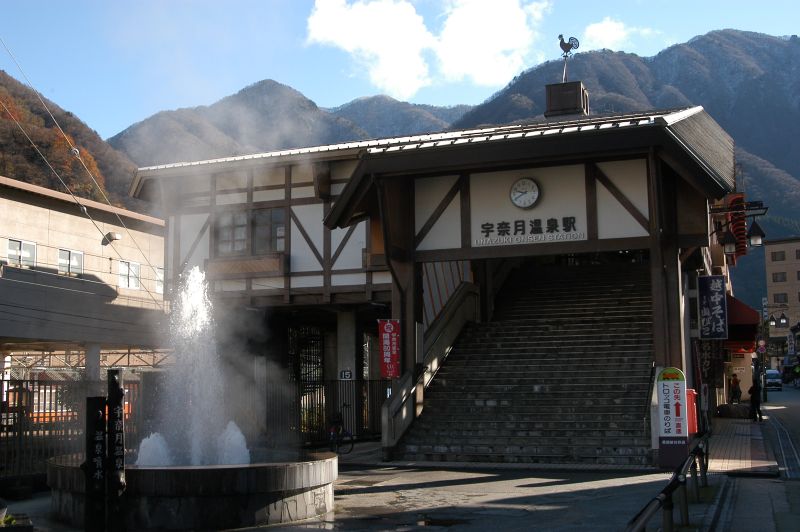
Unazuki Onsen is Toyama’s most famous hot spring resort and the eastern gateway to the Kurobe Gorge Railway. The spring source at Unazuki produces water at 98°C — among the hottest naturally occurring springs in Japan — which is piped 4 kilometres down from a source in the gorge above. By the time it reaches the baths it has cooled to a more manageable temperature, but the volume and heat of the source are extraordinary.
The setting is the main draw: the town sits above the Kurobe River with the steep gorge walls visible from many of the ryokan baths. Some larger properties have open-air baths (rotenburo) positioned to look directly into the canyon. In autumn, the foliage on the opposite gorge wall turns orange and red while you soak.
Staying in Unazuki
Enraku is Unazuki’s most prestigious ryokan, offering rooms with private outdoor baths and kaiseki meals that showcase Toyama Bay seafood and Kurobe mountain produce. Rates run ¥28,000–55,000 per person including two meals. Grand Hotel Yatsuragi offers a mid-range alternative at ¥20,000–35,000 per person with meals, with large communal indoor and outdoor baths.
For day visitors, the Kuronagi no Yu is a public bath facility a short walk from Unazuki-Onsen Station (¥500). The Kurobe Gorge Railway terminal is at the same station, making it natural to combine the railway trip with an onsen stop.
Toyama City Onsen
Toyama City does not have a famous onsen tradition, but several hotels draw on natural spring sources or artificial hot spring facilities:
Toyama Manten Hotel in the city centre has an onsen floor using water from a local source, accessible to hotel guests and day visitors (¥700). Dormy Inn Toyama has a rooftop bath with city views and is popular with business travellers who want a genuine onsen experience without leaving the urban centre. Both are convenient bases for exploring the city’s Glass Art Museum, Toyama Castle, and station markets.
Uozu Onsen
Uozu is a fishing port city on the eastern coast of Toyama Prefecture, approximately 40 kilometres from Toyama City. The onsen facilities here are smaller in scale but offer a seaside setting that is different in character from the gorge-edge springs of Unazuki.
Uozu is also the nearest town to the firefly squid fishing grounds — several hotels offer combination packages of onsen stay and dawn boat tour during the March–May spawning season. Booking these packages early (two to three months in advance) is essential during the squid season.
Tateyama Alpine Onsen
On the Tateyama Kurobe Alpine Route, several facilities offer bathing at altitude:
Bijodaira Lodge, at the base of the Tateyama cable car, has a simple bath using mountain water — not a mineral spring but a cool, clear alpine soak at around 1,000 metres. Midagahara Hotel, at 1,930 metres on the plateau, has indoor baths available to guests and sometimes day visitors; calling ahead is recommended.
At Murodo (2,450m), Tateyama Hotel is the highest accommodation on the route and has a bath available to guests. Soaking here in May, when snow still covers the surrounding peaks and the crater lake is half frozen, is one of the more unusual onsen experiences in Japan. Rates at Tateyama Hotel run ¥15,000–25,000 per person.
Day Trip Onsen Tips
- Unazuki from Toyama: Take the JR Hokuriku Line to Uozu, then the Toyama Chitetsu Kurobe Line to Unazuki-Onsen (total 60–75 minutes). The public bath is a 5-minute walk from the station.
- Bring a towel: Most public baths sell small towels at reception (¥150–200) if you arrive without one. Rental bath towels are available at most ryokan.
- Tattoo policy: Like most traditional onsen in Japan, Unazuki’s facilities generally prohibit tattoos in communal baths. Check individual property policies; private bath rooms are an option at higher-end ryokan.
Season Guide
- Winter (December–February): Unazuki is at its most atmospheric with snow on the gorge walls. Crab kaiseki season. Fewer visitors midweek.
- Spring (April–May): Unazuki marks the start of the Kurobe Gorge Railway season. Alpine Route onsen open at Murodo. Firefly squid season near Uozu.
- Autumn (October–November): Peak season for Unazuki and the gorge. Foliage is exceptional. Book ryokan two to three months in advance for October.
- Summer (June–September): Midgahara and alpine facilities are fully open. Lower gorge temperatures than the coast. Good season for Unazuki without the foliage crowds.


