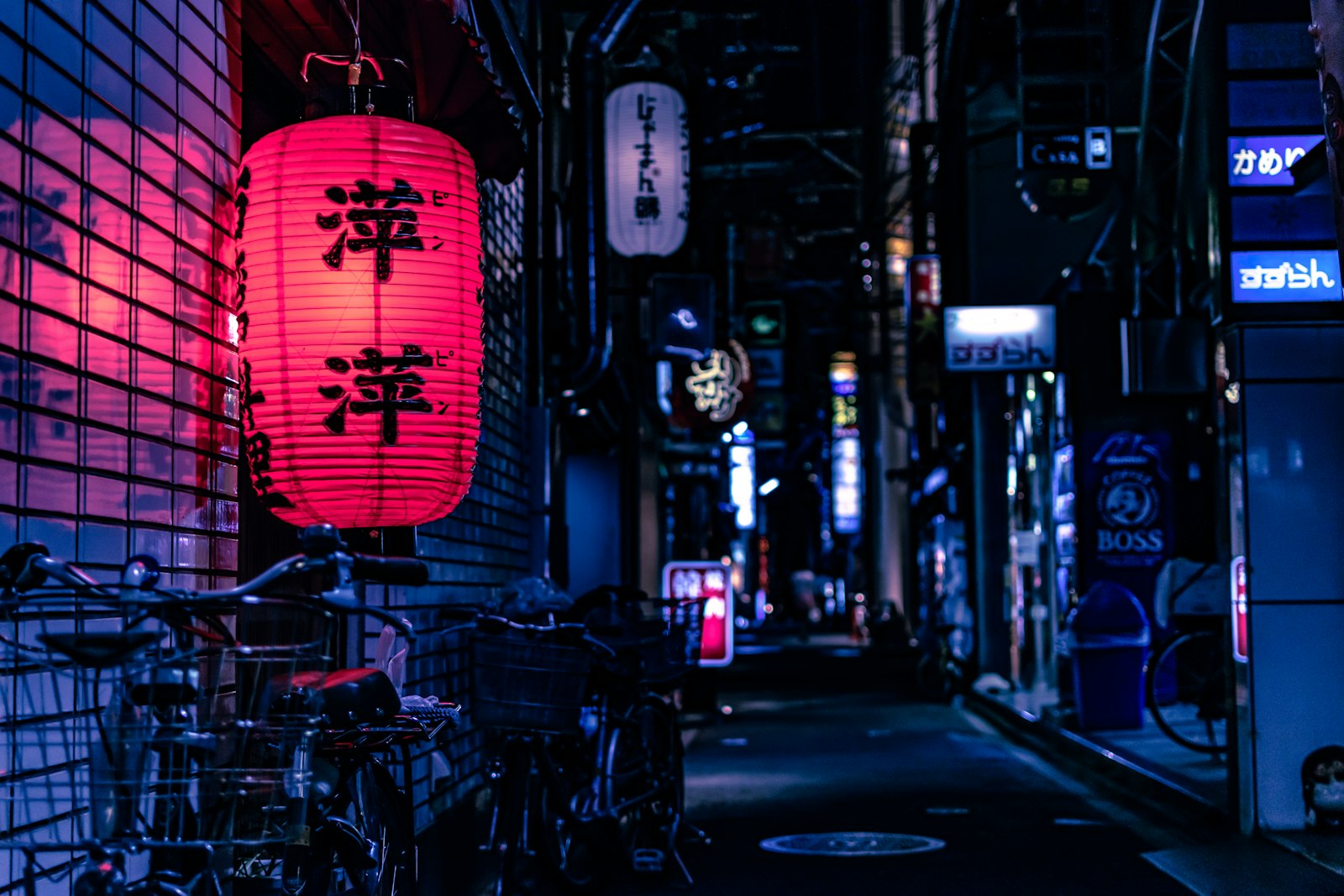
Wakayama is one of Japan’s most spiritually charged prefectures — a place where Buddhism arrived from the sea, where pilgrims have walked forest mountain paths for over a thousand years, and where the Pacific breaks against dramatic cliffs at the island nation’s southernmost tip. Unlike Nara or Kyoto, Wakayama demands time and commitment: the sights are spread across a large, mountainous landscape, often separated by hours of travel. But that distance is precisely the point. The difficulty of reaching Koyasan or Kumano has been generating meaning for pilgrims since the 9th century, and modern visitors who make the effort encounter something that is genuinely hard to find elsewhere in Japan.
⛩️ Koyasan — Japan’s Most Sacred Mountain Town
Access: Nankai Koya Line from Namba (Osaka) to Gokurakubashi Station (80 min), then cable car (5 min) and bus into town | Alternative: JR Highway Bus from Osaka/Kyoto direct Area highlights: Okunoin, Kongobuji Temple, Danjogaran complex
Koyasan (Mount Koya) is a mountain plateau at 800 metres that contains an entire temple town — over 100 monasteries, 50 of which offer lodging to visitors, and a spiritual atmosphere unlike anywhere else in the country. The monk Kobo Daishi (Kukai) founded the settlement in 816 AD after returning from esoteric Buddhist study in Tang China, choosing this remote mountain top for its eight-petalled lotus shape when viewed from above. He is still believed by many worshippers to be alive in eternal meditation in the innermost sanctuary, waiting for Maitreya, the future Buddha.
Okunoin — The Sacred Cemetery
Admission: Free | Open: Always; lanterns lit dusk to dawn
The approach to Okunoin is a 2-kilometre stone path through a cedar forest containing over 200,000 graves — tombstones and memorial stones for emperors, feudal lords, samurai, corporate employees (yes, corporate cenotaphs for companies including Panasonic and Nissin Cup Noodles), and ordinary pilgrims who wanted to be buried near Kobo Daishi. Walking this path at dawn or dusk, with lanterns lighting the stone-moss corridor under ancient cryptomeria trees, is one of the most atmospheric experiences in Japan.
At the far end of the path, across the Mimyo Bridge (where shoes must be removed and photography is forbidden), lies the Toro-do (Lantern Hall) — a wooden structure filled with over 10,000 lanterns that have burned continuously for centuries, some donated by emperors over a thousand years ago. Two flames are said never to have been extinguished: the one lit by the Emperor Shirakawa in the 11th century, and the one lit by a common woman who sold her hair to buy oil. Beyond the Lantern Hall is Kobo Daishi’s mausoleum, the most sacred point in Shingon Buddhism.
Kongobuji Temple
Admission: ¥1,000 | Hours: 8:30–17:00
The headquarters of the Koyasan Shingon sect, Kongobuji was founded in 1593 by Toyotomi Hideyoshi as a memorial to his mother. The interior contains spectacular gilded fusuma (sliding door) paintings commissioned from the Kano school — the finest at Kongobuji depicting a cedar forest in winter, pine trees, and plum blossoms across 152 panels of breathtaking scale. The dry rock garden Banryutei, made of Kyoto white sand and representing two dragons emerging from clouds, is the largest rock garden in Japan.
Danjogaran — The Temple Complex at the Heart of Koyasan
Admission: Grounds free; Konpon Daito interior ¥500 | Hours: 8:30–17:00
The Danjogaran is the ritual heart of Koyasan — a ceremonial precinct containing multiple halls around a wide gravel plaza. The Konpon Daito (Great Stupa), a 48-metre vermilion pagoda, is the most visually commanding structure on the plateau and represents the three-dimensional mandala of Koyasan’s esoteric Buddhist worldview. Morning service chanting drifts out from the nearby Kondo (Main Hall) while monks in white and saffron cross the plaza in the early light. Arriving before 9:00am gives you the complex almost entirely to yourself.
🌊 Kumano Nachi Taisha & Nachi Falls
Access: From Kii-Katsuura Station (JR Kisei Line from Wakayama, about 3 hr), bus to Nachi Falls/Kumano Nachi Taisha (25 min) Admission: Shrine free; Segi-no-Taki waterfall viewing area ¥300 | Hours: Shrine always open; treasure hall 8:30–16:00
Kumano Nachi Taisha is one of the three Kumano Grand Shrines forming the centre of the Kumano Kodo pilgrimage network — and it occupies perhaps the most visually dramatic setting of all three, on a forested mountainside with Japan’s tallest single-drop waterfall visible through the trees behind the shrine’s main hall. The cascade, Nachi Falls (Nachi-no-Taki), drops 133 metres in a single unbroken column of white water into a pool far below, audible long before it is visible.
The classic view — a three-story red pagoda framing the falls with primary forest behind — has become one of the most recognisable images in Japan. Getting there requires climbing approximately 450 stone steps from the bus stop, through a cedar forest lined with stone lanterns. The steps are steep; allow 30–40 minutes at a comfortable pace.
The shrine itself predates Japanese Buddhism, worshipping the waterfall itself as a deity — one of the purest examples of nature worship that underlies all Japanese Shinto. The Nachi Fire Festival on July 14th (see events guide) takes place here, with 12 enormous torch-bearing priests carrying the shrine’s portable sanctuaries down the steps to meet the waterfall.
🏯 Wakayama Castle
Access: 10 min walk from Wakayama Station (JR Kisei Line, Hanwa Line, Kinokuni Line) Admission: ¥410 | Hours: 9:00–17:30 (closed Dec 29–31)
Wakayama Castle stands on a rocky hilltop above the city centre, its white tenshu (main tower) visible from most of the downtown area. The current three-story keep is a 1958 concrete reconstruction of the original 1585 castle built for Toyotomi Hideyoshi’s brother, but it occupies the original stone base and the surrounding Momijidani Garden — one of the finest castle-ground gardens in western Japan — remains intact. Spring cherry blossom transforms the castle grounds into one of Wakayama’s best photo opportunities.
The interior houses a modest collection of castle history and period armour; the fifth-floor observation deck offers fine views over the city and coastline. The neighbouring garden’s autumn foliage (late November) is exceptional. A free shuttle cat cable car (nicknamed Otetemo-chan) runs up to the castle from the park entrance — a small but memorable detail that delights younger visitors.
🏛️ Kushimoto Roman Road & Hashigui Rocks
Access: JR Kisei Line to Kushimoto Station (from Wakayama, approximately 3 hr); Hashigui Rocks 15 min walk from station Admission: Free | Open: Always
The Hashigui Rocks (Bridge Pillar Rocks) at Kushimoto are a line of approximately 40 sea-eroded basalt pillars extending 850 metres into the ocean toward Oshima Island, as though the remains of a giant stone bridge submerged by the Pacific. The rocks are striking at any time, but particularly at dawn and during winter sunsets when the sky colors orange behind the offshore island silhouette.
Nearby, the remains of the Turkish frigate Ertuğrul, which sank in a typhoon here in 1890 with the loss of 587 lives, are commemorated at a park and memorial museum. A small surviving community of Ottoman sailors were rescued by Kushimoto fishermen, beginning a Turkish-Japanese friendship that persists today. The museum is modest but the story is genuinely moving.
🌊 Cape Shio-no-misaki
Access: JR Kisei Line to Kushimoto or Kii-Shirahama Station, then bus or taxi; Shio-no-misaki bus stop Admission: Free | Open: Always
Cape Shio-no-misaki is the southernmost point of Honshu — the Japanese mainland — a windswept headland of subtropical vegetation where the Pacific crashes against red-black rock. A white lighthouse (Japan’s oldest, built 1873) stands at the tip; the view from the headland stretches south into open ocean with nothing between here and Southeast Asia. On clear days the islands of the Nanki Kushimoto Marine Park are visible offshore.
The approach road passes through dense stands of the Biroujyu palm (Livistona chinensis), a subtropical species that creates an unmistakably tropical atmosphere unlike anything in central Japan. The combination of subtropical plants, dramatic coastal scenery, and the emotional weight of standing at the end of Japan’s largest island gives the cape a character that stays with visitors long after they leave.
Practical Tips for Wakayama Sightseeing
Getting there: Wakayama City is 1 hour from Osaka by limited express (JR Kuroshio). Koyasan requires about 1.5–2 hours from Osaka Namba via the Nankai Koya Line. Kumano Nachi Taisha requires roughly 3 hours from Wakayama City by JR Kisei Line. Plan multiple days — trying to cover all of Wakayama’s highlights in a single day is not possible.
JR passes: The Kinokuni Line (JR Kisei Line) connecting Wakayama City south to Kushimoto and east to the Kumano region is covered by the JR Pass, making it cost-effective for multi-day visits. The Nankai Koya Line to Koyasan is not JR-operated.
Best base: Wakayama City works for the castle and day trips north. For Kumano, base yourself at Kii-Katsuura or Shirahama. For Koyasan, stay on the mountain itself — the overnight shukubo (temple lodging) experience is integral to understanding why people travel here.
Seasonal timing: Koyasan is spectacular in both autumn foliage (late October–mid November) and when snow dusts the Okunoin cedars in January–February. Kumano Nachi Taisha’s Fire Festival (July 14) is one of Japan’s most impressive, but accommodation in the Nachikatsuura area must be booked many months ahead.