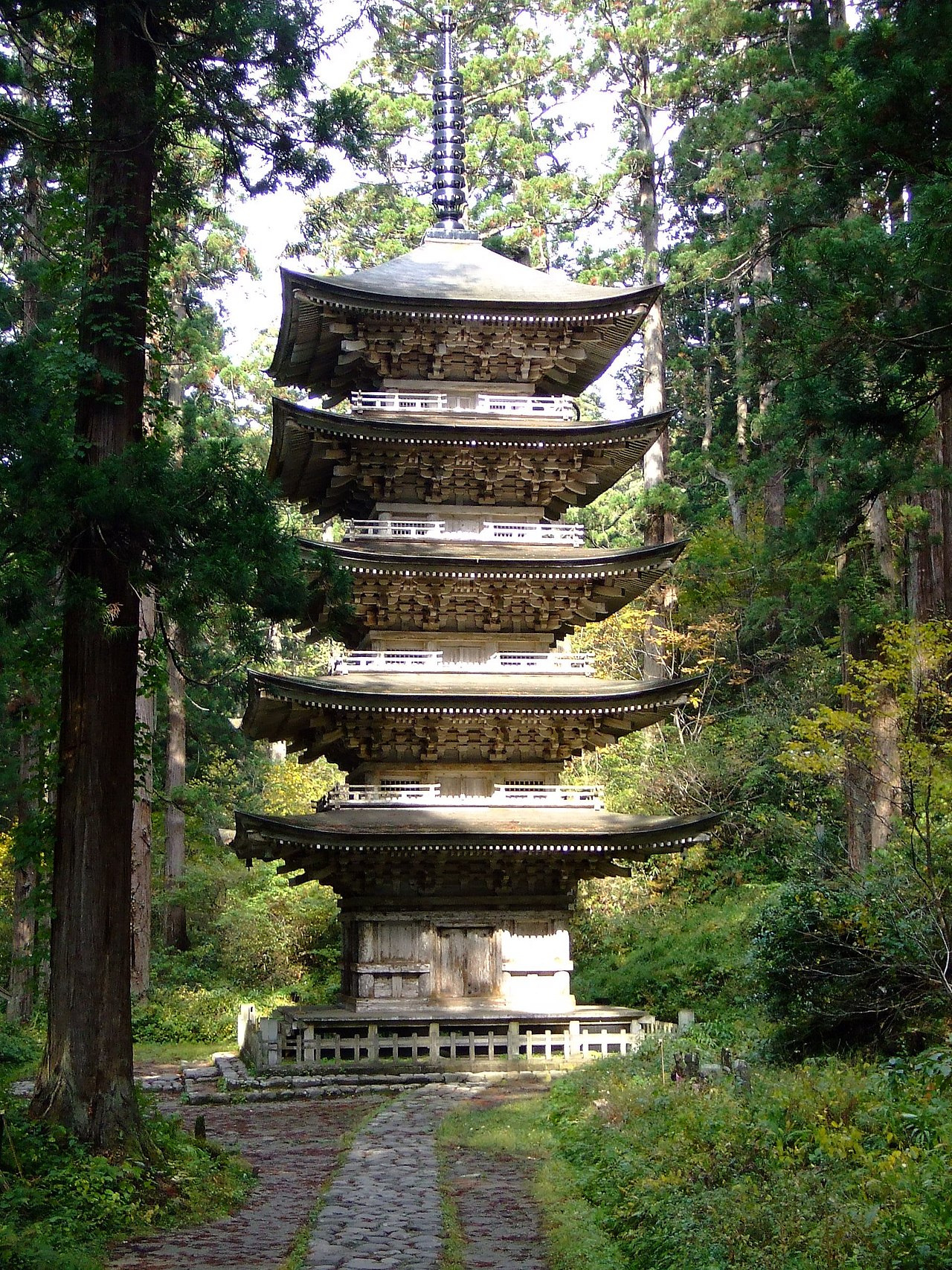
HAUNTED YAMAGATA: A Guide to Spirits, Legends, and Sacred Shadows
VISITOR GUIDELINES — PLEASE READ CAREFULLY
Safety and Respect are Non-Negotiable
- Visit during daylight hours. Mountain paths become genuinely dangerous after dark. These safety recommendations exist because people have died on these trails.
- Respect all boundaries, barriers, and posted restrictions. Religious sites have sacred zones that are off-limits for spiritual and safety reasons.
- Approach all memorial sites and death-related locations with profound respect. The sokushinbutsu monks, battlefield dead, and river victims were real people whose suffering was real. Treat these places as you would a cemetery.
- Leave absolutely no trace. Do not leave offerings unless explicitly permitted. Take all trash with you.
- Photography restrictions must be observed, particularly around displayed sokushinbutsu and inside temple buildings.
- Local guides are strongly recommended for locations with complex spiritual significance.
Yamagata’s supernatural reputation isn’t fabricated for tourism—it emerges from genuine historical practices, documented tragedies, and landscape features that have unsettled travelers for centuries. This guide approaches these locations with seriousness.
1. MT GASSAN (月山) — THE MOUNTAIN OF THE DEAD
The Death-World Mountain
Of the three sacred mountains of Dewa Sanzan, Gassan—literally “Moon Mountain”—has represented the realm of the dead and ancestral spirits for 1,400 years. In the cosmology practiced here since the 7th century, pilgrims journey through symbolic death by ascending Gassan, experiencing the afterworld before “rebirth” on the third peak. This isn’t metaphor softened by time—the mountain still functions as a death-realm in local spiritual understanding.
Gassan’s connection to death intensifies through its historical relationship to sokushinbutsu—Buddhist monks who undertook living mummification, slowly fasting on tree bark and toxic tea while still alive, eventually entering a tomb to meditate until death. Several of these mummified monks are preserved in temples connected to the Dewa Sanzan complex. These aren’t relics in the distant past; you can still view them, their bodies seated in eternal meditation, skin darkened like ancient leather, facial features still discernible.
The Atmosphere
Even in August, when most Japanese mountains bloom with summer wildflowers, Gassan retains massive snowfields. The high-altitude summit (1,984m) generates its own weather—sudden mists appear from nowhere, reducing visibility to a few meters. The landscape takes on an otherworldly quality: white snow against grey rock under shifting fog.
Hikers consistently describe Gassan as feeling fundamentally different from other mountains. The air feels thinner than altitude alone explains. The silence between the wind has a quality that makes people speak in whispers. On cloudy days, the mist moves across the high marshes with an almost purposeful quality. It’s not frightening, exactly—more like standing in a space where the boundary between worlds has worn thin through centuries of prayer and death-focused ritual.
The summit shrine, Gassan Shrine, requires ritual purification before entry and is attended by priests who live in complete isolation during the climbing season. Their presence reinforces that this isn’t a tourist attraction pretending at spirituality—this is an active religious site where death and the afterlife remain central.
Visiting Approach
The climbing season runs July to September (snow makes it inaccessible outside these months). Start extremely early—not only for safety but because the morning mist creates the most atmospheric conditions. The trail is well-maintained but long (several hours). Expect to see pilgrims in white, marking their journey through symbolic death.
Hire a local guide familiar with the spiritual significance. Several temples near the mountain base offer stays where you can learn about the sokushinbutsu tradition before ascending. The displayed mummified monks can be viewed at Dainichibo Temple and Churenji Temple—photography is strictly forbidden, and the viewing chambers should be entered with utmost solemnity.
2. ZAO VOLCANIC SPIRIT (蔵王) — THE UNPREDICTABLE DEITY
Fire and Ice, Fear and Power
The Zao mountain range straddles the Yamagata-Miyagi border, crowned by the Okama crater lake—a startling turquoise eye of water sitting directly above an active magma chamber. Zao last erupted in 1940, and volcanologists maintain constant monitoring. The ground here is restless.
Local tradition personifies this geological violence as Zao Gongen, a mountain deity of fierce and unpredictable power—protective but dangerous, never fully knowable. Unlike the gentle Jizo statues that dot Japan’s roadsides, Zao Gongen is depicted as a wrathful figure, trampling demons underfoot. This is a deity that demands respect through fear as much as devotion.
In winter, Zao becomes famous for juhyo—“snow monsters”—ice formations that coat trees in grotesque, towering shapes. While modern tourists photograph them as natural curiosities, traditional interpretation saw them as supernatural presences, spirits made temporarily visible through ice. Walking among them in whiteout conditions, it’s easy to understand why—they loom suddenly from the blowing snow, vaguely humanoid, utterly silent.
The Atmosphere
Standing at the crater rim on a clear day, you can see the mineral-stained rocks, smell the faint sulfur, and feel the warmth rising from below. Despite brilliant sunshine, hikers consistently report unease here—a feeling of standing somewhere they shouldn’t, of being watched or assessed by something vast and indifferent to human presence.
In poor weather, the crater disappears into cloud, and the sense of standing at the edge of a drop becomes vertiginous and threatening. The wind carries sounds that might be geological shifting or might be something else. Guides who work the mountain regularly speak carefully about “the mountain’s moods,” and they will turn groups back when those moods turn dark.
Visiting Approach
The Okama crater is accessible by road in summer months (late April to October, weather dependent). The viewing area is clearly marked—stay within boundaries. The volcanic gases can be dangerous, and rockfall occurs.
For the juhyo, visit January through February. Ropeway access makes viewing them relatively easy, but serious winter hiking requires proper equipment and extreme weather skills. Guided snowshoe tours provide safer access to the ice forest. Local guides know when to retreat—trust their judgment absolutely.
3. YAMADERA NIGHT ATMOSPHERE — TEMPLE IN DARKNESS
Beyond the Tourist Hours
Yamadera (Risshaku-ji Temple) is Yamagata’s most visited sight—and in daylight, with tour groups climbing the 1,015 stone steps, it can feel more scenic than supernatural. But the temple’s spiritual power emerges only after the last daytrippers descend and darkness gathers in the valley.
This is when Yamadera returns to its historical function: a mountain temple where monks practiced endurance meditation through the night, seeking enlightenment through isolation, cold, and the dissolution of normal perception. For over a thousand years, monks have spent long nights here in prayer, creating a concentrated spiritual atmosphere that sensitive visitors can still feel.
Matsuo Basho famously visited in 1689, writing: “In the utter silence / the cries of the cicadas / sink into the rocks.” His haiku isn’t just about quiet—it’s about something beyond ordinary silence, a stillness so profound that even insect sounds become absorbed into stone. That quality intensifies after dark.
The Atmosphere
The stone steps climbing the cliff face become a meditation in darkness—each step requiring attention, the temples above invisible except as faint lights in the black. The forest presses close on either side, ancient cryptomeria trees that were old when Basho climbed here. The valley far below disappears into darkness.
At the summit temples, the night opens up—stars overhead, the distant lights of Yamagata city seeming impossibly far away. The wind moves through the rock formations with sounds that echo strangely. The temple bell, if it rings, carries a weight in darkness that daylight somehow dilutes.
Visitors on guided night climbs report a sensation of time becoming unstable—not dramatically, but subtly, as though the boundary between Basho’s 1689 visit and the present moment has softened. People who check their phones (not recommended) are startled by how much or how little time has passed.
Visiting Approach
The temple closes at sunset and climbing the steps after dark without permission is prohibited—and genuinely dangerous. However, the temple occasionally organizes guided night visits, particularly during the summer festival period (check with the temple office weeks in advance).
If you visit during the day, stay until late afternoon when the crowds thin. The atmosphere begins to shift as the sun drops toward the mountains. The last hour before closing offers a taste of what the mountain feels like when returned to silence.
4. UESUGI CLAN BATTLEFIELD ECHOES — SAMURAI SHADOWS IN YONEZAWA
The Weight of Loyalty and Defeat
Yonezawa city carries a historical gravity unusual even in Japan, where history saturates the landscape. This was the domain of the Uesugi clan, ruled by legendary daimyo Uesugi Kenshin until his mysterious death in 1578—suspected poisoning, though officially recorded as natural causes. Kenshin died just as he prepared to march against Oda Nobunaga, his death potentially changing the course of Japanese history.
After the Battle of Sekigahara (1600), the Uesugi—who had sided with the losing Western Army—saw their domain drastically reduced and their samurai retainers relocated to Yonezawa. Despite crushing poverty, these retainers refused to abandon their lords or their code. Generations lived in genteel starvation rather than give up samurai identity.
This concentration of loyalty, pride, suffering, and death-before-dishonor created a spiritual intensity that hasn’t fully dissipated. Yonezawa feels like a city that refuses to forget—not in a nostalgic way, but in a manner that keeps the past present and active.
The Atmosphere
The Uesugi Shrine and surrounding grounds feel heavy with watching presences. The museum displays armor, weapons, and personal effects of samurai who lived and died by codes most modern visitors can barely comprehend. The items carry a weight—not hostile, but demanding recognition, refusing to become mere artifacts.
The Uesugi clan cemetery is where this atmosphere concentrates. Rows of weathered stone markers commemorating samurai who served, fought, starved, and died for their lords. On overcast days, when mist moves through the cryptomeria trees, visitors report a sense of being assessed—of these warrior-spirits measuring whether modern people possess any comparable loyalty or conviction.
Local people still take the Uesugi legacy seriously. Festivals commemorating the clan are solemn affairs, not mere pageantry. The sense of continuity with the past is almost confrontational—a challenge to the modern sensibility that history is something finished and separate.
Visiting Approach
The Uesugi Shrine and museum are easily accessible in Yonezawa. Visit on a quiet weekday if possible. The cemetery requires respectful clothing and demeanor—this is not a tourist site but a place of ongoing memorial.
Hire a local guide who can explain the historical details that illuminate the spiritual atmosphere. Without understanding the specific histories of loyalty and suffering, the locations might seem like ordinary historical sites. The supernatural weight here emerges from knowing the human stories.
5. MOGAMI RIVER GORGE — THE BEAUTIFUL, DEADLY WATER
Where No Escape Existed
The Mogami River cuts through narrow gorges north of Yamagata city, creating scenery so beautiful that boat tours now glide through what was once one of Japan’s most feared waterways. In the Edo period, this river was a necessary but dreaded transportation route—the gorge narrows to vertical walls with no landing points, and when the river flooded, travelers trapped on boats faced certain death.
Matsuo Basho traveled this section in 1689 during his “Narrow Road to the Deep North” journey. His writing records genuine anxiety: the river was in flood, the gorge dangerous, the boatmen grim. He survived, but many others didn’t. The beautiful scenery was no comfort when the water rose and the current accelerated toward rapids.
The traditional boat songs sung by Mogami boatmen contain pre-Buddhist lyrics about river spirits demanding tribute—dark verses largely edited out of modern tourist versions. The original songs acknowledged that the river had power, personality, and hunger. Deaths on this river weren’t accidents but payments, sacrifices to a force that had always been here and would remain long after humans disappeared.
The Atmosphere
Modern boats are safe, with experienced pilots who know every rock and current. But the atmosphere remains—the gorge walls that rise directly from the water, cutting off escape; the places where the river narrows and accelerates with muscular force; the sudden temperature drop in the gorge’s shadow.
When mist fills the gorge (common in early morning and evening), the sense of ancient danger returns. The rock walls emerge and vanish in shifting white, the sound of water echoing strangely. The forest above the gorge is old and deep, dark green even in summer. The beauty has teeth.
Visitors frequently report feeling watched from the gorge walls—not hostile, but observant, as though the river and its valley maintain an awareness of everyone passing through. Photographs taken in the gorge sometimes show unexpected mist formations or light effects that weren’t visible to the naked eye—probably just fog and sun interacting with stone, but unsettling nonetheless.
Visiting Approach
Boat tours operate spring through autumn (winter ice makes the river impassable). Choose early morning or late afternoon tours when light and mist create the most atmospheric conditions. Respect the boatmen’s instructions—the river remains powerful and dangerous despite modern safety measures.
If possible, read Basho’s account of his journey before visiting. His 17th-century anxiety provides context for understanding what made this river feared. The same rocks and rapids he navigated are still here; only the boats have changed.
Ask if any boatmen know the old songs—some older guides can still sing verses their grandfathers learned. These fragments of pre-modern river spirituality connect the present experience to the ancient understanding of the river as a living, demanding presence.
Final Note: Yamagata’s haunted reputation emerges from real history, documented spiritual practices, and landscape features that genuinely create unsettling atmospheres. This isn’t theme-park spookiness but the residue of centuries of death, devotion, and human struggle against natural forces. Approach with respect, take safety seriously, and recognize that what you’re experiencing has frightened travelers for longer than most nations have existed.