A Romantic Travel Guide to Yamagata Prefecture
Nestled in Japan’s northern Tohoku region, Yamagata Prefecture offers honeymooners an intoxicating blend of mountain spirituality, historic hot springs, and intimate culinary experiences far from the well-trodden tourist routes. This is a destination for couples seeking quiet communion—with each other and with a Japan that moves at the unhurried pace of steam rising from ancient baths and temple bells echoing through cedar forests.
Ginzan Onsen: Japan’s Most Romantic Hot Spring Village
If you visit only one place in Yamagata, make it Ginzan Onsen. This former silver-mining town looks like it was sketched by a romantic novelist: a narrow gorge where traditional wooden ryokan line both sides of a rushing river, connected by footbridges and illuminated after dark by flickering gas lanterns. The Taisho-period architecture (1920s) gives the entire village a nostalgic, timeless quality that becomes almost dreamlike when snow begins to fall.
Book your accommodation at least four to six months in advance—and splurge for a river-facing room at either Notoya Ryokan or Fujiya, the two most atmospheric properties. Notoya’s rooms feature private hinoki (cypress) baths where you can soak while watching snowflakes drift past your window. Fujiya offers similar luxury with slightly more modern amenities.
Arrive at dusk. This is when Ginzan transforms. As daytrippers depart, the gas lanterns are lit one by one along the riverside walking path. The soft golden light reflects on the water and snow, creating an atmosphere so cinematic you’ll understand why this village inspired settings in numerous Japanese films and anime.
Your kaiseki dinner will showcase the abundance of the Shonai region: impeccably cooked local rice (Yamagata produces some of Japan’s finest), delicate river fish, seasonal mountain vegetables, and multiple courses highlighting ingredients you’ve likely never encountered. The presentation rivals any fine dining experience in Tokyo, but with the intimacy of being served in your private room. Pair everything with local sake—Yamagata has more sake breweries per capita than almost anywhere in Japan.
Set an alarm for dawn. Before other guests wake, walk the empty village together. In winter, you’ll leave the first footprints in fresh snow. In any season, you’ll have this enchanted setting entirely to yourselves, with only the sound of the river and perhaps an elderly shopkeeper sweeping their doorstep.
Dewa Sanzan: A Pilgrimage for Two
An hour from Ginzan lies one of Japan’s most sacred mountain ranges: Dewa Sanzan, or the Three Mountains of Dewa. For over 1,400 years, pilgrims have climbed these peaks as a symbolic journey through death and rebirth—a powerful metaphor for couples beginning a new life together.
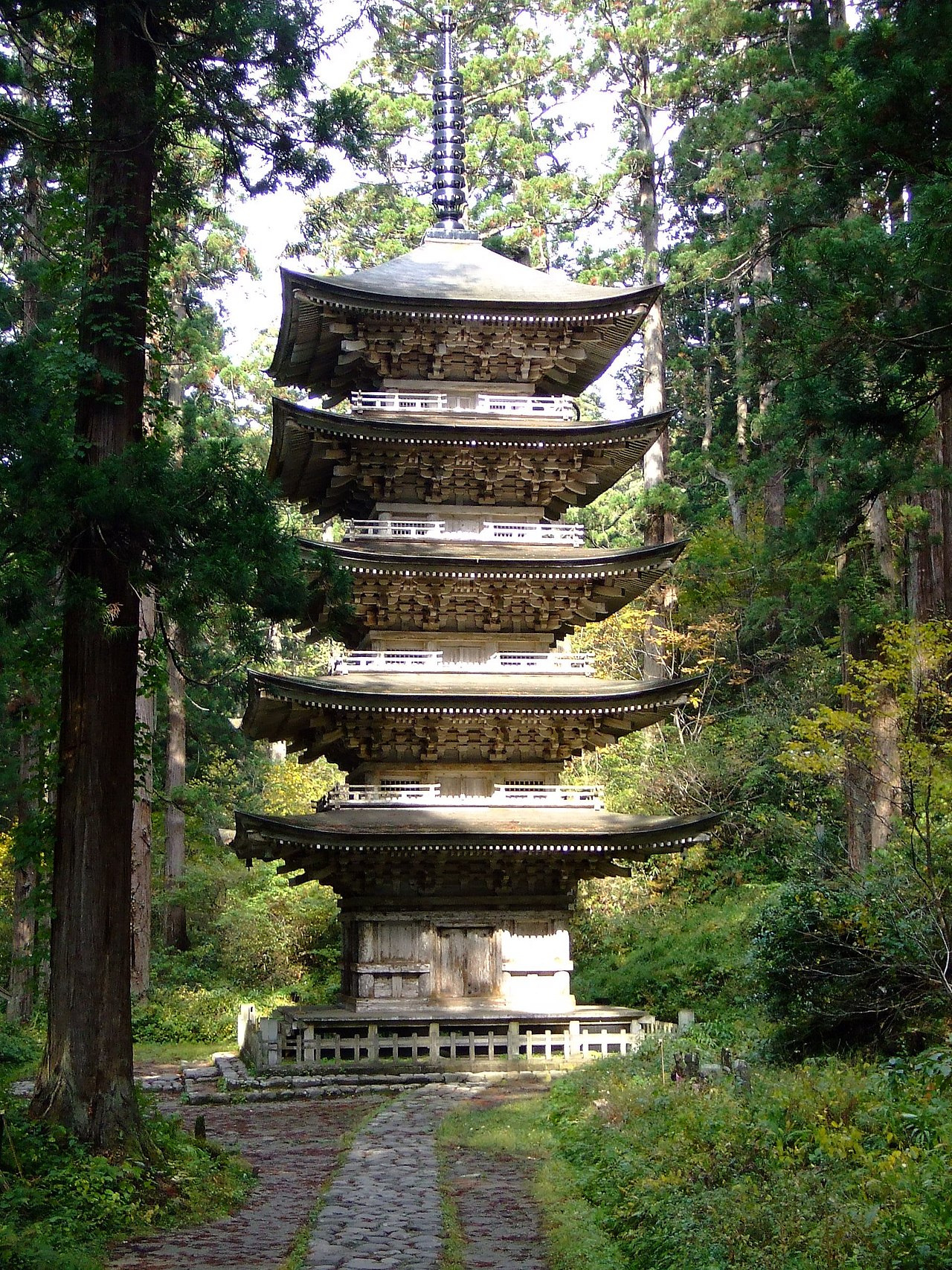
While climbing all three mountains requires multiple days, most couples focus on Mount Haguro, the most accessible and spiritually resonant. The ascent begins with 2,446 stone steps through a primordial forest of massive cedar trees, some over 1,000 years old. The path is steep enough to feel like an achievement, gentle enough that most reasonably fit couples can complete it.
In Tsuruoka, you can rent traditional white pilgrim robes (shiro-shōzoku) for around ¥3,000 per person. It’s touristy, yes—but also genuinely affecting. Dressed identically in white, climbing together through the ancient forest, you’re participating in a ritual that transcends the individual. Other hikers will smile and offer encouragement.
The summit Idu Jinja shrine, with its distinctive thatched roof, marks the symbolic point of rebirth. Many couples write wishes on ema (wooden plaques) and leave them here, prayers for their shared future.
Yamadera: The Temple in the Clouds
Poet Matsuo Basho visited Yamadera in 1689 and wrote of “the silence soaking into the rocks.” That silence remains, especially if you time your visit for late afternoon when tour groups have departed.
The Risshakuji temple complex clings to cliffsides overlooking a forested valley. The climb (1,015 steps—easier than Haguro) takes about 30 minutes, passing dozens of small shrines and Buddha statues tucked into rock faces. The Godaido platform offers the reward: an open wooden viewing deck where the entire valley spreads below you.
Come for golden hour. As the sun descends over the forested ridges, the light turns honey-colored, and temple buildings seem to glow from within. In this suspended moment, with the valley exhaling cool air and temple bells ringing somewhere above, you’ll understand why this place has drawn seekers for centuries.
Zao’s Winter Wonderland
For winter honeymooners (December through February), Zao Onsen offers high-altitude drama. This volcanic hot spring resort sits at 880 meters, meaning serious snowfall and the famous “snow monsters” (juhyo)—trees so laden with ice and snow they transform into alien sculptures.
The main attraction for couples is the outdoor rotenburo baths. Picture this: you’re submerged in milky-white sulfurous water (which makes your skin impossibly soft), steam rising around you, snowflakes landing on your face and melting, the night sky vast and dark overhead. Some ryokan offer private rotenburo that you can reserve by the hour—worth every yen for the intimacy.
On designated weekends, the resort illuminates the juhyo fields after dark (Juhyo Illumination), and you can take a cable car through the rainbow-lit snow sculptures. It’s unabashedly romantic.
Cherry Blossom Magic
If your dates align with spring (mid-April to early May in Yamagata), don’t miss the cherry blossoms. Unlike the frenzied hanami parties in Tokyo, Yamagata’s celebrations maintain a gentle quality.
Kaminoyama Castle illuminates its surrounding cherry trees after dark in April—a scene of almost painful beauty. The castle grounds are compact enough to feel intimate rather than overwhelming.
In late April, Tendo hosts the Ningen Shogi (Human Chess) festival, where people dressed in period costume serve as chess pieces on a giant board under blooming cherry trees. It’s quirky, distinctly Japanese, and makes for unforgettable photos.
Culinary Excellence
Yamagata’s food scene deserves its own pilgrimage. Yonezawa beef, one of Japan’s top three wagyu, can be experienced as sukiyaki at specialist restaurants where the marbling is so intense it looks like abstract art.
For sake lovers, Juyondai represents the pinnacle—a cult-favorite brew that’s nearly impossible to find. Some high-end ryokan and restaurants have connections to secure bottles. Book well in advance and mention your interest.
Practical Notes
Seasonal timing: Winter (January-February) for snowy romance; April-May for cherry blossoms; June for fruit blossoms; autumn (October-November) for mountain colors.
Booking lead times: Ginzan Onsen top ryokan: 4-6 months; Zao weekend stays: 3 months; restaurants for Juyondai: 2-3 months.
Getting around: Rent a car. Public transport exists but limits spontaneity—and this is a trip for following your instincts.
Yamagata asks you to slow down, to notice details, to be present. For couples beginning a shared journey, there’s no better invitation.