Yamagata Prefecture Nature and Outdoor Guide
Yamagata Prefecture, nestled in the Tohoku region of northern Honshu, offers international visitors an extraordinary blend of spiritual mountain pilgrimage, volcanic landscapes, and agricultural beauty that remains largely undiscovered by overseas travelers. From sacred peaks where ancient ascetics trained to snow monsters frozen in Siberian winds, Yamagata delivers some of Japan’s most distinctive outdoor experiences.
Dewa Sanzan: The Three Sacred Mountains
The Dewa Sanzan—Mt Haguro, Mt Gassan, and Mt Yudono—form the spiritual heart of Yamagata and represent birth, death, and rebirth in the Shugendo mountain religion. Visiting all three constitutes a symbolic journey through these life stages, a pilgrimage that has drawn seekers for over 1,400 years.
Mt Haguro (414m): The Gateway Mountain
Mt Haguro offers year-round access and serves as the perfect introduction to sacred mountain pilgrimage. The ascent follows 2,446 stone steps through a cathedral-like avenue of massive Japanese cedar trees, some over 1,000 years old. Their gnarled trunks and towering canopy create an atmosphere of profound antiquity that justifies the journey alone.
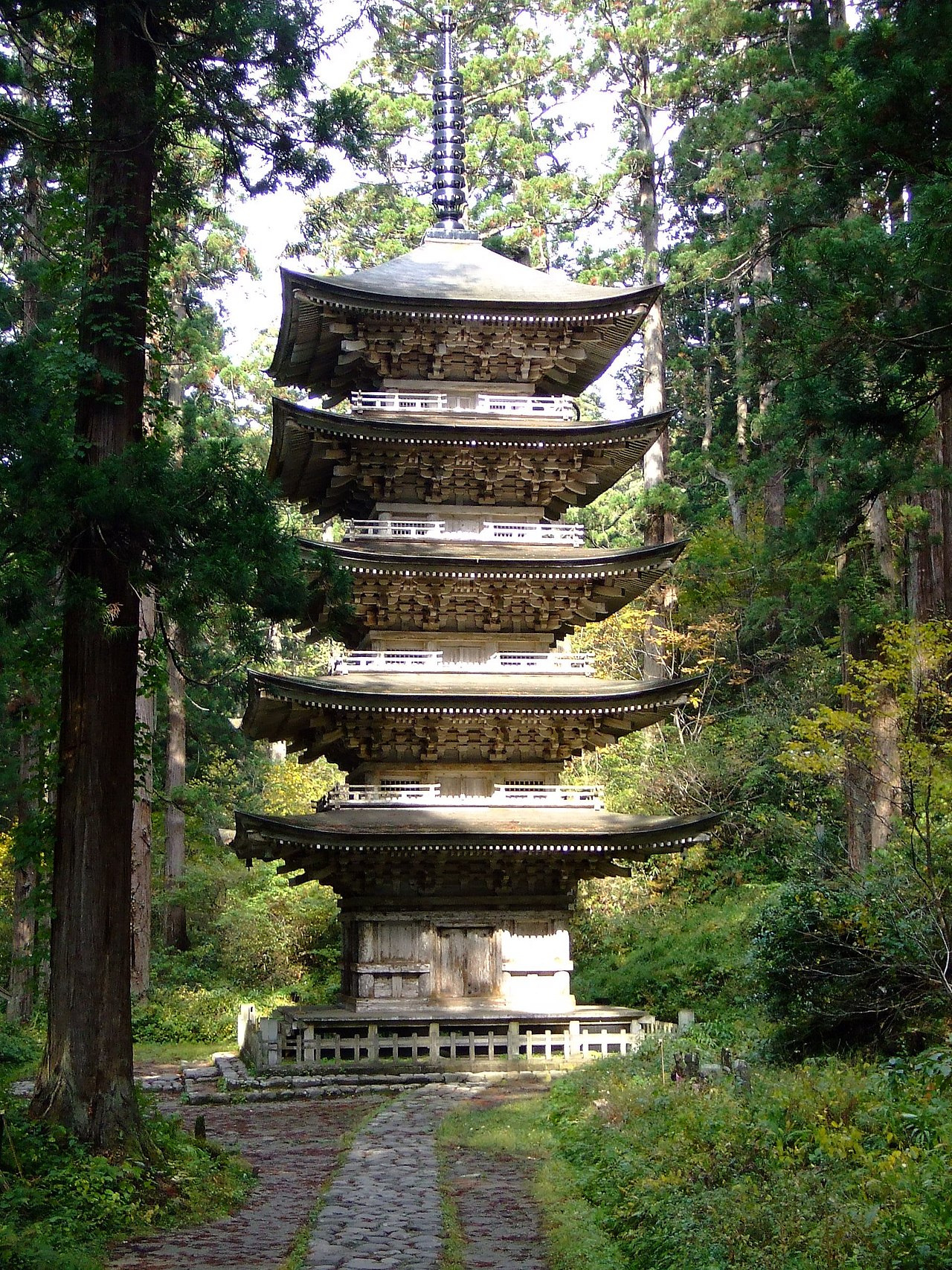
About ten minutes up the path stands the five-storey pagoda (Gojūnotō), a 600-year-old national treasure emerging from the forest gloom. Its weathered wood and elegant proportions represent one of Tohoku’s finest architectural treasures. The climb takes 45-60 minutes for most visitors, though the stone steps can be challenging for those with knee issues.
The summit hosts the Idu Jinja shrine complex, which uniquely houses the deities of all three mountains under one massive thatched roof—convenient for winter when the other peaks remain snowbound. Even in deep snow, the approach path is maintained and walkable, though microspikes are advisable January through March.
Access: Buses run from Tsuruoka Station to Haguro Center (40 minutes, ¥820). Rental cars provide greater flexibility for exploring the region.
Difficulty: Moderate. Steady uphill on stone steps, but manageable for anyone with reasonable fitness.
Mt Gassan (1,984m): The Alpine Sanctuary
Mt Gassan operates only July through September—before July, snow blocks the route; after September, the shrine closes for winter. This short season and 1,984m elevation create an alpine environment rare in Japanese mountains south of Hokkaido.
The standard route from Gassan 8th Station takes 3-4 hours to the summit. Even in August, patches of last winter’s snow linger in sheltered gullies. The high-altitude wetlands bloom with cardinal flowers, alpine lilies, and dozens of wildflower species throughout the brief summer. The trail crosses boardwalks protecting fragile alpine marsh ecosystems.
Summit etiquette requires a small purification fee (¥500) at the Gassan Shrine, where priests conduct blessings. The descent to Mt Yudono (2 hours) completes the traditional pilgrimage route—a one-way journey that requires pre-arranged transport from Yudono back to your starting point or accommodation.
Important: Luggage reduction is mandatory—large backpacks and unnecessary items should be left at 8th Station. Consider hiring a mountain guide (available through Tsuruoka tourism office) for route-finding and cultural context.
Access: Seasonal buses run from Tsuruoka to Gassan 8th Station (90 minutes).
Difficulty: Moderate to challenging. Significant elevation gain, rocky terrain, and altitude effects possible.
Mt Yudono (1,504m): The Secret Mountain
Mt Yudono represents the most sacred element of the pilgrimage—and the most mysterious. The object of veneration is a sacred rock formation continuously washed by warm spring water. For centuries, pilgrims were forbidden to speak of what they witnessed here, and photography remains strictly prohibited today.
Visitors must remove shoes and proceed barefoot across the sacred rock, an unexpectedly powerful sensory experience. The warm mineral water, the rust-red stone, and the profound reverence of the site create an atmosphere quite unlike typical tourist destinations. Even secular visitors report finding unexpected emotional weight here.
Access: Via Mt Gassan descent, or direct buses from Tsuruoka to Yudono Sanrojo (75 minutes, July-October only).
Difficulty: Easy if approaching directly; moderate if descending from Gassan.
Zao Volcanic Plateau: Land of Snow Monsters
The Zao mountain range straddling Yamagata and Miyagi prefectures offers dramatically different experiences by season. The Okama crater lake, formed 1,200 years ago, shifts colors with light and weather—emerald, jade, cobalt, even steel grey—earning its nickname “Five-Colour Pond.”
The Zao Echo Line toll road (¥540) winds 26.5km through volcanic landscape, open late April through late October. From the parking area, a short walk reaches the crater overlook. The alien landscape of volcanic rock, alpine scrub, and the color-changing lake makes for spectacular photography.
Winter transforms Zao into the realm of juhyo—snow monsters. When Siberian winds blast moisture-laden air against standing trees at high elevation, ice accumulates into bizarre formations resembling frozen ghosts or alien creatures. The Zao Ropeway (¥2,800 return) ascends directly into the monster zone, where visitors can walk among these natural sculptures. Peak monster season runs January through February, with nighttime illumination events creating an otherworldly atmosphere.
Access: Buses from Yamagata Station to Zao Onsen (40 minutes, ¥1,000).
Mogami River Gorge Boat Ride
The Mogami River, celebrated in classical Japanese poetry, flows through a dramatic gorge between Shinjō and Sakata. Traditional 30-minute boat rides depart from Furukuchi boarding point, where skilled boatmen pole flat-bottomed craft through the canyon while singing local folksongs in dialect so thick even Japanese visitors struggle to understand.
The experience connects visitors to centuries of Tohoku tradition—these boats once carried rice and safflower dye through the gorge to trading ports. The boatmen’s work songs, the canyon walls rising 30-50 meters on both sides, and the skillful navigation through rapids create an immersive journey into old Japan.
Autumn foliage (October-November) paints the canyon walls in brilliant orange and red, making this one of Tohoku’s most memorable seasonal spectacles.
Access: Furukuchi Station on the JR Rikuu East Line; boats run year-round, ¥2,500 per person.
Gassan Ski Resort: Summer Skiing
Gassan offers Japan’s longest ski season, with upper slopes holding snow from November through July. The extraordinary phenomenon of summer skiing—carving turns in May and June under warm sunshine—attracts devoted powder seekers long after other resorts close. The “spring corn snow” develops a perfect texture for smooth, forgiving turns.
Access: Route 112 from Tsuruoka; summer access only (April-July), as winter snowfall buries the access road.
Shonai Plain: The Rice Paddy Landscape
Late summer (August-September) transforms the Shonai Plain into Japan’s most picturesque agricultural landscape. Endless rice paddies create a golden-green patchwork backed by the Dewa Mountains, with traditional farmhouses and irrigation channels completing a scene largely unchanged for centuries.
This spiritual landscape produces some of Japan’s finest organic rice. Cycling routes follow raised paths between paddies, offering intimate encounters with working agriculture. Sunset casting golden light across the ripening rice fields remains a photographer’s dream.
Access: Tsuruoka or Sakata make ideal bases; bicycle rental available at both stations.
Seasonal Guide:
- Spring (April-May): Echo Line opens; early hiking
- Summer (June-August): Gassan opens; rice paddies; summer skiing
- Autumn (September-November): Fall colors; harvest season; perfect hiking weather
- Winter (December-March): Snow monsters; winter pilgrimage to Haguro; onsen season
Yamagata rewards visitors who venture beyond Japan’s famous Golden Route with experiences of spiritual depth, natural wonder, and cultural authenticity increasingly rare in modern Japan.