Spiritual Power Spots Guide to Yamagata Prefecture
Yamagata Prefecture, nestled in the mountainous heart of northern Japan, holds some of the country’s most powerful and ancient spiritual sites. While Kyoto’s temples attract millions, Yamagata’s sacred mountains and pilgrimage routes remain relatively unknown to international visitors—yet they represent Japan’s deepest traditions of mountain worship and spiritual transformation. This is where yamabushi mountain ascetics have practiced for over 1,400 years, and where the boundaries between the physical and spiritual worlds grow thin.
1. Dewa Sanzan (出羽三山): The Complete Journey of Death and Rebirth
The Dewa Sanzan—the “Three Mountains of Dewa”—form Japan’s most profound and complete mountain pilgrimage system. Unlike single sacred peaks, these three mountains together represent the entire cycle of human existence: present life, death, and rebirth. For over fourteen centuries, pilgrims dressed in white (the color of death and purity) have walked this circuit, symbolically dying and being reborn before returning to ordinary life.
Mt. Haguro (羽黒山) - Present Life and Earth
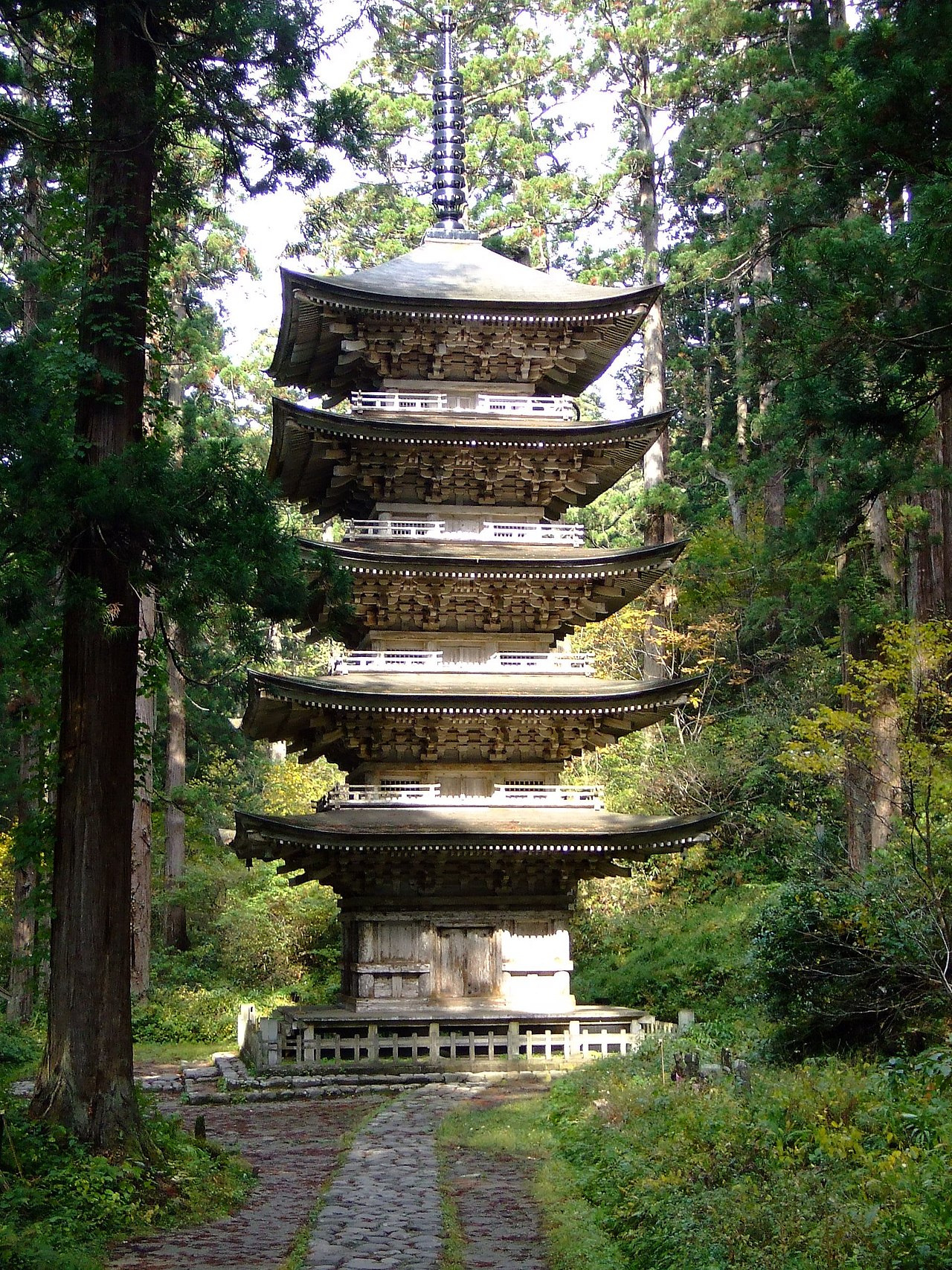
Representing the present world and physical vitality, Mt. Haguro is accessible year-round and serves as the spiritual entry point. The ascent begins with 2,446 stone steps winding through an ancient cedar forest, some trees over 1,000 years old. Approximately halfway up stands the magnificent five-storey pagoda, built without a single nail—a National Treasure dating to 937. The climb itself is a walking meditation, each step grounding you deeper into the present moment.
Spiritual Power: Grounding, vitality, connection to the living world, present-moment awareness
Visiting Etiquette: Bow at the torii gate before ascending. Walk mindfully—the steps themselves are considered sacred. The on-site shukubo (temple lodgings) offer traditional vegetarian shojin-ryori meals and the rare opportunity to observe morning prayers.
Best Time: Year-round, though autumn colors (October) are spectacular. Winter pilgrimage in snow offers profound solitude.
Access: 10-minute bus from Tsuruoka Station to Haguro Center; the climb takes 45-90 minutes depending on pace.
Mt. Gassan (月山) - Death and Transition
At 1,984 meters, Gassan represents the realm of the dead and the transition between worlds. Accessible only from July to mid-September due to heavy snow, this high alpine environment feels otherworldly—pure, stark, and powerful. The trail passes through misty wetlands and alpine flowers, culminating at Gassan Shrine at the summit. Here, Shinto priests conduct purification rituals even in summer.
Spiritual Power: Releasing the past, honoring ancestors, navigating transitions, letting go
Visiting Etiquette: Undergo purification (oharai) by the priest before entering the shrine’s inner area (small fee). Wear appropriate hiking gear—weather changes rapidly.
Best Time: July to early September only
Access: Bus from Tsuruoka to Gassan Hachigome (8th station); 3-4 hour hike to summit
Mt. Yudono (湯殿山) - Rebirth and the Future
The most sacred and most secret of the three, Yudono-san embodies rebirth and new beginnings. The pilgrimage culminates here at a warm, rust-colored sacred rock from which hot spring water flows. Following ancient protocols, pilgrims must remove their shoes and walk barefoot to touch the sacred stone—a direct, unmediated encounter with divine power. Photography is completely forbidden, and traditional pilgrims don’t speak of what they experience here: “語るなかれ、聞くなかれ” (Don’t speak of it, don’t ask about it).
Spiritual Power: Renewal, spiritual cleansing, new beginnings, transformation, direct mystical experience
Visiting Etiquette: Remove shoes before approaching the sacred stone. No photography whatsoever—this is strictly enforced. Maintain silence. Purification fee required. This is deeply sacred space; approach with reverence.
Best Time: Late April to November
Access: Bus from Tsuruoka to Yudono-san parking area; short walk to shrine
2. Risshakuji Temple / Yamadera (立石寺): The Mountain of Poetry and Stillness
Founded in 860, Yamadera clings dramatically to a rocky mountainside, its temples and halls built into natural stone formations. The poet Matsuo Basho visited in 1689 and composed his famous haiku here: “閑さや岩にしみ入る蝉の声” (the stillness / the cicada’s cry / seeps into the rocks). The 1,015 stone steps ascending through forest and stone are said to erase one worldly desire with each step. The Oku-no-In (inner sanctuary) at the summit offers both panoramic views and profound quiet, despite—or perhaps because of—the steep climb required to reach it.
Spiritual Power: Mental clarity, artistic inspiration, concentration, finding stillness within sound, poetic consciousness
Visiting Etiquette: The climb is the practice—don’t rush. Visit the Nio-mon gate guardians near the entrance. Ring bells gently. The summit’s Oku-no-In is for quiet contemplation.
Best Time: Spring (cherry blossoms), autumn (foliage), or winter (snow creates otherworldly beauty, but icy—crampons recommended)
Access: 10 minutes walk from Yamadera Station (Senzan Line from Yamagata City)
3. Uesugi Shrine, Yonezawa (上杉神社): Righteous Power and Strategic Wisdom
This shrine honors Uesugi Kenshin (1530-1578), one of history’s most formidable yet principled warlords, famous for his Buddhist devotion and code of honor—including sending salt to his enemy during famine despite being at war. Located on the former Maizuru Castle grounds, surrounded by cherry trees and moats, the shrine radiates a different quality than mountain sites: focused, martial, strategic energy balanced with integrity.
Spiritual Power: Righteous strength, strategic wisdom, keeping oaths, principled action, overcoming challenges with honor
Visiting Etiquette: Standard shrine protocol—bow twice, clap twice, bow once. The adjacent Keishoden Museum houses Kenshin’s armor and artifacts. Spring’s cherry blossoms create a contemplative atmosphere.
Best Time: April-May (cherry blossoms and Uesugi Festival), though winter offers snow-covered tranquility
Access: 10-minute walk from Yonezawa Station
4. Hagurosan Winter Celebrations: Fire Rituals in Deep Snow
The Shoretsu-sai (Shorei Fire Festival) held at Haguro-san in late December and early January reveals the mountain’s power in its most elemental form. Yamabushi perform dramatic fire rituals, blowing conch shells through the snow-covered cedar forest, conducting purification ceremonies with flames and chanting. Witnessing these ancient practices in the deep silence of winter snow offers a glimpse into living traditions maintained for over a millennium.
Spiritual Power: Purification by fire, winter renewal, connection to unbroken lineage, elemental power
Visiting Etiquette: Dress for extreme cold. Observe quietly. Some rituals may restrict access. Check specific dates annually (around December 31-January 1).
Access: Same as Mt. Haguro; special transport often arranged for New Year visitors
5. Iide Mountain Range (飯豊連峰): Sacred Wilderness and Elemental Power
For those seeking serious mountain experience, the Iide Range on Yamagata’s southern border offers pristine alpine wilderness and ancient worship traditions with virtually no crowds. These sacred peaks, accessible only via multi-day hiking, were historically off-limits to women (restrictions now lifted) and maintain an aura of untouched power. The ridge trail passes old shrines and offers some of Japan’s finest alpine hiking through pure, unmediated nature.
Spiritual Power: Elemental power, profound solitude, pristine nature connection, self-sufficiency, wilderness consciousness
Visiting Etiquette: This requires serious preparation—proper equipment, mountain experience, and multi-day self-sufficiency. Leave no trace. Respect shrine areas along trails.
Best Time: July-September only
Access: Various trailheads; Kawai, Dainichi-goya, or Midori-goya are common starts; requires careful planning
Yamagata’s spiritual sites offer something increasingly rare: authentic sacred spaces still actively used for their original purposes. Whether climbing Dewa Sanzan’s complete death-and-rebirth journey or finding Basho’s stillness at Yamadera, these power spots transform visitors willing to approach with respect, openness, and humble effort.