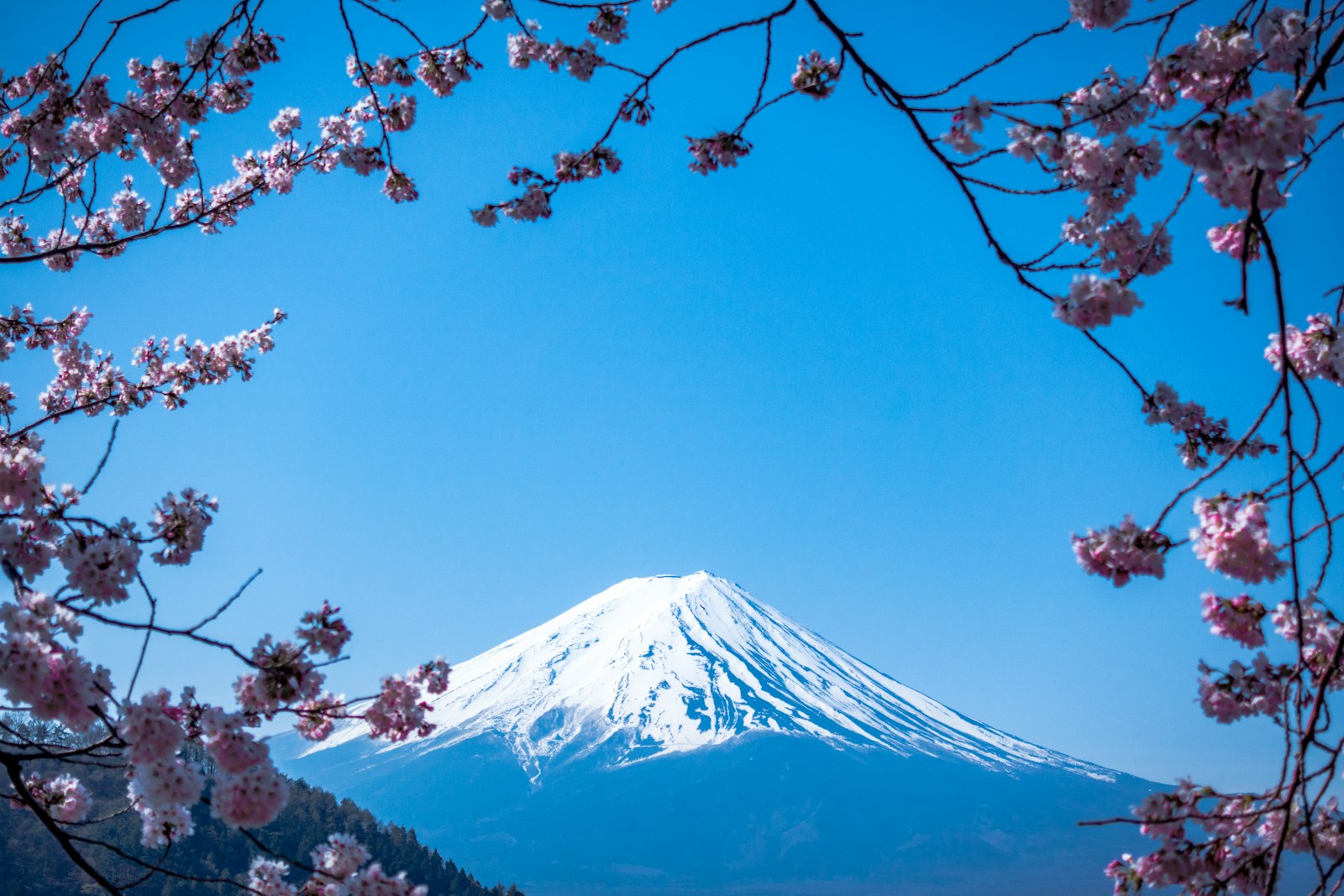
Yamanashi Prefecture sits in the bowl of mountains north of Mount Fuji — the prefecture most associated with Japan’s iconic peak. The Fuji Five Lakes provide the classic “Fuji reflected in water” photography; the Kofu basin produces Japan’s oldest wine (Koshu grape cultivation documented from the 8th century); and the Shosenkyo Gorge and Southern Alps provide mountain trekking largely unknown to foreign visitors.
Best Areas to Stay
Lake Kawaguchi (Kawaguchiko) — Fuji Views
The most accessible of the Fuji Five Lakes — 90 minutes from Shinjuku by highway bus. North shore ryokan and hotels have the classic southward Fuji view. Best for: Fuji photography, first-time visitors, cherry blossom season (April).
Lake Yamanaka — Quieter Alternative
The largest and eastern-most of the Five Lakes — less touristy than Kawaguchi with a local outdoor sports community (windsurfing, cycling). Mount Fuji views from the north shore equally impressive. Best for: active travellers, cycling, quieter stays.
Kofu — Wine Country
The prefectural capital in the basin surrounded by vineyards. Shingen Takeda’s castle town with winery accommodation and wine tour packages. Best for: wine tourism, history (Takeda clan), Shosenkyo Gorge day trip.
Lake Kawaguchi Ryokan
Kozantei Ubuya ⭐⭐⭐⭐⭐
The definitive Fuji view ryokan — Japanese-style rooms with floor-level windows facing Lake Kawaguchi and Mount Fuji directly across the water. The rotenburo (outdoor bath) at sunrise, with mist on the lake and the entire mountain reflected in still water, is one of Japan’s great natural spectacles. ¥45,000–¥90,000/pp. Peak autumn foliage (mid-November) and cherry blossom (early April) require 6-month advance booking.
Fuji Lake Hotel ⭐⭐⭐⭐
A classic lakeside hotel with a long history — opened during the 1964 Tokyo Olympics era. Large rooms by Japanese standards, multiple restaurant options, and direct lake views from most rooms. ¥25,000–¥45,000/night.
Kawaguchiko Station Inn (Budget)
A clean, well-run guesthouse near Kawaguchiko Station — dormitories and private rooms available. Excellent for those who want the Fuji area at a fraction of ryokan prices. ¥5,000–¥12,000/night.
Lake Yamanaka Accommodation
Yamanakakohan Hotel
A lakeside hotel with Fuji views from the outdoor bath — natural hot spring sourced from the highland volcanic geology. Smaller and quieter than the Kawaguchiko properties. ¥18,000–¥30,000/pp.
Lake Yamanaka Campsite
The most dramatic budget option — tent camping on the lake shore with Mount Fuji as your evening silhouette. Facilities include hot showers and a camp store. April to October only. ¥2,000–¥4,000/tent.
Kofu & Wine Country
Keishu-en Wine Resort
A boutique resort hotel in the Kofu wine region — surrounded by Koshu grape vineyards, with guided harvest experiences (September), wine cellar tours, and pairing dinners featuring Kofu basin produce and local wine. ¥25,000–¥45,000/pp.
Kofu Shingen Hotel
A city business hotel named for the famous warlord Takeda Shingen — well-located for Shingen Festival (April), the crystal market at Isawa Onsen, and transport to Shosenkyo Gorge. ¥10,000–¥18,000/night.
Practical Tips
- Fuji view timing: Mount Fuji is clearest in winter (December to March) — the cold, dry air strips haze from the sky and the snow-covered summit stands in sharp relief. Summer (June–July) has the best weather for climbing but the most atmospheric haze.
- Lake Kawaguchi north shore: The classic “Fuji Kawaguchi” photograph is taken from the north shore, looking south. All ryokan on this side face the mountain — confirm your booking includes a north-facing (lake view) room.
- Koshu wine: Grown in the Kofu basin since the 8th century, the Koshu grape produces a pale, delicate white wine suited to Japanese seafood and sushi. Available at nearly every restaurant in Yamanashi for ¥700–¥1,500 per glass. Château Mercian and Grace Wine are the most internationally awarded labels.
- Fuji Five Lakes bus pass: The Fujikyu Bus “Fuji Five Lakes Free Passport” (¥1,500/day) covers the entire lake circuit by bus. Kawaguchiko Station is the hub. Buy at Shinjuku’s bus terminal.
- Climbing season: The official Fuji climbing season runs July 1 to September 10. The Yoshida trail (north side, from Lake Kawaguchi) is the most popular. Book a mountain hut at the 7th or 8th station well ahead for a sunrise summit attempt.