Tohoku · 현 여행 가이드

아키타 여행 가이드

도호쿠의 숨겨진 보석 — 완벽하게 보존된 사무라이 마을, 유백색 숲속 온천, 일본에서 가장 깊은 코발트빛 호수, 두려운 새해 도깨비, 그리고 일본에서 가장 독특한 향토 요리

🏯 가쿠노다테 — 일본에서 가장 잘 보존된 사무라이 마을♨️ 뉴토 온센 — 일본에서 가장 분위기 있는 숲속 온천🏮 간토 축제 — 유네스코 무형문화유산🐕 아키타이누 — 일본에서 가장 유명한 견종🍶 일본 최고의 사케 산지 중 하나

🗾 소개: Akita

야호, 아키타에 오신 걸 환영해요 — 도호쿠에서 가장 잘 알려지지 않은 비밀 같은 곳이자 솔직히 너무너무 저평가된 곳이에요! 🎉 이게 얼마나 대단한지 아세요? 이곳에는 400년 역사의 사무라이 마을 가쿠노다테가 있는데, 수양벚나무 가지가 오래된 검은 담장 저택 위로 드리워져 있어요 — 마치 에도시대 꿈속으로 바로 들어온 것 같다니까요! 그리고 뉴토 온센은 눈 덮인 너도밤나무 숲 깊숙이 자리 잡고 있는데, 일곱 개의 소박한 료칸 각각에서 전혀 다른 온천수가 솟아 나와요 — 유백색, 녹슨 붉은색, 맑고 투명한 물까지… 다 들어가 보고 싶어질 거예요! 다자와코? 깊이가 무려 423m나 되는 일본에서 가장 깊은 호수로, 일년 내내 놀라운 코발트 블루로 빛나요 — 정말 아름다워요!! 매년 8월 아키타 시에서는 장엄한 간토 축제가 열리는데, 공연자들이 46개의 빛나는 등불이 달린 거대한 대나무 장대를 이마와 어깨로 균형을 잡아요 — 유네스코 인증을 받은 정말 입이 떡 벌어지는 광경이에요! 아, 그리고 오가 반도의 나마하게 도깨비는요? 이 무섭게 생긴 가면을 쓴 존재들이 매년 섣달 그믐날 밤에 집집마다 찾아와 아이들을 혼내 줘요 — 1,000년 된 전통인데 아직도 소름이 돋아요 (물론 좋은 의미의 소름이에요! 😆). 게다가 이곳 음식은 최고예요 — 기리탄포 전골, 부드러운 이나니와 우동, 방목 히나이 닭, 그리고 너무 맛있어서 위험할 정도의 사케까지. 아키타는 정말 100% 방문할 가치가 있어요, 약속할게요!!

🌏
위치
도호쿠 북서부, 동해를 접하며 — 이와테, 야마가타, 아오모리, 미야기와 인접
🗣️
언어
일본어 (아키타 사투리; 가쿠노다테 및 주요 관광지에서 영어 가능)
💴
화폐
일본 엔 (JPY) — 농촌 지역에서는 현금 필수; 아키타 시내에서는 IC 카드 사용 가능
🕐
시간대
JST (UTC+9) — 서머타임 없음
🌡️
베스트 시즌
4월 말~5월 (벚꽃); 7월~8월 (축제); 10월 (단풍); 1월~2월 (눈 축제)
✈️
가장 가까운 공항
아키타 공항 (AXT) · 아키타 시내에서 버스로 40분
🚇
이동 수단
아키타 신칸센으로 아키타 시 또는 가쿠노다테 이동; JR 노선; 오가, 뉴토, 시라카미 탐방에는 렌터카 필수
전원 플러그
A타입, 100V / 50Hz

✈️ 교통편

아키타 시는 아키타 신칸센(고마치)으로 도쿄에서 3시간 50분이면 닿을 수 있습니다. 사무라이 마을 가쿠노다테는 같은 노선의 중간 정차역으로, 도쿄에서 2시간 45분 거리입니다. 오가 반도, 뉴토 온센, 시라카미 산지, 국립공원 지역을 탐방하려면 렌터카가 필수입니다.

🚄 도쿄에서 출발
  • 아키타 신칸센 고마치 (도쿄 → 가쿠노다테) — 2시간 47분. ¥15,200 (지정석). 고마치는 모리오카에서 하야부사와 분리되어 — 도호쿠의 절경 산악 구간을 달리는 조용하고 쾌적한 객차입니다.
  • 아키타 신칸센 고마치 (도쿄 → 아키타) — 3시간 48분. ¥17,340. 아키타 시내까지 직행 — 도호쿠에서 가장 서쪽에 위치한 신칸센 종착지입니다.
  • 고속버스 (신주쿠/도쿄 → 아키타) — 야간 9~10시간. ¥4,500~¥7,000. 저렴한 야간 버스 옵션; 늦은 저녁 출발, 이른 아침 도착.
🚄 센다이·모리오카에서 출발
  • 아키타 신칸센 고마치 (모리오카 → 아키타) — 1시간 13분. ¥4,710. 모리오카에서 편리하게 환승.
  • JR 오우선 (아키타 → 아오모리) — 특급 2시간 45분. 동해를 따라 이어지는 경치 좋은 해안 노선으로 아오모리와 시라카미 등산로 입구까지 연결됩니다.
✈️ 오사카·나고야에서 출발
  • ANA / JAL (ITM 또는 NGO → 아키타 AXT) — 1시간 20분. ¥12,000~. 아키타 공항에서 아키타역까지 공항 버스로 40분.
  • 피치항공 (KIX → 아키타) — ¥6,000~. 간사이 출발 저가 항공 옵션.
🚗 아키타 현내 이동
  • 렌터카 — 뉴토 온센(다자와코역에서 1시간), 오가 반도(아키타 시내에서 1시간), 시라카미 산지(아키타 시내에서 2시간), 하치만타이 탐방에 필수. 아키타역 또는 다자와코역에서 예약.
  • 아키타 신칸센 / JR 다자와코선 — 아키타 시에서 가쿠노다테(25분, ¥840) 및 다자와코역(40분, ¥1,140)까지 연결 — 택시나 버스를 이용해 다자와코와 뉴토 온센으로 가는 관문.
  • 오가 반도 버스 — 여름 시즌(7월~9월)에 아키타역에서 오가까지 관광 버스 운행. 비수기에는 렌터카 또는 관광버스 투어 필요.
  • 아키타 시내 — 역 주변이 컴팩트하고 도보 이동 가능; 시내 순환 버스(¥100/회)로 센슈 공원과 박물관 지구 이동 가능.
💡 여행 팁아키타 이상적인 여행 코스는 아키타 신칸센(가쿠노다테 → 다자와코)과 다자와코역에서 렌터카를 빌려 뉴토 온센과 산악 지대를 탐방하는 것입니다. 가쿠노다테는 3~4시간, 다자와코는 반나절, 뉴토 온센은 1박을 권장합니다. 오가 반도는 아키타 시내에서 렌터카로 하루 코스로 다녀오기에 최적입니다.

📖 추천 여행 가이드

여행의 모든 측면을 계획하는 데 도움이 되는 심층 가이드 — 주요 관광 명소부터 최고의 레스토랑, 계절 이벤트까지.

⛩️

관광명소

7 곳
Shirakami Sanchi (UNESCO)
📍 Shirakami Sanchi, Nishimeya, Aomori / Akita

Shirakami Sanchi (UNESCO)

A vast UNESCO World Natural Heritage primeval beech forest straddling Akita and Aomori prefectures — the last great untouched virgin beech forest in East Asia. The Aoike (Blue Pond) within Shirakami glows a supernatural turquoise fed by mineral springs. Strictly limited visitor access preserves its extraordinary integrity.

UNESCO Beech Forest Wilderness Primeval
Kakunodate Samurai District
📍 Kakunodate, Senboku, Akita

Kakunodate Samurai District

One of Japan's best-preserved samurai towns — Kakunodate's 400-year-old bukeyashiki (samurai residence) street is lined with ancient black-walled mansions and weeping cherry trees planted by samurai families. Six of the original residences are open to the public, revealing the refined domestic life of the Edo warrior class.

Samurai Edo Period Historic Street Cherry Blossoms
Kakunodate Samurai District & Cherry Blossoms
📍 Semboku, Akita

Kakunodate Samurai District & Cherry Blossoms

Kakunodate's Bukeyashiki samurai quarter is one of Japan's best-preserved feudal districts, where six grand samurai residences open their gardens along a street lined with weeping cherry trees. In late April the blossoms hang over the historic earthen walls like a pink waterfall, and in autumn the maples turn brilliant scarlet. The district also houses kabazaiku cherry-bark craft workshops, a unique Kakunodate art form.

Samurai Cherry Blossoms Historic
Lake Tazawa (Japan's Deepest Lake)
📍 Tazawako, Senboku, Akita

Lake Tazawa (Japan's Deepest Lake)

Japan's deepest lake (423 m) glows a vivid cobalt blue year-round thanks to its extraordinary depth — it never freezes in winter. The golden statue of Tatsuko, a legendary beauty said to have become the lake's goddess, stands on the western shore. The surrounding caldera provides panoramic views from hiking trails above the rim.

Lake Deepest in Japan Tatsuko Cobalt Blue
Oga Peninsula Namahage Experience
📍 Oga, Akita

Oga Peninsula Namahage Experience

The Oga Peninsula is the birthplace of the Namahage ritual, where men in terrifying demon masks and straw capes visit homes on New Year's Eve to drive out evil and laziness — a UNESCO Intangible Cultural Heritage. The Namahage Museum and adjacent Oga Shinzan Denshokan folk museum allow visitors to meet costumed Namahage year-round and witness dramatic performance demonstrations. The rugged sea cliffs and fishing villages of the peninsula add natural drama to the cultural visit.

Namahage Folk Culture Demon Ritual
Oga Peninsula & Namahage Museum
📍 Oga, Akita

Oga Peninsula & Namahage Museum

The rugged Oga Peninsula juts into the Sea of Japan, home to the Namahage — fearsome demon-masked figures who visit houses on New Year's Eve to discipline lazy children. The Oga Shinzan Folklore Museum features nightly Namahage ceremonies, while the dramatic coastline offers volcanic sea cliffs and hidden coves.

Namahage UNESCO Folklore Coastline
🍜

미식

7 곳
Inaniwa Udon
📍 Yuzawa, Akita

Inaniwa Udon

One of Japan's three great udon alongside Sanuki and Mizusawa — Inaniwa udon from Akita's Yuzawa region is distinguished by its extraordinarily thin, silky-smooth strands made by a laborious 72-hour hand-stretching process. Served cold in summer with dipping broth, or warm in a clear dashi, it is a study in refined simplicity.

Inaniwa Udon One of Japan's Three Great Noodles Handmade Silky
Kiritanpo Nabe (Hot Pot)
📍 Akita City, Akita

Kiritanpo Nabe (Hot Pot)

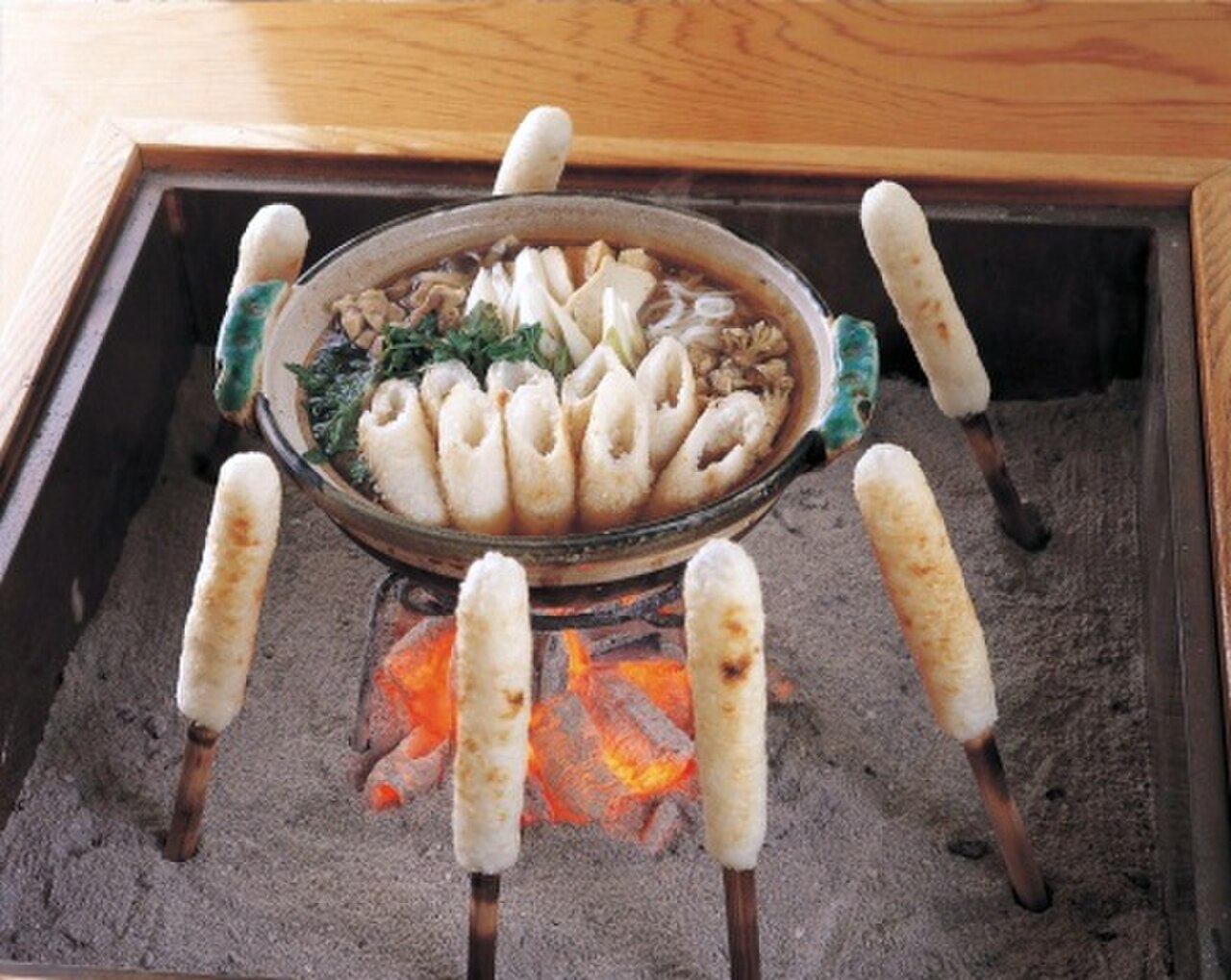
Akita's most iconic dish — freshly pounded rice is moulded onto cedar skewers, grilled over charcoal, then simmered in a rich broth with Hinai-jidori chicken (one of Japan's three great chickens), burdock, Japanese parsley, and maitake mushrooms. The mochi-like kiritanpo absorbs the umami-rich broth beautifully.

Kiritanpo Hot Pot Hinai Chicken Akita Specialty
Hinai-jidori Chicken Cuisine
📍 Hinai, Kamikoani, Akita

Hinai-jidori Chicken Cuisine

Hinai-jidori is one of Japan's three designated premium chicken breeds, raised free-range in Akita's Hinai region for 150 days — twice as long as standard poultry. The meat is firmer, richer, and more intensely flavoured than anything available in a supermarket. Taste it in kiritanpo nabe, grilled yakitori, or as sashimi (raw chicken) at specialist restaurants.

Hinai Chicken Free-Range One of Japan's Three Great Chickens Local
Kiritanpo Nabe Hot Pot
📍 Akita City, Akita

Kiritanpo Nabe Hot Pot

Kiritanpo nabe is Akita's most iconic dish: cylinders of freshly pounded rice pressed around cedar skewers, then simmered in a rich chicken and burdock broth seasoned with soy and Japanese parsley. The mashed-rice tubes absorb the fragrant soup, becoming pillowy and deeply savory. Kiritanpo is best enjoyed from October through March at specialized kiritanpo restaurants throughout Akita City and the Odate region where the dish originated.

Hot Pot Akita Cuisine Winter
Akita Sake — Japan's Finest Rice Wine Region
📍 Akita City, Akita

Akita Sake — Japan's Finest Rice Wine Region

Akita is one of Japan's most celebrated sake prefectures — the combination of pure snowmelt water, high-quality Akita Komachi rice, and the cold winters that allow slow fermentation produces sake of exceptional clarity and elegance. Over 40 breweries welcome visitors; the Yamamoto, Kariho, and Dewatsuru labels are internationally recognised.

Sake Rice Wine Brewery Tohoku
Shottsuru Fish Sauce & Hatahata
📍 Oga, Akita

Shottsuru Fish Sauce & Hatahata

Akita's ancient fish sauce — shottsuru — is made from hatahata (sailfin sandfish) fermented for over a year, producing a deep, savoury umami liquid used across local cooking. Hatahata itself appears in winter hot pots and as salted grilled fish; its roe (buri-ko) is a delicacy found only in Akita.

Fish Sauce Hatahata Fermented Umami
🏔️

자연

9 곳
Nyuto Onsen Village
📍 Nyuto, Senboku, Akita

Nyuto Onsen Village

One of Japan's most celebrated onsen destinations — seven rustic ryokan lodges scattered through the snowy beech forests of the Nyuto mountains, each drawing from different spring sources with distinct mineral compositions and colours. The famous milky-white sulphurous spring at Tsuru-no-yu ryokan, operating since 1638, is among the most atmospheric outdoor baths in Japan.

Onsen Milky White Springs Forest Baths Remote
Shirakami Sanchi (UNESCO)
📍 Shirakami Sanchi, Nishimeya, Aomori / Akita

Shirakami Sanchi (UNESCO)

A vast UNESCO World Natural Heritage primeval beech forest straddling Akita and Aomori prefectures — the last great untouched virgin beech forest in East Asia. The Aoike (Blue Pond) within Shirakami glows a supernatural turquoise fed by mineral springs. Strictly limited visitor access preserves its extraordinary integrity.

UNESCO Beech Forest Wilderness Primeval
Nyuto Onsen — Milky White Mountain Baths
📍 Semboku, Akita

Nyuto Onsen — Milky White Mountain Baths

Nestled deep in the mountains near Lake Tazawa, Nyuto Onsen is a cluster of seven rustic ryokan inns each tapping their own distinct spring — some cloudy white with sulfur, others clear green or amber brown. The most celebrated is Tsurunoyu, a 350-year-old inn with open-air mixed-gender baths surrounded by beech forest, fed by springs at different temperatures. A 'yunめぐり' hot spring hopping pass lets visitors visit multiple baths in a single day.

Onsen Milky Water Mountain
Shirakami Anmon Waterfall Hike
📍 Shirakami Sanchi, Nishimeya, Aomori / Akita

Shirakami Anmon Waterfall Hike

The Anmon Waterfall trail in Shirakami Sanchi is the most accessible route into the UNESCO beech forest — a 3 km hike through ancient woodland leads to three cascading falls, the largest dropping 26 m through moss-covered rocks. Spring brings wildflowers; autumn transforms the canopy into a riot of gold and crimson.

Waterfall Beech Forest UNESCO Hiking
Towada-Hachimantai National Park
📍 Hachimantai, Kazuno, Akita

Towada-Hachimantai National Park

The Hachimantai plateau in northern Akita is a volcanic highland of crater lakes, alpine marshes, and steaming volcanic vents. The Aspite Line mountain road (open May–November) traverses the plateau past the stunning Goshikinu five-colour marsh and Hachimantai summit — one of Japan's great scenic drives.

National Park Volcanic Alpine Aspite Line
Kakunodate Samurai District & Cherry Blossoms
📍 Semboku, Akita

Kakunodate Samurai District & Cherry Blossoms

Kakunodate's Bukeyashiki samurai quarter is one of Japan's best-preserved feudal districts, where six grand samurai residences open their gardens along a street lined with weeping cherry trees. In late April the blossoms hang over the historic earthen walls like a pink waterfall, and in autumn the maples turn brilliant scarlet. The district also houses kabazaiku cherry-bark craft workshops, a unique Kakunodate art form.

Samurai Cherry Blossoms Historic
🎿

레저

9 곳
Nyuto Onsen Village
📍 Nyuto, Senboku, Akita

Nyuto Onsen Village

One of Japan's most celebrated onsen destinations — seven rustic ryokan lodges scattered through the snowy beech forests of the Nyuto mountains, each drawing from different spring sources with distinct mineral compositions and colours. The famous milky-white sulphurous spring at Tsuru-no-yu ryokan, operating since 1638, is among the most atmospheric outdoor baths in Japan.

Onsen Milky White Springs Forest Baths Remote
Nyuto Onsen Forest Bathing
📍 Nyuto, Senboku, Akita

Nyuto Onsen Forest Bathing

Bathing in Nyuto Onsen's outdoor pools while deep snow blankets the surrounding beech forest is one of Japan's most sought-after winter experiences. Tsuru-no-yu's mixed outdoor bath (konyoku rotenburo) open since 1638 is the most photographed onsen in Japan — arrive at dawn before tour groups for the full atmosphere.

Open-Air Bath Snow Bathing Forest Relaxation
Nyuto Onsen — Milky White Mountain Baths
📍 Semboku, Akita

Nyuto Onsen — Milky White Mountain Baths

Nestled deep in the mountains near Lake Tazawa, Nyuto Onsen is a cluster of seven rustic ryokan inns each tapping their own distinct spring — some cloudy white with sulfur, others clear green or amber brown. The most celebrated is Tsurunoyu, a 350-year-old inn with open-air mixed-gender baths surrounded by beech forest, fed by springs at different temperatures. A 'yunめぐり' hot spring hopping pass lets visitors visit multiple baths in a single day.

Onsen Milky Water Mountain
Oga Peninsula Namahage Experience
📍 Oga, Akita

Oga Peninsula Namahage Experience

The Oga Peninsula is the birthplace of the Namahage ritual, where men in terrifying demon masks and straw capes visit homes on New Year's Eve to drive out evil and laziness — a UNESCO Intangible Cultural Heritage. The Namahage Museum and adjacent Oga Shinzan Denshokan folk museum allow visitors to meet costumed Namahage year-round and witness dramatic performance demonstrations. The rugged sea cliffs and fishing villages of the peninsula add natural drama to the cultural visit.

Namahage Folk Culture Demon Ritual
Tazawako & Hachimantai Skiing
📍 Tazawako, Senboku, Akita

Tazawako & Hachimantai Skiing

Tazawako Ski Resort offers the extraordinary sight of skiing above Japan's deepest cobalt-blue lake — runs with direct lake views are unique in Japan. The nearby Hachimantai resort system spans multiple connected areas and receives consistently deep, dry powder throughout winter (December–April).

Skiing Powder Snow Lake Views Tohoku
Kakunodate Kabazaiku (Cherry Bark Craft)
📍 Kakunodate, Senboku, Akita

Kakunodate Kabazaiku (Cherry Bark Craft)

Kakunodate's 200-year-old craft tradition of kabazaiku uses cherry tree bark to create lustrous, durable containers, tea canisters, and accessories. The bark is peeled, layered, and polished to a warm honey-brown sheen — a uniquely Akita art form. Several workshops in the samurai district welcome visitors to watch artisans at work.

Kabazaiku Cherry Bark Traditional Craft Souvenir
🎆

이벤트

6 곳
Omagari All-Japan Fireworks Championship (Aug)
📍 Daisen, Akita

Omagari All-Japan Fireworks Championship (Aug)

Japan's most prestigious fireworks competition — held in Daisen (formerly Omagari) on the last Saturday of August, this century-old competition draws 30 pyrotechnic teams from across Japan to display their finest original creations. Over 18,000 shells light up the night sky above the Omono River before 800,000 spectators.

Fireworks Competition August National Championship
Namahage Sedo Festival (Feb)
📍 Oga, Akita

Namahage Sedo Festival (Feb)

The Namahage Sedo Festival at Shinzan Shrine on Oga Peninsula combines ancient Shinto fire rituals with the fearsome Namahage demons — the ceremony, performed on the second Friday–Sunday of February, is a UNESCO Intangible Heritage. Torch-lit processions and the appearance of the masked figures in deep snow create an otherworldly atmosphere.

Namahage UNESCO Winter Festival Fire
Kakunodate Cherry Blossoms (Late Apr)
📍 Kakunodate, Senboku, Akita

Kakunodate Cherry Blossoms (Late Apr)

Kakunodate's weeping cherry trees — planted by samurai families 350 years ago — form tunnels of pink blossom over the historic bukeyashiki street in late April. Unlike the upright somei yoshino common elsewhere, these shidarezakura drape dramatically over garden walls. The Hinokinai riverbank adds 2 km of cherry-lined riverside for hanami picnics.

Cherry Blossoms Weeping Cherry Samurai Street Spring
Towada-Hachimantai Autumn Foliage (Oct)
📍 Hachimantai, Kazuno, Akita

Towada-Hachimantai Autumn Foliage (Oct)

The Hachimantai Aspite Line mountain road turns incandescent in mid-October — crimson and gold beech forest flanks both sides of the road as it crosses the volcanic plateau, and the Goshikinu marsh reflects the autumn canopy in perfect stillness. Widely regarded as one of Tohoku's finest autumn foliage experiences.

Autumn Foliage Aspite Line National Park October
Akita Kantō Festival (Aug)
📍 Akita City, Akita

Akita Kantō Festival (Aug)

One of Tohoku's four great festivals and a UNESCO Intangible Cultural Heritage — the Akita Kantō Festival fills the city's main boulevard for four evenings in early August with performers balancing towering bamboo poles hung with up to 46 lit paper lanterns on their palms, foreheads, and shoulders. Each pole weighs 50 kg and stands 12 m tall.

Kantō Festival Bamboo Poles UNESCO August
Yokote Kamakura Snow Festival (Feb)
📍 Yokote, Akita

Yokote Kamakura Snow Festival (Feb)

Yokote's Kamakura Festival (February 15–16) fills the city with hundreds of dome-shaped snow huts — children sit inside eating mochi and offering amazake (sweet sake) to visitors who bow to enter through the small opening. After dark, candles within each kamakura glow amber through the snow walls, creating one of Japan's most magical winter scenes.

Kamakura Snow Lanterns Winter Festival Unique
🎌

체험

2 곳
Akita Sake Brewery Toji Experience
📍 Yuzawa, Akita

Akita Sake Brewery Toji Experience

Akita's soft snowmelt water and cold winters make it one of Japan's premier sake regions. Several breweries in Yuzawa and Akita city offer toji (master brewer) experience days where visitors join actual brewing operations — washing rice, monitoring koji mold growth, and tasting each stage from moromi mash to finished sake — an intimate look at the ancient brewing craft.

Sake Brewing Workshop Winter
Akita Kanto Festival Lantern Balancing
📍 Akita City, Akita

Akita Kanto Festival Lantern Balancing

Akita's Kanto Festival (August) involves balancing bamboo poles hung with 46 lit paper lanterns — weighing up to 50 kg — on the palm, forehead, shoulder or hip. Training sessions run throughout summer at the Kanto Festival Hall where instructors teach the balancing technique and visitors try a smaller 8-lantern practice pole under supervision.

Kanto Lantern Festival Balance

💡 실용 여행 정보

방문 전후에 꼭 알아야 할 모든 정보.

🌸
베스트 방문 시기
  • 4월 말 ~ 5월 — 가쿠노다테의 수양벚나무(시다레자쿠라)는 4월 말에 절정을 이룹니다 — 도쿄 벚꽃보다 약 일주일 늦어, 봄 여행의 두 번째 코스로 안성맞춤입니다. 히노키나이 강변을 따라 2km에 걸쳐 벚꽃이 늘어서 있습니다. 5월 말에는 뉴토 너도밤나무 숲에 신록이 가득합니다.
  • 여름 (8월) — 간토 축제(8월 3~6일)는 아키타 시를 대표하는 행사입니다. 오마가리의 전일본 불꽃놀이 선수권 대회는 8월 마지막 토요일에 열리며 — 일본에서 가장 화려한 불꽃놀이 이벤트 중 하나입니다.
  • 가을 (10월) — 하치만타이 아스피테 라인 도로와 시라카미 산지가 황금색과 진홍색으로 물듭니다. 단풍에 둘러싸인 다자와코는 도호쿠 최고의 절경 중 하나입니다.
  • 겨울 (1~2월) — 요코테 가마쿠라 축제(2월 15~16일)와 나마하게 세도 축제(2월 둘째 주말)는 아키타만의 독특한 체험입니다. 눈이 내리는 중에 뉴토 온센에 몸을 담그는 것은 일본에서 가장 분위기 넘치는 온천 체험이지만 — 3~6개월 전에 예약하세요.
♨️
뉴토 온센 팁
  • 쓰루노유는 가장 유명한 료칸입니다 — 너도밤나무 숲 또는 설경에 둘러싸인, 유백색 물이 가득한 대형 혼탕 노천탕(혼욕 로텐부로)은 더할 나위 없는 일본만의 경험입니다. 단, 금~토요일 숙박은 몇 달 전에 예약이 마감됩니다. 평일 방문이나 당일치기(¥600, 오전 10시~오후 3시)가 현실적입니다.
  • 뉴토 온센쿄 메구리 패스(¥2,500)로 하루 동안 여러 료칸을 방문할 수 있습니다 — 각 료칸마다 수질, 색깔, 분위기가 완전히 다릅니다. 가니바 온센의 녹슨 붉은 철분 온천과 마고로쿠 온센의 맑은 유황 온천은 쓰루노유의 유백색 온천과 가장 극적인 대조를 이룹니다.
  • 다자와코역에서 쓰루노유까지 계절 버스가 운행됩니다(40분). 비수기(주말을 제외한 11월~4월)에는 택시나 렌터카가 필요합니다 — 방문 전에 버스 시간표를 반드시 확인하세요.
  • 뉴토 온센의 료칸은 Wi-Fi가 없고, 휴대폰 신호도 약하며, 산길은 좁습니다. 그냥 받아들이세요 — 이곳은 진정한 오지 일본이고, 마지막 당일 방문객이 떠난 후의 고요함은 정말 깊습니다.
🏯
가쿠노다테 팁
  • 부케야시키(사무라이 저택) 거리는 무료로 산책할 수 있으며, 여섯 채의 저택은 입장료가 있습니다(각 ¥300~¥500). 이시구로 저택과 아오야기 저택이 가장 잘 보존되어 있으며 — 아오야기 저택은 다섯 개의 별도 전시관을 갖추고 있으며, 사무라이 가문이 소유했던 희귀한 메이지 시대 서양 물건 컬렉션도 있습니다.
  • 메인 쇼핑 거리(니시키야마치)의 공예 공방에서는 가쿠노다테만의 특산품인 가바자이쿠(벚나무 껍질 공예품)를 판매합니다. 소품(명함 케이스, 젓가락 받침)은 ¥1,500부터 — 200년 이상의 공예 전통으로 만들어진 실용적이고 들고 다니기 편한 기념품입니다.
  • 가쿠노다테는 아담해서 사무라이 마을 전체와 강변을 2~3시간이면 걸어서 다 볼 수 있습니다. 도쿄에서 신칸센으로 도착해(2시간 47분) 다자와코(15분)로 이동하면 문화와 자연을 완벽하게 결합한 하루 코스가 됩니다.
  • 벚꽃 시즌(4월 말)에는 주말마다 마을이 붐빕니다 — 첫 번째 신칸센으로 도착해(오전 10시 이전) 인파를 피하세요. 평일 방문이 더 조용하고 저택을 제대로 감상할 수 있습니다.
🍜
음식 & 음료 팁
  • 기리탄포 나베는 좋은 식당에서는 사전 예약이 필요합니다 — 아키타 시의 기리탄포 혼케 야마모토가 단연 최고의 주소입니다. 풀코스(기리탄포, 히나이 닭고기, 제철 채소)는 1인당 ¥4,000~¥6,000입니다. 시내 외곽의 가쿠노다테 인근 도로변 식당에서는 ¥1,500부터 간단한 버전을 맛볼 수 있습니다.
  • 이나니와 우동은 아키타 어느 기념품 가게에서나 고급스러운 상자에 담긴 건면을 살 수 있습니다 — 일본 최고의 음식 선물 중 하나입니다. 신선한 식당 체험을 원한다면, 전국 체인인 사토 요스케에서 따뜻하게 또는 차갑게 먹을 수 있으며, 원조 식당은 유자와(아키타에서 지역 열차로 1.5시간)에 있습니다.
  • 아키타의 사케 양조장에서 방문객을 환영합니다 — 다이고(아키타 시 북쪽)의 가리호 양조장과 아키타 시내의 데와쓰루에서 투어와 시음이 가능하며, 영어 자료도 구비되어 있습니다. 아키타 현 최고의 사케를 맛보려면 아키타 고마치 쌀로 만든 준마이 다이긴죠를 찾아보세요.
  • 쇼쓰루 전골(쇼쓰루 나베)은 겨울에 아키타 시 이자카야 전반에서 제공됩니다 — 발효 어장 베이스는 강렬하지만 깊은 감칠맛이 있으며, 하타하타 생선과 두부를 육수에 끓여 냅니다. 현지 사케와 함께 즐기면 가장 정통 아키타 식사 경험을 할 수 있습니다.
🏮
축제 팁
  • 간토 축제(8월 3~6일) 낮 공연은 간도엔 홀(¥500, 오전 9시 30분~오후 3시 30분)에서 가까이서 관람하고 사진을 찍을 수 있습니다; 저녁 퍼레이드는 간토 오도리 거리에서 오후 7시 15분에 시작됩니다. 저녁 퍼레이드는 도로변에서 무료로 관람 가능 — 앞자리를 잡으려면 오후 6시까지 도착하세요.
  • 간토 축제 기간 중, 저녁 퍼레이드 후에 진행되는 간토 체험 세션에서 누구나 실제 장대 균형 잡기를 시도해 볼 수 있습니다 — 소형 연습 장대도 놀라울 정도로 무거우며, 이 체험을 통해 공연자들의 기술에 깊은 경의를 갖게 됩니다.
  • 오마가리 불꽃놀이(8월 마지막 토요일)의 경우, 다이센의 행사장은 아키타에서 JR로 40분 거리입니다. 피날레 후에는 열차가 즉시 만원이 됩니다 — 지정석을 미리 구매하거나 택시를 이용하세요. 관람 구역은 오후부터 열리니 좋은 자리를 잡으려면 일찍 도착해 피크닉 매트를 챙기세요.
  • 요코테 가마쿠라 축제(2월 15~16일)는 눈 돔 안에서 촛불이 빛나는 어두운 밤이 가장 환상적입니다. 극한의 방한복을 준비하세요(영하 10°C도 흔합니다); 마을에서는 대부분의 가마쿠라에서 무료 아마자케(따뜻한 단술)와 떡을 제공합니다. 요코테에서 1박을 하세요 — 인파가 몰리기 전 이른 아침의 고요함은 정말 깊은 감동을 줍니다.
🐕
아키타이누 & 야생동물 팁
  • 오다테(아키타에서 JR로 북쪽 1시간)의 아키타이누 관광협회에서 전용 체험 센터를 운영합니다 — 방문객이 공인 핸들러와 함께 공인 아키타 견을 산책시키고, 쓰다듬고, 사진을 찍을 수 있습니다. 세션(¥1,000~¥2,000)은 온라인으로 사전 예약 필요; 개들은 침착하고 위풍당당하며 사진이 정말 잘 나옵니다.
  • 오다테에는 오다테역 근처에 하치코 기념비(영화와 시부야 동상으로 불멸의 존재가 된 충직한 아키타 견)도 있습니다 — 애견인들의 성지이자 감동적인 지역 역사의 한 부분입니다.
  • 시라카미 산지에는 일본 불곰, 일본 카모아이벡스, 독수리, 희귀한 블랙스턴 물고기 올빼미가 서식합니다. 안몬 폭포 트레일(가장 접근하기 쉬운 코스)은 봄철 숲속 탐조에 매우 좋으며; 더 깊은 오지 구역은 공인 가이드와 사전 허가가 필요합니다.
  • 하치만타이 국립공원의 고시키누마 습지에는 습지 금잔화, 면화풀, 잠자리 등 희귀 고산 습지 생물이 서식합니다. 아스피테 라인 도로에서 진지한 등산 장비 없이도 접근할 수 있는 목재 데크 코스(30분 순환)로 이동 가능합니다.

🏨 Akita 호텔 찾기

수백 개의 호텔 가격을 비교해보세요 — 저렴한 캡슐 호텔부터 럭셔리 료칸까지.

Booking.com에서 검색 →

🎌 투어 & 체험

가이드 투어, 당일치기 여행, 요리 교실, 문화 체험을 예약하세요.

Viator에서 투어 보기 →

🗺️ 액티비티 & 명소

줄 서지 마세요 — 입장권, 당일 투어, 현지 체험을 미리 예약하세요.

GetYourGuide에서 탐색 →

🎟️ Akita에서 즐길 거리

Klook에서 Akita의 티켓, 교통 패스, 독특한 현지 체험을 발견하세요.

Klook에서 예약 →

🚄 JR 패스 & 기차 티켓

도착 전에 온라인으로 일본 철도 패스를 구매하세요 — 신칸센으로 일본 전국을 여행하는 가장 쉬운 방법입니다.

JRPass.com에서 구매 →
🗺️ Plan