
Matsushima Bay
One of Japan's three canonical views — 260 pine-covered islands scattered across a tranquil bay. Cruise between the islands at dusk for a view unchanged since the haiku poet Matsuo Bashō famously fell speechless before it.
아오모리 · 이와테 · 미야기 · 아키타 · 야마가타 · 후쿠시마
도호쿠는 일본의 발견되지 않은 위대한 북쪽 지방입니다 — 고대 숲, 화산 산지, UNESCO 세계유산, 그리고 세상을 멈추게 할 만큼 장엄한 축제가 있는 6개 현. 군중이 교토와 도쿄로 몰리는 동안, 도호쿠는 더 멀리 나아가는 여행자에게 일본의 대도시에서는 이미 거의 사라진 진정성을 선사합니다. 이곳에서는 목조 무사 저택이 그대로 남아있는 사무라이 마을, 산림 도로로만 접근할 수 있는 산악 온천, 그리고 세계에서 가장 시각적으로 경이로운 축제들 — 네부타, 칸토, 타나바타 — 을 만날 수 있습니다. 해안은 거칠고, 사케는 탁월하며, 사람들은 따뜻하기로 유명합니다. 도호쿠는 세상이 도착하기 전 일본의 모습입니다.
One of Japan's three canonical views — 260 pine-covered islands scattered across a tranquil bay. Cruise between the islands at dusk for a view unchanged since the haiku poet Matsuo Bashō famously fell speechless before it.

The Konjikido (Golden Hall) of Chusonji Temple — entirely sheathed in gold leaf — is one of Japan's most breathtaking interiors, built in 1124. Motsuji garden beside it is one of the best-preserved Heian-period gardens in the country.

Hirosaki Castle surrounded by 2,600 cherry trees is considered one of Japan's finest blossom viewing spots. At peak bloom the fallen petals form a pink carpet on the moat — the 'flower raft' (hanaikada) — a uniquely Hirosaki spectacle.

A mountain temple complex of 1,000 stone steps ascending a sheer cliff face above a forested valley. Matsuo Bashō composed one of his most famous haiku here in 1689. The view from the summit over the valley is among the most atmospheric in all Tohoku.

The red-roofed castle of Aizu-Wakamatsu is deeply associated with the Boshin War of 1868 — the last stand of samurai loyalty to the Tokugawa shogunate. The surrounding city retains a strong samurai heritage and excellent sake breweries.

One of Japan's best-preserved samurai towns — the wide streets of the inner samurai quarter are lined with black-walled clan estates and ancient weeping cherry trees. In late April the blossoms create one of Tohoku's most iconic scenes.

On New Year's Eve, demon-masked men in straw costumes (namahage) visit homes on Akita's Oga Peninsula, demanding that children behave and adults work hard. This ancient ritual, inscribed on UNESCO's Intangible Cultural Heritage list, can be experienced year-round at the Oga Shinzan Folklore Museum.

Sendai's iconic dish — thick-sliced beef tongue grilled over charcoal and served with barley rice and oxtail soup. Born in post-war Sendai from American occupation surplus, it has become one of Japan's most distinctive regional specialties.
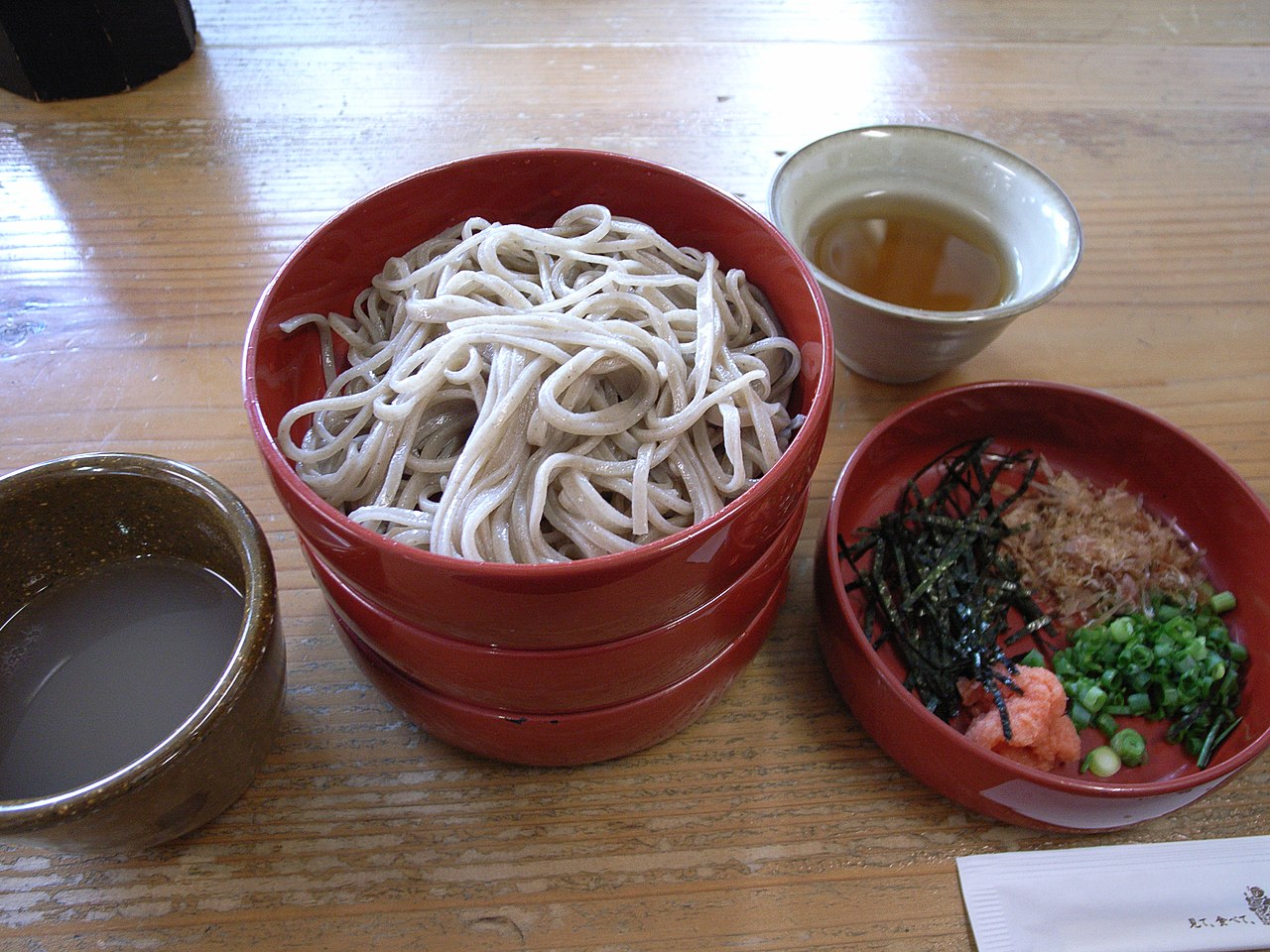
Iwate's legendary interactive soba experience — servers continuously refill your small bowl until you cover it with the lid. The average visitor eats 50–100 small portions; the record exceeds 500. A uniquely Japanese dining event for any adventurous traveller.

Akita's soul food — rice pounded and formed onto cedar skewers, grilled over charcoal, then simmered in a rich chicken and burdock root broth. The crisp-edged kiritanpo soaks up the aromatic soup as it cooks, creating a uniquely satisfying winter dish.

Zunda mochi — rice cakes coated in a sweet, bright-green edamame (young soybean) paste — is Tohoku's most beloved sweet. The vivid colour and delicate sweetness make it a must-try, available in every Sendai station shop and café.

Yamagata's autumn tradition of gathering outdoors to cook imoni — a hearty stew of taro root, beef, konnyaku, and leeks in a soy-based broth — beside river banks. The Imoni Festival in Yamagata City draws over 30,000 people cooking from a 6-metre pot.
Sendai's other iconic food — fish paste shaped like a bamboo leaf and grilled on a stick. The slightly smoky, chewy cakes are eaten hot off the grill in Sendai's Ichibancho arcade or taken home as the region's definitive edible souvenir.

A 14km forest trail following the Oirase River as it cascades over mossy boulders and through ancient beech forest. Fourteen named waterfalls punctuate the walk, which connects Lake Towada to the valley below. Autumn foliage here (mid-October) is among Tohoku's most spectacular.

A vast caldera lake straddling Aomori and Akita prefectures, with startlingly clear blue water and forested caldera walls. The lakeside Towada Shrine and the famous twin-statue sculpture by Kotaro Takamura are focal points for visitors.

Zao's famous 'juhyo' (ice monsters) — fir trees encased in layer upon layer of ice and snow to create surreal white sculptural forms across the mountain plateau. Cable car access at night for illuminated viewing is one of Tohoku's most otherworldly experiences.

The world's largest remaining virgin beech forest and a UNESCO World Heritage Site — 130,000 hectares of ancient woodland where bears, golden eagles, and black woodpeckers live undisturbed. The Juniko (Twelve Lakes) area offers brilliant turquoise-blue forest ponds.

A chain of volcanic ponds behind Mt. Bandai, each a different colour — cobalt, emerald, milky turquoise — due to varying mineral concentrations. An easy 3km walking trail connects the ponds through wetland forest. The colours shift through the day as light changes.

A high volcanic plateau straddling Akita and Iwate with caldera lakes, alpine flowers, and Japan's most dramatic 'dragon eye' lake — where the melting snow creates a blue pupil in a white iris. Snowshoeing in winter and wildflower hiking in summer.
Zao's famous 'juhyo' (ice monsters) — fir trees encased in layer upon layer of ice and snow to create surreal white sculptural forms across the mountain plateau. Cable car access at night for illuminated viewing is one of Tohoku's most otherworldly experiences.

Seven rustic ryokan deep in a cedar forest on the slopes of Mt. Nyuto, each fed by a different mineral spring — milky white, iron-rich, or crystal clear. Tsurunoyu Onsen, the oldest, has an outdoor bath that appears unchanged since the Edo period.

One of Japan's largest ski areas — 40 runs across two mountains, connecting to the ice monster plateau by gondola. Uniquely, the resort town at the base is a full traditional onsen village, so skiers can end each day soaking in sulphuric hot spring baths.

Built in 1684, Sukayu is one of Japan's most famous historic onsen — its 1,000-person sen-nin-buro (thousand-person bath) is a vast wooden hall of milky, skin-smoothing sulphur water. A deep snow country inn where guests are buried under metres of winter snowfall.
A high volcanic plateau straddling Akita and Iwate with caldera lakes, alpine flowers, and Japan's most dramatic 'dragon eye' lake — where the melting snow creates a blue pupil in a white iris. Snowshoeing in winter and wildflower hiking in summer.
Hirosaki Castle surrounded by 2,600 cherry trees is considered one of Japan's finest blossom viewing spots. At peak bloom the fallen petals form a pink carpet on the moat — the 'flower raft' (hanaikada) — a uniquely Hirosaki spectacle.

One of Japan's greatest summer festivals — enormous illuminated floats (nebuta) depicting warriors, gods, and mythological scenes are paraded through Aomori city at night, surrounded by thousands of dancers in vivid costumes. Inscribed on UNESCO's Intangible Cultural Heritage list.
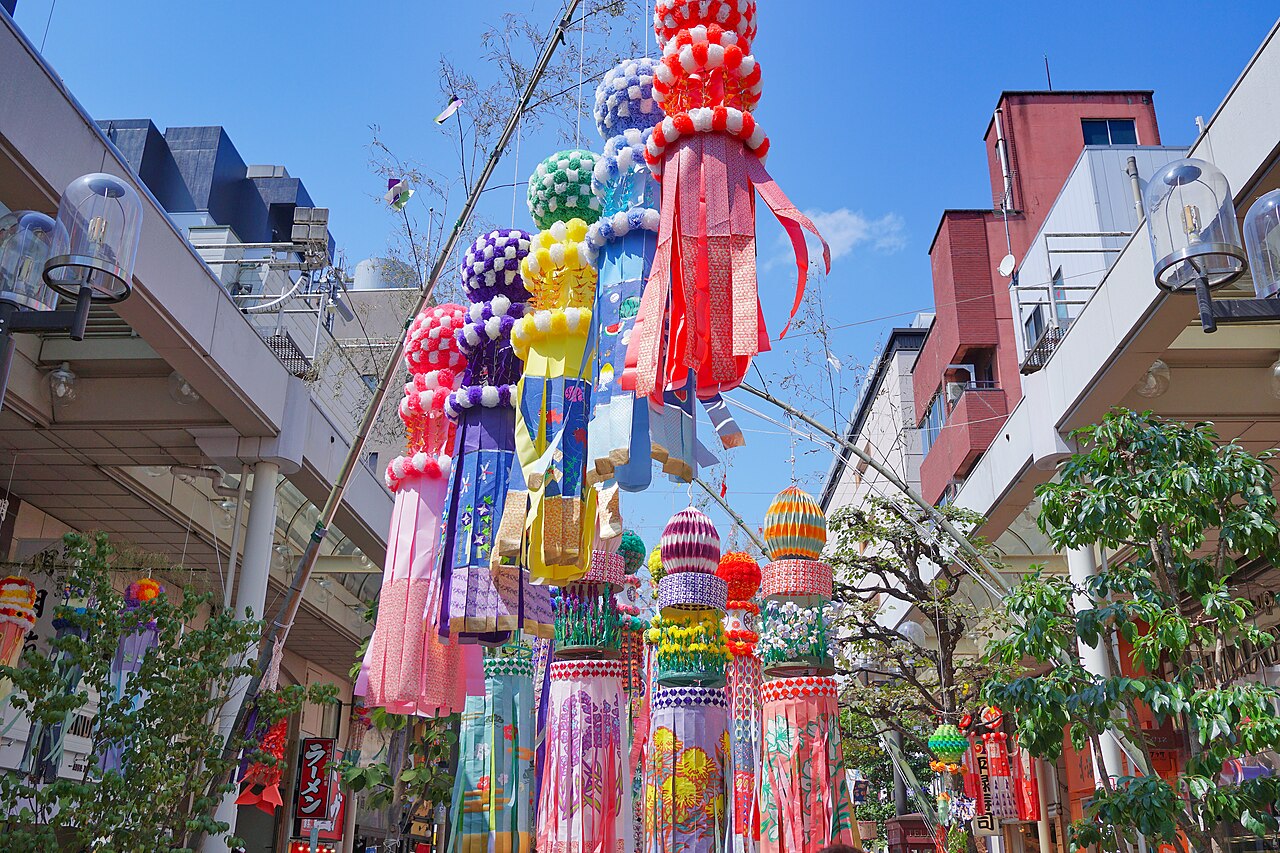
Japan's largest Tanabata festival — Sendai's covered shopping arcades are transformed by 3,000 enormous bamboo arrangements hung with colourful washi paper streamers, some reaching 10 metres long. A city-wide spectacle drawing two million visitors over three days.

Performers balance 12-metre bamboo poles hung with 46 lit paper lanterns on their foreheads, shoulders, and hips — each pole weighing up to 50kg. This UNESCO Intangible Cultural Heritage event lights up central Akita with the golden glow of over 10,000 lanterns.

Considered one of Japan's top three cherry blossom festivals — 2,600 trees around Hirosaki Castle drop petals onto the moat, forming a dense 'flower raft' that drifts with the current. The castle tower framed by blossoms at dusk is one of Japan's most photographed spring scenes.
On New Year's Eve, demon-masked men in straw costumes (namahage) visit homes on Akita's Oga Peninsula, demanding that children behave and adults work hard. This ancient ritual, inscribed on UNESCO's Intangible Cultural Heritage list, can be experienced year-round at the Oga Shinzan Folklore Museum.