




Fushimi Inari Taisha
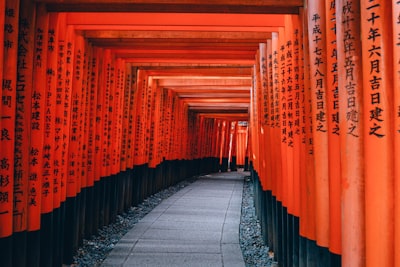
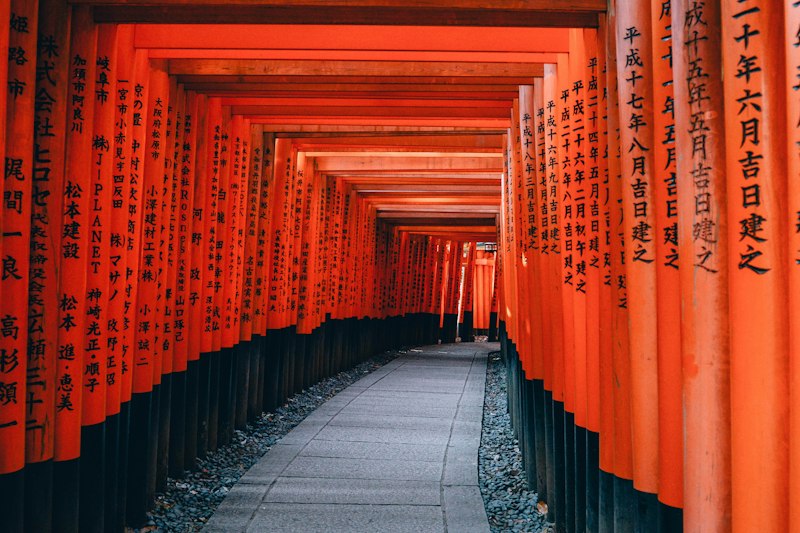
Thousands of vermilion torii gates wind up a forested mountain in southern Kyoto — the iconic image of Japan and one of the country's most visited shrines. Go before 8am to avoid crowds.
Kansai · Prefecture Guide
Japan's ancient imperial capital — 17 UNESCO World Heritage Sites, a living geisha culture, and the world's most refined culinary tradition
Kyoto was Japan's imperial capital for over a thousand years, and it shows. No other city in Japan — perhaps in the world — concentrates so much refined culture, living tradition, and breathtaking beauty within such a compact area. Here you will find UNESCO temples and shrines at every turn, geiko and maiko gliding through gaslit alleyways at dusk, the world's most elaborate multi-course cuisine born from centuries of Buddhist temple cooking, and mountain hikes that lead from city streets into ancient cedar forest within minutes. Kyoto rewards visitors who slow down — one neighbourhood explored carefully will reveal more than ten seen in a rush.
Kyoto sits on the Tokaido Shinkansen line and is one of Japan's best-connected cities. Most overseas visitors arrive via Tokyo or Osaka, both under 15 minutes by Shinkansen from Shin-Osaka. Kansai International Airport is 75 minutes away. Within the city, buses and the subway cover most destinations, but the city's flat topography also makes cycling an excellent option.
Deep-dive guides to help you plan every aspect of your visit — from top sightseeing spots to the best restaurants and seasonal events.
Thousands of vermilion torii gates wind up a forested mountain in southern Kyoto — the iconic image of Japan and one of the country's most visited shrines. Go before 8am to avoid crowds.

A Zen temple pavilion covered entirely in gold leaf, reflected in a mirror pond — a UNESCO World Heritage Site and one of the world's most photographed buildings.

A towering bamboo forest on the western outskirts of Kyoto — the rustling canopy overhead is a designated Sound Landscape of Japan. Visit at dawn for the most atmospheric experience.

An 8th-century temple perched on a forested hillside east of Kyoto, famous for its wooden stage jutting out over the valley and sweeping views of the city — a UNESCO World Heritage Site.
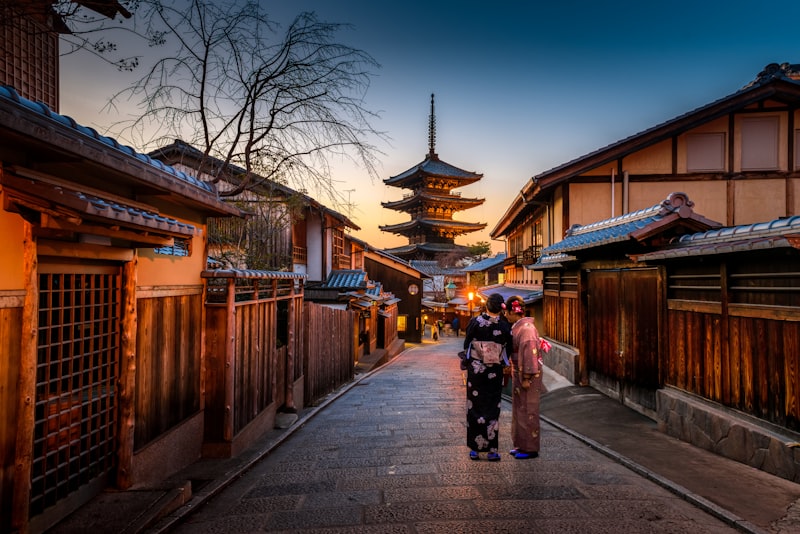
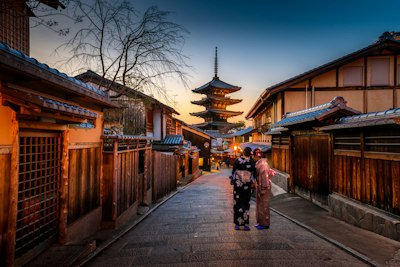
Kyoto's most famous entertainment district — preserved machiya townhouses, ochaya teahouses, and the chance to spot a geiko or maiko gliding through Hanamikoji Street at dusk.

A UNESCO-listed shogun palace with the famous 'nightingale floors' that chirp when walked upon — a security feature against assassins. The Ninomaru Palace interiors are exceptionally preserved.

Kyoto's 'Kitchen' — a covered 400 m arcade with 130+ stalls selling tsukemono pickles, yudofu tofu, fresh matcha sweets, grilled skewers, and seasonal Kyoto vegetables (kyo-yasai).
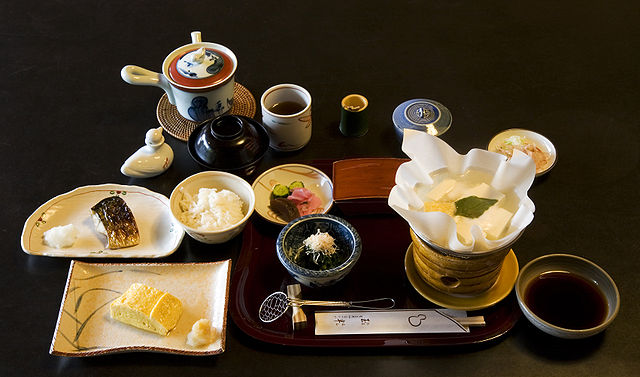
Kyoto is the birthplace and pinnacle of kaiseki — Japan's multi-course haute cuisine. Each course reflects the season in ingredient, presentation, and ceramic ware, served in a tatami room.

Uji, just south of Kyoto, is Japan's premier matcha-growing region. Try ceremonial-grade matcha in a traditional tearoom, or indulge in matcha parfaits, soft-serve, and wagashi sweets.

Silken tofu simmered in kombu broth — a Kyoto specialty born from Buddhist temple cuisine. The restaurants around Nanzenji Temple serve some of the finest yudofu in Japan.

Kyoto's traditional everyday cuisine — small dishes of simmered vegetables, tofu, and pickles made with kyo-yasai (Kyoto heirloom vegetables). Found at intimate neighbourhood restaurants throughout the city.
A towering bamboo forest on the western outskirts of Kyoto — the rustling canopy overhead is a designated Sound Landscape of Japan. Visit at dawn for the most atmospheric experience.

The Hozu River gorge through the Arashiyama mountains offers traditional wooden boat rides (hozugawa kudari) through spectacular autumn scenery, and cherry blossom reflections in spring.

Two atmospheric mountain villages north of Kyoto connected by a forest hiking trail over Mt. Kurama — Kurama Onsen at the trailhead and Kibune's summer kawadoko river-platform dining at the other end.

A 2 km canal-side path lined with cherry trees in the Higashiyama foothills — at its most beautiful during sakura season when petals drift into the water like pink snow.

The open-sided Sagano Romantic Train runs through the Hozu River gorge between Saga-Torokko and Kameoka — 25 minutes of spectacular forest and river scenery in an old-fashioned sightseeing train.

A lesser-known 10 km forest trail linking Arashiyama, Matsuo Taisha, and Nishiki through the western hills — rich in bamboo groves, moss temples, and cedar forest away from tourist crowds.
The open-sided Sagano Romantic Train runs through the Hozu River gorge between Saga-Torokko and Kameoka — 25 minutes of spectacular forest and river scenery in an old-fashioned sightseeing train.

Participate in an authentic Japanese tea ceremony (chado) in a traditional machiya or temple garden — learning the precise movements and Zen philosophy behind every gesture.

Rent a beautifully styled kimono from shops near Gion or Higashiyama and spend the day strolling Kyoto's stone-paved alleyways — the experience transforms photographs and deepens connection to the city.
A UNESCO-listed shogun palace with the famous 'nightingale floors' that chirp when walked upon — a security feature against assassins. The Ninomaru Palace interiors are exceptionally preserved.

Learn to prepare classic Kyoto dishes — dashi stock, simmered vegetables, tofu dishes — in an intimate class led by local chefs, usually including a market visit to Nishiki beforehand.

Kyoto's flat city centre and wide riverside paths make it ideal for cycling — rent a bike near Kyoto Station and cover temples, canal paths, and Nishiki Market in a single morning.

One of Kyoto's three great festivals — an elegant procession of 500 people in Heian-period court costume from the Imperial Palace to Kamigamo and Shimogamo Shrines on May 15.

Japan's most famous festival — the entire month of July in Kyoto, culminating in the Yamaboko Junko parade on July 17 when 32 enormous tapestry-draped floats rumble through the city centre.

The 'Festival of Ages' on October 22 — a 2 km procession of 2,000 people in historical costumes spanning every era of Japanese history from the Meiji period back to the Heian court.

The historic stone-paved lanes of Higashiyama are lined with hundreds of bamboo lanterns for two weeks each March — a magical night-walk experience past illuminated temples and traditional shops.

November is Kyoto's most spectacular month — maple foliage frames every temple, shrine, and garden in crimson and gold. Eikando, Tofukuji, and Arashiyama are the top viewing spots.
Everything you need to know before and during your visit.
Compare prices across hundreds of hotels — from budget capsules to luxury ryokan.
Search Hotels on Booking.com →Book guided tours, day trips, cooking classes, and cultural experiences.
Browse Tours on Viator →Skip the queues — pre-book entry tickets, day tours, and local experiences.
Explore on GetYourGuide →Discover tickets, transport passes, and unique local experiences in Kyoto with Klook.
Book on Klook →Pre-purchase your JR Pass or individual shinkansen tickets before you arrive.
Buy JR Pass →