
Chubu · Prefecture Guide

Niigata Travel Guide

Japan's rice and sake heartland — Sado Island, the world's largest outdoor art triennial, Fuji Rock, and ski resorts reachable by Shinkansen from Tokyo

🍚 Japan's Most Prized Rice (Uonuma Koshihikari)🍶 Most Sake Breweries Per Capita in Japan🏝️ Sado Island — Gold, Noh & Exile History🎿 GALA Yuzawa — Ski Direct from Shinkansen🎵 Fuji Rock Festival — Japan's Largest Outdoor Music Event

🗾 About Niigata

Niigata is Japan's rice and sake capital — the long prefecture that runs from the Sea of Japan coast up into the heavy-snow Echigo mountains produces Uonuma Koshihikari, the most prized short-grain rice in the country, alongside more sake breweries per capita than anywhere else in Japan, their light and dry style shaped by exceptionally pure snowmelt water. Off the coast, Sado Island carries one of Japan's most layered histories: a shogunate gold mine that once funded the Edo economy, an extraordinary living tradition of Noh theatre preserved in over 30 community stages, and the haunted legacy of political exiles — including the priest Nichiren and a deposed emperor — who were banished to its shores. The mainland's ski resorts at Naeba and GALA Yuzawa are among Honshu's finest, drawing powder-hunters from Tokyo in as little as 75 minutes by Shinkansen, while in summer the same mountain valley at Naeba transforms into the site of Fuji Rock Festival, Japan's largest and most internationally celebrated outdoor music event. The contrast between Niigata's rural landscape — terraced rice paddies, misty mountain valleys, weathered fishing villages — and the sophisticated izakaya culture of Niigata City, where sake bars serve 95 local varieties by coin machine, captures the remarkable range of a prefecture that rewards unhurried exploration.

🌏
Location
Chubu region, facing the Sea of Japan — bordered by Yamagata, Fukushima, Gunma, Nagano, Toyama
🗣️
Language
Japanese (Niigata dialect; English available at major ski resorts, Sado Island ferry terminals, and Niigata Station)
💴
Currency
Japanese Yen (JPY) — cash essential in rural areas and on Sado Island; IC cards in Niigata City
🕐
Time Zone
JST (UTC+9) — no daylight saving
🌡️
Best Season
Late Mar–Apr (Takada sakura); Jun–Aug (Sado Island, Fuji Rock, fresh vegetables); Jan–Mar (world-class ski); Sep–Oct (rice harvest, Echigo-Tsumari triennial years)
✈️
Nearest Airports
Niigata Airport (KIJ) · 25 min bus to Niigata Station. Also: Tokyo–Niigata Shinkansen (2h)
🚇
Getting Around
Joetsu Shinkansen (Tokyo to Niigata City 2h, Echigo-Yuzawa 1h20m); ferry to Sado Island (1h on Jetfoil); rental car for rural areas and Echigo-Tsumari
Power Plug
Type A, 100V / 50Hz

✈️ Getting There

Niigata City is reached from Tokyo in approximately 2 hours by the Joetsu Shinkansen Toki or Tanigawa — one of Japan's fastest regional connections. The ski resort of Echigo-Yuzawa is just 1 hour 20 minutes from Tokyo, and GALA Yuzawa has its own dedicated Shinkansen station, making a ski day-trip from the capital genuinely effortless. Sado Island is accessed by high-speed Jetfoil ferry (1 hour) or car ferry (2.5 hours) from Niigata Port.

🚄 From Tokyo by Shinkansen
  • Joetsu Shinkansen Toki (Tokyo → Niigata) — 1 hr 57 min. ¥10,690 (reserved). The fastest Toki trains stop only at Omiya and Urasa before arriving at Niigata City — a remarkably swift connection for a Sea of Japan prefecture.
  • Joetsu Shinkansen Tanigawa (Tokyo → Echigo-Yuzawa) — 1 hr 20 min. ¥6,380. The gateway to Naeba and the Yuzawa ski area; transfer here for Naeba by bus (approx. 40 min).
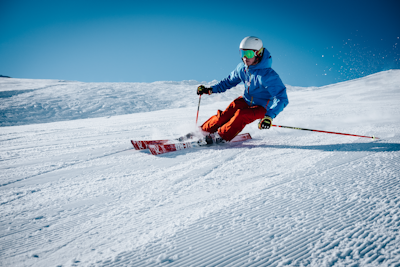
  • Joetsu Shinkansen (Tokyo → GALA Yuzawa) — Seasonal ski service (Dec–May); 75 min direct to the ski resort gondola. ¥6,380. No transfer required — ski boots can be carried onto the Shinkansen.
⛴️ Ferry to Sado Island
  • Jetfoil (Niigata Port → Ryotsu Port, Sado) — 1 hr 5 min. ¥7,110 one-way. Advance reservation strongly recommended — services fill quickly in summer and during Earth Celebration (August) and Obon (mid-August).
  • Car Ferry (Niigata Port → Ryotsu Port, Sado) — 2 hrs 30 min. From ¥2,560 (2nd class). Necessary for bringing a vehicle; the onboard dining and slower crossing offer a pleasant introduction to island travel.
  • Ogi Route Ferry (Naoetsu Port → Ogi Port, Sado) — 2 hrs. ¥3,060. Alternative departure from Joetsu area; useful if visiting Takada Castle before crossing to Sado.
✈️ From Osaka / Nagoya
  • ANA / JAL (ITM or NGO → Niigata KIJ) — 1 hr. From ¥10,000. Niigata Airport is 25 min by airport limousine bus to Niigata Station.
  • Shinkansen via Tokyo (Shin-Osaka → Tokyo → Niigata) — approx. 4 hrs total. Convenient with a JR Pass; the Nozomi/Hikari Tokaido Shinkansen to Tokyo connects directly to the Joetsu line.
🚗 Getting Around Niigata
  • Rental Car — Essential for Echigo-Tsumari Art Field (spread across 760 km² of mountain villages), Murakami, Itoigawa Geopark, and Myoko. Rent from Niigata Station or Echigo-Yuzawa Station.
  • JR Shinetsu / Echigo Lines — Connect Niigata City to Murakami (northbound) and Joetsu/Naoetsu (southbound). Limited express Shirasagi/Hakutaka services run to Nagano and the Hokuriku region.
  • Sado Island Transport — Buses connect Ryotsu Port to the gold mine (Aikawa) and other key sights; cycling is the best way to explore the island's interior and coast. E-bike rental available at Ryotsu Port.
  • Niigata City — Compact city centre walkable from the station; the Bandai area waterfront and Furumachi district are easily reached on foot or by bicycle.
💡 Travel TipSado Island ferries fill up fast in July and August — book the Jetfoil at least 2–3 weeks ahead for summer travel, and 1–2 months ahead for the Earth Celebration (mid-August) period. For ski travel, the GALA Yuzawa Shinkansen service is seasonal and runs only December through early May; the last trains of the season in late April–May often coincide with spring corn-snow skiing conditions. A JR Pass covers both the Joetsu Shinkansen and the GALA Yuzawa branch, making it excellent value for winter ski trips combined with Niigata City sightseeing.

📖 Recommended Travel Guides

Deep-dive guides to help you plan every aspect of your visit — from top sightseeing spots to the best restaurants and seasonal events.

⛩️

Sightseeing

9 spots
Sado Island — Gold Mine & Noh Theatre
📍

Sado Island — Gold Mine & Noh Theatre

Japan's sixth-largest island holds centuries of extraordinary history — a shogunate gold mine that funded the Edo economy, a tradition of Noh theatre preserved in over 30 community stages, and the melancholy legacy of political exiles including the philosopher Nichiren and the Emperor Juntoku. The Sado Kinzan gold mine tunnels are open for dramatic underground tours, while taraibune (round wooden tub boats) are still paddled by local women through the rocky shoreline coves of Ogi.
UNESCO Candidate Gold Mine Noh Theatre Exile History Tub Boats
Niigata City — Port Waterfront & Sake District
📍

Niigata City — Port Waterfront & Sake District

Niigata City grew rich as a major Sea of Japan port, and its compact historic waterfront retains the atmosphere of a prosperous Meiji-era trading town. The Furumachi geisha district and Ponshukan sake museum — where 95 varieties from across the prefecture can be tasted by coin machine — make this one of Japan's most rewarding urban sake crawls. The broad Shinano River mouth and evening neon reflections on the water give the city a distinct character unlike anywhere else on Honshu's coast.

Port City Sake District Waterfront Izakaya History
Echigo-Tsumari Art Field
📍

Echigo-Tsumari Art Field

The world's largest outdoor art festival permanently transformed 760 square kilometres of terraced rice-paddy landscape in Niigata's Tokamachi region, placing hundreds of artworks by artists from 40 countries among abandoned farmhouses, rice fields, and forested hills. Iconic installations include Ilya Kabakov's 'The Rice Field' and Christian Boltanski's haunting 'Les Archives du Coeur' on Teshima (accessed via collaboration with the Setouchi Triennale). Even outside triennial years, over 200 permanent works remain open across the region.

Outdoor Art Triennial Rice Paddies Contemporary Art Rural Japan
Takada Castle Ruins & 4,000 Cherry Trees
📍

Takada Castle Ruins & 4,000 Cherry Trees

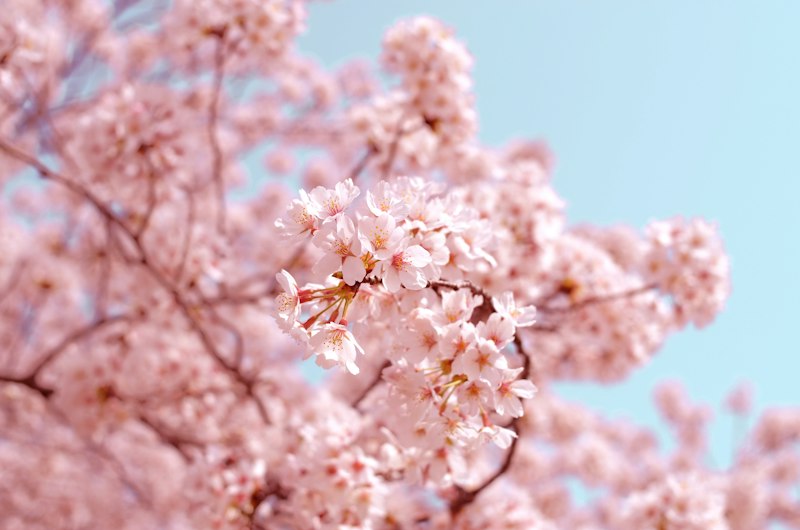
Takada Castle in Joetsu City is ranked alongside Hirosaki and Ueno as one of Japan's three greatest cherry blossom destinations — its moat and earthworks are surrounded by 4,000 Somei Yoshino trees that are illuminated nightly throughout the blossom season, creating a scene of extraordinary romance. The three-tiered reconstructed turret rises above a mirror of pink-lit water, and the lantern-lit nighttime atmosphere — known as yozakura — draws hundreds of thousands of visitors each spring. The castle was built in just 96 days by Tokugawa Ieyasu's son in 1614.

Cherry Blossoms Castle Ruins Night Sakura Top 3 in Japan Spring
Murakami — Samurai Town & Sake-Brine Salmon
📍

Murakami — Samurai Town & Sake-Brine Salmon

The northern castle town of Murakami preserves elegant samurai-era streets lined with merchants who perfected the art of sake-brine salmon preservation — an Edo-period technique that hangs hundreds of salmon from the eaves of town houses each autumn. The town is also the northernmost tea-growing region in Japan, producing a distinctive astringent green tea unique to the Murakami highlands. Walking the historic machiya townscape, stopping to taste salmon dishes and sip Murakami tea, is one of Niigata's most refined half-day experiences.

Samurai Town Salted Salmon Historic Streets Tea Culture Murakami
Ojiya — Birthplace of Nishikigoi Koi
📍

Ojiya — Birthplace of Nishikigoi Koi

The city of Ojiya in the Uonuma valley is the originating home of Nishikigoi — the ornamental koi carp that became one of Japan's most iconic exports, now kept in ponds worldwide. Local breeders have been developing and refining colour varieties since the early 19th century, and the Ojiya Nishikigoi Village (Nishikigoi no Sato) allows visitors to see prize specimens up close, some valued in the tens of thousands of dollars. The surrounding Uonuma rice paddies provide the pure snowmelt water that contributes to both the koi's colours and the region's world-famous rice.

Nishikigoi Koi Carp Ojiya Birthplace Uonuma
Itoigawa Geopark — UNESCO & Japan's Jade Birthplace
📍

Itoigawa Geopark — UNESCO & Japan's Jade Birthplace

Itoigawa on Niigata's southwestern coast is one of the world's great geological sites — the Fossa Magna, the great tectonic rift that divides Honshu into its eastern and western halves, meets the Sea of Japan here. The beaches at Itoigawa are the only place in the world where jadeite (true jade) forms naturally and can be found washed ashore as pebbles. The Fossa Magna Museum displays stunning jade specimens, Jomon-era jade artifacts, and explains the extraordinary geological forces that shaped the Japanese archipelago.

UNESCO Geopark Jade Fossa Magna Geological Wonder
Takada Cherry Blossom Festival
📍

Takada Cherry Blossom Festival

The Takada Cherry Blossom Festival runs through late March and April when the castle moat's 4,000 trees reach full bloom, with 3,000 red lanterns illuminating the blossoms for night viewing — an event so celebrated that it is ranked alongside Hirosaki and Ueno as one of Japan's three great cherry blossom spectacles. Stalls line the castle grounds, local sake and tarenkatsu-don vendors set up beneath the blossoms, and the reflections in the moat at night create a scene of haunting beauty. The festival draws hundreds of thousands of visitors over its three-week run.

Cherry Blossoms Takada Night Sakura Top 3 Japan Spring Festival
Sado Island Taraibune Tub Boats
📍

Sado Island Taraibune Tub Boats

Taraibune — round wooden washtub boats once used by local women to collect shellfish and seaweed among Sado Island's rocky coves — are one of Japan's most charmingly eccentric traditional crafts, and Ogi on Sado's southern coast is the place to experience them. Visitors can board the circular 1.2-metre tubs and be paddled through the sea cave coastline by local guides using a single twisting oar, a skill that takes years to master. The experience is short, slightly wobbly, and entirely delightful — one of Niigata's most photographed moments.

Taraibune Tub Boats Sado Traditional Ogi
🍜

Gourmet

9 spots
Niigata City — Port Waterfront & Sake District
📍

Niigata City — Port Waterfront & Sake District

Niigata City grew rich as a major Sea of Japan port, and its compact historic waterfront retains the atmosphere of a prosperous Meiji-era trading town. The Furumachi geisha district and Ponshukan sake museum — where 95 varieties from across the prefecture can be tasted by coin machine — make this one of Japan's most rewarding urban sake crawls. The broad Shinano River mouth and evening neon reflections on the water give the city a distinct character unlike anywhere else on Honshu's coast.

Port City Sake District Waterfront Izakaya History
Murakami — Samurai Town & Sake-Brine Salmon
📍

Murakami — Samurai Town & Sake-Brine Salmon

The northern castle town of Murakami preserves elegant samurai-era streets lined with merchants who perfected the art of sake-brine salmon preservation — an Edo-period technique that hangs hundreds of salmon from the eaves of town houses each autumn. The town is also the northernmost tea-growing region in Japan, producing a distinctive astringent green tea unique to the Murakami highlands. Walking the historic machiya townscape, stopping to taste salmon dishes and sip Murakami tea, is one of Niigata's most refined half-day experiences.

Samurai Town Salted Salmon Historic Streets Tea Culture Murakami
Uonuma Koshihikari — Japan's Most Prized Rice
📍

Uonuma Koshihikari — Japan's Most Prized Rice

Uonuma Koshihikari is Japan's most coveted short-grain rice — grown in the narrow mountain valley of Uonuma where dramatic diurnal temperature swings, pure snowmelt water, and mineral-rich soil produce grains of exceptional sweetness, stickiness, and flavour. The harvest season in September and October transforms the terraced valley into a patchwork of golden fields against the backdrop of the Echigo mountains. Every serious Japanese rice lover ranks Uonuma Koshihikari as the undisputed benchmark.

Koshihikari Rice Uonuma Premium Harvest
Niigata Sake — Most Breweries Per Capita in Japan
📍

Niigata Sake — Most Breweries Per Capita in Japan

Niigata holds the record for the most sake breweries per capita in Japan — over 90 kuraboto (breweries) producing a style prized for its tanrei karakuchi (light and dry) character, a result of the prefecture's exceptionally soft snowmelt water. Landmark labels such as Koshi No Kanbai, Hakkaisan, and Kubota are exported worldwide, while dozens of smaller craft breweries offer direct tastings in historic kura (warehouses). The combination of premium Koshihikari rice and pure water creates sake of national renown.

Sake Breweries Soft Water Koshi No Kanbai Hakkaisan
Hegi Soba — Funori Seaweed Noodles
📍

Hegi Soba — Funori Seaweed Noodles

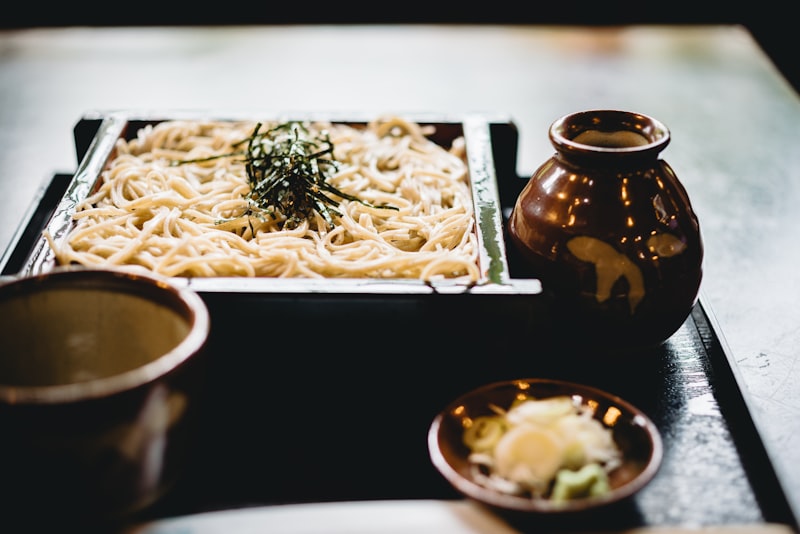
Hegi soba is Niigata's most distinctive regional noodle — buckwheat dough bound with funori seaweed paste rather than egg, giving the noodles a silky, elastic texture and subtle oceanic note unique among Japan's great soba traditions. Served cold in elegant bite-sized bundles on a wooden hegi tray, the presentation is as refined as the flavour. The tradition originates in Ojiya in the Uonuma region, where the textile industry historically provided funori as a starch-and-binding agent.

Hegi Soba Funori Noodles Ojiya Niigata Specialty
Noppe — Traditional Niigata Root Vegetable Stew
📍

Noppe — Traditional Niigata Root Vegetable Stew

Noppe is Niigata's beloved traditional stew — a clear, lightly seasoned broth packed with taro root, lotus root, shiitake mushrooms, carrot, konjac, and salmon or kamaboko fish cake, thickened naturally by the starch released from the sato-imo taro. Eaten at room temperature or chilled at summer festivals and warm in winter, it is a dish deeply embedded in the prefecture's seasonal food culture. Nearly every Niigata family has its own version, passed down through generations.

Noppe Taro Root Traditional New Year Comfort Food
Tarenkatsu-don — Niigata-Style Katsudon
📍

Tarenkatsu-don — Niigata-Style Katsudon

Niigata's version of katsudon breaks from the national standard — instead of simmering the pork cutlet in egg and dashi, tarenkatsu-don dips the crispy cutlet directly into a sweet soy-based tare sauce and lays it over a bowl of premium Koshihikari rice. The result is a cleaner, crisper dish where the sauce caramelises lightly on the hot cutlet surface. Niigata City's Furu-machi district has dozens of specialist tarenkatsu restaurants, and the dish is considered the city's most iconic B-gourmet.

Tarenkatsu Katsudon Sweet Soy Niigata B-Gourmet Pork Cutlet
Hakkaisan Brewery & Sake Museum
📍

Hakkaisan Brewery & Sake Museum

Hakkaisan is one of Niigata's most internationally recognised sake breweries, its pure, dry junmai ginjo style earning loyal drinkers across Japan and beyond. The brewery in Minamiuonuma offers guided tours through traditional wooden fermentation rooms where the role of local snowmelt water and Niigata climate in sake production is vividly explained. The tasting room allows comparison of multiple expressions from the flagship Hakkaisan label alongside premium seasonal releases unavailable elsewhere.

Hakkaisan Sake Brewery Tour Tasting Minamiuonuma
Ponshukan — 95 Sake Varieties Tasting
📍

Ponshukan — 95 Sake Varieties Tasting

Ponshukan inside Niigata Station's CoCoLo complex is one of Japan's most beloved sake experiences — for a ¥500 package of five coins, visitors operate vintage coin-machine dispensers to taste any of 95 Niigata prefecture sake varieties, ranging from crisp dry junmai to rich aged expressions. The sake museum section explains Niigata's brewing history with displays of traditional tools, and the attached shop sells bottles from virtually every active Niigata brewery. It is the perfect introduction to the breadth and diversity of the prefecture's sake culture before exploring further.

Sake Tasting Ponshukan Niigata Station 95 Varieties Coin Machine
🏔️

Nature

7 spots
Echigo-Tsumari Art Field
📍

Echigo-Tsumari Art Field

The world's largest outdoor art festival permanently transformed 760 square kilometres of terraced rice-paddy landscape in Niigata's Tokamachi region, placing hundreds of artworks by artists from 40 countries among abandoned farmhouses, rice fields, and forested hills. Iconic installations include Ilya Kabakov's 'The Rice Field' and Christian Boltanski's haunting 'Les Archives du Coeur' on Teshima (accessed via collaboration with the Setouchi Triennale). Even outside triennial years, over 200 permanent works remain open across the region.

Outdoor Art Triennial Rice Paddies Contemporary Art Rural Japan
Ojiya — Birthplace of Nishikigoi Koi
📍

Ojiya — Birthplace of Nishikigoi Koi

The city of Ojiya in the Uonuma valley is the originating home of Nishikigoi — the ornamental koi carp that became one of Japan's most iconic exports, now kept in ponds worldwide. Local breeders have been developing and refining colour varieties since the early 19th century, and the Ojiya Nishikigoi Village (Nishikigoi no Sato) allows visitors to see prize specimens up close, some valued in the tens of thousands of dollars. The surrounding Uonuma rice paddies provide the pure snowmelt water that contributes to both the koi's colours and the region's world-famous rice.

Nishikigoi Koi Carp Ojiya Birthplace Uonuma
Myoko-Togakushi Renzan National Park
📍

Myoko-Togakushi Renzan National Park

This national park spanning the border of Niigata and Nagano prefectures covers a chain of volcanic peaks, ancient beech forests, and dramatic waterfalls fed by the heavy snowfall of the Echigo mountains. Mount Myoko (2,454 m) towers above a caldera lake, and the park's walking trails lead through pristine forests that explode in autumn foliage. Naena Waterfall — a 55-metre plunge surrounded by lush green gorge — is one of the park's most spectacular features.

National Park Volcanic Waterfalls Hiking Beech Forest
Itoigawa Geopark — UNESCO & Japan's Jade Birthplace
📍

Itoigawa Geopark — UNESCO & Japan's Jade Birthplace

Itoigawa on Niigata's southwestern coast is one of the world's great geological sites — the Fossa Magna, the great tectonic rift that divides Honshu into its eastern and western halves, meets the Sea of Japan here. The beaches at Itoigawa are the only place in the world where jadeite (true jade) forms naturally and can be found washed ashore as pebbles. The Fossa Magna Museum displays stunning jade specimens, Jomon-era jade artifacts, and explains the extraordinary geological forces that shaped the Japanese archipelago.

UNESCO Geopark Jade Fossa Magna Geological Wonder
Shinano River — Japan's Longest River
📍

Shinano River — Japan's Longest River

The Shinano River is the longest river in Japan, flowing 367 kilometres from the mountains of Nagano through the Niigata plain to the Sea of Japan. Its wide lower reaches and associated wetlands form a critical habitat for migratory birds, including whooper swans that overwinter in the Taki Waterfowl Park near its estuary. The riverside cycling paths and ferry crossings in Niigata City offer a relaxing way to experience the river's scale, while the upstream gorge sections near Ojiya reveal its more dramatic mountain character.

Longest River Wetlands Birds Cycling River Scenery
Echigo Mountains & Sea of Japan Coastline
📍

Echigo Mountains & Sea of Japan Coastline

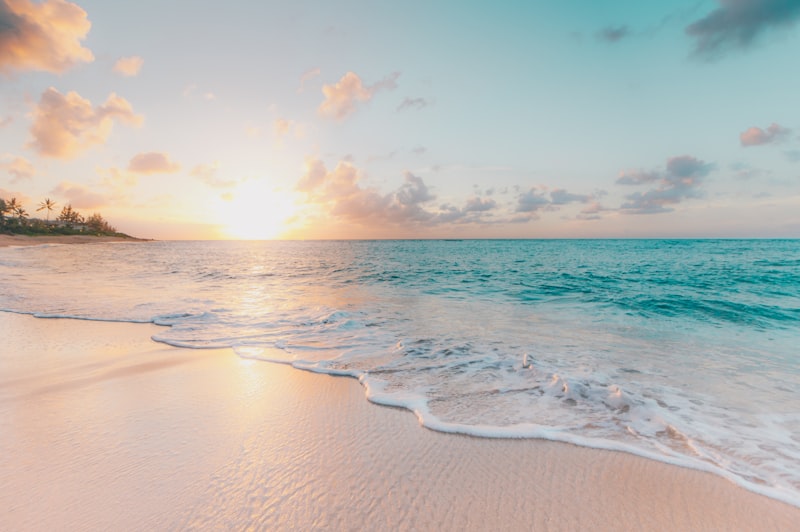
The juxtaposition of Niigata's landscape is striking — the rugged Echigo mountain range, carrying Japan's heaviest snowfall, descends to a long arc of Sea of Japan coastline marked by pine forests, dune systems, and the grey-blue winter sea. The Niigata coastline north of the city, particularly around Murakami, offers dramatic cliffs and hidden coves accessible by coastal hiking trails. The Sea of Japan sunsets from Sado Island — with Honshu's mountain silhouette across the water — are among Japan's finest.

Sea of Japan Coastline Mountains Sunset Landscapes
Sado Island Cycling
📍

Sado Island Cycling

Sado Island's diverse landscape — mountains in the north, a wide rice-producing plain in the centre, and dramatic coastal cliffs in the south — makes it one of Japan's best cycling destinations. The island circuit covers roughly 200 km, passing through fishing villages, historic mine sites, Noh stage communities, and terraced rice fields, with a quietness and unhurried pace that larger island tourism hotspots cannot offer. E-bike rentals from Ryotsu Port make the hilly sections accessible even for casual riders.

Cycling Sado Island Countryside Coastal Route Slow Travel
🎿

Leisure

6 spots
Naeba Ski Resort — Fuji Rock & World-Class Skiing
📍

Naeba Ski Resort — Fuji Rock & World-Class Skiing

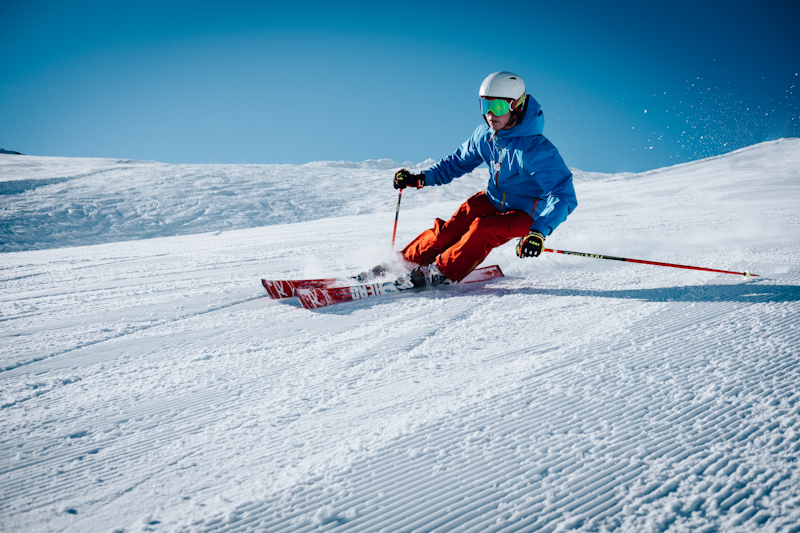
Naeba is one of Honshu's largest ski resorts, spread across a dramatic mountain bowl with 27 courses, a top elevation of 1,789 metres, and the Dragondola — Japan's longest gondola at 5.5 km — connecting to the adjacent Tashiro area. In summer, the same slopes transform into the venue for Fuji Rock Festival, Japan's largest outdoor music event, drawing 130,000 people to a weekend of international and Japanese acts across multiple stages. The contrast between its snowy winter incarnation and summer festival atmosphere is one of Japan's most remarkable seasonal transformations.

Ski Resort Fuji Rock Largest Honshu Snow Gondola
GALA Yuzawa — Ski Direct from Shinkansen
📍

GALA Yuzawa — Ski Direct from Shinkansen

GALA Yuzawa offers one of Japan's most convenient ski experiences — the resort has its own dedicated Shinkansen station on the Joetsu line, allowing skiers to travel directly from Tokyo in 75 minutes and step off the bullet train into a gondola lift. The resort is compact but perfectly serviced, with excellent rental equipment, ski lessons for beginners, and high-quality on-mountain dining. The day-trip ski-from-Tokyo concept makes this ideal for travelers with limited time who want a genuine Niigata powder snow experience.

GALA Yuzawa Shinkansen Ski Day Trip Tokyo Unique Experience
Hakkaisan Brewery & Sake Museum
📍

Hakkaisan Brewery & Sake Museum

Hakkaisan is one of Niigata's most internationally recognised sake breweries, its pure, dry junmai ginjo style earning loyal drinkers across Japan and beyond. The brewery in Minamiuonuma offers guided tours through traditional wooden fermentation rooms where the role of local snowmelt water and Niigata climate in sake production is vividly explained. The tasting room allows comparison of multiple expressions from the flagship Hakkaisan label alongside premium seasonal releases unavailable elsewhere.

Hakkaisan Sake Brewery Tour Tasting Minamiuonuma
Sado Island Cycling
📍

Sado Island Cycling

Sado Island's diverse landscape — mountains in the north, a wide rice-producing plain in the centre, and dramatic coastal cliffs in the south — makes it one of Japan's best cycling destinations. The island circuit covers roughly 200 km, passing through fishing villages, historic mine sites, Noh stage communities, and terraced rice fields, with a quietness and unhurried pace that larger island tourism hotspots cannot offer. E-bike rentals from Ryotsu Port make the hilly sections accessible even for casual riders.

Cycling Sado Island Countryside Coastal Route Slow Travel
Ponshukan — 95 Sake Varieties Tasting
📍

Ponshukan — 95 Sake Varieties Tasting

Ponshukan inside Niigata Station's CoCoLo complex is one of Japan's most beloved sake experiences — for a ¥500 package of five coins, visitors operate vintage coin-machine dispensers to taste any of 95 Niigata prefecture sake varieties, ranging from crisp dry junmai to rich aged expressions. The sake museum section explains Niigata's brewing history with displays of traditional tools, and the attached shop sells bottles from virtually every active Niigata brewery. It is the perfect introduction to the breadth and diversity of the prefecture's sake culture before exploring further.

Sake Tasting Ponshukan Niigata Station 95 Varieties Coin Machine
Sado Island Taraibune Tub Boats
📍

Sado Island Taraibune Tub Boats

Taraibune — round wooden washtub boats once used by local women to collect shellfish and seaweed among Sado Island's rocky coves — are one of Japan's most charmingly eccentric traditional crafts, and Ogi on Sado's southern coast is the place to experience them. Visitors can board the circular 1.2-metre tubs and be paddled through the sea cave coastline by local guides using a single twisting oar, a skill that takes years to master. The experience is short, slightly wobbly, and entirely delightful — one of Niigata's most photographed moments.

Taraibune Tub Boats Sado Traditional Ogi
🎆

Events

6 spots
Takada Castle Ruins & 4,000 Cherry Trees
📍

Takada Castle Ruins & 4,000 Cherry Trees

Takada Castle in Joetsu City is ranked alongside Hirosaki and Ueno as one of Japan's three greatest cherry blossom destinations — its moat and earthworks are surrounded by 4,000 Somei Yoshino trees that are illuminated nightly throughout the blossom season, creating a scene of extraordinary romance. The three-tiered reconstructed turret rises above a mirror of pink-lit water, and the lantern-lit nighttime atmosphere — known as yozakura — draws hundreds of thousands of visitors each spring. The castle was built in just 96 days by Tokugawa Ieyasu's son in 1614.

Cherry Blossoms Castle Ruins Night Sakura Top 3 in Japan Spring
Naeba Ski Resort — Fuji Rock & World-Class Skiing
📍

Naeba Ski Resort — Fuji Rock & World-Class Skiing

Naeba is one of Honshu's largest ski resorts, spread across a dramatic mountain bowl with 27 courses, a top elevation of 1,789 metres, and the Dragondola — Japan's longest gondola at 5.5 km — connecting to the adjacent Tashiro area. In summer, the same slopes transform into the venue for Fuji Rock Festival, Japan's largest outdoor music event, drawing 130,000 people to a weekend of international and Japanese acts across multiple stages. The contrast between its snowy winter incarnation and summer festival atmosphere is one of Japan's most remarkable seasonal transformations.

Ski Resort Fuji Rock Largest Honshu Snow Gondola
Fuji Rock Festival — Japan's Largest Outdoor Music Event
📍

Fuji Rock Festival — Japan's Largest Outdoor Music Event

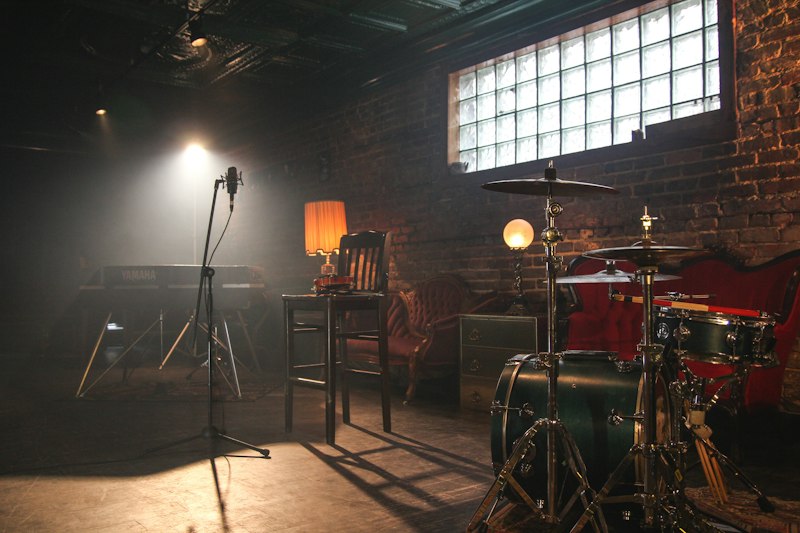
Held annually over the last weekend of July at Naeba ski resort, Fuji Rock Festival is Japan's largest and most internationally respected outdoor music event — attracting over 130,000 attendees across three days to a spectacular mountain valley venue with multiple stages scattered through forest, riverside meadows, and open mountain terrain. International headliners and Japanese acts share a lineup that spans rock, electronic, hip-hop, folk, and jazz, all in an atmosphere of exceptional organisation, safety, and genuine musical passion. The experience of watching a world-class act as mist rolls over the surrounding Niigata mountains is uniquely Japanese.

Fuji Rock Music Festival Naeba July International
Niigata Matsuri — Port City Summer Festival
📍

Niigata Matsuri — Port City Summer Festival

The Niigata Matsuri is a three-day summer festival held in late July to early August that celebrates the city's identity as a great Sea of Japan port — centred on the Shinano River waterfront with processions, taiko drumming, folk dance performances, and one of northern Honshu's most spectacular fireworks displays launched over the river. The festival draws over 1.5 million visitors and fills the city's izakaya and sake bars with a celebratory energy that showcases Niigata's urban culture at its most festive.

Festival Summer Port City Fireworks August
Sado Earth Celebration — Kodo Taiko Festival
📍

Sado Earth Celebration — Kodo Taiko Festival

The Earth Celebration is a three-day international arts festival held each August on Sado Island, centred on performances by Kodo — the world-famous taiko drumming ensemble that has made Sado its permanent home. Open-air concerts combine Kodo's thunderous taiko with collaborating artists from world music traditions, while daytime workshops allow visitors to experience taiko drumming themselves. The combination of a remote island setting, extraordinary musical energy, and the ancient landscape of Sado creates one of Japan's most atmospheric festival experiences.

Kodo Taiko Earth Celebration Sado Island August
Takada Cherry Blossom Festival
📍

Takada Cherry Blossom Festival

The Takada Cherry Blossom Festival runs through late March and April when the castle moat's 4,000 trees reach full bloom, with 3,000 red lanterns illuminating the blossoms for night viewing — an event so celebrated that it is ranked alongside Hirosaki and Ueno as one of Japan's three great cherry blossom spectacles. Stalls line the castle grounds, local sake and tarenkatsu-don vendors set up beneath the blossoms, and the reflections in the moat at night create a scene of haunting beauty. The festival draws hundreds of thousands of visitors over its three-week run.

Cherry Blossoms Takada Night Sakura Top 3 Japan Spring Festival

💡 Practical Travel Tips

Everything you need to know before and during your visit.

🌸
Best Time to Visit
  • Late March – April (Cherry Blossoms) — Takada Castle's 4,000 cherry trees are illuminated nightly throughout the blossom season, ranked alongside Hirosaki and Ueno as one of Japan's three greatest sakura spectacles. The 3,000 red lanterns reflected in the moat create a scene of extraordinary atmosphere. Timing varies by year but typically peaks in early to mid-April.
  • June – August (Sado Island & Summer) — June and July are ideal for Sado Island exploration before peak crowds arrive. The Earth Celebration taiko festival (mid-August) and Niigata Matsuri (late July / early August) bring the prefecture to life. Fuji Rock Festival in late July transforms Naeba ski resort into Japan's greatest music event.
  • September – October (Rice Harvest) — Uonuma and the Echigo plains turn golden at harvest time, with the mountain backdrop creating spectacular autumn landscapes. Echigo-Tsumari Art Field is particularly rewarding in autumn triennial years (2024, 2027), when temporary artworks join the permanent collection across the rice-paddy landscape.
  • January – March (World-Class Ski) — The Joetsu Shinkansen makes Niigata's ski resorts the most accessible powder snow destination from Tokyo. GALA Yuzawa's direct ski-from-Shinkansen concept is unique in Japan, while Naeba offers serious vertical and extensive terrain for advanced skiers.
🏝️
Sado Island Tips
  • Allow a minimum of two days on Sado — the island is Japan's sixth largest and the distances between the gold mine in the north (Aikawa), the central Kuninaka plain, and Ogi in the south are substantial. Renting a car from Ryotsu Port is the most efficient option; bus services connect the main sites but require careful timetable planning.
  • The Sado Kinzan gold mine (Aikawa) offers two tour routes: the Edo Course follows candle-lit tunnels where animated figures recreate the conditions faced by convict labourers, and the Meiji Industrial Heritage Course shows the later mechanised era. Allow 1.5 hours total; the combination of history, darkness, and human drama is one of Niigata's most affecting experiences.
  • Taraibune tub boats at Ogi Port operate year-round (weather permitting) and take roughly 10 minutes per ride — short but genuinely charming. Book at the Ogi port terminal; arrive early in summer as queues form. Combine with the Sado Historical Museum for context on the island's fishing and agricultural culture.
  • The Kodo drumming ensemble's Earth Celebration festival (mid-August) sells out extremely quickly — the main evening concerts open for ticket sale in March and are often gone within hours. Day programmes and workshops have more availability and are equally worthwhile. Accommodation on Sado in August is extremely limited; book well in advance or consider staying in Niigata City and using the ferry.
  • Sado's Noh theatre tradition is extraordinarily accessible — over 30 community stages across the island host public performances, and visiting a village Noh stage (even without a performance in progress) is a profound encounter with a living cultural tradition. The Sado City Tourism Office can advise on performance schedules, which are most frequent in spring and autumn.
🍶
Sake & Rice Tips
  • Ponshukan at Niigata Station (CoCoLo Niigata West building, accessible without exiting the station) is the ideal first stop in the prefecture — a ¥500 coin set lets you taste any five of 95 local sake varieties from vintage coin-operated dispensers. It is open daily from 9am–8pm and serves as both a museum and a tasting experience. Purchase bottles from the attached shop; prices are often lower than Tokyo retail.
  • For a deeper sake experience, the Niigata Sake no Jin event (held annually in March at Toki Messe convention centre) is Japan's largest sake festival, drawing 90+ Niigata breweries and tens of thousands of visitors over two days. The tasting format allows direct conversation with brewers — plan well ahead as tickets sell out in early January.
  • Uonuma Koshihikari rice is available in supermarkets throughout Niigata but the freshest experience is in the harvest season (September–October) at a local restaurant in Minamiuonuma or Tokamachi. A bowl of freshly milled Uonuma rice with local pickles and miso soup is a study in pure flavour that requires no further accompaniment.
  • Niigata sake's signature tanrei karakuchi (light and dry) style pairs exceptionally well with the prefecture's seafood — Japan Sea snow crab (November–March), flounder sashimi, and salmon cuisine from Murakami. Many Niigata City izakaya source both sake and fish locally; ask for the osusume (recommendation) from the chef.
🎿
Ski Resort Tips
  • GALA Yuzawa is ideal for day-trippers and beginners — the slope layout is straightforward, rental equipment is top-quality, and the onsen facilities at the base lodge are excellent for post-ski recovery. However, it is a relatively small resort; experienced skiers wanting variety should use it as a base and buy the combined lift pass that includes neighbouring Yuzawa Kogen and Ishiuchi Maruyama resorts.
  • Naeba offers the most serious skiing in the Niigata region — 27 courses, a top elevation of 1,789 metres, and the 5.5 km Dragondola gondola connecting to Tashiro create a genuinely full ski-holiday destination. Accommodation ranges from budget lodges in Yuzawa town (40 min by bus) to onsite hotels at the resort. February typically delivers the best snow conditions.
  • The Joetsu Kokusai and Kagura resorts offer quieter alternatives with excellent powder fields and fewer crowds than the Yuzawa cluster. Kagura in particular has a reputation among advanced skiers for deep backcountry-adjacent terrain and a longer season that can extend into early May.
  • Ski gear can be sent ahead by Yamato Transport from any convenience store to your ski resort hotel — the ta-Q-bin ski transport service is remarkably affordable (approx. ¥1,500–¥2,500 per ski bag) and eliminates the awkwardness of carrying equipment on the Shinkansen. Book 2 days in advance.
🍜
Food Tips
  • Hegi soba is best experienced in the Uonuma region where it originates — restaurants in Ojiya and Tokamachi serve the noodles on traditional wooden hegi trays in elegant bite-sized bundles, with the funori seaweed binding giving a texture and subtle flavour unavailable in versions sold outside Niigata. In Niigata City, the Furuimachi and Honcho-dori areas have specialist hegi soba restaurants.
  • Tarenkatsu-don is Niigata City's definitive fast lunch — the sweet-soy-dipped pork cutlet over Koshihikari rice is found at specialist shops throughout the Furumachi district. Katsudon Miyoshiya (in business since the 1930s) is credited with establishing the style; the lunchtime queue is worth the 20-minute wait.
  • The Niigata City seafood market at Furumachi Ichiba offers the best overview of Japan Sea seafood — seasonal highlights include snow crab (beni-zuwai and kegani), nodoguro (rosy sea bass), and the Niigata specialty of salmon marinated in sake lees (sake-brine salmon). The adjacent food stalls offer prepared dishes for immediate eating.
  • Murakami salmon cuisine is a world unto itself — visit in October or November when fresh salmon arrive and the town hangs hundreds of whole fish from eaves to cure in the salt sea air. The specialty dishes include sake-brine grilled salmon (sake-brine sansai), salmon roe rice (ikura don), and salmon hot pot (sake-jiru); the Murakami Machiya Hiroba market is the best place to taste them.

🏨 Find Hotels in Niigata

Compare prices across hundreds of hotels — from budget capsules to luxury ryokan.

Search Hotels on Booking.com →

🎌 Tours & Experiences

Book guided tours, day trips, cooking classes, and cultural experiences.

Browse Tours on Viator →

🗺️ Activities & Attractions

Skip the queues — pre-book entry tickets, day tours, and local experiences.

Explore on GetYourGuide →

🎟️ Things to Do in Niigata

Discover tickets, transport passes, and unique local experiences in Niigata with Klook.

Book on Klook →

🚄 JR Pass & Rail Tickets

Pre-purchase your JR Pass or individual shinkansen tickets before you arrive.

Buy JR Pass →