Chubu · Prefecture Guide

Toyama Travel Guide

The wall of snow you walk through — 20-metre alpine corridors, Japan's richest seafood bay, firefly squid glowing blue at night, and a miniature train through Japan's deepest gorge

🏔️ Tateyama Alpine Route — 20m Snow Corridor in April🦐 Shiro-ebi — White Shrimp Found Only in Toyama Bay✨ Hotaru-ika — Glowing Firefly Squid in Spring🏘️ Gokayama — UNESCO Thatched Village🚂 Kurobe Gorge Railway — Japan's Most Scenic Mini Train

🗾 About Toyama

Toyama is compressed between two extremes that exist nowhere else in Japan at such close range: the Northern Alps rising above 3,000 metres just 20 kilometres inland, and Toyama Bay plunging to depths of over 1,000 metres just off the coast — a geography that fills the prefecture with both spectacular alpine scenery and the richest concentration of seafood in the country. The Tateyama Kurobe Alpine Route is Japan's most dramatic mountain crossing, threading through the Northern Alps via cable cars, ropeways, and trolley buses, and in April and May the Yuki no Otani snow corridor presents walls of compacted snow up to 20 metres high that visitors walk between in disbelief. Every spring from March to May, millions of firefly squid rise to the surface of Toyama Bay at night near the Namerikawa coast and glow electric blue as fishermen scoop them from the sea in one of Japan's most extraordinary natural spectacles. The Bay's cold, nutrient-rich deep water also nurtures shiro-ebi — white shrimp found in commercial quantities nowhere else on earth — along with yellowtail buri, snow crab, and a diversity of premium seafood that makes Toyama one of Japan's most serious sushi destinations.

🌏
Location
Chubu region, Sea of Japan coast — bordered by Niigata, Nagano, Gifu, Ishikawa
🗣️
Language
Japanese; English signage at major tourist sites including the Alpine Route and Kurobe Dam
💴
Currency
Japanese Yen (JPY); IC cards work in Toyama City; cash essential for rural areas and markets
🕐
Time Zone
JST (UTC+9) — no daylight saving
🌡️
Best Season
Mid-Apr–Jun (Tateyama snow corridor); Mar–May (firefly squid season); Oct–Nov (Kurobe Gorge autumn foliage); Dec–Mar (Gokayama deep snow, snow crab)
✈️
Nearest Airports
Toyama Airport (TOY) — flights from Tokyo Haneda (1h). Hokuriku Shinkansen to Toyama Station (2h from Tokyo)
🚇
Getting Around
Hokuriku Shinkansen to Toyama (2h from Tokyo); Alpine Route has its own cable car/bus/trolley system; rental car for Gokayama and Kurobe Gorge
Power Plug
Type A, 100V / 50Hz

✈️ Getting There

The Hokuriku Shinkansen Kagayaki reaches Toyama in 2 hours from Tokyo — one of the best-value bullet train journeys for the scenery alone. The Tateyama Kurobe Alpine Route runs east–west and can be done as a one-way crossing from Toyama to Nagano, making it possible to enter from Toyama and exit directly toward Matsumoto without retracing any steps.

🚄 From Tokyo (Shinkansen)
  • Hokuriku Shinkansen Kagayaki (Tokyo → Toyama) — approx 2h8m. Fastest and most practical option. Fully covered by JR Pass.
🚄 From Osaka / Kyoto
  • Limited Express Thunderbird (Osaka → Kanazawa) — approx 2h30m, then Shinkansen to Toyama (18 min). Alternatively, direct Shinkansen from Shin-Osaka in approx 2h30m.
✈️ By Air
  • Toyama Airport (TOY) — direct flights from Tokyo Haneda (1h) with ANA and JAL. Airport bus to Toyama Station: 15 min.
🚃 Alpine Route Gateway
  • Tateyama Station (Toyama-side entry) — Toyama Chihō Railway from Toyama Station to Tateyama Station: approx 50 min. The Nagano-side entry is Shinano-Omachi Station (Oito Line from Matsumoto).
  • The Alpine Route is one-way friendly — enter from Toyama and exit at Shinano-Omachi (Nagano) without backtracking.
🚗 Getting Around Toyama
  • Gokayama — Rental car or the Kanto-Etchu bus from Takaoka (World Heritage Bus, approx 4 departures/day — check schedule). Rental car from Toyama Station is most flexible.
  • Kurobe Gorge Railway — Toyama Chihō Railway from Toyama to Unazuki-Onsen station (approx 80 min).
  • Toyama City — Compact and walkable; Toyama Light Rail and city tram cover the Glass Art Museum, Castle Park, and station area.
💡 Travel TipThe Tateyama Kurobe Alpine Route is one-way friendly — take it from the Toyama side to Shinano-Omachi (Nagano) and continue to Matsumoto or Tokyo without backtracking. This makes Toyama an ideal stop on a Tokyo–Alps–Kyoto circuit.

📖 Recommended Travel Guides

Deep-dive guides to help you plan every aspect of your visit — from top sightseeing spots to the best restaurants and seasonal events.

⛩️

Sightseeing

8 spots
Tateyama Kurobe Alpine Route
📍

Tateyama Kurobe Alpine Route

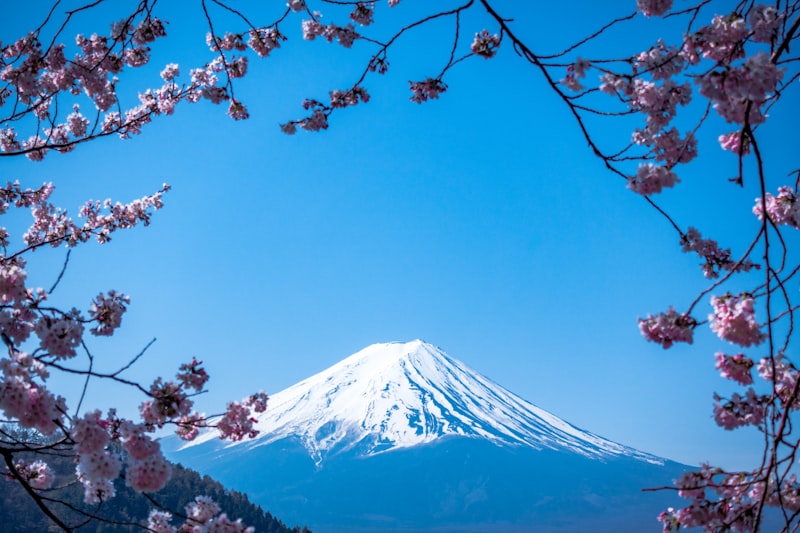
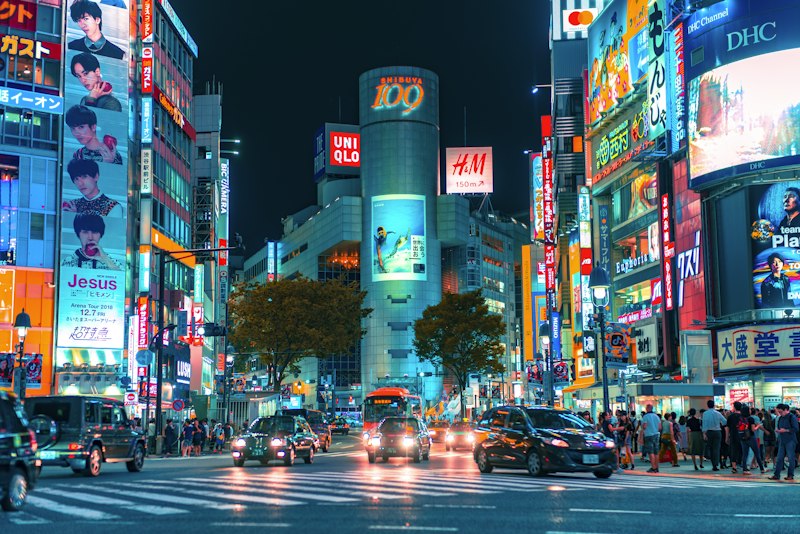
One of Japan's great mountain crossings, the Tateyama Kurobe Alpine Route threads through the Northern Alps via cable cars, trolley buses, and ropeways. From mid-April to late June, the famous Yuki no Otani snow corridor rises up to 20 metres on either side of the walking path. The full crossing from Toyama to Nagano is a single unforgettable day.
alps snow corridor mountain crossing cable car
Kurobe Dam
📍

Kurobe Dam

Japan's largest arch dam stands 186 metres tall and holds back the brilliant turquoise waters of Lake Kurobe, ringed by the jagged peaks of the Northern Alps. The dam's discharge fountains put on a dramatic show from late June through October, and the surrounding ridgelines explode in crimson and gold foliage every autumn. Getting here is half the adventure, reached via the Alpine Route's trolley bus tunnel bored straight through the mountain.

dam alps autumn foliage engineering
Gokayama UNESCO Gassho Village
📍

Gokayama UNESCO Gassho Village

Tucked deep in the Shogawa River valley on Toyama's Gifu border, Gokayama preserves clusters of gassho-zukuri farmhouses whose steep thatched roofs were engineered to shed the heaviest snowfall in Japan. Far quieter than the more famous Shirakawa-go next door, Gokayama lets you wander its lanes with almost no crowds and stay overnight in working farmhouses. In winter, the snow-capped rooftops glow orange in the lantern light of the Doburoku Festival.

UNESCO gassho-zukuri thatched roof historic village
Zuiryuji Temple
📍

Zuiryuji Temple

Built in 1663 for the Kaga domain lord Maeda Toshitsune, Zuiryuji is widely regarded as one of the finest Zen temple complexes in Japan, its perfectly proportioned main gate, Buddha hall, and garden aligned on a single sacred axis. The complex is a designated national treasure, its austere Soto Zen structures framed by ancient cedars and a raked gravel garden that stills the mind. Takaoka's quieter pace makes a visit here feel like genuine pilgrimage.

zen temple national treasure Takaoka architecture
Takaoka Great Buddha
📍

Takaoka Great Buddha

Standing 16 metres tall and cast entirely in bronze, the Takaoka Daibutsu is counted among Japan's three great Buddhas alongside Nara and Kamakura. The present statue, completed in 1933 after a century of rebuilding, sits in serene meditation and wears a remarkable detail — a miniature temple hidden beneath the hem of its robe. The surrounding Takaoka city centre is compact and walkable, with the Great Buddha just minutes from Zuiryuji Temple.

great buddha bronze Takaoka landmark
Toyama Castle
📍

Toyama Castle

Toyama Castle's white three-tiered keep rises from a forested island park in the heart of the city, its moat reflecting the tower against the backdrop of the Northern Alps on a clear day. The reconstructed castle dates to 1954 and houses a local history museum tracing the castle town's development under the Maeda clan. The surrounding Shiroyama Park is one of Toyama's finest cherry blossom spots every April.

castle city park history Toyama City
Toyama Glass Art Museum
📍

Toyama Glass Art Museum

Designed by Pritzker Prize-winning architects SANAA and opened in 2015, Toyama Glass Art Museum is itself a work of art — six levels of interlocking glass floors inside a glittering facade that refracts the city outside. The permanent collection features major installations by international glass artists including Dale Chihuly, whose immense chandelier cascades through the central atrium. The museum is integrated with the city library, making it one of Japan's most visited civic cultural spaces.

contemporary art SANAA glass art architecture
Shirakawa-go (via Toyama Gateway)
📍

Shirakawa-go (via Toyama Gateway)

While Shirakawa-go sits technically in Gifu Prefecture, Toyama is its most convenient gateway via the Tateyama Kurobe Alpine Route or direct buses from Toyama City and Takaoka. The UNESCO village is the most famous collection of gassho-zukuri farmhouses in Japan, best visited in the early morning before tour buses arrive or in winter when the rooftops are buried under snow. Pairing Shirakawa-go with Gokayama on the Toyama side makes for a full day in Japan's most extraordinary rural landscape.

UNESCO gassho-zukuri thatched village day trip
🍜

Gourmet

7 spots
Toyama Bay Sushi
📍

Toyama Bay Sushi

Toyama Bay's extraordinary depth and cold mountain-fed currents produce a concentration of premium seafood found nowhere else in Japan. White shrimp, firefly squid, yellowtail buri, and horsehair crab are all caught here at their seasonal peaks, making Toyama one of the most serious sushi destinations in the country. The city's sushi restaurants serve these treasures simply, letting the Bay's extraordinary produce speak for itself.

sushi seafood white shrimp firefly squid
Shiro-ebi (White Shrimp)
📍

Shiro-ebi (White Shrimp)

Translucent and barely an inch long, the shiro-ebi or white shrimp is found in commercial quantities only in Toyama Bay, hauled from depths of 200–300 metres and brought to market within hours. Their flavour is delicate and sweet, best showcased as kakiage tempura — a golden fritter in which dozens of tiny shrimp cluster together — or draped over a finger of pressed rice as nigiri. Every sushi counter in Toyama lists them as the signature item.

white shrimp Toyama Bay exclusive tempura sushi
Hotaru-ika (Firefly Squid)
📍

Hotaru-ika (Firefly Squid)

Every spring from March to May, millions of firefly squid migrate into the shallows of Toyama Bay at night and glow an otherworldly blue as fishermen scoop them up in huge nets off the Namerikawa coast. Eaten fresh the same morning, hotaru-ika have a rich, intensely oceanic flavour quite different from the pickled version sold as a condiment nationwide. The Namerikawa coast hosts boat tours so visitors can witness the bioluminescent spectacle from the water.

firefly squid bioluminescence spring Namerikawa
Masuzushi (Trout Pressed Sushi)
📍

Masuzushi (Trout Pressed Sushi)

Masuzushi is Toyama's most beloved food souvenir — salted masu trout laid over vinegared rice, pressed into a round cedar box lined with bamboo leaves, and wrapped in a way that is as beautiful as it is delicious. The trout cures gently in the acid of the rice, turning a vivid pink and developing a silky texture that keeps for a day without refrigeration. Sold at Toyama Station and in wooden boxes at department stores, it is the edible emblem of the prefecture.

masuzushi trout sushi pressed sushi Toyama souvenir
Toyama Black Ramen
📍

Toyama Black Ramen

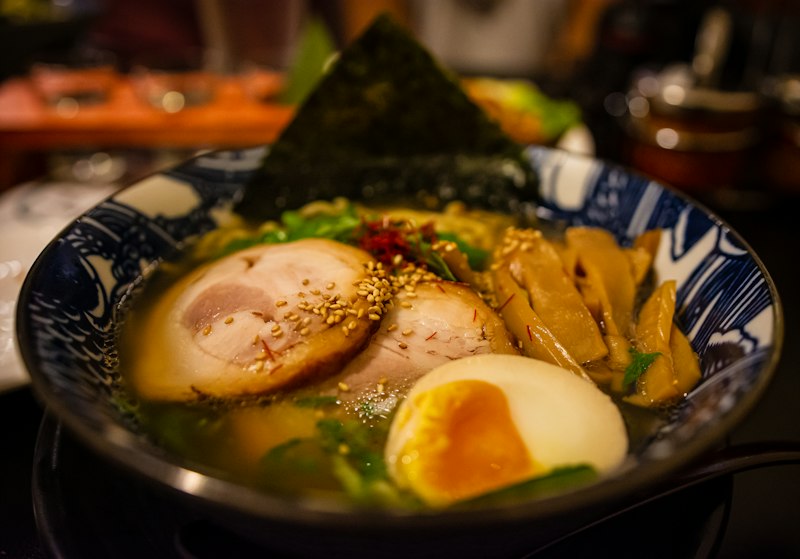
Toyama Black is Japan's most intensely coloured ramen — the broth is almost opaque from charred soy sauce layered over a rich chicken and pork stock, with a boldness born from fuelling the heavy manual workers of postwar Toyama. Thick noodles, a seasoned soft-boiled egg, and a heavy dusting of black pepper complete the bowl. The flavour is punishingly savoury and deeply satisfying, best experienced at the original shops clustered near Toyama Station.

black ramen soy sauce broth local ramen Toyama City
Hotaru-ika Squid Festival
📍

Hotaru-ika Squid Festival

Each April, the port town of Namerikawa celebrates the firefly squid season with an outdoor festival centred on the fishing boats that have worked these waters for generations. Night observation tours depart before dawn so visitors can watch the haul of glowing squid come in over the boat's side, and the morning market sells fresh hotaru-ika for eating on the spot. The Hotaruika Museum runs exhibits on the squid's bioluminescence biology alongside the seasonal events.

firefly squid Namerikawa April festival night fishing
Toyama Bay Seafood Market (Shinminato)
📍

Toyama Bay Seafood Market (Shinminato)

The Shinminato Kitokito Market on the Toyama Bay waterfront is the most direct way to taste the Bay's famous diversity — vendors sell fresh white shrimp, yellowtail, snow crab, and seasonal fish pulled from the water the same morning. The market's kitchen stalls let you eat grilled or raw fish on the waterfront with the Northern Alps visible across the water on clear days. Arriving by 9am ensures the best selection before the day's catch sells out.

fish market Shinminato fresh seafood morning market
🏔️

Nature

9 spots
Tateyama Kurobe Alpine Route
📍

Tateyama Kurobe Alpine Route

One of Japan's great mountain crossings, the Tateyama Kurobe Alpine Route threads through the Northern Alps via cable cars, trolley buses, and ropeways. From mid-April to late June, the famous Yuki no Otani snow corridor rises up to 20 metres on either side of the walking path. The full crossing from Toyama to Nagano is a single unforgettable day.
alps snow corridor mountain crossing cable car
Tateyama Snow Corridor (Yuki no Otani)
📍

Tateyama Snow Corridor (Yuki no Otani)

Every April the snowploughs carve an open-air corridor through up to 20 metres of compacted snow on the Murodo plateau, creating walls that dwarf every visitor who walks between them. The corridor is open from mid-April through late June, with the walls at their most dramatic in the first weeks after opening. It is one of Japan's most surreal and photogenic seasonal spectacles.

snow walls yuki no otani spring tateyama
Kurobe Dam
📍

Kurobe Dam

Japan's largest arch dam stands 186 metres tall and holds back the brilliant turquoise waters of Lake Kurobe, ringed by the jagged peaks of the Northern Alps. The dam's discharge fountains put on a dramatic show from late June through October, and the surrounding ridgelines explode in crimson and gold foliage every autumn. Getting here is half the adventure, reached via the Alpine Route's trolley bus tunnel bored straight through the mountain.

dam alps autumn foliage engineering
Shomyo Falls
📍

Shomyo Falls

At 350 metres Shomyo Falls is Japan's tallest waterfall, plunging in four distinct tiers down a sheer black cliff face in the Tateyama canyon. Spring snowmelt swells the falls into a thundering white torrent, and a second seasonal waterfall called Hanoki drops alongside it during peak melt. A paved path leads to a viewing platform just 350 metres from the base, putting the full height above you in one staggering view.

waterfall tallest in japan tateyama hiking
Gokayama UNESCO Gassho Village
📍

Gokayama UNESCO Gassho Village

Tucked deep in the Shogawa River valley on Toyama's Gifu border, Gokayama preserves clusters of gassho-zukuri farmhouses whose steep thatched roofs were engineered to shed the heaviest snowfall in Japan. Far quieter than the more famous Shirakawa-go next door, Gokayama lets you wander its lanes with almost no crowds and stay overnight in working farmhouses. In winter, the snow-capped rooftops glow orange in the lantern light of the Doburoku Festival.

UNESCO gassho-zukuri thatched roof historic village
Hotaru-ika (Firefly Squid)
📍

Hotaru-ika (Firefly Squid)

Every spring from March to May, millions of firefly squid migrate into the shallows of Toyama Bay at night and glow an otherworldly blue as fishermen scoop them up in huge nets off the Namerikawa coast. Eaten fresh the same morning, hotaru-ika have a rich, intensely oceanic flavour quite different from the pickled version sold as a condiment nationwide. The Namerikawa coast hosts boat tours so visitors can witness the bioluminescent spectacle from the water.

firefly squid bioluminescence spring Namerikawa
Firefly Squid Season — Namerikawa Coast
📍

Firefly Squid Season — Namerikawa Coast

The Namerikawa coastline becomes one of Japan's most magical natural spectacles from March to May, when firefly squid rise to the surface at night in their millions and turn the sea electric blue. Fishing boats use traditional net-scooping methods unchanged for generations, and the Hotaruika Museum in Namerikawa runs boat tours that put you in the middle of the action before dawn. On a calm spring night the glow can be seen from the shore even without boarding a boat.

bioluminescence Namerikawa night tour spring
Toyama Bay
📍

Toyama Bay

Toyama Bay plunges to depths of over 1,000 metres just kilometres from shore, creating one of the most biologically productive bays in Japan — cold nutrient-rich currents well up from the deep and feed an astonishing diversity of marine life year-round. The panorama from the Toyama coast on a clear winter day is extraordinary, the snow-capped Northern Alps rising almost directly behind the city and reflecting in the Bay. This mountain-to-sea geography in miniature is what makes Toyama unique in Japan.

bay seafood mountains to sea depth gradient
Kurobe Gorge Railway
📍

Kurobe Gorge Railway

Japan's most dramatic narrow-gauge railway squeezes through the sheer walls of Kurobe Gorge in open-air carriages, hugging cliffsides and crossing delicate bridges above turquoise water. The 20-kilometre route from Unazuki to Keyakidaira takes about 80 minutes each way through tunnel after tunnel and soaring viaduct after viaduct. October transforms the gorge walls into a cathedral of crimson maples and gold larches, making autumn the single most spectacular time to ride.

gorge railway autumn foliage miniature train open-air
🎿

Leisure

5 spots
Tateyama Alpine Resort Skiing
📍

Tateyama Alpine Resort Skiing

With skiing available above 2,000 metres until late April and sometimes into May, Tateyama offers some of the latest-season alpine runs accessible in Japan. The combination of deep mountain snowpack and relatively easy access via the Alpine Route makes it a favourite for skiers and snowboarders seeking spring powder long after other resorts have closed. The panoramic views of the entire Northern Alps range from the upper slopes add a scenery dimension that lower-altitude resorts cannot match.

skiing above 2000m late season tateyama
Kurobe Gorge Railway
📍

Kurobe Gorge Railway

Japan's most dramatic narrow-gauge railway squeezes through the sheer walls of Kurobe Gorge in open-air carriages, hugging cliffsides and crossing delicate bridges above turquoise water. The 20-kilometre route from Unazuki to Keyakidaira takes about 80 minutes each way through tunnel after tunnel and soaring viaduct after viaduct. October transforms the gorge walls into a cathedral of crimson maples and gold larches, making autumn the single most spectacular time to ride.

gorge railway autumn foliage miniature train open-air
Toyama Glass Art Museum
📍

Toyama Glass Art Museum

Designed by Pritzker Prize-winning architects SANAA and opened in 2015, Toyama Glass Art Museum is itself a work of art — six levels of interlocking glass floors inside a glittering facade that refracts the city outside. The permanent collection features major installations by international glass artists including Dale Chihuly, whose immense chandelier cascades through the central atrium. The museum is integrated with the city library, making it one of Japan's most visited civic cultural spaces.

contemporary art SANAA glass art architecture
Takaoka Copperware Workshop
📍

Takaoka Copperware Workshop

Takaoka has produced 90 percent of Japan's bronze Buddhist altar fittings for over 400 years, and a handful of workshops in the old casting district still welcome visitors to see molten metal poured into sand moulds and finished by hand. The craft tradition that cast the Takaoka Great Buddha is alive in the small workshops around Sotokanaya-cho, where artisans make everything from temple bells to tea ceremony kettles. Finished pieces — vases, cups, incense burners — make among the most distinctive souvenirs in Toyama.

copperware traditional craft workshop Takaoka
Toyama Bay Seafood Market (Shinminato)
📍

Toyama Bay Seafood Market (Shinminato)

The Shinminato Kitokito Market on the Toyama Bay waterfront is the most direct way to taste the Bay's famous diversity — vendors sell fresh white shrimp, yellowtail, snow crab, and seasonal fish pulled from the water the same morning. The market's kitchen stalls let you eat grilled or raw fish on the waterfront with the Northern Alps visible across the water on clear days. Arriving by 9am ensures the best selection before the day's catch sells out.

fish market Shinminato fresh seafood morning market
🎆

Events

6 spots
Tateyama Snow Corridor (Yuki no Otani)
📍

Tateyama Snow Corridor (Yuki no Otani)

Every April the snowploughs carve an open-air corridor through up to 20 metres of compacted snow on the Murodo plateau, creating walls that dwarf every visitor who walks between them. The corridor is open from mid-April through late June, with the walls at their most dramatic in the first weeks after opening. It is one of Japan's most surreal and photogenic seasonal spectacles.

snow walls yuki no otani spring tateyama
Firefly Squid Season — Namerikawa Coast
📍

Firefly Squid Season — Namerikawa Coast

The Namerikawa coastline becomes one of Japan's most magical natural spectacles from March to May, when firefly squid rise to the surface at night in their millions and turn the sea electric blue. Fishing boats use traditional net-scooping methods unchanged for generations, and the Hotaruika Museum in Namerikawa runs boat tours that put you in the middle of the action before dawn. On a calm spring night the glow can be seen from the shore even without boarding a boat.

bioluminescence Namerikawa night tour spring
Tateyama Snow Corridor Opening (Yuki no Otani)
📍

Tateyama Snow Corridor Opening (Yuki no Otani)

Every year in mid-April, the Tateyama Murodo plateau reopens after winter with walls of snow reaching up to 20 metres on either side of the walking route — an annual spectacle that draws visitors from across Japan and around the world. The corridor opening is staggered over several days as the road is cleared, and the first weeks of the season see the tallest walls before gradual melting sets in. Arriving on opening week guarantees the most dramatic scale and the best photographs.

snow walls seasonal opening mid-April tateyama
Hotaru-ika Squid Festival
📍

Hotaru-ika Squid Festival

Each April, the port town of Namerikawa celebrates the firefly squid season with an outdoor festival centred on the fishing boats that have worked these waters for generations. Night observation tours depart before dawn so visitors can watch the haul of glowing squid come in over the boat's side, and the morning market sells fresh hotaru-ika for eating on the spot. The Hotaruika Museum runs exhibits on the squid's bioluminescence biology alongside the seasonal events.

firefly squid Namerikawa April festival night fishing
Toyama Matsuri
📍

Toyama Matsuri

Toyama's main summer festival fills the city centre for three days each August with lantern floats, taiko drumming, traditional Owara-style dance, and a grand fireworks show launched over Toyama Bay. The floats are decorated with hand-painted scenes from local history and tradition, and the Owara Bon Odori dancers perform in haunting slow rhythmic movements unique to the Etchu region. The fireworks finale, with the Northern Alps silhouetted in the distance, is one of the most beautiful festival endings in the Chubu region.

city festival fireworks August Toyama City
Gokayama Doburoku Festival
📍

Gokayama Doburoku Festival

Every October the UNESCO-listed gassho villages of Gokayama celebrate the autumn harvest with the Doburoku Festival, at which a thick unfiltered sake called doburoku — brewed using a rare shrine licence granted nowhere else in Japan — is offered to the gods and shared with visitors. The festival unfolds inside thatched farmhouses and the village shrine to the sound of lion dances and ancient chants, the autumn foliage blazing on the hillside above. Staying overnight in a gassho farmhouse for the festival is one of Toyama's most immersive cultural experiences.

doburoku sake UNESCO village October harvest festival

💡 Practical Travel Tips

Everything you need to know before and during your visit.

📅
Best Time to Visit Toyama
  • Mid-April–late June — The snow corridor (Yuki no Otani) is tallest and most dramatic in the first two weeks after the April opening — up to 20 metres high. March–May also overlaps with firefly squid season.
  • October–November — Kurobe Gorge transforms into crimson and gold autumn foliage. The Doburoku Festival in Gokayama coincides with peak foliage.
  • December–March — The deepest snows transform Gokayama, and snow crab season peaks. The village looks as it has for 500 years under heavy white rooftops.
🏔️
Tateyama Alpine Route Tips
  • Book in advance for mid-April to early May — through tickets from Toyama to Shinano-Omachi sell out weeks ahead. Allow a full day for the complete crossing.
  • Depart Tateyama Station early (first or second cable car after 7am) to reach the snow corridor before midday crowds.
  • Dress for conditions at 2,450m altitude — even in May, temperatures can drop to zero with wind. The Murodo plateau is not the valley floor.
  • The trolley bus tunnel bored straight through a mountain is one of the great engineering oddities of the route — the corridor itself is free to walk once you reach Murodo.
🦐
Toyama Bay Seafood Tips
  • Head to Toyama's dedicated sushi area near the station or to Kitokito Market in Shinminato for the freshest morning catch. Ask for the Toyama Bay Course set (富山湾鮨セット) — shiro-ebi, hotaru-ika (in season), and buri at a fixed price around ¥3,500–¥5,000.
  • Masuzushi (trout pressed sushi) is best bought at Toyama Station producers — the Masu no Sushi Museum shop or originals at the station. Freshness is notably different from airport versions.
  • Toyama Black Ramen — best at lunch at the original Nishi Tomoya or Taiki near the station, where the coal-black broth is still made to the original postwar recipe.
🏘️
Gokayama Tips
  • Gokayama has two main hamlet clusters: Ainokura (larger, most scenic — 20 gassho houses on a hillside with a panoramic viewpoint) and Suganuma (smaller, more intimate, good folk museum).
  • Unlike Shirakawa-go, Gokayama sees far fewer visitors and many gassho houses are still occupied — keep voices low and stay on marked paths.
  • Staying overnight in a gassho farmhouse minshuku is the most atmospheric accommodation experience in Toyama — book months ahead for the October Doburoku Festival weekend.

🏨 Find Hotels in Toyama

Compare prices across hundreds of hotels — from budget capsules to luxury ryokan.

Search Hotels on Booking.com →

🎌 Tours & Experiences

Book guided tours, day trips, cooking classes, and cultural experiences.

Browse Tours on Viator →

🗺️ Activities & Attractions

Skip the queues — pre-book entry tickets, day tours, and local experiences.

Explore on GetYourGuide →

🎟️ Things to Do in Toyama

Discover tickets, transport passes, and unique local experiences in Toyama with Klook.

Book on Klook →

🚄 JR Pass & Rail Tickets

Pre-purchase your JR Pass or individual shinkansen tickets before you arrive.

Buy JR Pass →